Kyoto bike tours — rentals, routes and the best guided rides
Kyoto: Arashiyama Bamboo Forest Morning Tour by Bike
Is Kyoto a good city to explore by bike?
Yes — central Kyoto is mostly flat, has a dedicated riverside path along the Kamo River, and many temple districts (including Arashiyama) are more efficiently covered by bike than on foot or by bus. Rentals run roughly ¥1,000-2,000 (US$7-13) per day for a standard bike, ¥2,500-4,000 (US$17-27) for an e-bike. Guided bike tours run ¥6,000-12,000 (US$40-80) for 2-4 hours.
Why cycling works especially well in Kyoto
Central Kyoto is largely flat, laid out on a grid inherited from the city’s Heian-era planning, and threaded with a dedicated riverside cycling and walking path along the Kamo River that runs for kilometers through the city center. That combination — flat terrain, a real bike lane, and temple districts spread wider apart than they look on a tourist map — makes Kyoto genuinely well-suited to a bike, more so than most Japanese cities and considerably more than Tokyo’s denser, more traffic-heavy core.
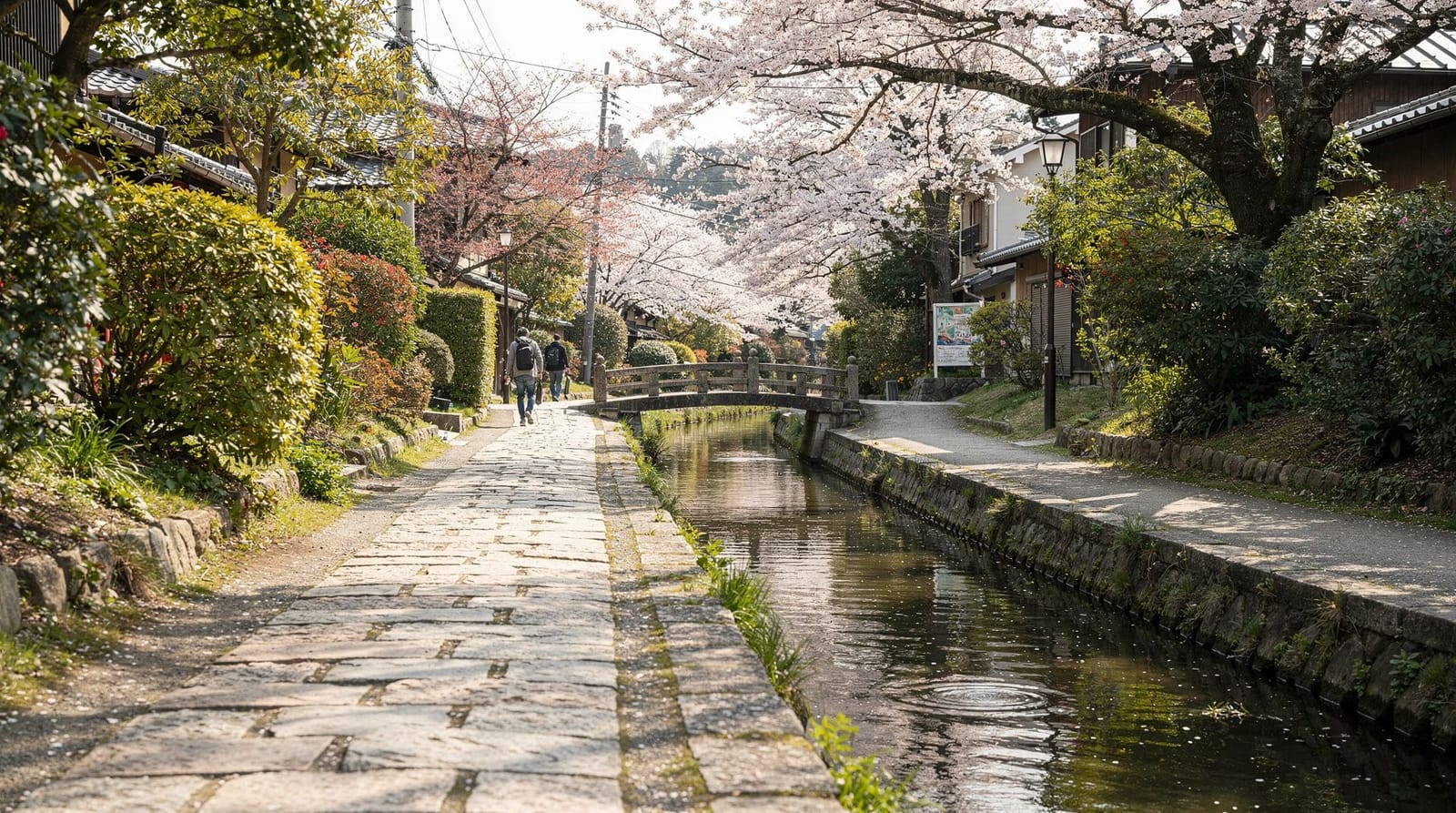
The practical case for cycling here isn’t romantic, it’s logistical: Arashiyama’s full area (not just the bamboo grove), the stretch between Ginkaku-ji and Nanzen-ji along the Philosopher’s Path, and the loop connecting several of Kyoto’s northern gardens are all more efficiently covered by bike than by bus, and considerably more flexible than a fixed-schedule guided walking tour. This guide covers rental logistics, the main routes, and the guided bike tour options worth paying for versus renting and going it alone.
| Standard bike rental | around ¥1,000-2,000/day |
| E-bike rental | around ¥2,500-4,000/day |
| Guided bike tour | around ¥6,000-12,000 for 2-4 hours |
| License needed | No |
| Best time | Early morning (7-8am) for Arashiyama |
Renting a bike: no license needed, prices and logistics
Standard city bike rentals in Kyoto run roughly ¥1,000-2,000 (US$7-13) per day, available from shops clustered near Kyoto Station, throughout central Kyoto, and directly at Arashiyama’s Randen Arashiyama station. No license is required — a passport or ID is typically held as a deposit rather than checked for a qualification. Electric-assist bikes cost more, roughly ¥2,500-4,000 (US$17-27) per day, and are genuinely worth the premium for routes involving the gentle but sustained inclines toward Kyoto’s eastern hills, particularly in summer heat.
Most rental shops open around 9am and expect bikes back by 6-7pm, though some offer multi-day rates for travelers basing themselves in Kyoto for several days. Baskets are standard on city bikes; helmets are available on request but not legally required for adults in Japan, though renting one is a reasonable precaution given Kyoto’s mix of narrow lanes and occasional uneven pavement.
The Kamo River path: Kyoto’s best free cycling route
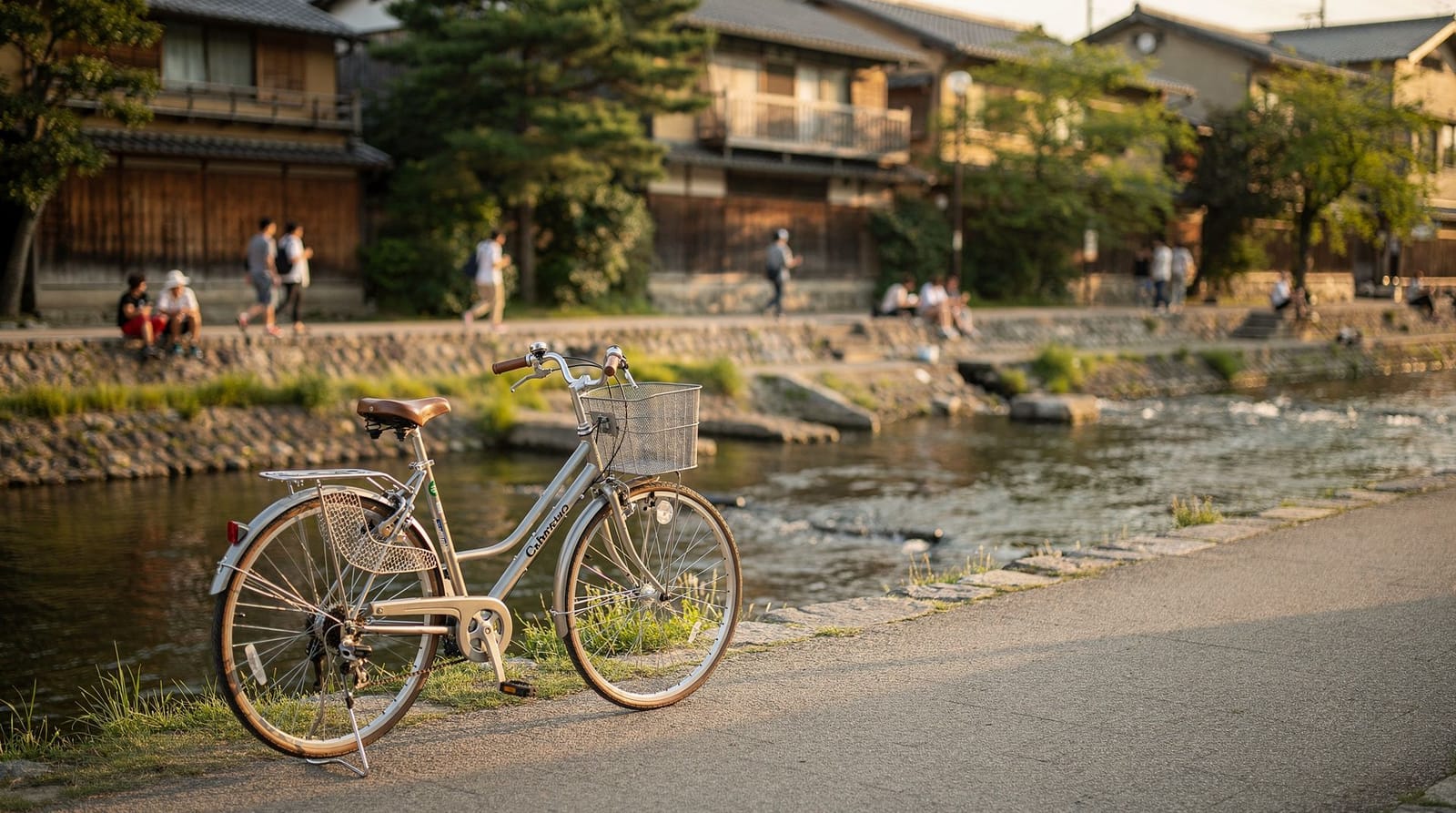
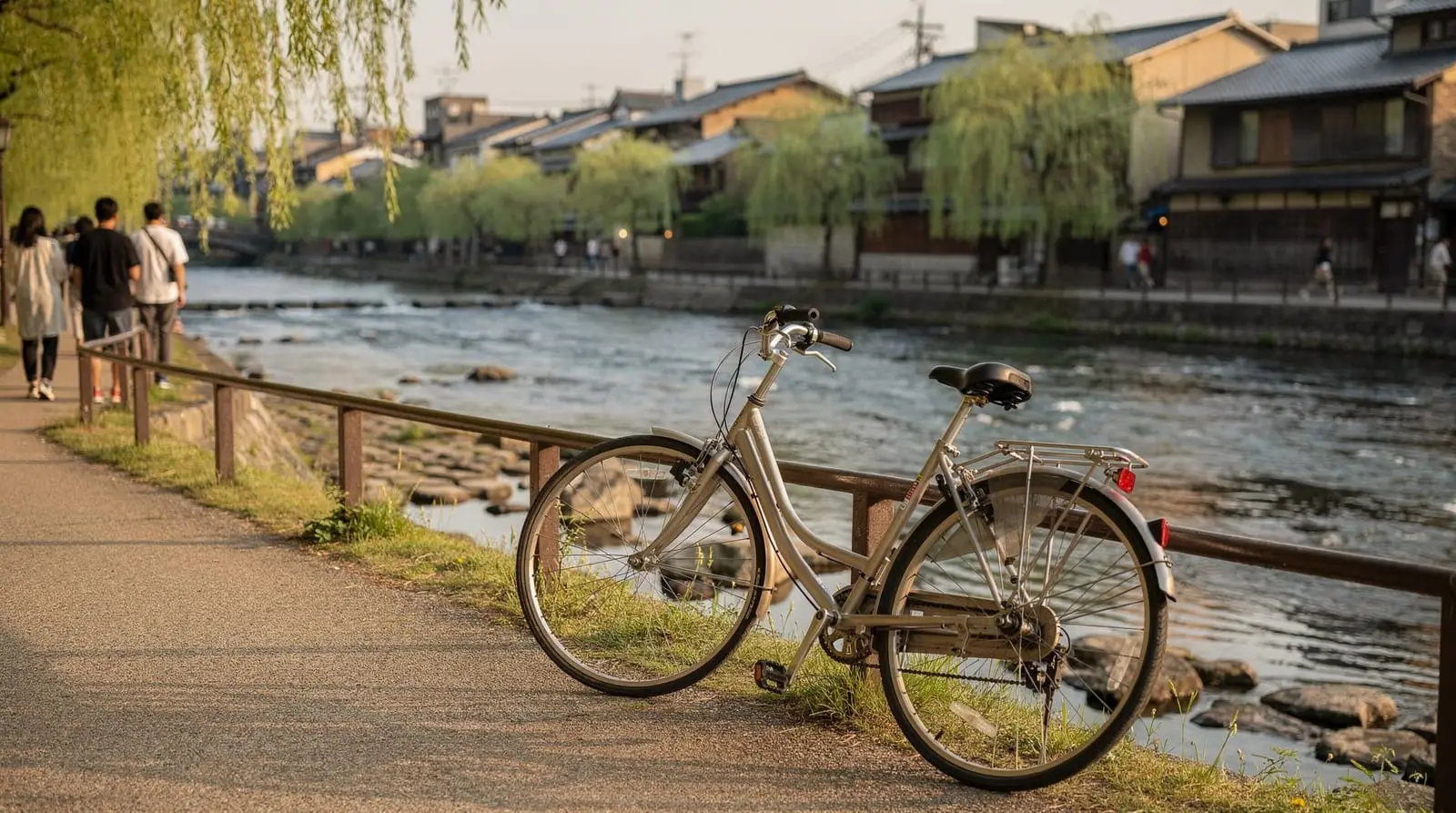
The Kamo River path is Kyoto’s single best free cycling route — a dedicated riverside path running roughly north-south through the city, well away from car traffic, with stone stepping-stones, herons, and locals fishing or picnicking along the banks depending on season. It’s flat, well-maintained, and connects reasonably close to both downtown Kyoto and the approach to Ginkaku-ji and the Philosopher’s Path in the east. Riding a stretch of it, even without a specific destination, is one of the more relaxing ways to spend an hour in the city outside temple-hopping.
Arashiyama by bike: covering more than the bamboo grove
Arashiyama’s bamboo grove itself takes 10-15 minutes to walk regardless of transport, but the wider Arashiyama-Sagano area — Tenryu-ji’s garden, the Togetsukyo bridge, the quieter northern approach to the bamboo grove away from the main pedestrian crush, and temples like Adashino Nenbutsu-ji further out — spans several kilometers that a bike covers considerably faster than walking.
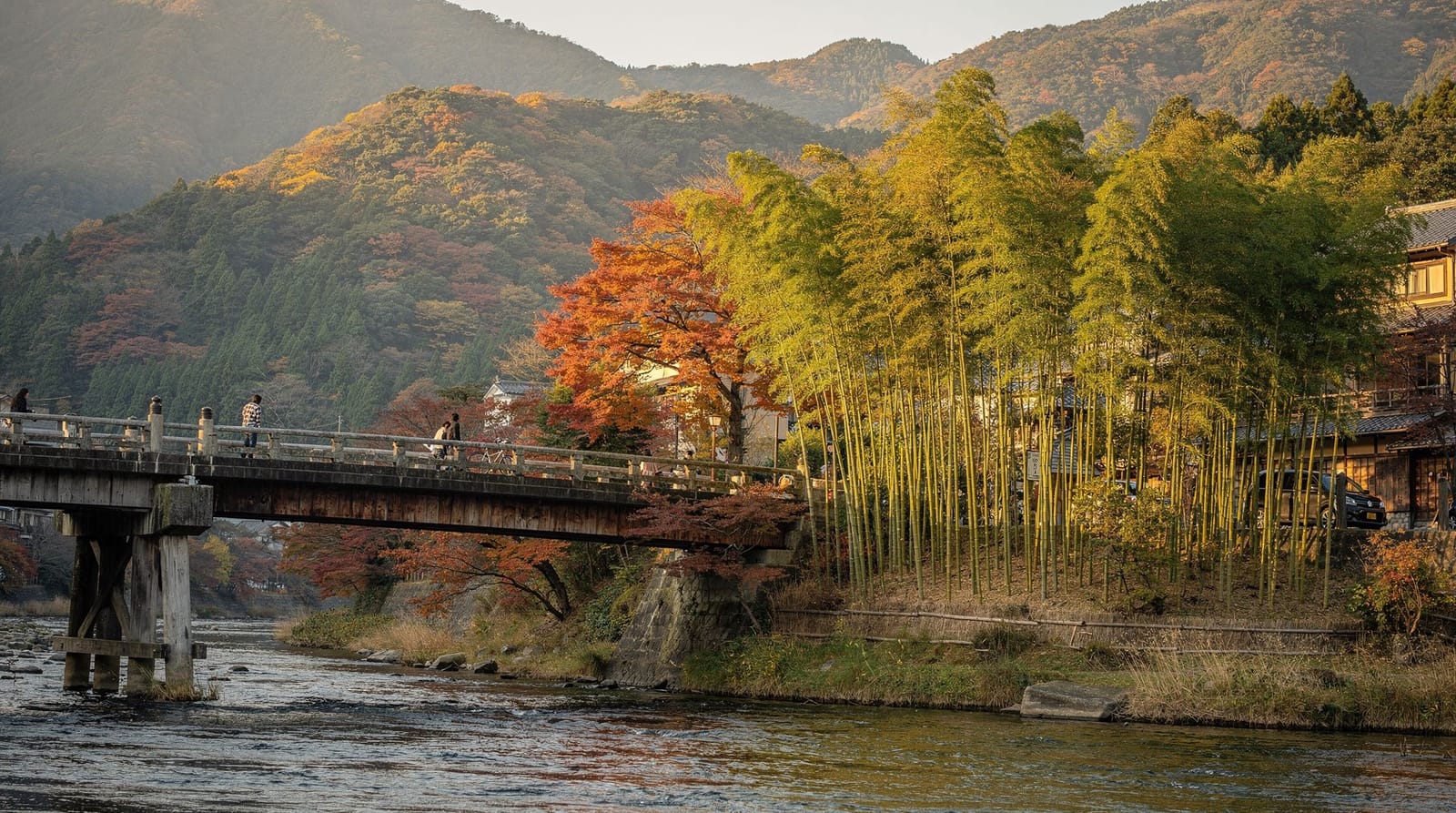
Arashiyama bamboo forest morning bike tourA morning bike tour timed before the main pedestrian crowds arrive (ideally starting by 7-8am) is one of the more effective ways to see the bamboo grove close to empty, something that’s difficult to guarantee on foot given how quickly tour groups arrive once the district opens up. See the Tenryu-ji guide for the temple garden itself, which bikes aren’t permitted inside — expect to lock up at a designated area near the entrance.
Guided city bike tours: efficient, curated, and time-boxed
Beyond Arashiyama-specific rides, several guided bike tours cover a themed cross-section of the city in a set window, typically 2-4 hours.
Three gardens bike tourThe Three Gardens format bikes between a curated set of garden temples, walking each one on foot once you arrive, which suits travelers wanting a broader garden-focused day without the transit time public buses would add between stops. A separate, more offbeat option covers Kyoto’s less-touristed side — old bathhouses (sento), vintage shops, and local cafés away from the temple circuit.
Underground Kyoto bike tour: sento, vintage and café stopsThis “underground” format is worth calling out specifically for returning visitors or anyone who’s already covered Kyoto’s major temples and wants a genuinely different day — it trades marquee sights for neighborhood texture, and its value depends entirely on whether that’s the kind of day you’re looking for versus another temple.
E-bike tours: better for hillier or longer routes
For routes with more elevation change or longer overall distance, several operators run e-bike-specific tours that combine assisted cycling with stops you’d otherwise need a full day to cover on foot or by bus.
City secrets e-bike tourAt roughly 225 minutes (just under 4 hours), this format covers considerably more ground than a standard 2-hour city bike tour, and the electric assist matters more than it sounds like it would — Kyoto’s hills aren’t steep by mountain-biking standards, but they’re persistent enough over a multi-hour ride that pedal assist noticeably changes the experience, particularly in summer humidity. See the cycling Kyoto guide for e-bike routes extending beyond the city into Kyoto’s wider countryside, including toward Lake Biwa.
Self-guided versus guided: an honest comparison
A self-guided rental (¥1,000-4,000 per day) gives full flexibility on route, pace, and duration, and is the better choice for confident cyclists who’ve done some route planning or are comfortable navigating with a phone map. A guided tour (¥6,000-12,000 for 2-4 hours) trades that flexibility for a leader who knows efficient sequencing, less-crowded timing windows, and stops that aren’t obvious from a map — particularly valuable in Arashiyama, where the difference between arriving at 7am with a guide who knows the quiet northern approach versus arriving at 10am on your own is substantial.
For a first Kyoto visit with limited planning time, a guided tour is the safer bet. For a return visit, or if cycling itself (not just reaching temples) is part of the appeal, renting and building your own route — starting with the Kamo River path — is both cheaper and arguably more in the spirit of what makes Kyoto good for cycling in the first place.
Rules and etiquette while cycling in Kyoto
Kyoto’s narrow historic lanes — particularly in Gion, Higashiyama’s Sannenzaka and Ninenzaka slopes, and parts of Arashiyama near the bamboo grove — get genuinely crowded with pedestrians, and several are pedestrian-priority zones where cycling at anything but a slow walking pace is discourteous at minimum and against posted rules in some sections. Dismounting and walking the bike through the most crowded stretches is standard practice and expected, not optional. Parking is another practical consideration: designated bike parking areas exist near most major temples, and locking up outside these designated zones can result in impoundment by city enforcement, an inconvenience worth avoiding by using marked parking.
Seasonal considerations
Spring (cherry blossom season, late March-early April) and autumn (foliage season, mid-November) are the most rewarding times to cycle the Kamo River path and Arashiyama routes visually, but also the most crowded, meaning slower going and more careful navigation around pedestrians in temple districts. Summer (June-August) is hot and humid enough that an early-morning ride, ideally starting by 7-8am, is considerably more comfortable than a midday route — this is also when e-bikes earn their rental premium most clearly. Winter (December-February) is cold but rarely icy, and offers the quietest, least crowded cycling of the year if you’re comfortable riding in cooler temperatures.
Combining a bike day with other Kyoto activities
A bike-focused morning in Arashiyama pairs naturally with an afternoon spent elsewhere in the city using transit, since returning a rental bike partway through the day is straightforward at most shops. For travelers wanting a full day built around cycling and hiking-adjacent activity, see the hiking in Kyoto guide for trail options that connect reasonably well to bike-accessible starting points, and the getting around Kyoto guide for how cycling fits alongside the city’s bus and train network on a multi-modal day.
For the temple garden at the heart of most Arashiyama bike routes, see the Tenryu-ji guide, and for the wider district beyond the bamboo grove, the Arashiyama destination guide.
Booking timing
Guided bike tours, particularly early-morning Arashiyama rides timed to beat crowds, can sell out several days ahead during cherry blossom and autumn foliage peaks. Outside those windows, booking 1-2 days ahead is typically enough. Bike rentals are generally available same-day without reservation outside peak season, though reserving ahead removes any risk during the busiest weeks of spring and autumn.
What happens if the bike breaks down or you have an accident
Most rental shops include basic breakdown coverage as part of the standard rental fee — a flat tire or mechanical issue typically means calling the shop’s listed number and either getting instructions for a nearby partner shop or arranging a swap, rather than being stranded and charged extra. It’s worth confirming this before riding out with a rental, particularly for longer routes toward Arashiyama or beyond, where you’ll be well outside walking distance of the original shop if something goes wrong.
For accidents involving another party, Japan requires reporting to police regardless of severity, and rental shops can generally advise on next steps if this happens during a rental period. Guided tours remove most of this risk, since the tour operator supplies and maintains the bikes and handles any mechanical issue directly during the ride.
Bike types available beyond standard rentals
Most shops offer more than one bike category, and it’s worth matching the type to your planned route rather than defaulting to whatever’s cheapest. Standard city bikes (mamachari-style, with a basket and upright riding position) suit flat, short routes like the Kamo River path or central Kyoto sightseeing. Road-style bikes, less commonly available for rent but offered by some specialist shops, suit longer distance riders planning routes toward Lake Biwa or a full-day circuit.
Electric-assist bikes bridge the two, adding real value on routes with any sustained incline — Arashiyama’s wider loop, the approach to Kyoto’s eastern hills — without requiring the fitness a road bike route implies. Child seats and tandem attachments are available from some family-oriented rental shops, worth requesting specifically if traveling with young kids, since not every location stocks them by default.
Insurance and what a rental deposit actually covers
Most rental shops require a deposit, either cash or an ID hold, that covers damage or loss during the rental period rather than functioning as true insurance in the sense of covering third-party injury or property damage you might cause while riding. Some shops offer optional supplemental insurance for a small daily fee, worth taking if your travel insurance doesn’t already cover cycling-related incidents — check your existing policy before assuming a rental shop’s basic coverage is sufficient, since gaps here are a genuine, if uncommon, source of financial exposure.
Guided tours generally build liability coverage into the tour price by default, one of the less obvious but real advantages of paying the premium for a guided format over an independent rental, particularly for cycling with children or in unfamiliar traffic conditions.
Weather contingencies
Kyoto’s rainy season (tsuyu, roughly mid-June to mid-July) makes cycling genuinely unpleasant and occasionally unsafe on wet stone paving in historic districts — most rental shops and guided tour operators build flexible rescheduling into their policies for this reason, and it’s worth asking directly about rain contingencies before booking a tour during this window specifically.
Outside the rainy season, Kyoto sees occasional short, heavy summer thunderstorms that pass relatively quickly; waiting out a 30-45 minute downpour under shelter rather than pushing through it is the more common and sensible response than canceling a rental day outright. Typhoon season (roughly August-October) carries a small but real chance of a full-day washout, worth factoring into trip planning if cycling is a specific priority activity rather than a flexible add-on.
Night cycling: worth trying once
Cycling the Kamo River path or central Kyoto streets after dark is an underrated option worth a mention — traffic thins considerably, the summer heat that makes daytime riding uncomfortable eases off, and stretches of the riverbank take on a genuinely different character with lantern-lit restaurants and reflections on the water. Most rental shops don’t restrict evening returns as long as you’re back within the shop’s operating hours, and lights are typically fitted to rental bikes as standard equipment given Japan’s road regulations requiring them after dark. This isn’t a substitute for a full guided or daytime route, but it’s a low-effort way to add a genuinely different Kyoto experience to a rental you’ve already paid for during the day.
Frequently asked questions about Kyoto bike tours
Do I need a special license to rent a bike in Kyoto?
No license is required for a standard bicycle rental in Japan — anyone can rent and ride without a permit. Some shops ask for ID (passport or driver’s license) as a deposit hold rather than a riding qualification. Electric bikes (e-bikes) similarly require no special license, since Japan’s road-legal e-bikes are pedal-assist only, not throttle-powered mopeds.
Is Arashiyama better explored by bike or on foot?
By bike if you’re covering more than just the bamboo grove itself, which is a 10-15 minute walk end to end regardless of transport. Arashiyama’s wider area — Tenryu-ji, the Togetsukyo bridge, Adashino Nenbutsu-ji, and the quieter northern approach to the bamboo grove — spans several kilometers, and a bike covers this considerably faster than walking, with less crowding than the main pedestrian route near the station.
How much does it cost to rent a bike in Kyoto?
Standard city bikes run roughly ¥1,000-2,000 (US$7-13) for a full day from rental shops near Kyoto Station, Arashiyama, and central Kyoto. Electric-assist bikes cost more, typically ¥2,500-4,000 (US$17-27) per day, and are worth the premium if your route includes any of Kyoto’s gentle but persistent uphill stretches toward the eastern hills.
Is it safe to cycle in Kyoto traffic?
Central Kyoto is manageable for confident cyclists — many streets have marked bike lanes or wide shoulders, and drivers are generally accustomed to sharing the road with cyclists. That said, Kyoto’s narrower historic lanes in districts like Gion and Higashiyama get crowded with pedestrians, and cycling through them at anything but a slow walking pace is both discourteous and against posted rules in some pedestrian-priority zones.
Can I combine a bike tour with visiting temples?
Yes, and several guided bike tours are built specifically around this — the Ginkaku-ji and Philosopher’s Path e-bike route and the Three Gardens bike tour both combine cycling between temple districts with stops to walk through the gardens themselves, since bikes generally aren’t permitted inside temple grounds. Expect to lock up and walk the last stretch at each temple stop.
What’s the difference between a self-guided rental and a guided bike tour?
A self-guided rental gives you a bike and a map (or app) and full flexibility on route and pace, for roughly ¥1,000-4,000 per day. A guided tour includes a leader who knows efficient routes, less-crowded timing, and stops you might not find alone, for ¥6,000-12,000 for a few hours. Guided tours suit first-time visitors or those short on planning time; self-guided suits confident cyclists wanting full control of their day.
Where can I return a rental bike if I end my ride in a different part of the city?
This varies by rental shop — some, particularly larger chains with multiple locations, allow drop-off at a different branch for a small fee, while smaller independent shops typically require return to the same location. Confirm this before renting if your planned route is one-way rather than a loop back to the starting point, since an unplanned return trip can eat into your day.
Frequently asked questions about Kyoto bike tours — rentals, routes and the best guided rides
Do I need a special license to rent a bike in Kyoto?
Is Arashiyama better explored by bike or on foot?
How much does it cost to rent a bike in Kyoto?
Is it safe to cycle in Kyoto traffic?
Can I combine a bike tour with visiting temples?
What's the difference between a self-guided rental and a guided bike tour?
Top experiences
Bookable activities with verified prices and instant confirmation on GetYourGuide.