Kansai area passes — JR, Kansai Thru, and ICOCA compared
JR West: Kansai Mini Pass
Which Kansai pass should I actually buy?
For a Kyoto-based trip adding one or two day trips to Osaka, Nara, or Kobe, the JR West Kansai Mini Pass usually wins on JR routes specifically. For an itinerary leaning on private railways and city subways across Kyoto, Osaka, and Kobe rather than JR, the Kansai Thru Pass fits better. For most visitors doing neither in volume, a pay-as-you-go ICOCA card, with no upfront commitment, is cheaper than either pass and removes the need to calculate a break-even point at all.
Kansai’s regional transport runs on two largely separate networks — JR West’s train lines, and a web of private railways plus city subways operated by different companies entirely — and the passes covering each are built accordingly. Confusing the two is the most common mistake visitors make when researching Kansai passes: a JR pass won’t get you onto the Hankyu line to Arashiyama, and a private-railway pass won’t get you onto the Shinkansen or most JR lines. This guide compares what’s actually available, which network each covers, and an honest read on which itineraries justify a pass purchase at all versus simply paying as you go.
| JR-only pick | Kansai Mini Pass (JR West) |
| Private/subway pick | Kansai Thru Pass |
| No commitment | ICOCA pay-as-you-go IC card |
| Break-even | roughly 2+ day trips beyond Kyoto |
| Buy | JR stations (JR passes) or private-rail counters (Thru Pass) |
Why Kansai’s rail network splits into two pass ecosystems
Japan’s rail system is fragmented by design — JR (the privatized former national railway, split into regional companies including JR West for Kansai) operates alongside numerous private railways (Hankyu, Keihan, Kintetsu, Nankai, and others) that predate or compete with JR on overlapping routes, plus separately run city subways in Kyoto and Osaka. No single ticket or pass covers all of it. Passes therefore split cleanly into JR-only products and private-and-subway products, and understanding which category a given pass belongs to is the single most useful piece of information before comparing prices.
JR West’s Kansai passes: for JR-heavy itineraries
The JR West Kansai Mini Pass covers unlimited rides on JR lines across a defined Kansai zone for a set number of consecutive days, including the JR Nara line to Fushimi Inari and Nara, the Sagano line to Arashiyama, and JR routes connecting Kyoto to Osaka and Kobe. It’s the more affordable of JR West’s regional passes, aimed at itineraries staying within the immediate Kyoto-Osaka-Kobe-Nara cluster rather than ranging further into Kansai. A broader version, the Kansai Area Pass, extends the covered zone further (including Himeji and Wakayama in some configurations) at a higher price, worth considering only if an itinerary specifically includes those farther destinations.
Both JR West passes generally include the JR Haruka airport express or at minimum the standard JR rapid service between Kansai Airport and Kyoto or Osaka, which can offset a meaningful share of the pass cost if purchased for use starting on arrival day — a detail worth checking against current pass terms, since airport-line inclusion has varied across pass versions over time. The Kansai Airport to Kyoto guide covers this specific route and fare comparison in more detail.
The Kansai Thru Pass: for private railways and subways
The Kansai Wide Area Rail and Bus Pass represents the other major category — a pass covering private railways (Hankyu, Keihan, Kintetsu, Nankai, and others) plus the Kyoto and Osaka subways and many local buses, explicitly excluding all JR lines. This suits an itinerary built around Hankyu’s route to Arashiyama and Osaka, Keihan’s route between Gion-Shijo and Osaka’s Yodoyabashi, or Kintetsu’s route to Nara, rather than one relying primarily on JR. It also covers the Nankai line’s airport express between Kansai Airport and Namba in Osaka, making it a workable airport-arrival option for visitors landing and heading into Osaka first rather than Kyoto.
The practical decision between the two pass families comes down to which specific stations and lines an itinerary actually uses — a visitor doing Fushimi Inari (JR or Keihan), Arashiyama (JR, Hankyu, or Randen), and Nara (JR or Kintetsu) has genuine route choices at each stop, and the “right” pass depends on which option is chosen at each one, not a fixed rule about which pass is objectively better.
ICOCA: the option that avoids the whole decision
ICOCA, JR West’s IC card, isn’t a pass in the bundled-discount sense — it’s a stored-value card that deducts the correct fare on JR, most private railways, subways, and buses across Kansai, with no unlimited-ride period and no upfront commitment beyond the initial load.
For visitors whose itinerary doesn’t clearly cluster around either JR or the private-and-subway network — mixing a bit of both, or simply not doing enough day trips to hit either pass’s break-even point — ICOCA is very often the cheapest overall option, precisely because it never overpays for unused unlimited-ride capacity the way an underused pass does. The getting around Kyoto guide covers ICOCA purchase and top-up in detail for in-city use; the same card works identically for the day trips covered in this guide.
A worked comparison: three common itineraries
A visitor doing a single Fushimi Inari and Arashiyama day within Kyoto, no other day trips: neither pass pays off, since both are entirely reachable on a handful of individual fares far below either pass’s price — ICOCA wins clearly. A visitor adding one Osaka day trip and one Nara day trip to a Kyoto base, both primarily by JR: the JR West Kansai Mini Pass likely pays off, since two round trips by JR rapid service (roughly ¥580 and ¥720 one-way respectively) approach or exceed a 2-day pass’s price once combined with in-Kyoto JR use.
A visitor doing the same two day trips but preferring Hankyu to Osaka and Kintetsu to Nara instead of JR: the Kansai Thru Pass becomes the better comparison, covering both private-line routes plus Kyoto’s own subway, though the specific savings depend on current pass pricing against those individual fares.
Himeji and the Shinkansen: a separate category
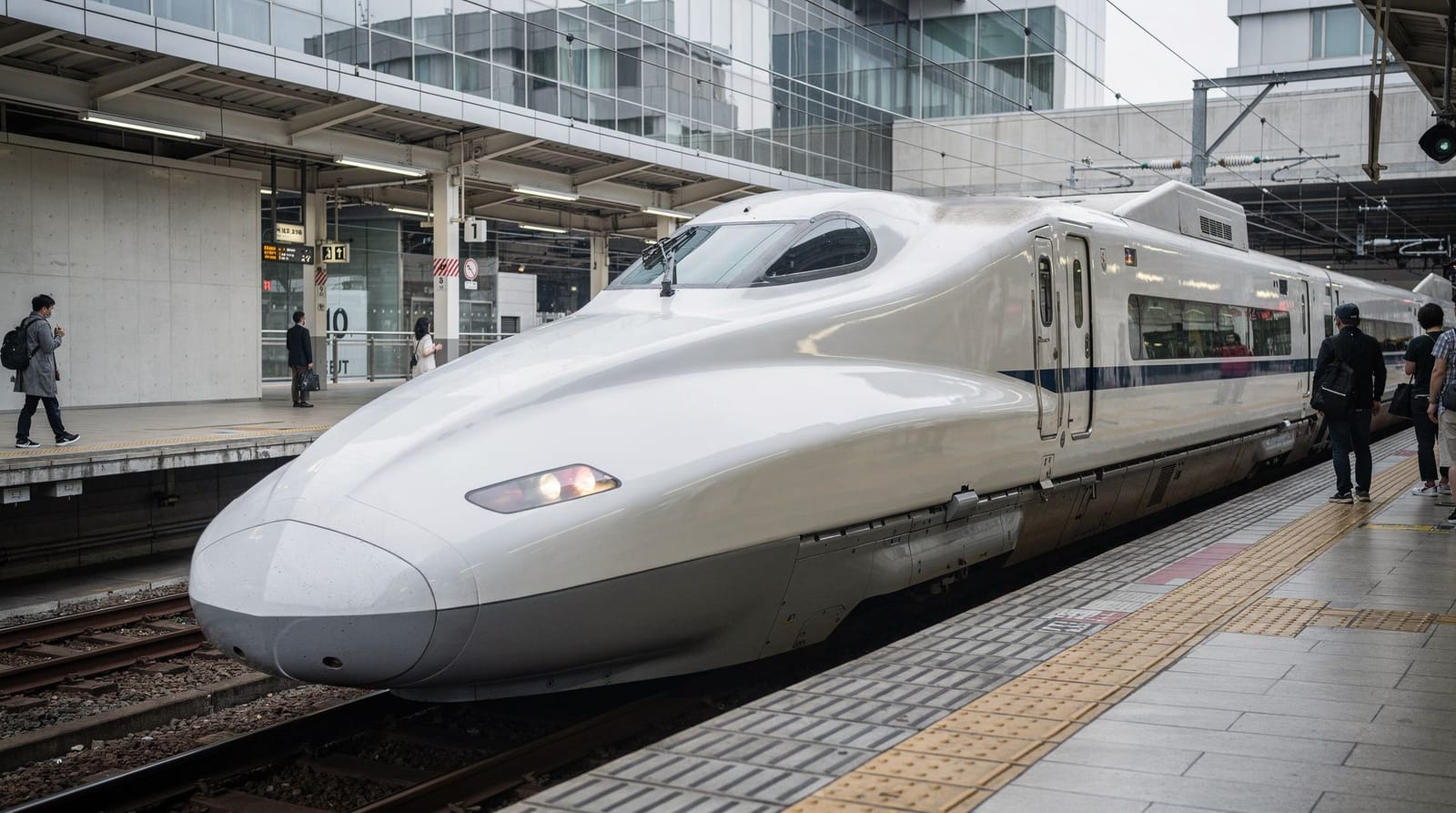
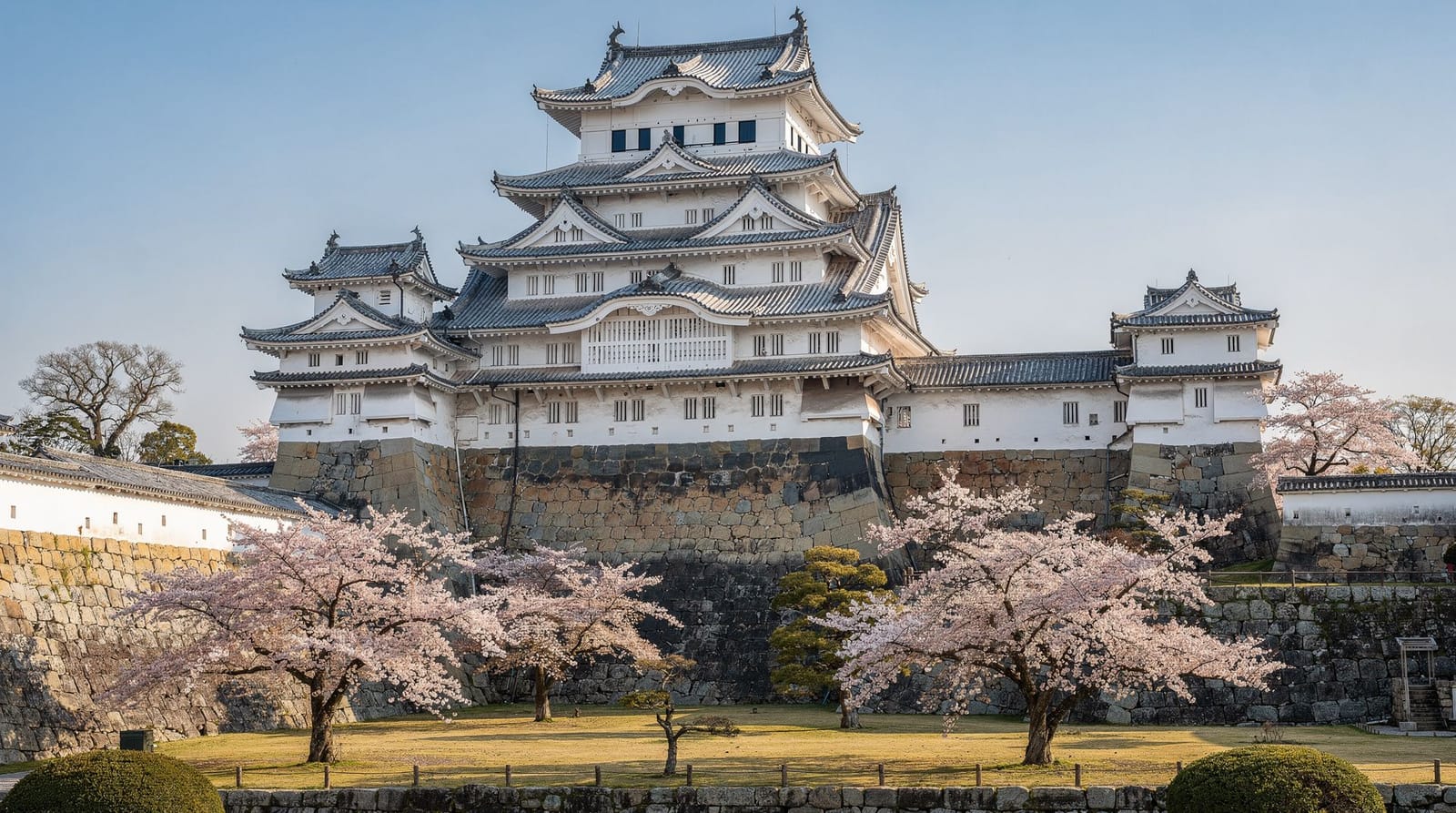
Neither major Kansai pass covers the Tokaido/Sanyo Shinkansen, so a day trip to Himeji Castle specifically involves a choice between the slower JR Kobe line special rapid (included in JR West’s broader Kansai Area Pass version, roughly 90 minutes from Kyoto) or the Shinkansen (faster, roughly 50 minutes, but requiring a separate ticket or a national JR Pass rather than either regional pass covered here). The Himeji Castle day trip guide covers this specific routing choice and the time-versus-cost tradeoff in full.
National JR Pass versus regional Kansai passes
Visitors planning travel well beyond Kansai — Tokyo, Hiroshima, or further — sometimes default to a national JR Pass without checking whether it’s actually cost-effective for a Kansai-only or Kansai-plus-one-other-region itinerary. The national pass’s price has risen substantially in recent years, and for a trip confined mostly to Kansai with perhaps one Shinkansen leg elsewhere, pricing a regional Kansai pass plus a single point-to-point Shinkansen ticket against the national pass’s cost is worth doing explicitly rather than assuming the broader pass is automatically the better value — it frequently isn’t for itineraries this geographically contained.
Combining a regional pass with Kyoto’s own city pass
A regional Kansai pass, whichever type, doesn’t cover Kyoto’s own city buses (only the subway is included on the Kansai Thru Pass side, and neither JR pass includes city buses at all). A visitor holding a JR or Kansai Thru pass for day-trip days still needs a separate ICOCA card or Kyoto’s own subway-and-bus day pass for purely in-Kyoto sightseeing days, covered in the Kyoto sightseeing pass guide. The two guides are meant to be read together for a full-trip transport plan: this one for the regional, cross-city legs, the other for in-Kyoto sightseeing days between them.
When neither pass is worth it
For a Kyoto-centered trip with no day trips at all, or only a single short one, neither regional pass typically pays off, and the honest recommendation is simply an ICOCA card used throughout, saving the pass comparison entirely for a future trip with a heavier day-trip itinerary. This is a common outcome, not an edge case — many first-time Kyoto visitors underestimate how much a single city alone offers and overestimate how many day trips they’ll realistically fit in during a first visit, making the simpler ICOCA-only approach the more honest recommendation more often than either pass.
How long each pass version actually lasts
Both major pass families come in more than one duration, and matching duration to itinerary length matters as much as matching network coverage. JR West’s Kansai Mini Pass is typically sold in a fixed short window (commonly a handful of consecutive days), while its broader Kansai Area Pass sometimes offers a choice between shorter and longer validity at different price points.
The Kansai Thru Pass is usually sold in 2-day or 3-day consecutive versions, priced to reward exactly the kind of two-or-more-day-trip itinerary described in the worked comparisons above. Buying a longer-duration pass than an itinerary actually needs is a common way to overpay — a 3-day Kansai Thru Pass bought for a trip with only two real day-trip days built in rarely earns back its extra cost over the 2-day version, since the unused third day of unlimited rides doesn’t refund or carry forward.
Children’s pricing across both pass families
Both JR West’s Kansai passes and the Kansai Thru Pass offer reduced children’s pricing, typically around half the adult rate, applying to children in roughly the 6-11 age range, with younger children usually riding free when accompanied by a paying adult. As with Kyoto’s own city pass covered in the companion guide, the break-even calculation for a child’s pass roughly mirrors the adult one in terms of number of rides needed, but the absolute yen savings are smaller, and families should weigh the convenience of not tracking individual child fares against the modest savings a child pass actually delivers, particularly on a itinerary that’s already borderline for the adult version.
Reserving seats and using passes on limited express trains
A detail that trips up first-time users of either pass family: unlimited-ride coverage doesn’t always mean unlimited unreserved-seat access on every service. JR West’s Haruka airport express and some of its other limited express trains require a seat reservation even when covered by a valid pass, and reservations are usually free with the pass but must be made separately at a ticket office or machine rather than assumed automatic.
The Kansai Thru Pass generally covers standard private-railway services without a reservation requirement, since most of the private lines it covers (Hankyu, Keihan, Kintetsu’s local and rapid services) don’t run reserved-seating trains the way JR’s limited expresses do. Checking whether a specific planned route involves a reservation-required service, and building in time to make that reservation before travel, avoids a frustrating gate rejection on travel day.
What happens if your itinerary changes mid-trip
Both pass families are generally non-refundable and tied to specific start dates once activated, which is worth factoring into the buy-early-versus-buy-later decision. A pass purchased for a fixed 2-day or 3-day window that ends up unused on one of those days, because plans shifted to more walking-based sightseeing than transit-based, can’t be adjusted or partially refunded in most cases. Visitors with a firm, already-booked itinerary can reasonably buy a pass in advance with confidence; visitors with a looser, flexible schedule are often better served waiting until the itinerary firms up, or defaulting to ICOCA’s pay-as-you-go model, which carries none of this inflexibility risk.
Buying online in advance versus on arrival
Several pass versions, particularly JR West’s, can be reserved online ahead of a trip and picked up at a designated ticket office on arrival, which can be worth doing during peak travel seasons when ticket counter queues at Kansai Airport or Kyoto Station run long. Online reservation doesn’t typically change the price, but it does let a traveler lock in the pass type and dates before departure rather than deciding at the counter, and some online booking channels bundle a small discount over the walk-up price as an incentive.
The Kansai Thru Pass has historically had more limited advance online purchase options compared to JR West’s products, more often bought in person at a station or tourist information counter after arrival, so travelers planning around that specific pass should build a short buffer into arrival-day plans to purchase it before their first intended use.
Comparing total cost against a full day-trip-heavy week
For visitors staying a full week or more with day trips genuinely planned for most of it — Osaka one day, Nara another, Kobe or Himeji a third, with Kyoto sightseeing filling the remaining days — running the actual numbers against both a JR pass and a Kansai Thru Pass for the specific days each would be used, rather than assuming one pass covers the whole week, usually produces the best result.
Many heavy-itinerary visitors end up buying a JR pass for a run of two or three JR-heavy days and switching back to ICOCA for the Kyoto-only days in between, rather than trying to force a single week-long pass to fit a mixed itinerary that no single Kansai pass is really designed to cover end to end. This piecemeal approach takes slightly more planning than picking one pass and using it throughout, but it reliably produces the lowest total transport cost for a genuinely mixed, day-trip-heavy week.
The bottom line
For most Kyoto-based itineraries, the decision tree is short: no day trips or one short one, use ICOCA; two or more JR-heavy day trips, price the JR West Kansai Mini Pass against individual fares; two or more day trips leaning on private railways and subways instead, price the Kansai Thru Pass the same way. A national JR Pass rarely makes sense for a Kansai-contained trip unless it also includes a Shinkansen leg well beyond the region, covered fully in the JR Pass for Kyoto guide.
None of these passes replace the need for a separate ICOCA card or Kyoto’s own subway-and-bus pass on purely in-city sightseeing days, covered in the Kyoto sightseeing pass guide — treat the two guides together as a full transport plan rather than either one in isolation.
Frequently asked questions about Kansai area passes
What’s the difference between the JR West Kansai passes and the Kansai Thru Pass?
JR West’s passes cover only JR lines; the Kansai Thru Pass covers private railways and subways instead, explicitly excluding JR. They cover largely non-overlapping networks rather than competing directly.
Is ICOCA a pass, or something different entirely?
ICOCA is a pay-as-you-go IC card with no bundled discount, deducting exact fares across JR, subways, and most private rail and bus routes in Kansai. It requires no upfront commitment or break-even calculation.
Can I use a Kansai pass to get from Kansai Airport to Kyoto?
Yes — JR West’s passes typically include the Haruka airport express or standard JR rapid service, and the Kansai Thru Pass covers the Nankai line’s airport express into Osaka instead.
Do these passes cover the Shinkansen?
No. Neither JR West’s regional Kansai passes nor the Kansai Thru Pass cover the Tokaido/Sanyo Shinkansen; a separate ticket or national JR Pass is needed for bullet train travel.
How many day trips justify buying a regional pass instead of paying individual fares?
Roughly two day trips beyond Kyoto’s immediate area is the general threshold where a 2-day regional pass starts to pay off, though the exact math depends on the specific pass and destinations chosen.
Where do I buy these passes?
JR West passes are sold at JR ticket offices and machines, including Kansai Airport and Kyoto Station, some reservable online in advance. The Kansai Thru Pass is sold at private railway stations and tourist information centers, not inside JR stations.
Frequently asked questions about Kansai area passes — JR, Kansai Thru, and ICOCA compared
What's the difference between the JR West Kansai passes and the Kansai Thru Pass?
Is ICOCA a pass, or something different entirely?
Can I use a Kansai pass to get from Kansai Airport to Kyoto?
Do these passes cover the Shinkansen (bullet train)?
How many day trips justify buying a regional pass instead of paying individual fares?
Where do I buy these passes?
Top experiences
Bookable activities with verified prices and instant confirmation on GetYourGuide.