Kyoto sightseeing pass — which one actually pays off
Kyoto: Hop-on Hop-off Sightseeing Bus Ticket
Is there still a Kyoto city bus day pass?
No. Kyoto discontinued its long-running bus-only day pass in March 2023 due to overcrowding on buses and now actively steers visitors toward Icoca or other IC cards instead. What remains are a subway-and-bus combined day pass, sightseeing bus tickets bundled with hop-on hop-off routes, and regional rail passes covering Kansai beyond Kyoto — none of which is a direct replacement for the old bus pass, and for most itineraries, a pay-as-you-go Icoca card works out cheaper than any of them.
Kyoto’s sightseeing pass landscape changed meaningfully in 2023, and a fair amount of advice still circulating online is out of date because of it. The city’s long-standing bus day pass, once the default recommendation for any Kyoto visitor, no longer exists, and what’s replaced it is a smaller set of options — a subway-and-bus combined pass, hop-on hop-off tourist bus tickets, and the option most visitors underrate, simply paying as you go with an Icoca card. This guide works through what’s actually available now, what each covers, and an honest comparison of when a pass earns back its cost versus when it doesn’t.
| Default choice | Icoca IC card, pay-as-you-go |
| Subway+bus pass | ¥1,100/day, pays off at 5+ rides |
| Hop-on hop-off | Priced as a tourism product, costs more per stop |
| JR/Kansai pass | Does NOT cover city buses or subway |
| Where to buy | Subway stations, Kyoto Station info center, JR machines |
Passes at a glance: which one for which day
| Situation | Best option | Why |
|---|---|---|
| Light walking day, 1-2 neighborhoods | Icoca card | Rarely hits the 5-ride break-even |
| Heavy transit day, 3+ areas | Subway and bus pass | Pays off around 5 rides |
| Uncomfortable with bus numbers | Hop-on hop-off ticket | Pays a premium for route simplicity |
| Day trip to Nara, Uji or Osaka | Icoca card (or JR/Kansai pass for the trip leg) | City passes don’t cover those lines |
| Already holding a JR Pass | Icoca card on top | JR Pass excludes city buses and subway |
The bus day pass no longer exists — here’s why that matters
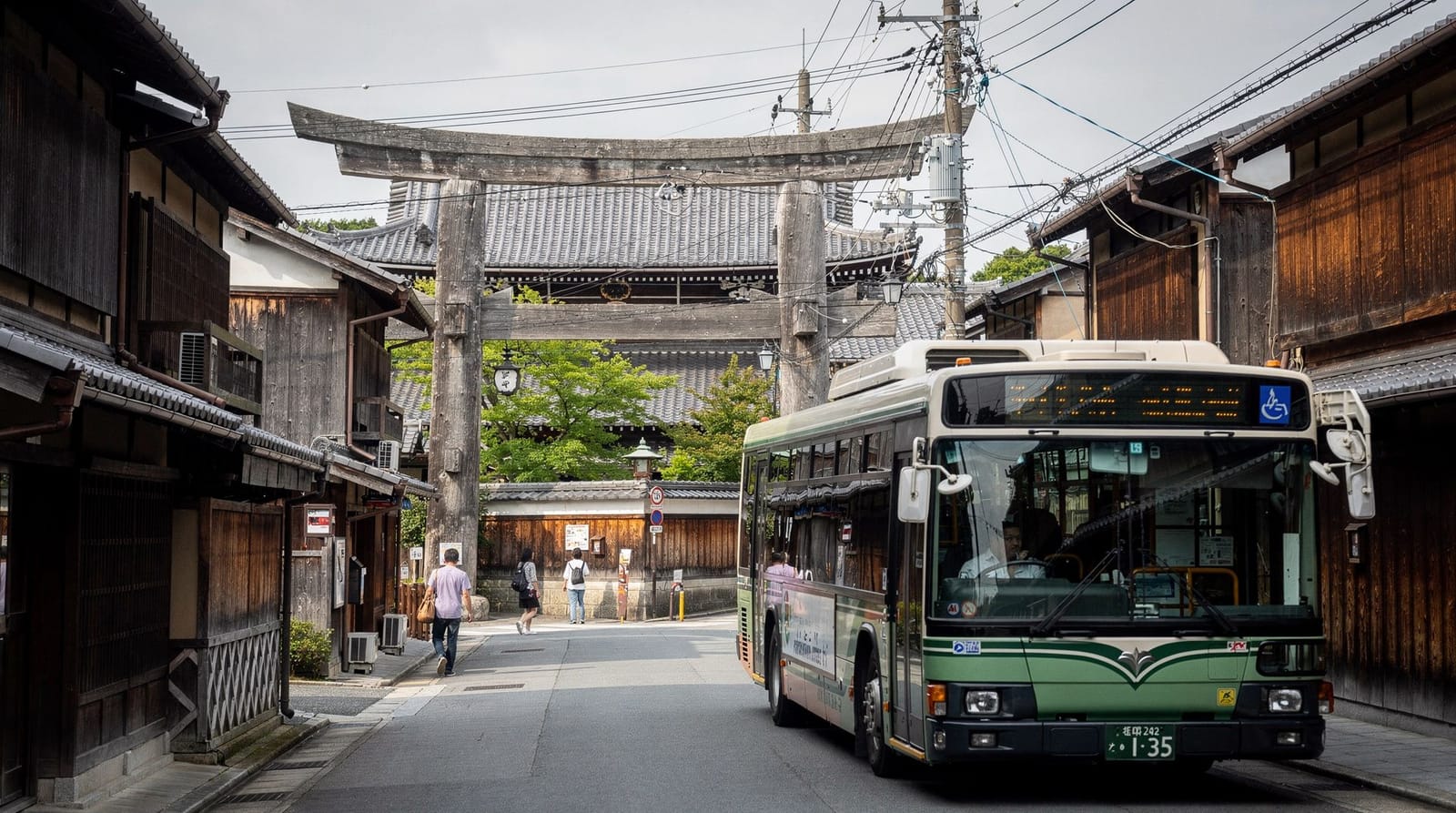
For years, a ¥600 bus-only day pass was the standard recommendation for Kyoto sightseeing, since city buses reach more of Kyoto’s must-see sights than any other transport mode. Kyoto discontinued it in March 2023, a decision driven by genuine overcrowding on the routes the pass most incentivized — particularly the 100 and 206 loops connecting Kyoto Station to Higashiyama, Gion, and Kiyomizu-dera — rather than a revenue motive.
The city has actively encouraged visitors toward IC cards and the subway instead since the change. Anyone planning a trip using an older blog post or guidebook recommending the bus pass should treat that specific advice as outdated; the mechanics of Kyoto’s buses themselves, covered in the Kyoto bus guide, remain accurate, but the pass product built around them is gone.
The subway and bus one-day pass: what actually replaced it
The current closest equivalent is the Kyoto subway and bus one-day pass, covering unlimited rides on both the city subway and city buses within Kyoto for a single calendar day, priced at ¥1,100 (about $7.50) for adults. Unlike the old bus-only pass, it includes the subway’s two lines, which helps offset the higher price if a day’s itinerary uses both modes.
The math: a single bus or subway ride runs ¥220-230 (about $1.50), so the pass pays for itself at five rides in a day. A temple-and-neighborhood-heavy day — Kyoto Station to Higashiyama, back to downtown, out to Kinkaku-ji, back to accommodation — can plausibly hit that count, but a day mixing substantial walking with two or three rides won’t, and paying individually via Icoca works out cheaper in that more common case.
Hop-on hop-off tickets: a different product entirely
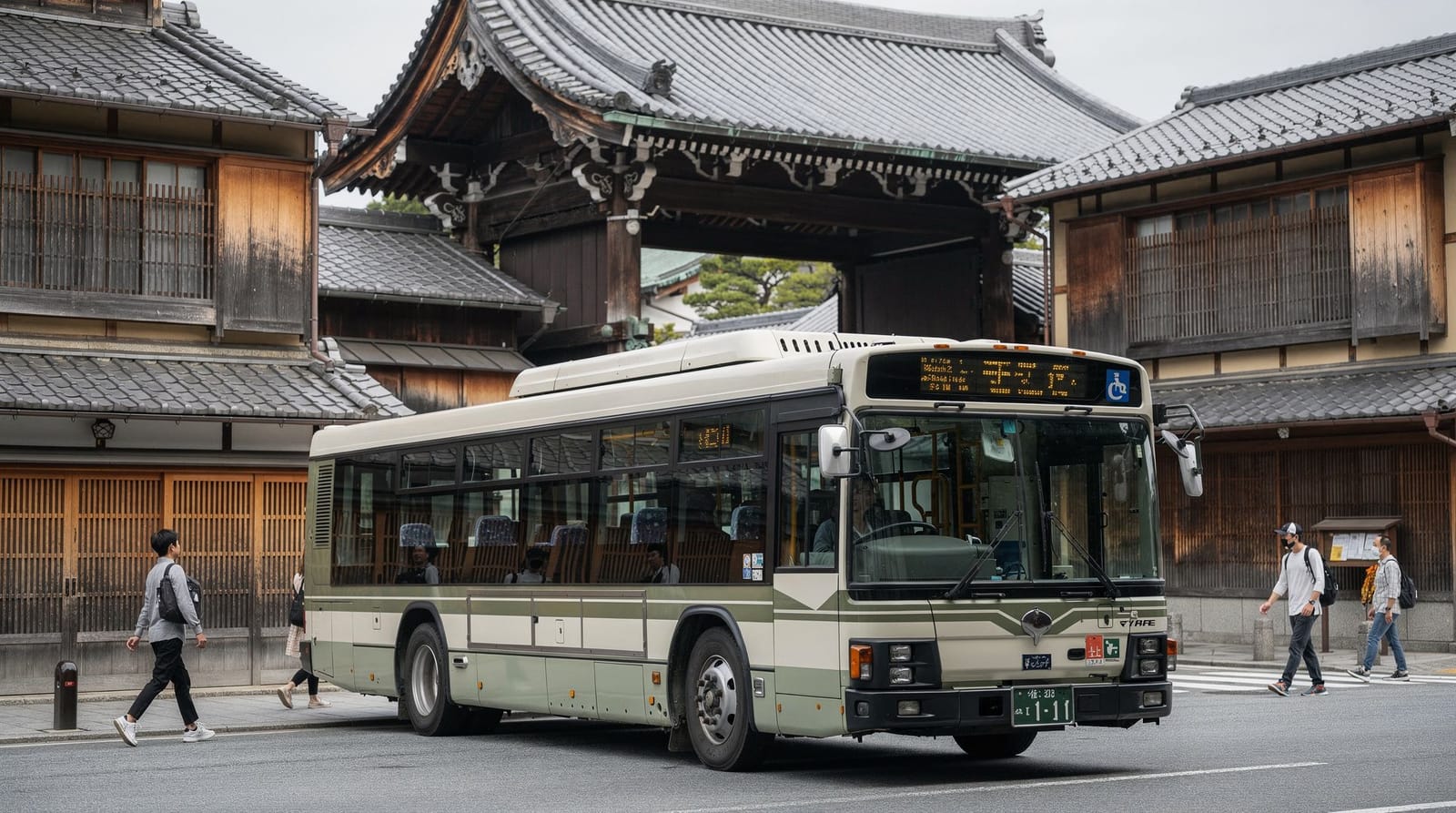
A Kyoto hop-on hop-off sightseeing bus ticket is worth understanding as a separate category from the transport passes above — a dedicated tourist-route bus circulating between major sights, run commercially rather than as part of Kyoto’s regular city bus network, with unlimited boarding across one or two days depending on the ticket purchased. It suits a specific kind of visitor: someone who wants a single, easy-to-follow route between headline sights without learning the numbered city bus system, willing to pay a premium over city bus fares for that simplicity. For visitors comfortable using Google Maps to navigate the regular bus network (covered in the Kyoto bus guide), the hop-on hop-off ticket usually costs more than the same day of city bus and subway rides would, since it’s priced as a tourism product rather than public transit.
Why an Icoca card usually beats every bundled option
For the majority of Kyoto itineraries, a pay-as-you-go Icoca card — or any nationally interoperable equivalent like Suica or Pasmo — costs less than any bundled pass, precisely because most sightseeing days don’t hit the five-ride threshold that makes the subway-and-bus pass worthwhile, and city buses alone (without needing the subway) already reach most major sights directly.
An Icoca card removes the need to calculate whether a given day’s itinerary justifies a pass purchase at all: tap on, pay the exact fare, and the question of “will this pay off” never has to be answered. The getting around Kyoto guide covers Icoca purchase, reload, and deposit details in full; this guide’s interest is narrowly in the pass-versus-pay-as-you-go comparison.
A Japan/Asia eSIM roaming data plan pairs naturally with the pay-as-you-go strategy, since navigating Kyoto’s bus network without a pre-planned route genuinely depends on having working maps and transit data from the moment you land, rather than trying to plan an entire multi-day itinerary offline in advance.
A worked comparison: three days, three strategies
Consider a representative three-day Kyoto visit. Day one: Fushimi Inari and Higashiyama, roughly six bus and train rides across the day — the subway and bus pass pays off here, at ¥1,100 against roughly ¥1,380-1,500 in individual fares. Day two: Arashiyama and a slower-paced afternoon downtown, roughly three rides — an Icoca card, at ¥660-690, beats the ¥1,100 pass by a meaningful margin.
Day three: Kinkaku-ji and Nijo Castle with substantial walking between, two rides — again, Icoca wins clearly. Across the three days, mixing strategies (pass on the heaviest-transit day, Icoca otherwise) costs less than committing to either a pass every day or pay-as-you-go every day, though the actual savings gap (typically a few hundred yen total) is small enough that most visitors reasonably default to Icoca throughout simply to avoid the daily recalculation.
Passes that don’t cover Kyoto city transport at all
A frequent point of confusion: a national JR Pass or a regional Kansai-wide rail pass covers JR trains between cities and certain JR lines running through Kyoto, but not city buses or the subway, which are operated by entirely separate companies (Kyoto City Transportation Bureau for buses and subway, versus JR West for JR lines).
Visitors arriving with a JR Pass or Kansai pass, assuming it covers their in-Kyoto sightseeing transport, are usually surprised to find it doesn’t — an Icoca card or the subway-and-bus pass covered above is still needed for actual city sightseeing. The broader set of regional Kansai passes, what each covers, and which itinerary suits which pass is covered fully in the Kansai area passes guide, a natural companion to this guide for anyone planning day trips beyond Kyoto itself.
Special-access passes: temples and museums
A separate category worth knowing about distinct from transport: a small number of combined-admission tickets exist for specific temple clusters or museum groups, though Kyoto doesn’t run anything as centralized as some European cities’ museum passes. Most temples price admission individually (typically ¥400-1,000, about $3-7, per site), and given how spread out Kyoto’s major sights are across different neighborhoods, a bundled admission pass rarely saves meaningful money compared to paying per site — the transport cost of reaching each site individually usually outweighs whatever admission discount a bundle might offer, unlike cities where major sights cluster within a single walkable district.
Who should actually buy a pass, and who shouldn’t
The subway and bus pass makes sense for a visitor with a specific, transport-heavy day planned in advance — multiple neighborhoods, a return trip to accommodation midday, an evening out — where hitting five rides is a near-certainty rather than a hope. It doesn’t make sense for a visitor prioritizing a slower pace, walking between nearby sights, or splitting a day between just one or two areas.
The hop-on hop-off ticket makes sense for a visitor genuinely uncomfortable navigating a foreign transit system who’s willing to pay for simplicity over cost efficiency; it doesn’t make sense for anyone already comfortable using a maps app, since the same stops are almost always reachable more cheaply by regular bus. For nearly everyone else, an Icoca card is the correct default, not because it’s the exciting recommendation but because it’s genuinely the one that avoids overpaying without requiring a spreadsheet.
Children’s fares and family pricing
The subway and bus pass, along with individual fares, offers a reduced children’s rate — typically half the adult price, so ¥550 for the day pass and roughly ¥110-115 per individual ride — applying to children aged 6 through 11, with children under 6 generally riding free when accompanied by a paying adult, subject to a small limit on the number of free children per adult on crowded services.
Families traveling with several children across a transport-heavy day should run the same five-ride threshold calculation separately for each child’s fare, since the break-even point doesn’t necessarily land on the same day for a child’s half-price pass as it does for an adult’s full-price one; in practice, because child fares are already lower, the number of rides needed to justify a child’s day pass is roughly the same five-ride mark, but the absolute savings are smaller and sometimes not worth the administrative hassle of managing multiple pass types across a family group compared to just tapping Icoca cards for everyone.
Buying passes online in advance versus on arrival
Some pass products, including certain versions of the hop-on hop-off ticket, can be purchased online before arrival, which mainly saves time rather than money — the price is typically identical to buying on the day, but pre-purchase avoids a queue at a kiosk on a first, jet-lagged morning in the city. The subway and bus one-day pass, by contrast, is generally not available for advance online purchase and must be bought at a station machine or the information center once in Kyoto, which is a minor inconvenience rather than a real obstacle given how many subway stations sell it.
Icoca cards themselves aren’t available for advance purchase either in the traditional physical form, though a virtual Icoca can be added to certain smartphone wallet apps before arrival for visitors who want to skip the physical card entirely — a genuinely convenient option if a compatible phone is available, since it also allows topping up by credit card rather than needing cash at a machine.
What changes during peak season crowding
During Kyoto’s two busiest windows — cherry blossom season in late March through mid-April, and autumn foliage in mid-November through early December — the calculus around passes shifts slightly, since bus travel times increase substantially with traffic and passenger volume regardless of which payment method is used.
A subway-and-bus pass doesn’t make crowded buses faster, but it does remove the friction of fare calculation and cash handling during the exact period when boarding delays are already worst, which is a real if modest convenience benefit beyond pure cost math. Some visitors reasonably choose the pass during peak season specifically for that friction reduction, even on days that wouldn’t otherwise hit the five-ride break-even point, prioritizing simplicity over the last few hundred yen of savings when everything else about the day already involves more waiting than usual.
Combining a pass with a day trip
A day that includes both Kyoto city sightseeing and a day trip to Uji, Nara, or Osaka complicates the pass calculation, since none of Kyoto’s own city passes cover the JR, Keihan, or Hankyu lines used for those trips. A realistic pattern: use a JR, Keihan, or Hankyu ticket (or an Icoca card, which covers all of them) for the day-trip leg itself, and separately decide whether the Kyoto-city portion of the same day — getting from the hotel to the train station in the morning, and from the return station back to the hotel in the evening — hits enough rides to justify the subway-and-bus pass on top of that.
In most cases, a day trip day involves only two or three purely in-Kyoto rides (getting to and from the relevant train station), which falls below the pass’s break-even point, making Icoca the more sensible choice for the Kyoto-city portion of any day trip.
What a pass doesn’t solve
None of the passes covered in this guide address two of the most common friction points visitors actually run into: bus crowding during peak hours, and travel time inflated by traffic, both covered in more detail in the Kyoto bus guide. A pass changes how you pay, not how fast or comfortable the ride is — a point worth internalizing before assuming that buying the “right” pass solves a scheduling problem that’s actually about avoiding the 10am-1pm crowd window on the 100 and 206 routes instead. Shifting activity timing, covered in the avoiding crowds guide, does more for the actual travel experience than any pass choice will.
A note on outdated recommendations online
Because the bus-only pass was such a long-standing default recommendation, a meaningful share of Kyoto travel content published before 2023 — and unfortunately, some republished or lightly updated content since — still references it as if it’s current. Signs of outdated advice include a specific ¥600 bus pass price with no mention of the subway, or language suggesting the pass covers “all Kyoto city buses” without noting the 2023 discontinuation. Cross-checking any pass recommendation against a recent source, or simply defaulting to Icoca as covered throughout this guide, avoids the risk of planning a purchase around a product that no longer exists at the counter.
The bottom line for most itineraries
Stripped of the pass-by-pass detail above, the practical guidance for most visitors is short: start with an Icoca card, use it by default, and only add the subway-and-bus one-day pass on a specific day where the itinerary genuinely involves five or more rides across both buses and the subway. The hop-on hop-off ticket is worth considering only for visitors who specifically value route simplicity over cost, and regional rail passes belong to a separate decision covered in the Kansai area passes guide rather than this one.
None of these choices meaningfully make or break a Kyoto trip financially — the total difference between the best and worst pass strategy across a week in the city is typically a few thousand yen, well under $20 — so the more useful outcome of reading this guide is simply knowing the old bus pass is gone, rather than optimizing every single ride to the yen.
Frequently asked questions about Kyoto sightseeing passes
Why did Kyoto cancel its bus day pass?
The city discontinued the ¥600 bus-only pass in March 2023 due to severe overcrowding on the routes it most incentivized, pushing visitors toward the subway and IC cards instead.
What’s the Kyoto subway and bus one-day pass, and is it worth it?
It covers unlimited subway and city bus rides for one day at ¥1,100 (about $7.50), paying off once a day includes roughly five or more rides — plausible on a heavy sightseeing day, not guaranteed on a lighter one.
Is a hop-on hop-off bus ticket different from a city transport pass?
Yes — it’s a commercial tourist-route bus with unlimited boarding, separate from Kyoto’s actual city bus network, priced higher than city buses for the convenience of a single simple route.
Do I need a Kyoto-specific pass if I already have a JR Pass or Kansai pass?
Yes, usually — JR and regional rail passes don’t cover city buses or the subway, which are run by a separate operator. Most visitors still need an Icoca card or the subway-and-bus pass for in-city sightseeing.
What’s the simplest option for a first-time visitor who doesn’t want to calculate anything?
An Icoca card, tapped on every ride without pre-calculating whether a pass pays off. It’s rarely more expensive than optimizing pass purchases and removes the decision entirely.
Where do I buy these passes?
The subway and bus pass is sold at subway ticket machines and Kyoto Station’s bus and subway information center. Hop-on hop-off tickets are typically bought online or at dedicated kiosks. Icoca cards are sold at any JR ticket machine.
Frequently asked questions about Kyoto sightseeing pass — which one actually pays off
Why did Kyoto cancel its bus day pass?
What's the Kyoto subway and bus one-day pass, and is it worth it?
Is a hop-on hop-off bus ticket different from a city transport pass?
Do I need a Kyoto-specific pass if I already have a JR Pass or Kansai pass?
What's the simplest option for a first-time visitor who doesn't want to calculate anything?
Where do I buy these passes?
Top experiences
Bookable activities with verified prices and instant confirmation on GetYourGuide.