When do cherry blossoms bloom in Kyoto in 2026?
Every year, a Japanese visitor asks the same question earlier and earlier: when, exactly, will Kyoto’s cherry trees bloom. The honest answer is that nobody knows for certain until roughly three weeks out, and even then the forecast keeps shifting. This piece explains what the 2026 forecast actually says as of writing, why it will keep changing, and how to build a trip around uncertainty rather than a single date on a calendar.
| Historical bloom window | around late March to first week of April |
| Full bloom (mankai) | typically 5-10 days after first bloom, lasts 3-5 days |
| Best time to book flights | months ahead, based on the historical average |
| Reliable forecast window | around 7-10 days before the actual date |
| Peak-week hotel prices | highest of the entire Japanese travel calendar |
Kyoto’s spring bloom, month by month and season by season
The cherry blossom window is narrow, but it sits inside a longer spring season worth planning around even if the exact bloom date doesn’t line up. Our Kyoto in spring guide covers the broader season, including what’s blooming before and after sakura, and the Kyoto weather month-by-month guide has realistic temperature and rain expectations for late March and April specifically, useful for packing regardless of exactly when the trees peak.
Sakura viewing spots, ranked by typical bloom order
| Spot | Typical timing | Why visit |
|---|---|---|
| Nijo Castle | close to citywide average | official trigger tree, wide variety of cultivars |
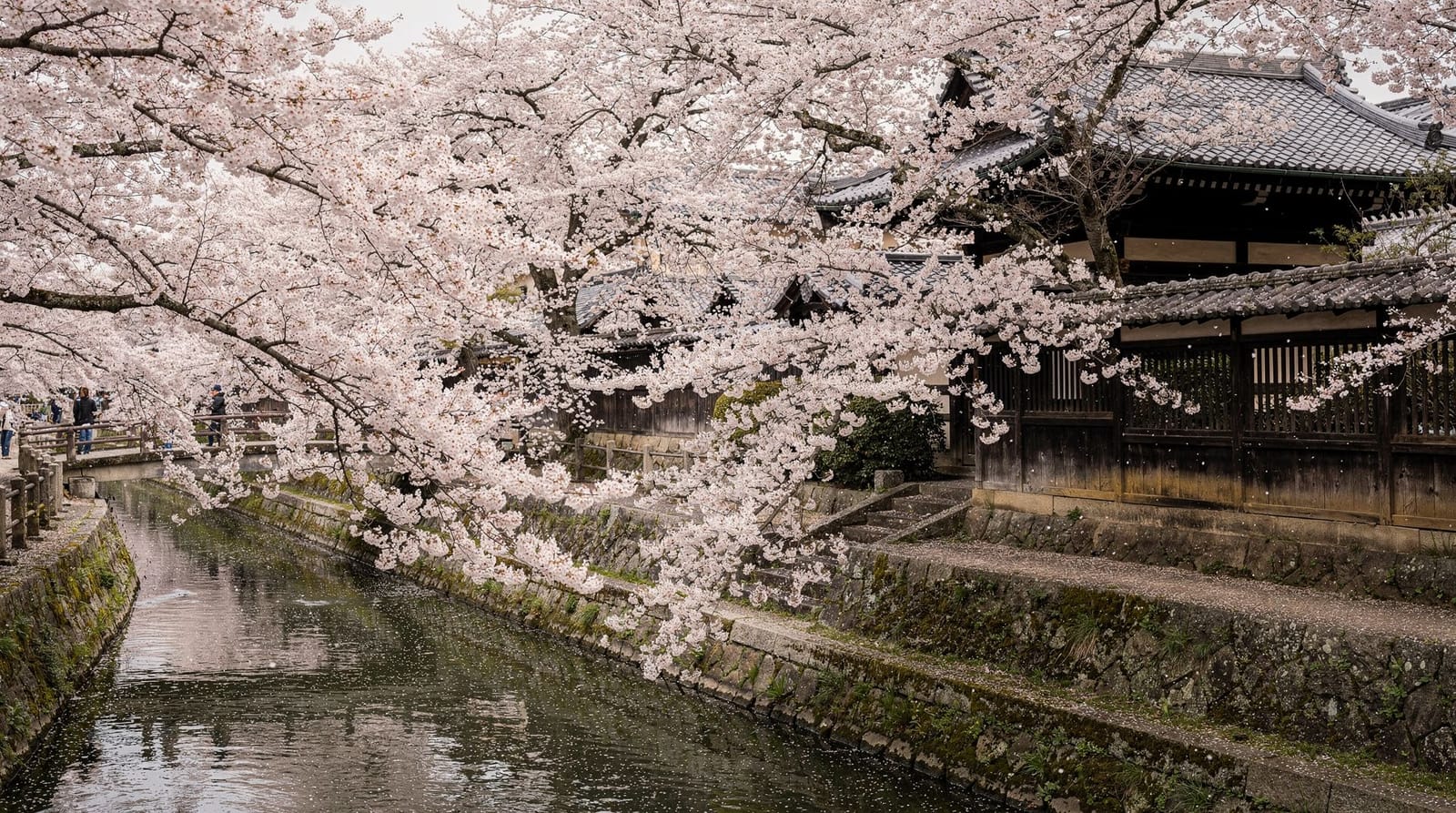
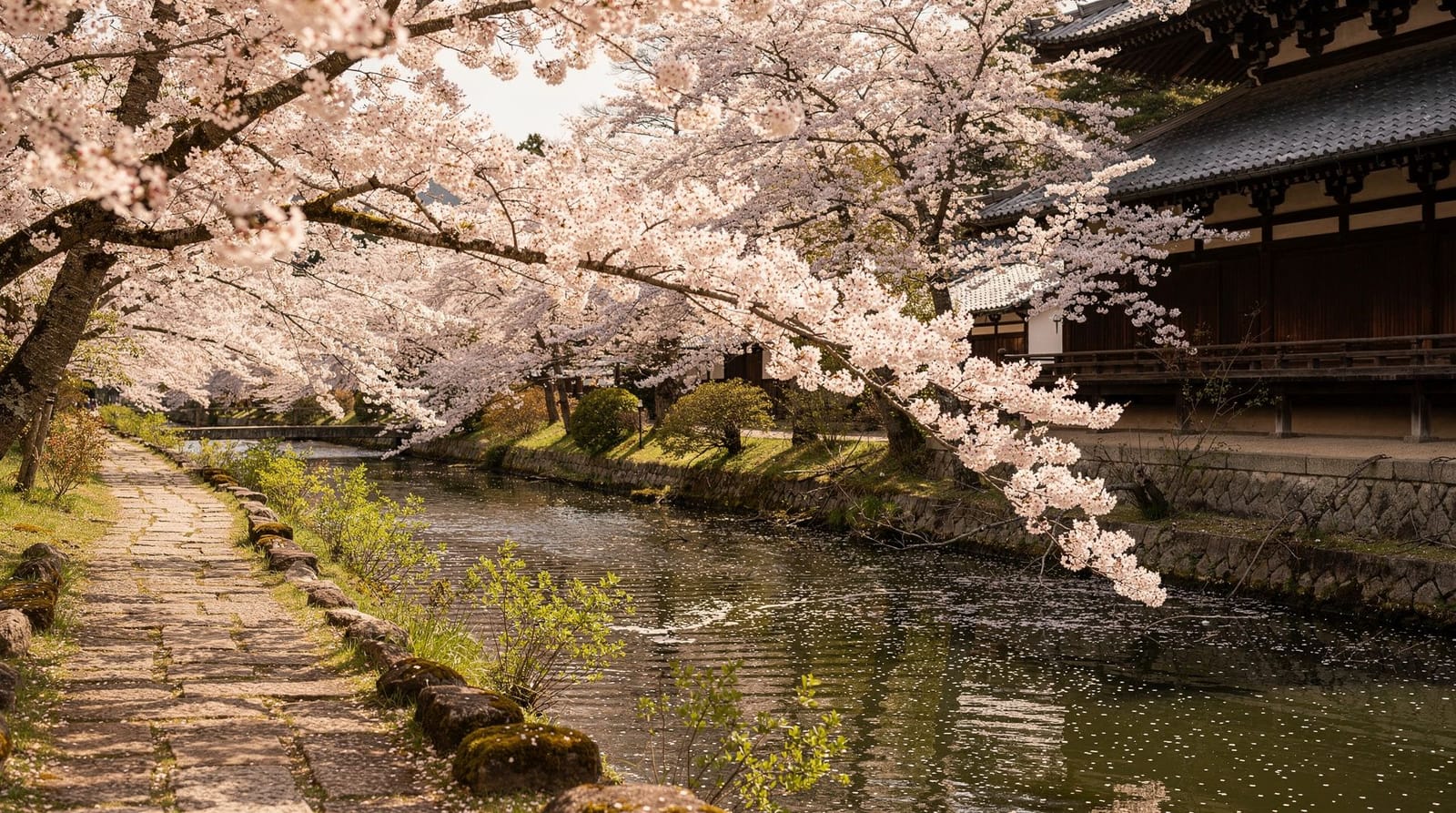
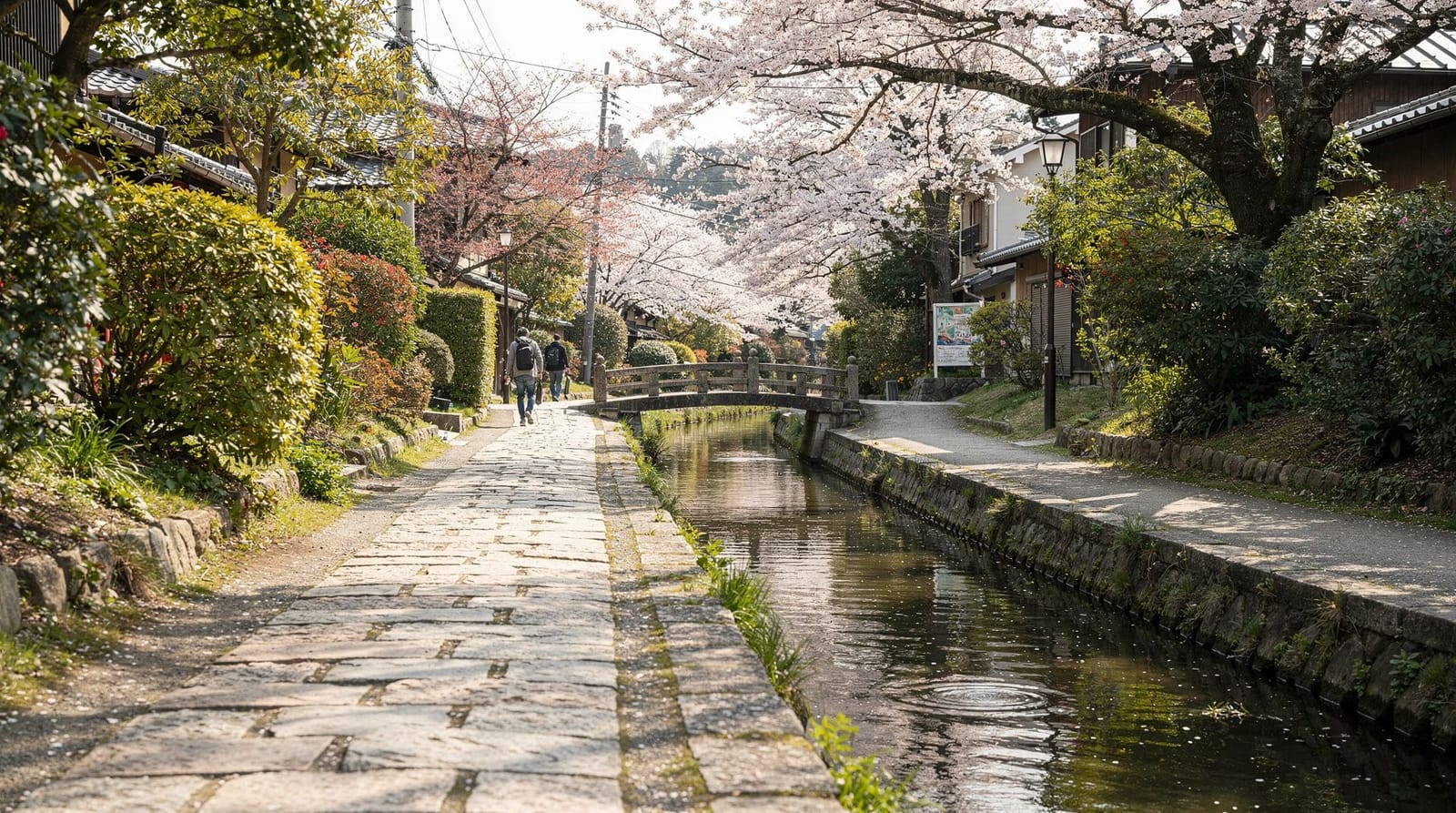
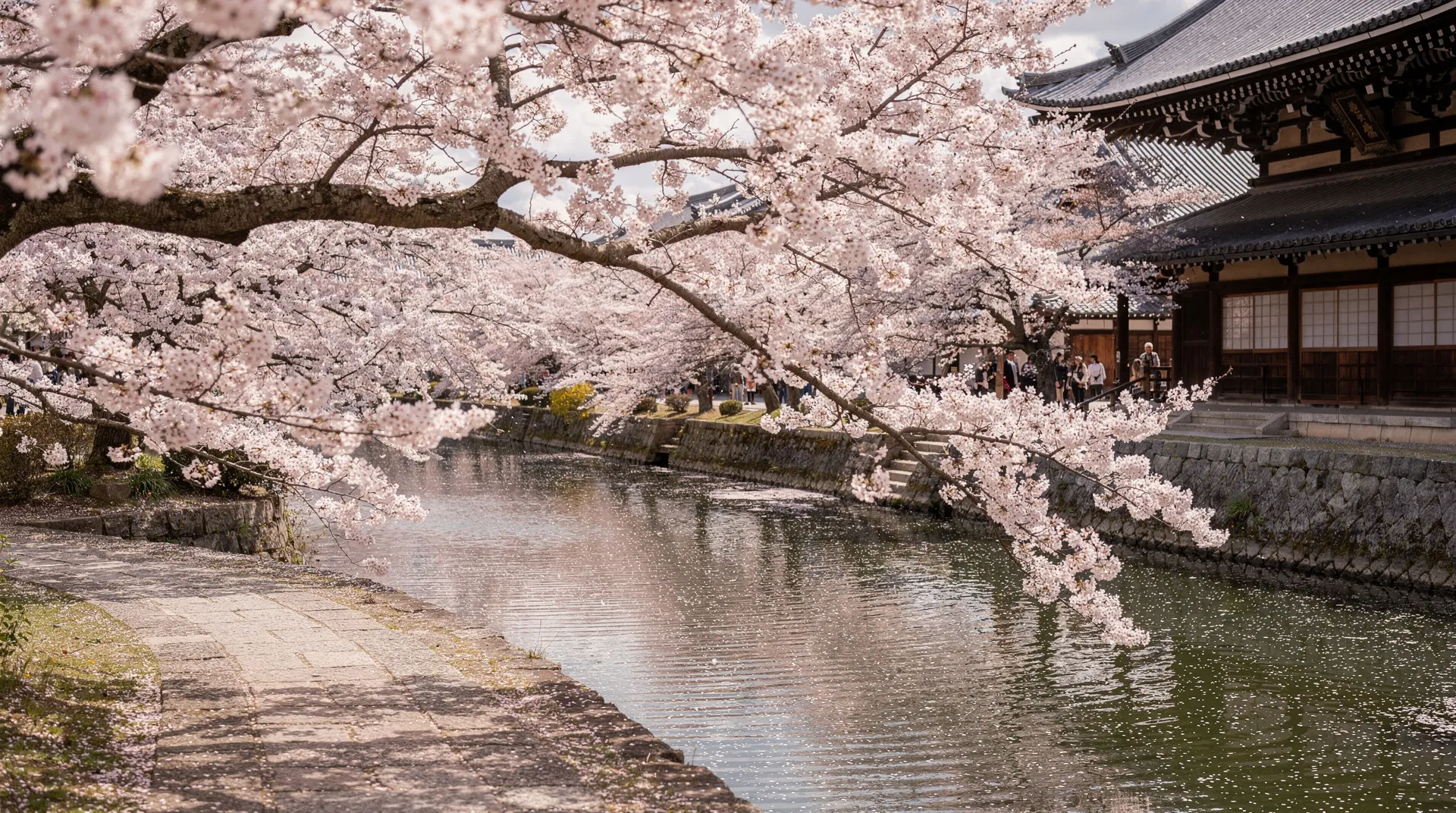
| Philosopher’s Path | close to citywide average | 2km canal-side tunnel of blossoms |
| Maruyama Park | close to citywide average | famous lit weeping cherry, evening illumination |
| Arashiyama | a few days later | cooler river valley, good second stop |
| Daigo-ji | broadly similar to average | historic 1598 viewing site, fewer crowds |
The Philosopher’s Path stretches between Ginkaku-ji and Nanzen-ji, and our Ginkaku-ji guide and Nanzen-ji guide both cover the temples anchoring each end, worth combining with the walk itself since both are within a few minutes of the path.
The forecast is a moving target, not a fixed date
The Japan Meteorological Corporation and several private forecasters (Weathernews being the most widely cited) release preliminary cherry blossom forecasts starting in January, then revise them every few weeks as actual spring temperatures come in. Early forecasts are directional at best — useful for roughly deciding which week of a trip to book flights around, not for locking a specific date to be under a specific tree. The forecast tightens considerably once it’s inside a three-week window of the expected bloom, and becomes genuinely reliable only about seven to ten days out.
For Kyoto specifically, the trigger tree that forecasters track is a specimen Somei Yoshino at Nijo Castle. Kyoto’s average first-bloom date over the past decade has landed in the last days of March, with full bloom (mankai) typically five to ten days later, so roughly the first week of April in an average year.
But “average” has been doing less and less work — several recent years have seen bloom dates a week or more earlier than the 20th-century historical average, driven by warmer late-winter and early-spring temperatures. Anyone planning a 2026 trip around bloom dates should treat “first week of April” as a reasonable planning anchor, and expect the real forecast, once it firms up in March, to potentially move that window several days earlier.
What “full bloom” actually means, and why it’s not the best target
Mankai (full bloom) is defined as roughly 80% of a tree’s buds open, and it’s the phrase most forecasts lead with because it photographs best in marketing material. In practice, full bloom is a narrow window — often just three to five days — and it’s also when crowds at every major viewing spot peak simultaneously, since everyone is chasing the same headline date.
A more useful target for an actual visit is the few days just before mankai, sometimes called kaika-to-mankai (opening toward full bloom), when 40-70% of blossoms are open. Trees still look full and pink from any normal viewing distance, petals haven’t started falling yet (petal-fall, hanafubuki, is its own beautiful but different phase), and crowds at the headline spots are meaningfully lighter than on the peak weekend. If a trip’s dates are flexible by even three or four days, arriving slightly before the forecast full-bloom date rather than exactly on it is a better trade in almost every case.
Guided walking tour along the Philosopher’s Path — Kyoto’s best-known cherry blossom tunnel, roughly 2km along the canal between Ginkaku-ji and Nanzen-jiWhere to actually watch bloom progress before booking
Rather than waiting for a single forecast headline, checking bloom progress reports directly in the weeks before travel gives a much better real-time read. The Japan Meteorological Corporation and Weathernews both publish updated maps roughly weekly through March, and Kyoto City’s own tourism sites often post photo updates from specific parks during the season. If a trip is already booked and the dates can’t move, this kind of tracking mostly serves to set expectations — arriving a few days before or after peak with cherry trees at 60-90% bloom is still a genuinely good cherry blossom trip, not a consolation prize.
Kyoto’s best sakura spots, in order of when they typically bloom
Bloom timing varies noticeably across Kyoto’s neighborhoods and elevations, which is useful if a trip spans more than a few days. The Philosopher’s Path and the Kamo River banks near downtown tend to bloom close to the citywide average date. Maruyama Park in Higashiyama, home to a famous weeping cherry (shidarezakura) that’s individually lit at night, blooms around the same window and is one of the few spots with organized evening illumination (yozakura).
Nijo Castle’s grounds, home to the official trigger tree, run close to average as well, with a wide variety of early, mid, and late-blooming cultivars planted across the grounds — genuinely useful if bloom timing is uncertain, since something is usually flowering there across a two-to-three-week span even when the Somei Yoshino peak has passed.
Arashiyama, particularly along the Katsura River and near Tenryu-ji temple, tends to bloom a few days later than downtown due to slightly cooler river-valley temperatures, which makes it a reasonable second stop if the citywide peak has already passed by the time a trip lands. Daigo-ji in the city’s southeast, historically favored by 16th-century warlord Toyotomi Hideyoshi for his famous 1598 cherry blossom viewing party, blooms on a broadly similar schedule and sees noticeably fewer international visitors than the Philosopher’s Path or Maruyama Park despite comparable scenery.
Building a trip around uncertainty rather than a single date
Given that even a seven-day-out forecast carries real error margin, a few practical planning choices reduce risk meaningfully. Booking a trip with at least four or five days in Kyoto, rather than a single-day dash timed to a specific forecast date, buys insurance against the bloom shifting by a few days in either direction. Choosing accommodation in central Kyoto or Higashiyama, within walking or short transit distance of multiple viewing spots, means a shift in which trees are peaking on a given day doesn’t require an entirely different day’s plan.
It’s also worth genuinely weighing whether chasing peak bloom is the right priority at all. Early April in Kyoto means the single most crowded and most expensive week of the entire year for flights and hotels, on top of already-dense spring crowds at temples and shrines. A trip built around late March or mid-April — accepting early blossoms, late blossoms, or simply green trees and fresh spring weather instead of pink ones — is a genuinely reasonable trade for lower costs and noticeably thinner crowds at every other sight on the itinerary, not just the sakura spots.
What to do if the blossoms have already fallen by the time you arrive
Petal fall isn’t the end of the cherry blossom season’s visual interest — it’s a distinct phase with its own name and its own devoted following in Japan. Hanafubuki, literally “flower snowstorm,” refers to the days when falling petals drift and collect on rivers, streets, and roof tiles, and several spots (the Kamo River and the moat around Nijo Castle in particular) are known for petals gathering visibly on the water’s surface. If a trip lands after peak bloom has clearly passed, redirecting expectations toward hanafubuki spots along water, rather than mourning the missed peak, salvages a genuinely different but still worthwhile version of the sakura experience.
Beyond that, Kyoto’s spring calendar doesn’t end when the Somei Yoshino trees finish — azaleas and wisteria follow in April and May at several temple gardens, giving a trip that missed peak sakura by a week or two a real alternative rather than nothing at all.
Hanami picnics — the other half of cherry blossom season
Cherry blossom season in Japan isn’t just about looking at trees; hanami, literally “flower viewing,” is also a social tradition of picnicking under blooming trees, and Kyoto’s parks fill with blue tarps, bento boxes, and convenience-store drinks throughout the peak weeks. Maruyama Park is the single most popular hanami spot in the city, busy from midday through evening during peak bloom, while the Kamo River banks offer a more relaxed, spread-out version of the same tradition with space for casual sitting rather than a fully reserved tarp.
A basic hanami setup costs almost nothing beyond a picnic sheet (available cheaply at any convenience store) and whatever food and drink you bring; reserving a specific patch of ground under a good tree during peak weekends, though, sometimes means sending someone ahead early in the morning to claim space, a genuine local custom worth knowing about if a spot at Maruyama Park matters to the plan.
Booking flights and hotels before the forecast is known
The practical tension with sakura trips is that flights and hotels need to be booked months ahead, long before any reliable forecast exists, while the actual bloom date isn’t confidently known until roughly a week out. Airlines and hotels are well aware of this demand and price accordingly — the last week of March through the first two weeks of April is reliably the most expensive and most fully booked stretch of the entire Japanese travel calendar, with popular Kyoto hotels selling out months in advance for the historically likely peak week.
The practical approach most experienced Japan travelers use: book based on the historical average window (this piece’s late-March-to-first-week-of-April anchor), accept that the exact days of peak bloom may fall just outside the booked dates in an unusually early or late year, and treat any single day’s forecast as a bonus rather than the entire basis for the trip. A trip built around Kyoto generally, with cherry blossoms as one strong seasonal reason among several (rather than the sole purpose), tends to come away satisfied regardless of exactly which days the trigger tree at Nijo Castle peaks.
Regional bloom variation beyond Kyoto itself
For visitors combining Kyoto with other stops, it’s worth knowing that bloom timing shifts meaningfully by latitude and elevation across Japan, which can extend an effective “cherry blossom trip” well beyond a single city’s peak week. Areas south and at lower elevation than Kyoto, including much of Kyushu, typically bloom slightly earlier in the season.
Areas north and at higher elevation, including much of the Tohoku region and mountainous parts of central Japan, bloom measurably later, sometimes into late April or even early May. A itinerary that starts in an earlier-blooming region and moves toward Kyoto, or continues from Kyoto toward a later-blooming region, can realistically stretch meaningful cherry blossom viewing across two or three weeks of travel rather than gambling everything on one city’s single peak window.
Setting realistic expectations for a 2026 trip
The most honest guidance for anyone booking a 2026 Kyoto trip around cherry blossoms: pick dates based on the historical average (roughly late March to the first week of April) when booking flights and hotels months in advance, since that’s the only information available that far out. Then track the real forecast starting in February and March, and treat any single date as a target with several days of built-in slack rather than a guarantee. Kyoto’s spring is beautiful across a three-to-four-week window even without hitting the exact mankai peak, and a trip planned with that flexibility in mind tends to come away satisfied regardless of what the trigger tree at Nijo Castle actually does.
For anyone still finalizing an itinerary, pairing a cherry blossom-focused stay with a broader look at how much time to budget in the city overall is worth doing before locking flights — the how many days in Kyoto guide and the 3-day Kyoto itinerary are both good starting points, and either works whether the blossoms cooperate exactly on schedule or not.
What to do the rest of the day around bloom-watching
Cherry blossom viewing rarely fills an entire day on its own, and pairing it with other Higashiyama-area sights makes for a fuller itinerary regardless of exactly where the bloom stands. A morning at Maruyama Park or along the Philosopher’s Path pairs naturally with nearby Kiyomizu-dera or a wider loop through Higashiyama, and our avoiding crowds in Kyoto guide has timing tips that apply just as much to peak sakura weekends as to any other high-season crowd. For a guided option that builds the walk into a structured half-day, a small-group tour of the path and its surrounding temples takes the planning uncertainty out of chasing the bloom.
Philosopher’s Path and hidden temple walking tourIf sakura season doesn’t line up with your dates
Not every trip can be timed to the bloom, and it’s worth knowing Kyoto rewards a visit at almost any time of year. The Kyoto in autumn guide covers the city’s other headline season, foliage, which draws comparably enthusiastic crowds a few months later, while the best time to visit Kyoto guide weighs sakura against every other season honestly, including the calmer, cheaper months many repeat visitors actually prefer.