Kyoto weather month by month — temperatures, rain, and what to pack
Kyoto: Japan/Asia eSIM Roaming Mobile Data Plan
What is Kyoto's weather like throughout the year?
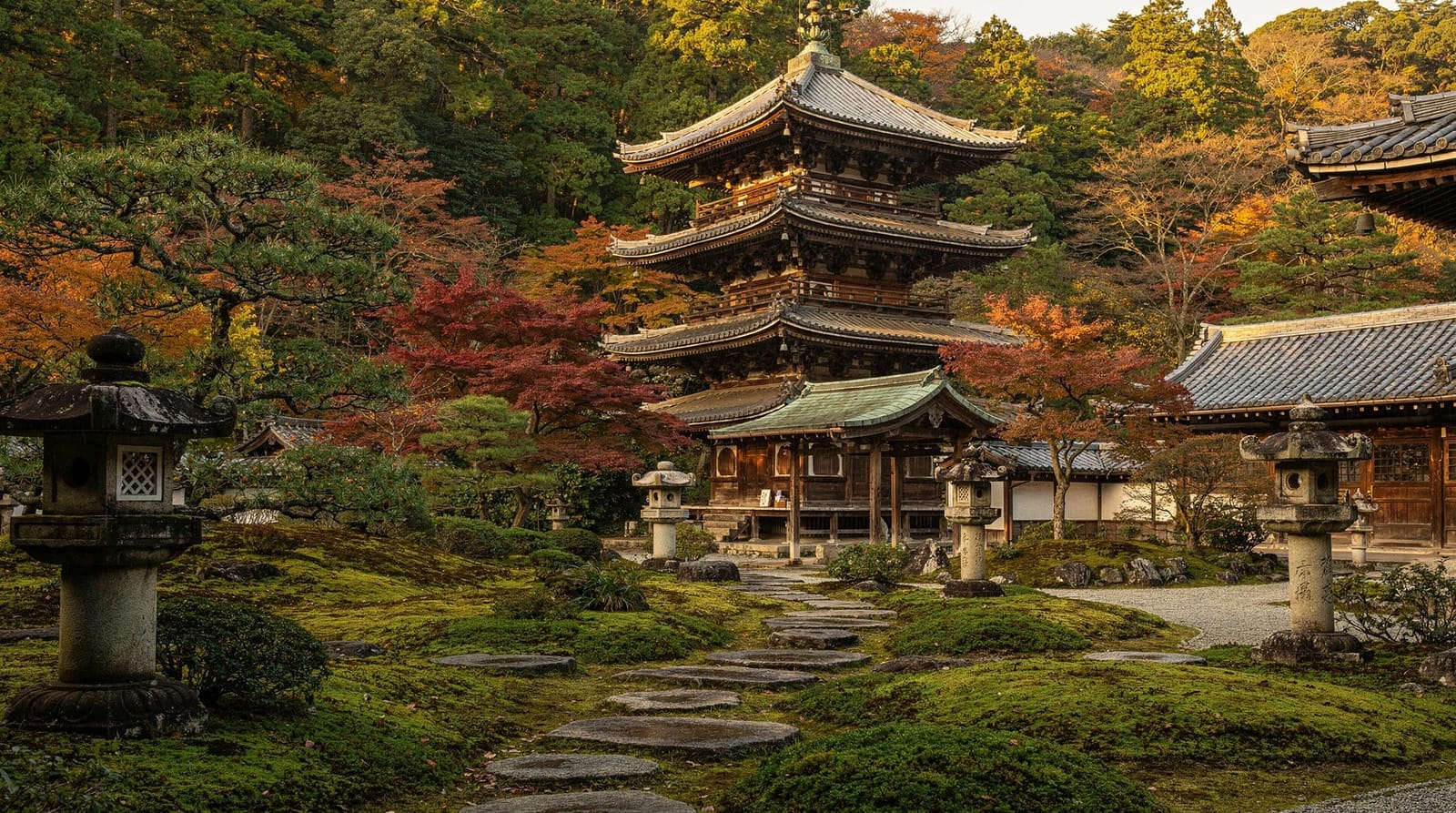
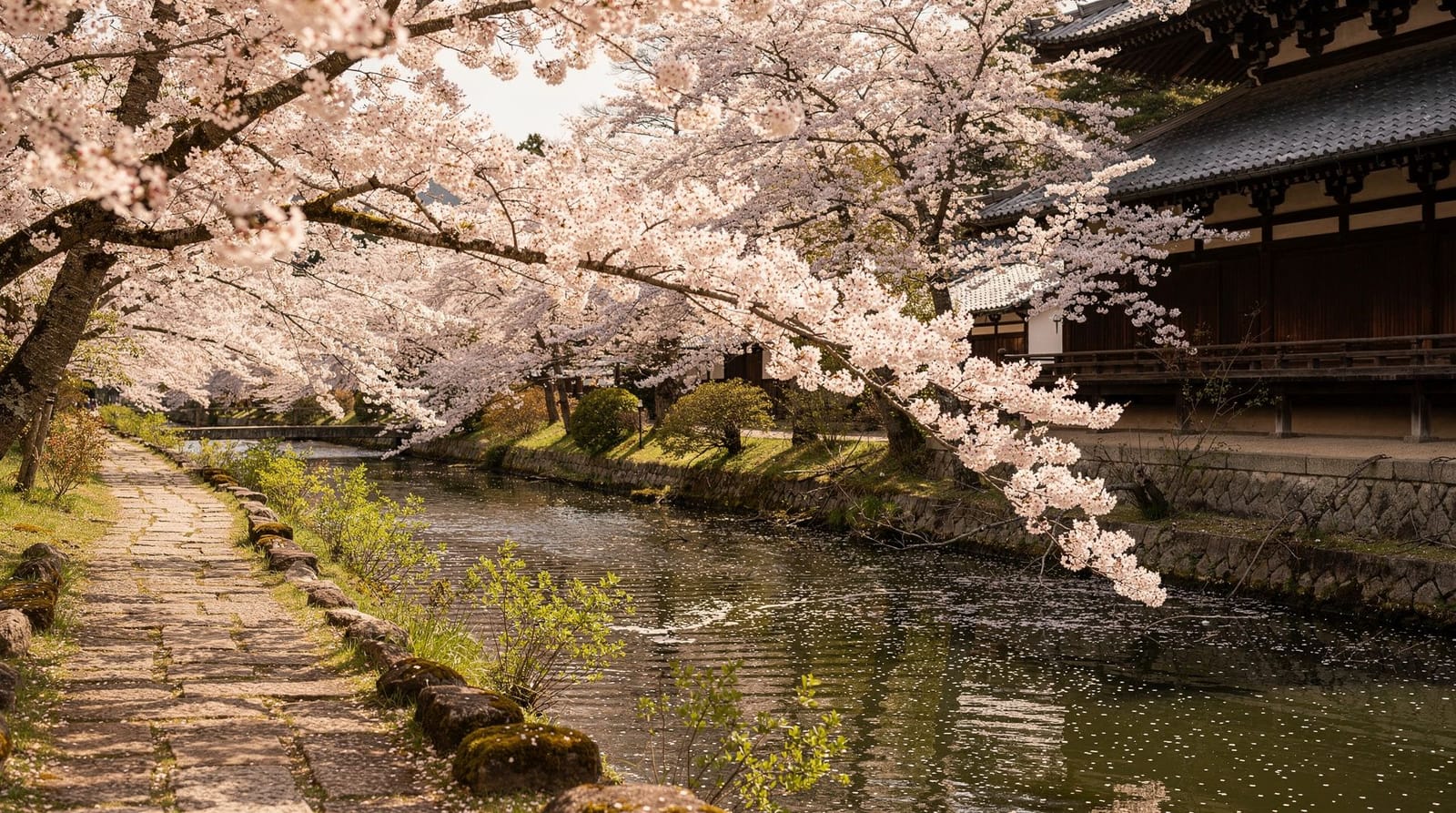
Kyoto has four distinct seasons with hot, humid summers (July-August highs of 33-35°C), cold but rarely snowy winters (December-February lows near freezing), a rainy season (tsuyu) from early June to mid-July, and mild, comfortable spring and autumn shoulder seasons that also bring cherry blossoms (late March-early April) and foliage (mid-November). October-November and March-May offer the most comfortable combination of temperature and rainfall.
Kyoto sits in a basin surrounded by mountains, which sharpens its seasons compared to coastal Japanese cities — summers run hotter and more humid, winters colder, and the shoulder seasons shorter and more distinct. This guide goes month by month through what to actually expect for temperature, rain, and humidity, and what to pack for each, as a weather-focused companion to the broader best time to visit Kyoto guide, which covers crowd and bloom timing in more depth.
| Hottest months | July-August, 33-35°C (91-95°F) |
| Coldest months | January-February, near-freezing lows |
| Rainy season (tsuyu) | Early June to mid-July |
| Typhoon risk | August-October, peaking in September |
| Most comfortable | October and early November |
Month by month at a glance
| Month | Highs | Notes |
|---|---|---|
| Jan-Feb | 8-10°C (46-50°F) | Cold, dry, occasional light snow |
| Mar-Apr | 10-20°C (50-68°F) | Cherry blossom window, unpredictable swings |
| May | 22-25°C (72-77°F) | Comfortable, before humidity builds |
| Jun-Jul | 25-34°C (77-93°F) | Tsuyu rainy season, then rising heat |
| Aug | 33-35°C (91-95°F) | Hottest month, cheapest for hotels |
| Sep | 24-30°C (75-86°F) | Cooling begins, peak typhoon risk |
| Oct-Nov | 15-25°C (59-77°F) | Best weather-to-crowd ratio, peak foliage |
| Dec | 8-12°C (46-54°F) | Cold, clear, quiet outside holidays |
January: cold, quiet, and occasionally snow-dusted
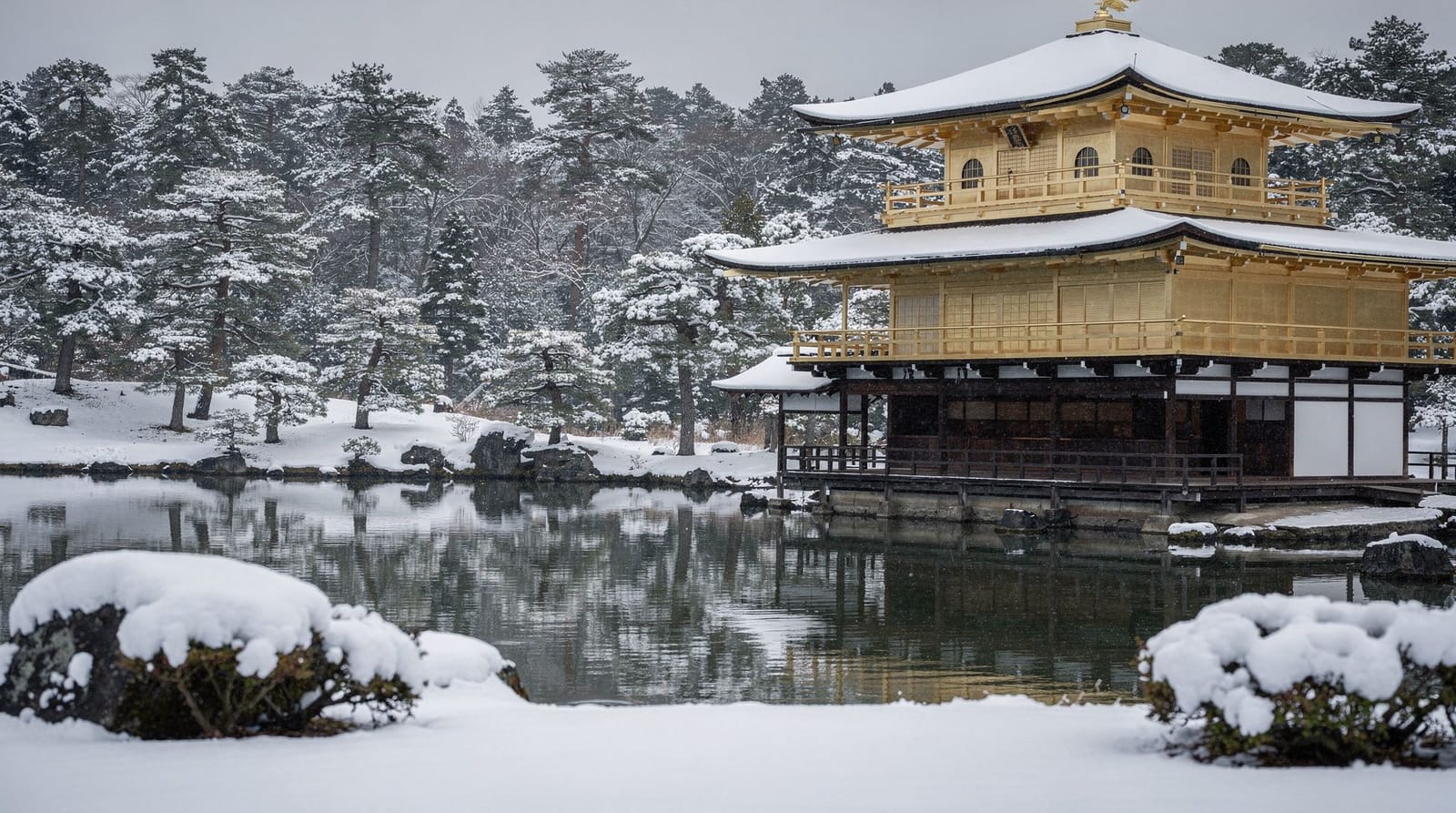
Daytime highs run 8-10°C (46-50°F), overnight lows commonly dip to 1-3°C (34-37°F) and occasionally below freezing. Rainfall is low and skies are frequently clear, though a handful of days bring a light, short-lived snow dusting — genuinely picturesque at temples like Kinkaku-ji but not something to plan around precisely. Pack a proper winter coat, gloves, and layers; indoor heating in temples and older buildings is often minimal, so dressing for the outdoor temperature even indoors is wise.
February: still cold, driest month of the year
Similar to January in temperature (8-10°C highs, near-freezing lows) but statistically the driest month, with the lowest rainfall of the year. Plum blossoms (ume) begin appearing at sites like Kitano Tenmangu in mid-to-late February, offering an earlier, less crowded alternative to the cherry blossom rush. Winter coat and layers remain necessary through the whole month.
March: the shift toward spring, and the sakura gamble begins
Temperatures climb steadily from cold (highs around 10°C early month) to mild (16-18°C by late March), with cherry blossoms typically beginning to open in the last week of the month, though the exact date shifts 5-10 days year to year. Nights remain cool, often 4-8°C, making a light-to-mid-weight jacket necessary even as afternoons turn pleasant. Rain increases modestly from the winter minimum but stays manageable.
April: peak bloom, peak crowds, unpredictable temperature swings
Cherry blossom full bloom (mankai) most often lands in the first week of April, with highs reaching a comfortable 18-20°C by mid-month, though a cold snap dropping temperatures 5-8°C for a day or two isn’t unusual even during peak sakura season. Rain is moderate. Layering remains the safest packing strategy — a warm day can follow a genuinely cold one with little warning during this transitional month.
May: consistently comfortable, before the humidity arrives
Highs of 22-25°C, moderate humidity still building rather than oppressive, and relatively low rainfall make May one of Kyoto’s most comfortable months overall, arriving after cherry blossom crowds thin but before tsuyu rain and summer heat set in. Light layers suffice; evenings can still call for a light jacket early in the month.
June: the tsuyu rainy season begins
Tsuyu typically starts in early June, bringing Kyoto’s highest rainfall of the year — frequent, often heavy but short downpours rather than continuous all-day rain, combined with rising humidity and highs of 25-28°C. A compact, sturdy umbrella is essential; many visitors underestimate how quickly a tsuyu downpour arrives. Moss gardens and temple grounds like Saiho-ji look genuinely their best during this wet period, and hotel rates and crowd levels both dip compared to spring.
July: rainy season ends, heat and humidity take over
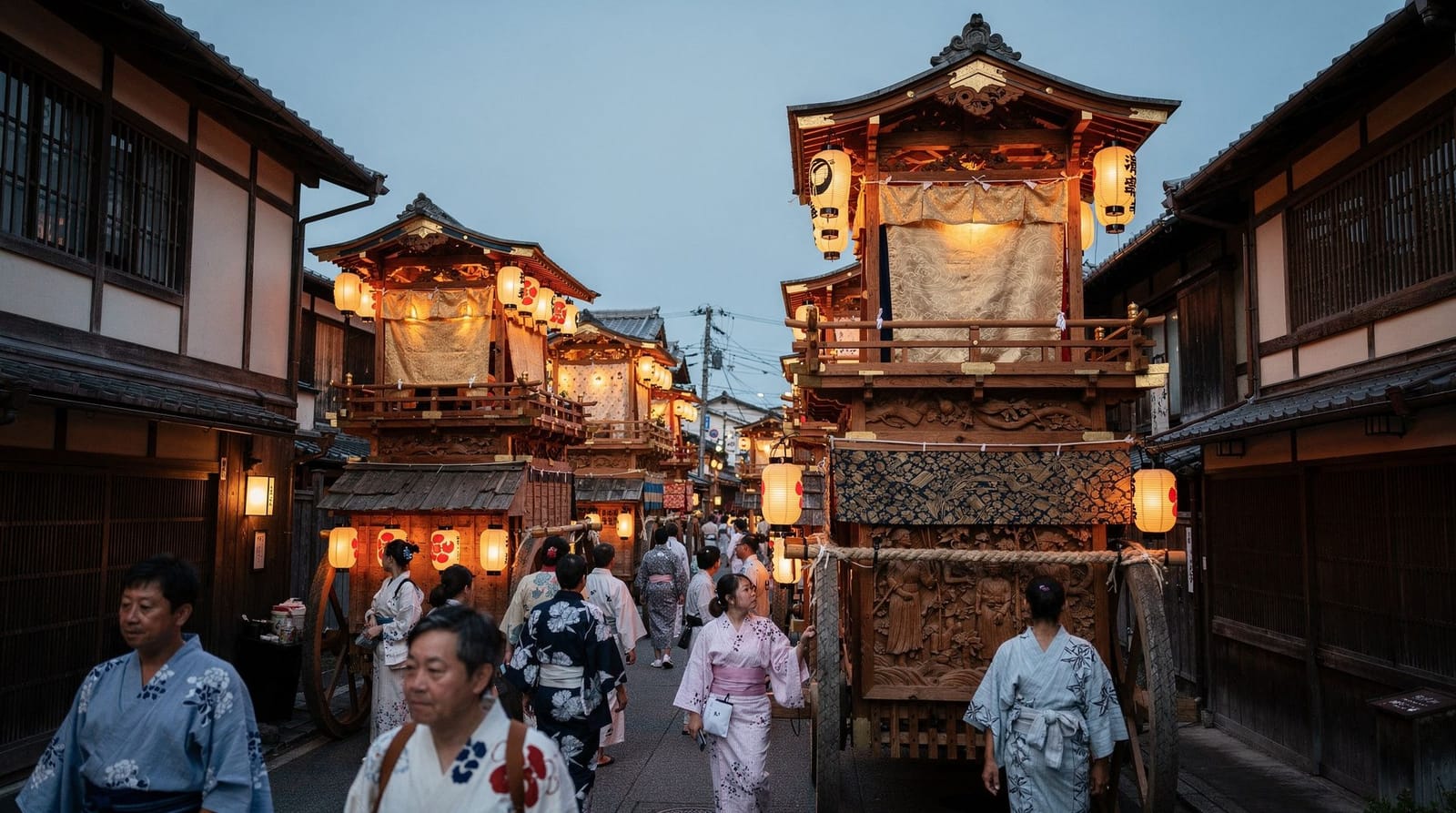
Tsuyu typically ends in the first two to three weeks of July, after which temperatures climb sharply — highs of 31-34°C with high humidity that makes conditions feel hotter than the number suggests. Early morning sightseeing (before 8-9am) becomes far more comfortable than midday. Lightweight, breathable clothing, a hat, and carrying water throughout the day are essential; a change of shirt for midday humidity is a common local habit worth adopting.
Japan/Asia eSIM roaming data plan — useful for checking real-time weather and train delay alerts during tsuyu or typhoon-adjacent travelAugust: the year’s hottest month
Highs regularly hit 33-35°C (91-95°F) with humidity that makes full days of outdoor temple walking genuinely demanding. Obon (mid-August), a major domestic travel holiday, adds crowds on top of the heat. This is also Kyoto’s cheapest and least crowded season for hotels and daytime sightseeing outside the Obon week itself — a workable trade for heat-tolerant or budget-focused travelers who front-load sightseeing into early mornings.
September: cooling begins, typhoon risk peaks
Temperatures start easing from August’s peak but remain warm and humid through most of the month, with highs around 28-30°C early on, dropping toward 24-26°C by late September. September is statistically Kyoto’s peak month for typhoon risk, though most years bring only glancing rain and wind rather than a trip-disrupting event — worth checking forecasts in the week before a September trip and building in a day of schedule flexibility.
October: consistently one of the best months
Highs of 22-25°C, low humidity, and minimal rainfall make October one of Kyoto’s most comfortable and reliable months, with autumn foliage not yet at its peak (so crowds remain thinner than mid-November) but pleasant temperatures throughout. Light layers work well for most of the month, with a jacket useful by late October evenings.
November: peak foliage, cold mornings, comfortable afternoons
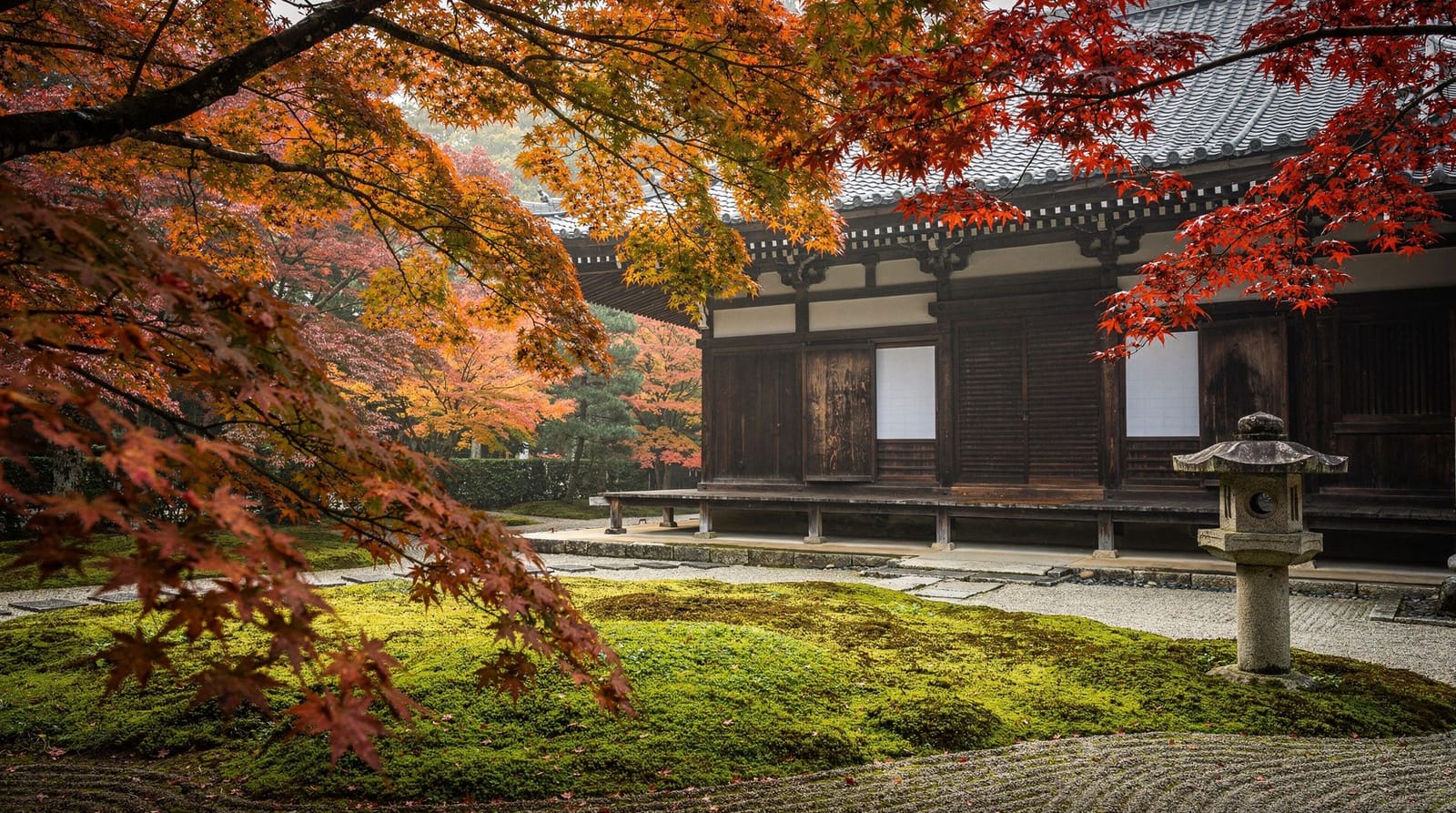
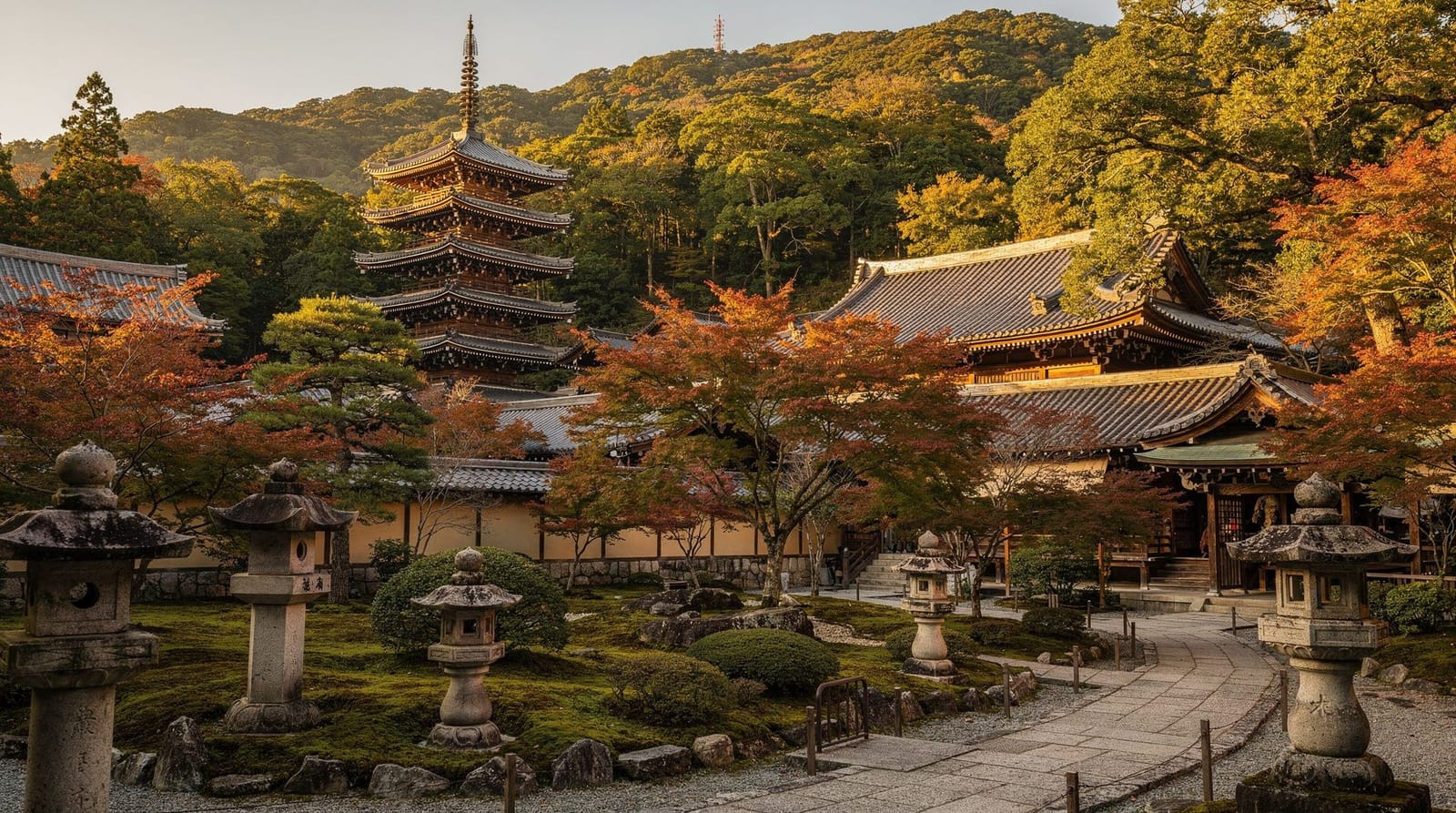
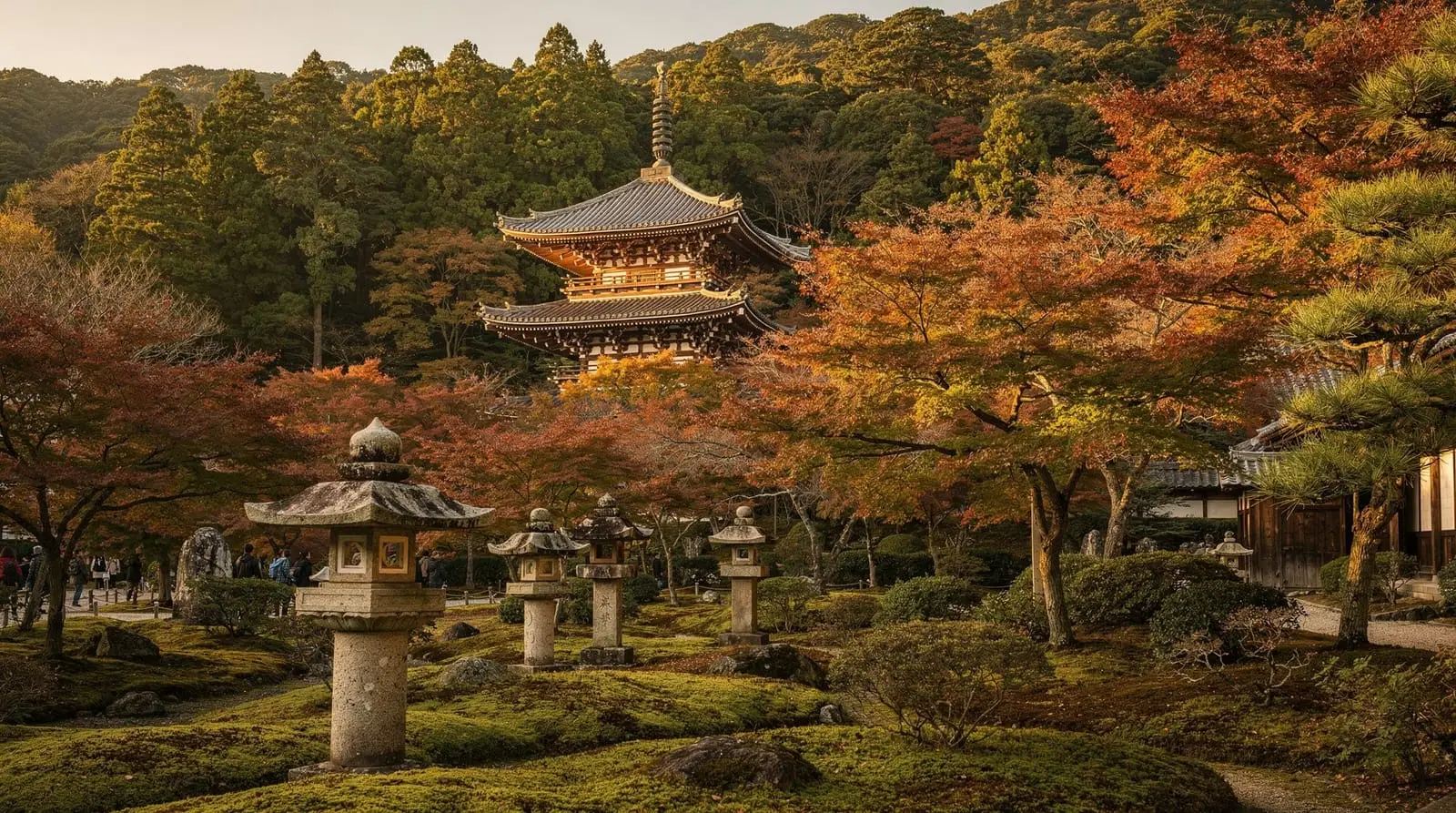
Peak autumn color typically falls in the second half of November, with highs of 15-18°C by mid-month dropping toward 10-12°C by month’s end, and morning temperatures often 5-8°C — cold enough to want a proper jacket for early starts. Rainfall is low. This is one of Kyoto’s most beautiful and most crowded windows simultaneously, so see the avoiding crowds in Kyoto guide for timing strategies specific to foliage season.
December: cold, clear, and quiet outside the holidays
Highs drop to 10-12°C early in the month, falling toward 8-9°C by late December, with overnight lows near freezing. Rainfall is low and skies are frequently clear. Crowds and prices dip meaningfully after early December (once foliage season ends) until a brief spike around New Year, when domestic travel picks up again. A winter coat and layers are necessary throughout.
Why Kyoto’s basin location intensifies its seasons
Kyoto sits in a valley basin ringed by mountains on three sides, a geography that traps both summer heat and winter cold more than coastal Japanese cities like Osaka or Tokyo experience at similar latitudes. Summer humidity, in particular, tends to sit heavier in Kyoto’s basin air than in Osaka just 40km away, which is part of why locals and repeat visitors alike describe Kyoto summers as noticeably more oppressive than the raw temperature numbers suggest.
The same basin effect works in Kyoto’s favor in autumn and winter, producing the crisp, still, high-contrast light that makes the city’s autumn foliage and occasional snow scenes photograph so well — the same lack of coastal wind that intensifies summer humidity also produces calmer, clearer conditions in the cooler months.
Ranking the months by comfort, not just beauty
If weather comfort alone — not blossom or foliage timing — is the deciding factor, October ranks first, followed closely by November (before its cold mornings fully set in) and May. April and early June are workable but carry either cherry-blossom-week unpredictability or the start of tsuyu rain. July and August are the two months requiring the most active heat management, and January and February the two requiring the most active cold management, though neither is severe enough to rule out a visit outright — both are simply the months where clothing and daily pacing (early starts, indoor midday breaks) matter most for comfort.
Checking real-time conditions before and during a trip
The Japan Meteorological Agency publishes short and medium-range forecasts, along with cherry blossom and typhoon tracking specific to the season, and is a more reliable source than generic international weather apps for Japan-specific timing like tsuyu onset or typhoon paths. Train operators also publish real-time delay and suspension information during typhoon or heavy snow events, worth checking the morning of any day trip during September’s typhoon-risk window or after a rare winter snowfall, since regional trains to Nara, Uji, or Osaka can see short suspensions that a Kyoto-only itinerary wouldn’t otherwise notice.
How weather should factor into indoor versus outdoor day planning
Kyoto’s sightseeing is heavily outdoor and walking-based — temple gardens, shrine grounds, and neighborhood streets rather than climate-controlled museum halls — which makes weather a bigger factor in daily comfort here than in a more indoor-heavy city itinerary.
On the hottest summer days, pairing an early outdoor start with an indoor midday stop (a museum, a covered shopping arcade like Nishiki Market, or a long lunch) before resuming outdoor sightseeing in the cooler late afternoon is a pattern many repeat visitors and locals follow rather than pushing through a full day of continuous outdoor walking. On tsuyu’s wettest days, several temple interiors and covered arcades offer a workable indoor-heavy alternative itinerary that doesn’t waste a rainy day, rather than trying to push through an outdoor-heavy plan in a downpour.
Weather’s effect on photography and seasonal color
Kyoto’s clearest, most photogenic light tends to arrive in the cooler, drier months — late autumn through winter’s clear stretches produce sharp, high-contrast conditions well suited to the city’s temple architecture and rock gardens, while the tsuyu rainy season, despite the inconvenience of carrying an umbrella, produces a distinctive soft, saturated light that specifically favors moss gardens like Saiho-ji and Sanzen-in, whose green tones intensify with consistent moisture.
Cherry blossom and autumn foliage photography both benefit from overcast rather than harsh sunny conditions, since diffused light renders the pink and red tones more evenly than the strong shadows a clear, sunny day produces — worth keeping in mind if photography is a trip priority, since a slightly overcast forecast during peak bloom or foliage weeks isn’t the disappointment it might seem.
Weather and transit: what to expect during disruptions
Kyoto’s rail and bus network is generally weather-resilient by international standards, but two scenarios are worth planning around. Heavy tsuyu downpours in June and early July occasionally cause brief local flooding or delays on lower-lying rail lines, usually resolved within hours rather than causing multi-day disruption.
A direct typhoon hit, most likely in September, can prompt planned service suspensions announced a day ahead — Japanese rail operators tend to preemptively suspend service for safety rather than run through severe conditions, which means a typhoon can cancel a day trip to Nara or Osaka even if the worst weather ultimately passes Kyoto itself with only moderate rain. Building a buffer day into any September itinerary that includes day trips, rather than scheduling every day trip back-to-back, absorbs this risk without requiring a different visiting month altogether.
Packing summary by season
Winter (December-February) calls for a proper coat, gloves, and layers, with indoor heating often minimal in older buildings. Spring (March-May) rewards flexible layering given the day-to-day temperature swings, especially through the unpredictable early-April cherry blossom window. Summer (June-August) calls for lightweight, breathable clothing, a hat, sun protection, and a compact umbrella for tsuyu’s sudden downpours in June and early July. Autumn (September-November) starts warm and humid and ends cold, so packing for both ends of that range matters if traveling across the full season.
For which of these months best matches your priorities — blossom timing, foliage, lower crowds, or lower cost — see the best time to visit Kyoto guide, and for season-specific activity guides, the Kyoto in summer, Kyoto in winter, Kyoto in spring, and Kyoto in autumn guides go deeper on what to do in each.