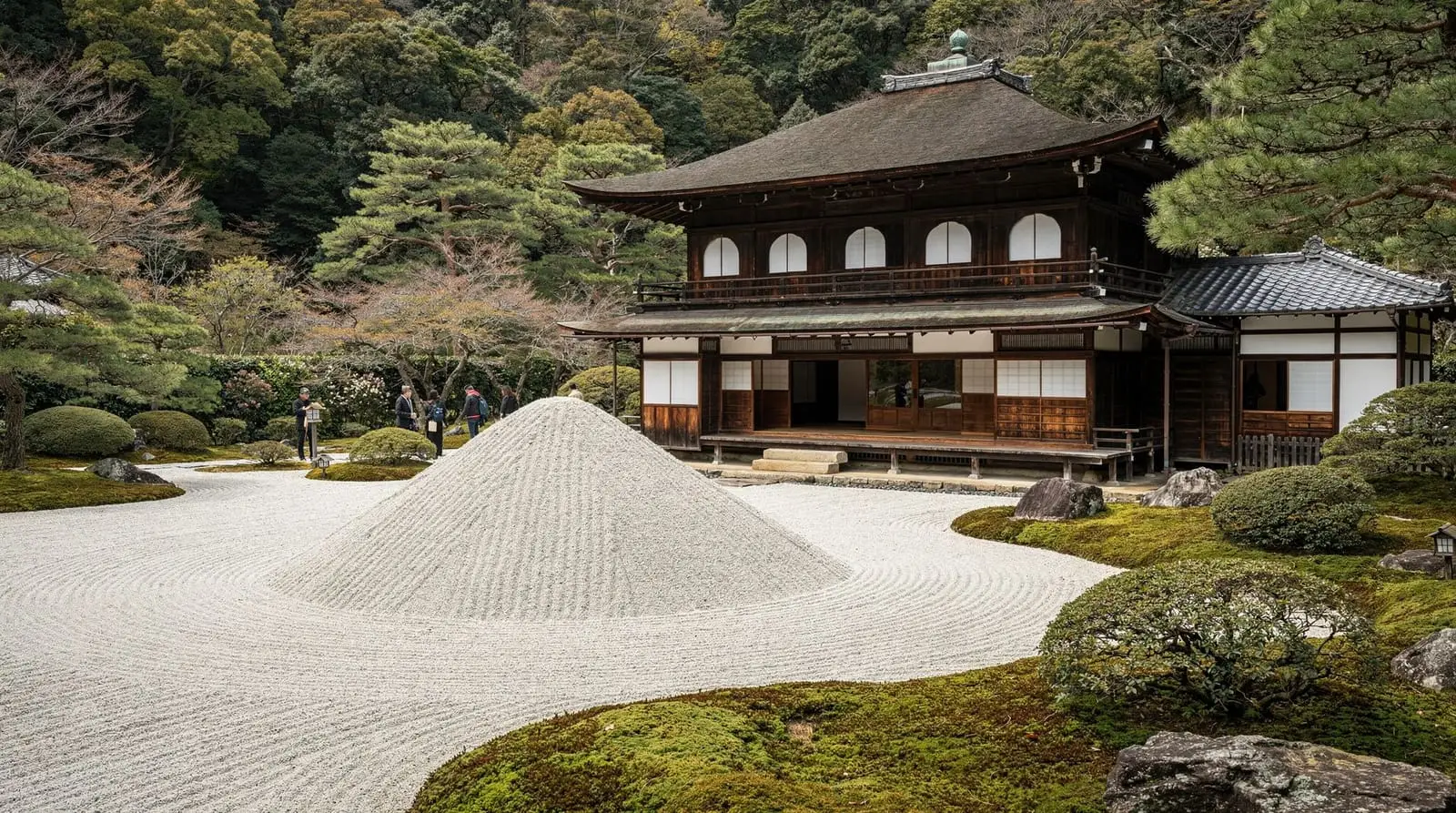
Ginkaku-ji guide — the Silver Pavilion's sand garden and moss
Kyoto: Crowd-Free Tour of Kiyomizu & Ginkaku-ji Temples
Why is Ginkaku-ji called the Silver Pavilion if it isn't covered in silver?
The pavilion was never actually covered in silver leaf — historians generally agree the name is either a later nickname contrasting it with the gold-covered Kinkaku-ji, or refers to how moonlight reflected off its dark lacquered wood. Admission is ¥500, hours are 8:30am-5pm (later in December-February), and the site is best known for its raked-sand Sea of Silver Sand garden rather than the building itself.
| Admission | ¥500 |
| Hours | 8:30am-5pm (9am-4:30pm Dec-Feb) |
| Time needed | 45-60min, plus 45-60min for the Philosopher’s Path |
| Getting there | Bus 100/5 from Kyoto Station, ~35-40min + 10min walk |
| Best time | 8:30am opening |
A pavilion named for silver that was never silver
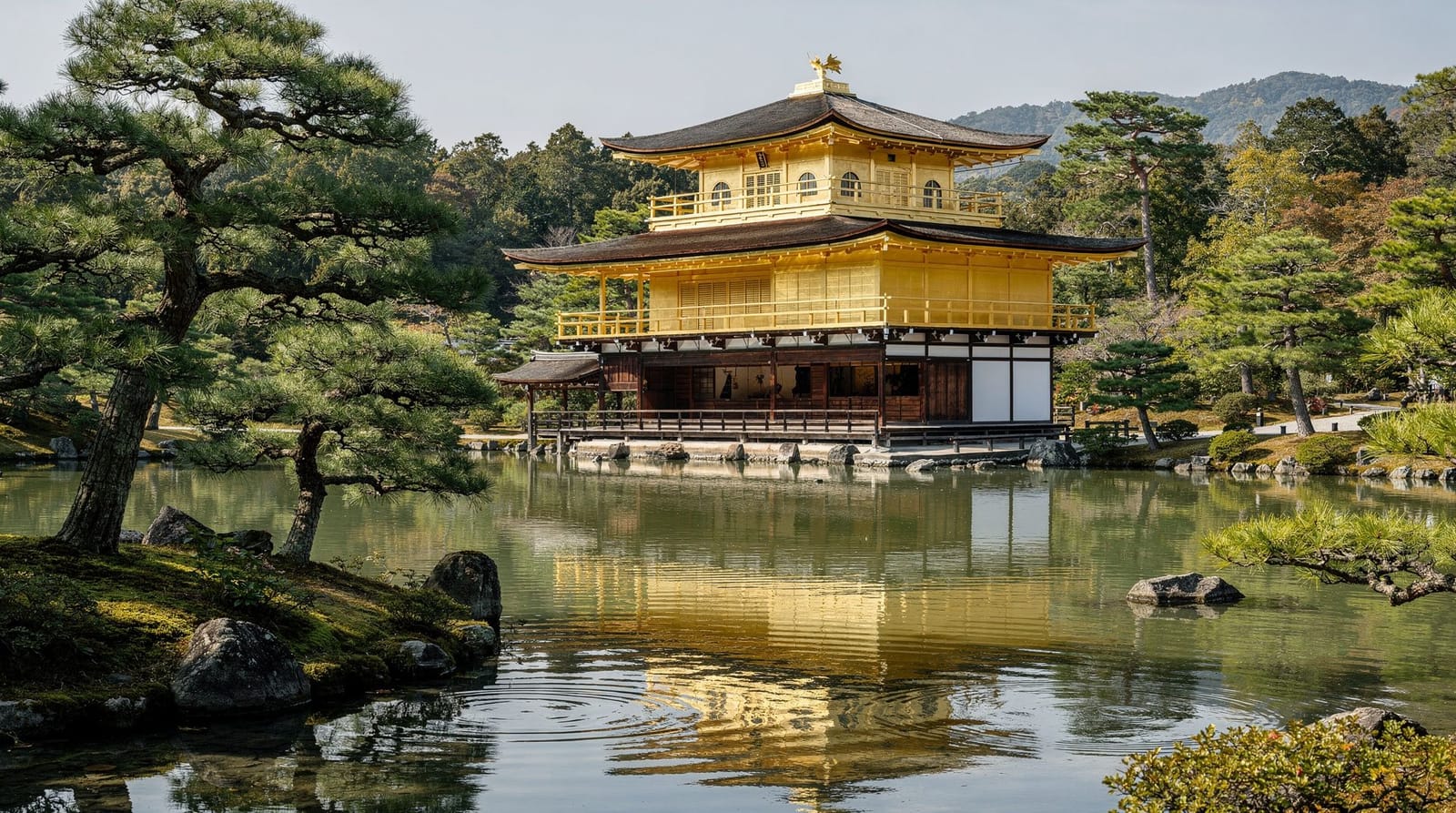
Ginkaku-ji — the Silver Pavilion — is one of Kyoto’s more quietly misleading names: the building has never been covered in silver leaf, and historians aren’t fully agreed on why the name stuck. The leading explanation treats it as a deliberate echo of Kinkaku-ji, the gold-leafed pavilion across the city, built by the same Ashikaga shogunate family two generations earlier; another account holds that moonlight on the dark lacquered wood originally suggested the comparison. Either way, visitors expecting a metallic building are consistently surprised — what draws people here is the garden around it, not the pavilion’s surface.
Built in 1482 as a retirement villa for shogun Ashikaga Yoshimasa, modeled in part on Kinkaku-ji, the site was converted to a Zen temple after his death, following the same pattern as its golden counterpart. It’s part of the Historic Monuments of Ancient Kyoto UNESCO listing, alongside Kinkaku-ji and 15 other sites across the city.
The Sea of Silver Sand and Kogetsudai
The garden’s signature feature sits directly in front of the pavilion: Ginshadan, the Sea of Silver Sand, a flat expanse of white sand raked into precise parallel ridges, paired with Kogetsudai, a cone-shaped sand mound said to represent Mount Fuji or a moon-viewing platform depending on which interpretation you read. Both are maintained daily by the temple’s gardeners and re-raked after rain disturbs the pattern.
Crowd-free tour of Kiyomizu and Ginkaku-ji templesThe sand garden is a dry-landscape (karesansui) design, the same broad tradition as Ryoan-ji’s rock garden across the city, though Ginkaku-ji’s version uses raked sand as its main abstraction rather than arranged stone. Photography of the sand garden is allowed from the designated viewing path, but walking onto the sand itself is not.
Admission, hours, and the winter schedule
Admission is ¥500, paid at the entrance. Hours run 8:30am to 5pm for most of the year, shifting to a slightly shorter 9am-4:30pm schedule from December through February. Unlike Kiyomizu-dera, Ginkaku-ji doesn’t run seasonal evening illumination hours — the grounds close at the same time regardless of season.
The full visit, including the sand garden viewing area and the hillside moss garden above it, takes about 45-60 minutes at an unhurried pace.
The moss garden and hillside viewpoint
Past the sand garden, a path climbs through Ginkaku-ji’s upper grounds, where centuries of moss growth cover the hillside beneath a stand of trees. The path leads to a small viewpoint overlooking the pavilion and, on clear days, out toward the city. This upper section sees noticeably fewer visitors than the flat sand garden area near the entrance, since it requires a short uphill walk that some visitors skip.
The moss is at its most vivid shortly after rain, and particularly during Japan’s early-summer rainy season (tsuyu), which typically runs from mid-June to mid-July — an otherwise unglamorous season for Kyoto sightseeing that happens to suit this specific garden well.
Crowds and timing
Ginkaku-ji is a well-known sight, but it draws a different crowd profile than Kinkaku-ji — more independent travelers arriving on foot via the Philosopher’s Path, fewer large tour buses, since it sits slightly off the most heavily circuited route through the city. Arriving at 8:30am opening still gives the clearest view of the sand garden before day-trippers from the Philosopher’s Path and Higashiyama arrive mid-morning.
Combining Ginkaku-ji with the Philosopher’s Path
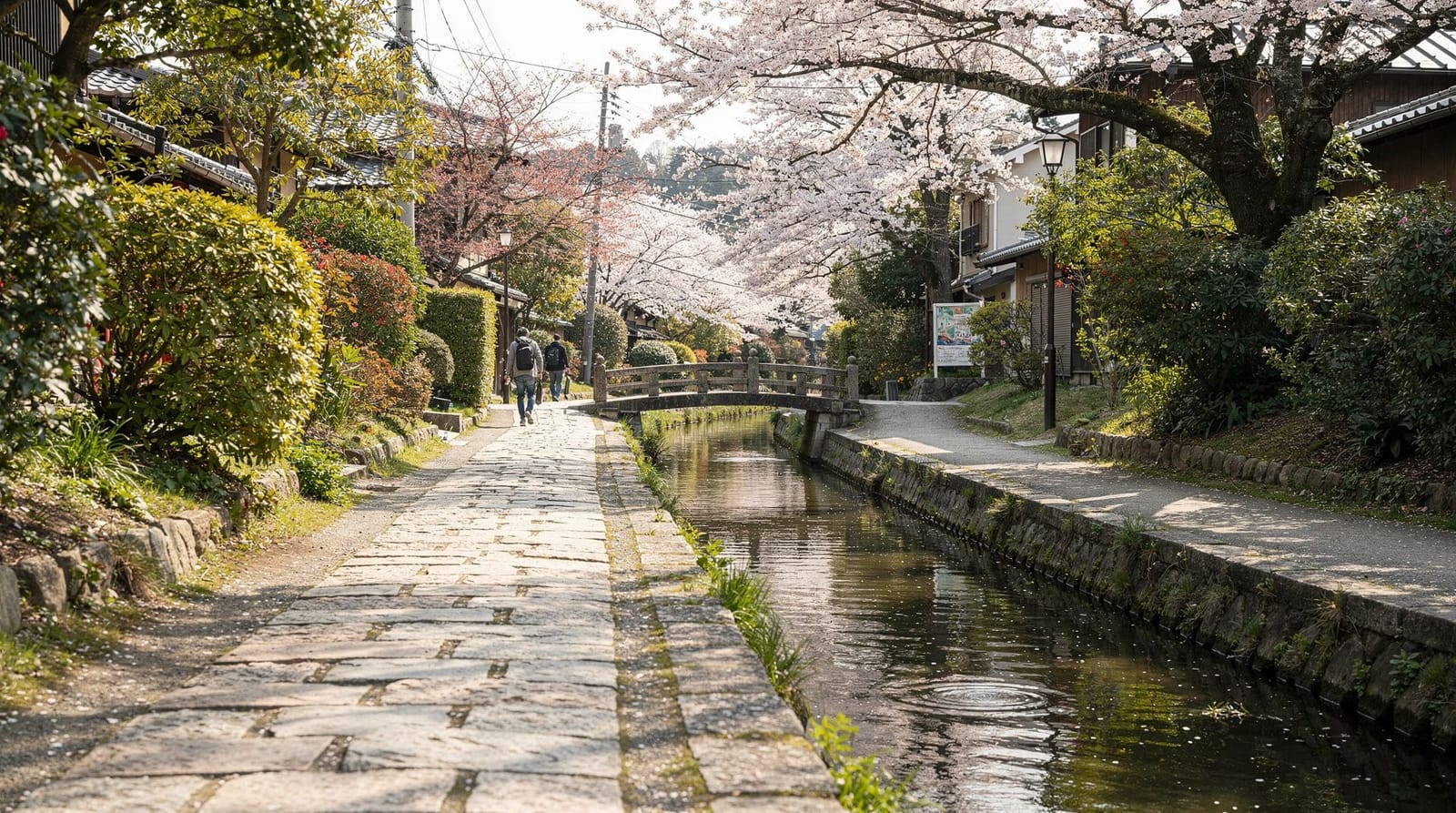
Ginkaku-ji sits directly at the northern end of the Philosopher’s Path, the roughly 2km canal-side walk that continues south to Nanzen-ji, passing Honen-in and Eikan-do along the way. This is the natural pairing for anyone visiting the pavilion — start here, then walk the path south at a relaxed pace, which takes 30-45 minutes end to end without stops.
Ginkaku-ji and Philosopher’s Path e-bike tourSee the Philosopher’s Path destination guide for the full route, including Eikan-do’s autumn foliage and Nanzen-ji’s aqueduct at the southern end. Cherry blossom season, typically late March into early April, is when the path itself is busiest, since the canal is lined with cherry trees for its full length.
Getting there from central Kyoto
City bus 100 or 5 from Kyoto Station runs to the Ginkakuji-michi stop in roughly 35-40 minutes; from there it’s a 10-minute walk uphill along a lane of small shops and cafes to the temple entrance. Coming from Higashiyama or Gion, several buses along Higashioji-dori reach the same stop in 15-20 minutes, making Ginkaku-ji a reasonable add-on to a Higashiyama morning rather than a separate half-day trip.
Pairing Ginkaku-ji with the rest of eastern Kyoto
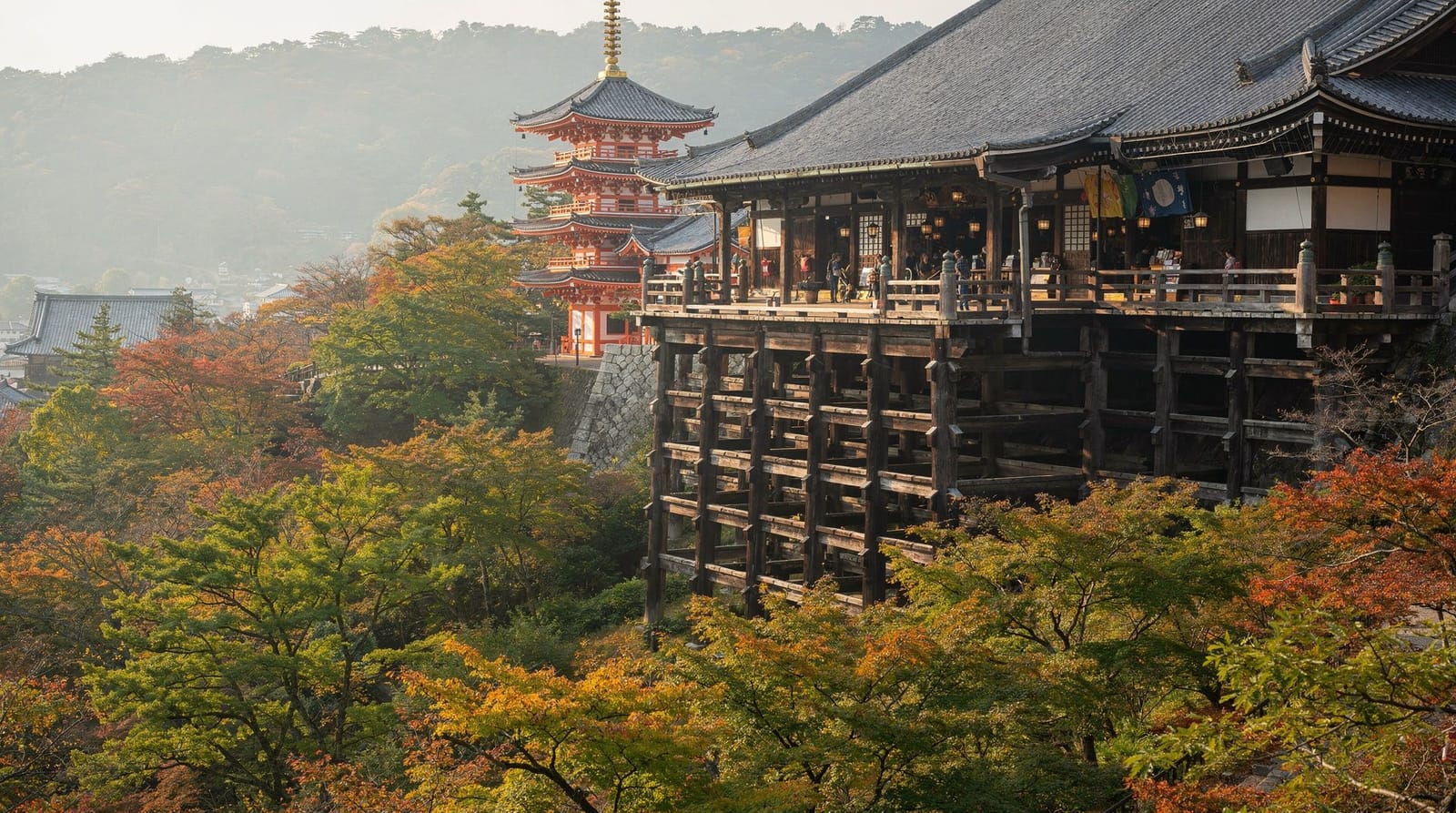
If you’re building a fuller day around eastern Kyoto’s temples, the Kiyomizu-dera guide covers the district’s other major wooden-stage temple, about 30-40 minutes away by bus or a longer walk south through Higashiyama. For a comparison with Kyoto’s other major dry-garden site, see the Ryoan-ji guide, where rock rather than sand forms the central design.
A brief history: from retirement villa to temple, again
Ginkaku-ji follows almost exactly the same origin pattern as Kinkaku-ji, built two generations earlier by the same Ashikaga shogunate family. Shogun Ashikaga Yoshimasa, grandson of Kinkaku-ji’s builder Yoshimitsu, constructed the villa in 1482 as a retreat during his retirement, modeling it in part on his grandfather’s earlier estate. After Yoshimasa’s death in 1490, the villa was converted into a Zen temple, following the same conversion pattern as its golden counterpart.
Yoshimasa’s era at the villa is historically significant beyond the building itself — it’s associated with the flowering of Higashiyama culture, an aesthetic movement that shaped much of what’s now considered classical Japanese taste: the tea ceremony, ink painting, Noh theater, and flower arranging all developed or matured significantly during this period, much of it connected to gatherings at this exact site.
Unlike Kinkaku-ji, Ginkaku-ji was never destroyed by fire or arson, and several of its original 15th-century structures, including the Kannon-den (the pavilion itself) and the Togudo hall, still stand — making Ginkaku-ji, somewhat counterintuitively given its “silver” name confusion, the more architecturally original of the two pavilion temples.
Why the silver leaf was never applied
Historical records suggest Yoshimasa may have originally intended to cover the pavilion in silver leaf to complement his grandfather’s gold pavilion, but funding shortfalls during a turbulent period of civil conflict (the Onin War, which broke out in 1467) meant the silver covering was never completed. Modern research has cast some doubt on whether silver leaf was ever seriously planned at all, versus the name simply developing later as a poetic contrast to Kinkaku-ji regardless of any original construction intent. Either explanation lands at the same practical point for visitors: the building is, and has always been, dark wood and lacquer rather than metal.
What to wear and practical tips
The main garden path, including the sand garden viewing area, is flat and well-maintained, but the climb to the hillside moss garden and viewpoint involves stone steps and some uneven ground — comfortable walking shoes are worth it if you plan to do the full loop rather than just the ground-floor sand garden. The path can be slippery after rain, particularly on the moss-adjacent sections where damp conditions are part of what keeps the moss so vivid.
There are no restrooms within the garden loop itself; facilities are located near the entrance before the ticket gate. A small shop near the exit sells temple charms, matcha, and Ginkaku-ji-specific souvenirs at prices in line with other major Kyoto temple gift shops.
Common mistakes first-time visitors make
The most common mistake is arriving expecting a literal silver building and feeling let down by the plain wood exterior — knowing the name’s actual history beforehand changes the visit from a mild disappointment into an interesting historical footnote. A second common mistake is skipping the hillside moss garden above the sand garden, since it requires a short uphill detour that a meaningful share of visitors bypass in favor of heading straight to the Philosopher’s Path — the upper garden adds real value and takes only 15-20 extra minutes.
A third mistake, more about the surrounding area than the temple itself, is assuming the Philosopher’s Path will be a solitary walk regardless of season — during cherry blossom weeks in late March and early April, the path is one of the most crowded walking routes in eastern Kyoto, not the quiet retreat its reputation suggests outside that specific window.
Nearby food and shops
The lane leading up to Ginkaku-ji from the Ginkakuji-michi bus stop is lined with small shops and cafes selling matcha sweets, yatsuhashi, and light meals, generally priced for the steady stream of visitors walking to and from the temple. A short walk south along the start of the Philosopher’s Path adds a few more independent cafes with outdoor seating overlooking the canal — a reasonable stop for coffee or a light lunch before continuing the walk toward Nanzen-ji.
How Ginkaku-ji compares to Kinkaku-ji
Both pavilion temples share a near-identical origin story — a shogun’s retirement villa converted posthumously into a Zen temple — but the visitor experience differs meaningfully. Kinkaku-ji is a single striking viewpoint completed in well under an hour; Ginkaku-ji rewards a slower visit, with the sand garden, the hillside moss walk, and the direct connection to the Philosopher’s Path adding up to a longer, more varied stop. If you can only visit one, Kinkaku-ji delivers the more immediately recognizable image; Ginkaku-ji delivers more to actually do once you’re there.
Accessibility
The lower sand garden section of Ginkaku-ji is on relatively flat, paved ground and manageable for most visitors with limited mobility. The upper moss garden and hillside viewpoint, however, involve stone steps and a genuine incline with no accessible alternative route — visitors with significant mobility limitations should plan to experience the sand garden and pavilion exterior rather than attempting the full hillside loop. The walk up to the temple from the Ginkakuji-michi bus stop is a gentle, mostly flat incline along a paved shopping lane, more manageable than the approach to Kiyomizu-dera in Higashiyama.
Seasonal notes: cherry blossoms, summer moss, and quiet winter
Cherry blossom season, typically late March into early April, brings blossoms along both the temple grounds and the adjoining Philosopher’s Path, making this one of the most crowded windows of the year for the combined visit. Early summer, particularly during Japan’s rainy season (tsuyu, mid-June to mid-July), is when the hillside moss garden looks its best — an otherwise unpopular season for Kyoto sightseeing that specifically rewards a Ginkaku-ji visit.
Autumn, especially November, brings foliage color to the Philosopher’s Path’s canal-side maples, drawing crowds that rival cherry blossom season, particularly around Eikan-do further south on the path. Winter is the quietest season at Ginkaku-ji, with the sand garden’s white gravel taking on a different character against bare trees and, occasionally, a light dusting of snow.
Budgeting your time: temple plus path
A focused visit to just the sand garden and pavilion exterior takes about 30 minutes. Adding the hillside moss garden and viewpoint brings the total to 45-60 minutes. If you’re continuing onto the full Philosopher’s Path afterward — the natural next step from Ginkaku-ji’s location at its northern end — budget another 45-60 minutes for an unhurried walk to Nanzen-ji, plus additional time for any of the smaller temples along the way, including Honen-in and Eikan-do, each worth 20-30 minutes if you stop.
Photography tips
The sand garden’s raked patterns photograph best in soft, even light rather than harsh midday sun, which can wash out the subtle texture created by the raking. Overcast mornings, common in Kyoto outside the driest summer stretches, often produce better images of Ginshadan than a bright clear day. Photography from the designated viewing path is permitted throughout the garden, but walking onto the sand itself is prohibited, and staff do enforce this if visitors step over the boundary rope for a closer shot.
The hillside moss garden’s best photo opportunities come after rain, when the moss’s color deepens noticeably — a useful reason to visit on a day that might otherwise seem like bad timing for sightseeing. From the upper viewpoint, a partial view of the pavilion roof through the trees offers a different angle than the standard ground-level shot most visitors take near the entrance.
Getting oriented before the Philosopher’s Path
Because Ginkaku-ji functions as the effective starting gate for the Philosopher’s Path, it’s worth a quick look at a map before setting out — the path itself is unmarked in long stretches beyond simple signage, running alongside the Lake Biwa Canal with occasional side streets leading to Honen-in, a quiet temple worth a short detour, and eventually Eikan-do and Nanzen-ji at the southern end. Public restrooms are limited directly on the path itself, so using the facilities at Ginkaku-ji before setting out is a reasonable precaution, particularly for anyone planning the full walk to Nanzen-ji.
Nanzen-ji: the path’s southern anchor
At the far end of the Philosopher’s Path sits Nanzen-ji, one of the most important Zen temples in Japan and, historically, the highest-ranked temple in the entire Rinzai Zen school’s temple system. Its grounds are free to enter, though the Sanmon gate (climbable for a view over the approach) and the Hojo garden each charge a separate ¥600 admission. A distinctive brick aqueduct, built in the Meiji era to carry water from Lake Biwa into Kyoto, cuts directly through the temple grounds — an unusual piece of 19th-century infrastructure sitting incongruously among centuries-old Zen architecture, and one of the more frequently photographed details along the entire path.
Pairing Ginkaku-ji with a walk to Nanzen-ji makes a natural half-day loop through eastern Kyoto’s temple and garden landscape, distinct in character from the wooden-stage architecture of Kiyomizu-dera further south in Higashiyama.
A quiet detour: Honen-in
Roughly a third of the way along the Philosopher’s Path from Ginkaku-ji, a small side path leads to Honen-in, a modest temple with a thatched gate and two raised sand mounds flanking the entrance path, raked into seasonal patterns that change several times a year. It’s free to enter the outer grounds (the main hall opens to the public only during limited spring and autumn periods), and it draws a fraction of the foot traffic passing along the main canal path just outside — a genuinely quiet stop for anyone who wants a break from the more visited temples on either end of the walk.
Comparing Ginkaku-ji’s garden tradition to Kyoto’s dry rock gardens
Ginkaku-ji’s Sea of Silver Sand is a karesansui (dry landscape) feature, the same broad design tradition behind Ryoan-ji’s famous rock garden, but the two use different materials to the same abstract end — raked sand and a sculpted cone here, arranged stone at Ryoan-ji.
Visitors interested in the wider tradition rather than just this one site can compare the two directly in the best zen gardens in Kyoto guide, which also covers Daitoku-ji’s subtemples and Tofuku-ji’s modernist 1939 reinterpretation of the same vocabulary. Ginkaku-ji’s version is unusual among the group for combining the flat sand feature with a genuine hillside moss garden in the same visit, giving it a broader range of textures than most single-garden temple stops in the city.
Nearby ticket combinations worth knowing
There’s no official combined ticket bundling Ginkaku-ji with other Higashiyama-area sights, but the geography makes a few natural pairings worth planning around rather than buying separately on the fly. Nanzen-ji’s Sanmon gate and Hojo garden (¥600 combined, separate from the free main grounds) sit at the Philosopher’s Path’s southern end, making a Ginkaku-ji-to-Nanzen-ji walk a two-ticket, one-walk day covering two of eastern Kyoto’s most significant Zen sites.
Eikan-do, roughly midway along the path, charges its own separate admission (higher during November’s illumination season) and is worth budgeting for if autumn foliage timing lines up with the visit. None of these tickets can be bought in advance bundled together — each temple sells its own admission at its own gate — but knowing the rough combined cost (¥1,600-2,000 for all three across a single day) helps with budgeting before setting out.
Frequently asked questions about Ginkaku-ji guide — the Silver Pavilion's sand garden and moss
Is Ginkaku-ji actually covered in silver?
What is the Sea of Silver Sand?
How much does Ginkaku-ji admission cost and what are the hours?
Is Ginkaku-ji less crowded than Kinkaku-ji?
Can you combine Ginkaku-ji with the Philosopher's Path?
What is the moss garden at Ginkaku-ji known for?
How do you get to Ginkaku-ji from central Kyoto?
Top experiences
Bookable activities with verified prices and instant confirmation on GetYourGuide.