Cycling in Kyoto and beyond — routes to Arashiyama and Lake Biwa
Best of Kyoto: Ginkakuji & Path of Philosophy E-Bike Tour
Can I cycle from Kyoto to Lake Biwa?
Yes, though most visitors take a train partway rather than cycling the full distance from central Kyoto, which involves a real climb over the mountains dividing the two prefectures. A common approach is training or e-biking to Otsu on Lake Biwa's shore, then cycling the lake's flatter cycling path (part of the longer Biwaichi route circling the entire lake) from there.
| City rental | ~¥1,000-4,000/day, standard or e-bike |
| Guided tours | ¥6,000-12,000+ for a few hours |
| Lake Biwa (Otsu shore) | Half-day realistic; full Biwaichi loop 1-2 days |
| Uji | Flatter alternative, 20-30min by train |
| Fitness needed | Minimal in city; real climbs toward the hills/Biwa |
Cycling as a way to see more of the Kyoto region, not just the city
There’s a separate guide on this site for guided bike tours within Kyoto itself — see the Kyoto bike tours guide for that. This guide takes a broader view: cycling as a way to cover ground the standard temple-hopping itinerary doesn’t reach, from the eastern hills around the Philosopher’s Path to genuine day-trip distances out toward Lake Biwa, Japan’s largest lake, sitting just over the mountains east of the city.
The throughline is the same as within the city — Kyoto and the surrounding region reward cycling because distances that feel large on a train map are often very manageable by bike, and because some of the most rewarding stretches (canal paths, lakeside roads, forest approaches) simply don’t have direct bus or train service.
Starting point: the Kamo River path
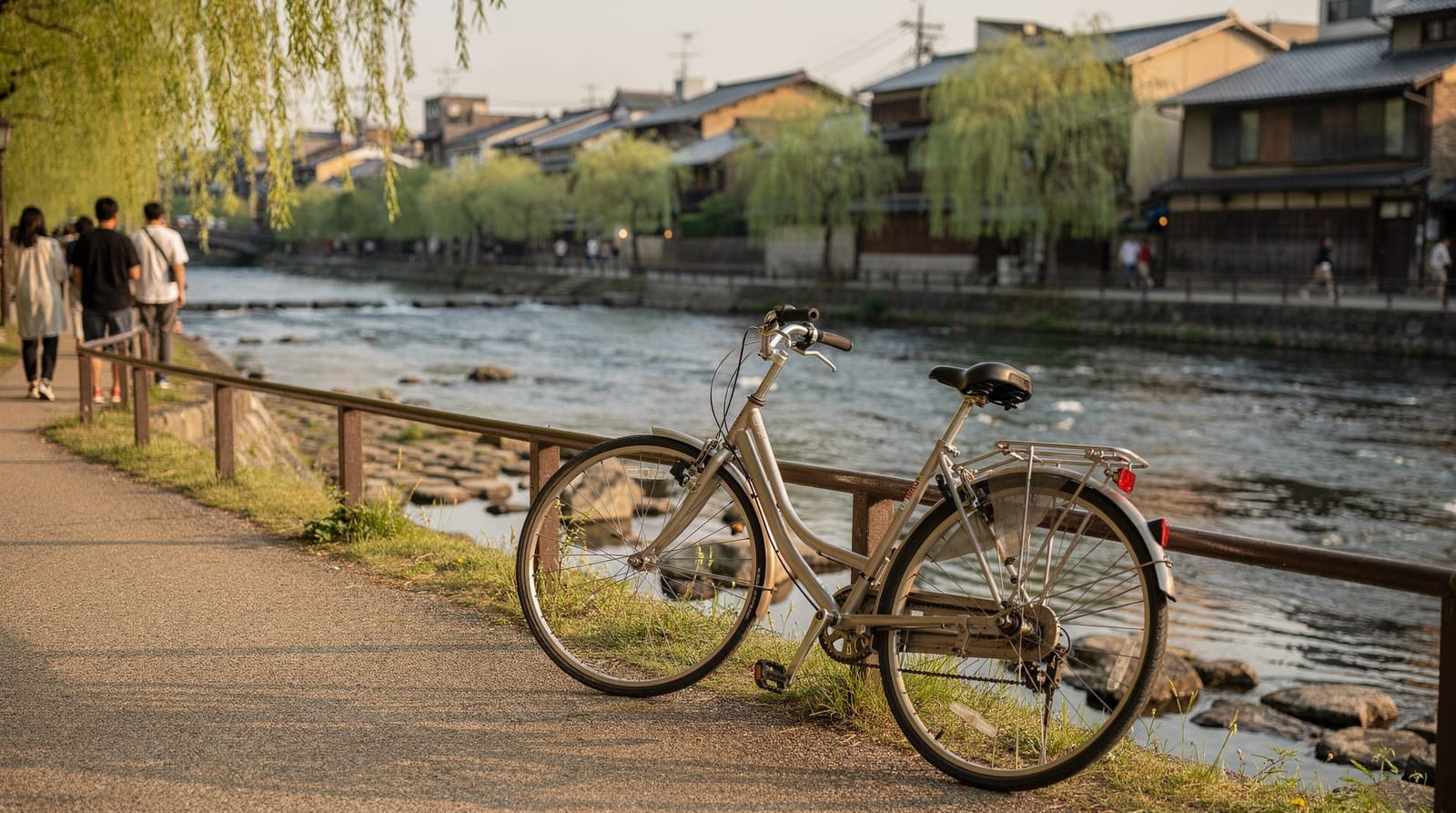
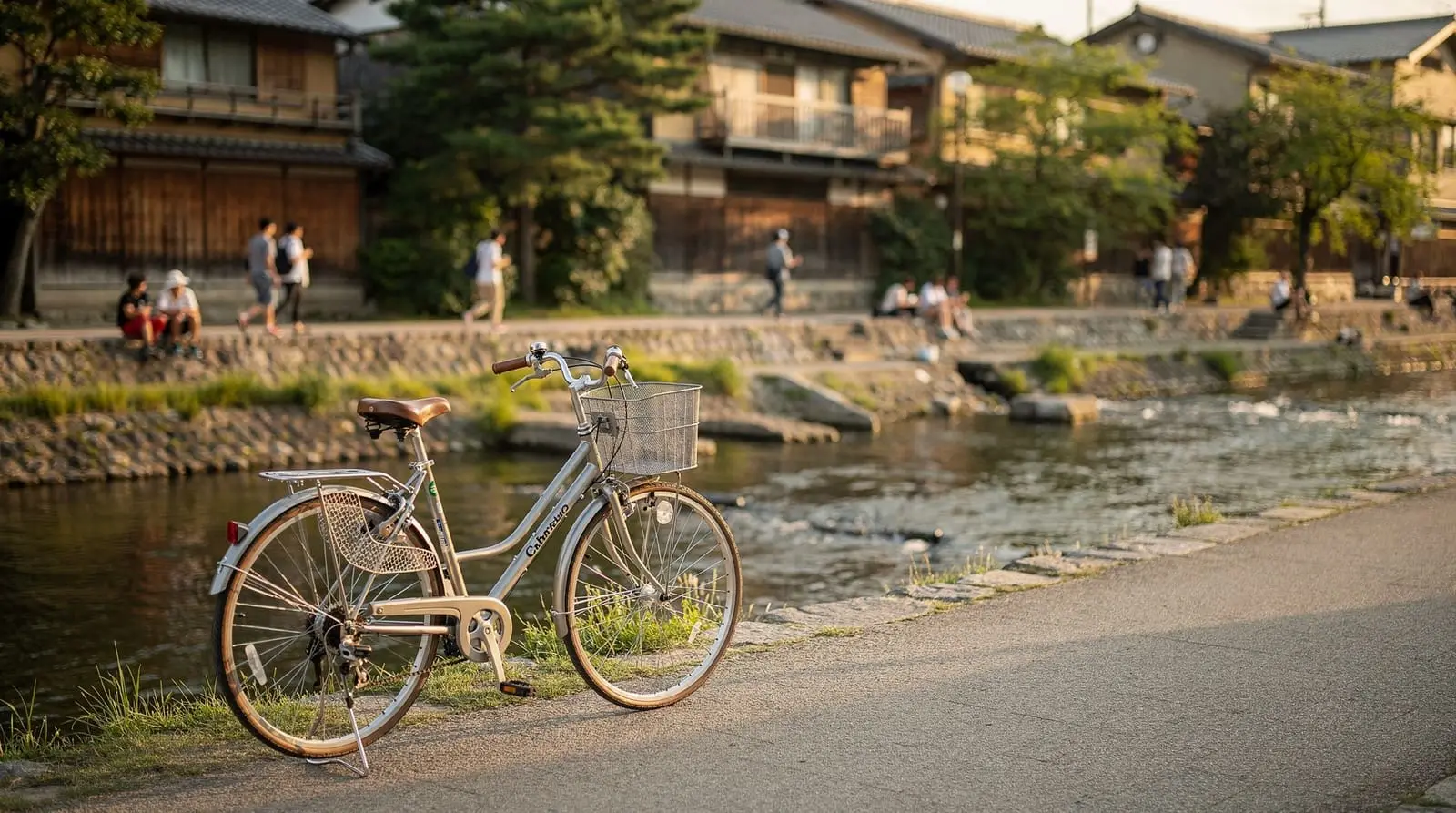
Any cycling day in Kyoto worth planning starts with the same free, reliable route — the Kamo River path, a dedicated riverside cycling and walking corridor running roughly north-south through the city center, away from car traffic. It’s flat, well-maintained, and a genuinely pleasant stretch to ride even without a specific destination, connecting reasonably close to downtown Kyoto and the approach toward Ginkaku-ji in the east. Most longer routes described below start by picking up this path before branching off toward their actual destination.
Ginkaku-ji and the Philosopher’s Path by e-bike
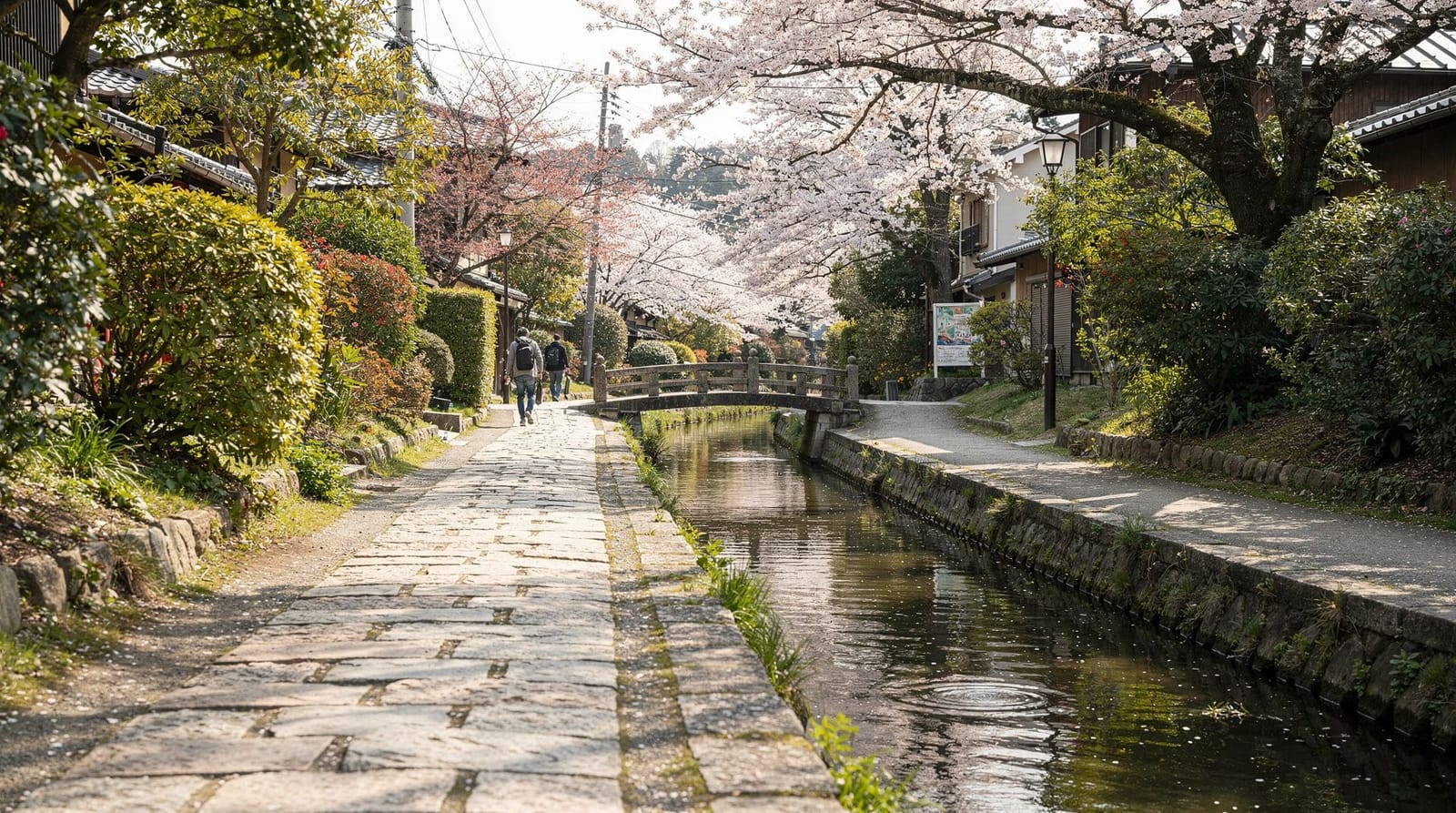
The Philosopher’s Path — a roughly 2km canal-side walking route connecting Ginkaku-ji to Nanzen-ji, lined with cherry trees that made it famous during blossom season — sits in Kyoto’s eastern hills, reachable from central Kyoto by a ride involving gentle but sustained elevation gain. An e-bike route covering this area combines the climb with the path itself and usually a few additional temple stops along the way.
Ginkaku-ji and Philosopher’s Path e-bike tourWorth noting honestly: the Philosopher’s Path itself is narrow in sections and shared with pedestrian foot traffic, particularly during cherry blossom season, so most guided formats treat it as a walk-your-bike stop rather than a route to ride through at any real speed — the value of the e-bike here is mainly getting to and between temple stops efficiently, not cycling the path itself. See the Philosopher’s Path destination guide for the walking-focused version of this same area.
City-wide e-bike routes
For a broader single ride covering multiple neighborhoods rather than one specific district, several operators run longer e-bike tours through a curated cross-section of the city.
City secrets e-bike tourAt roughly 3.5-4 hours, this format covers considerably more varied ground than a single-district ride, and the electric assist genuinely matters over that duration and across Kyoto’s mix of flat downtown streets and hillier eastern approaches — particularly in summer humidity, when unassisted cycling over several hours becomes a much more demanding proposition.
Arashiyama, revisited from a cycling angle
Arashiyama gets its own dedicated coverage in the Kyoto bike tours guide, but it’s worth a mention here too, since a morning Arashiyama ride pairs naturally with a longer cycling day extending further west or looping back through quieter countryside rather than returning directly to central Kyoto.
Arashiyama bamboo forest morning bike tourStarting here early (by 7-8am) and continuing on to other cycling-friendly stretches makes efficient use of the cooler morning hours, before Kyoto’s summer heat or the day’s crowds build up in either the bamboo grove or the wider Arashiyama district.
Cycling toward Lake Biwa
Lake Biwa, Japan’s largest freshwater lake, sits just east of Kyoto over the mountains — close enough that it’s a realistic day-trip cycling destination for reasonably fit riders, though not a casual undertaking from central Kyoto directly. The mountain pass route involves genuine, sustained elevation gain that most riders without strong hill-climbing fitness will find demanding without an e-bike.
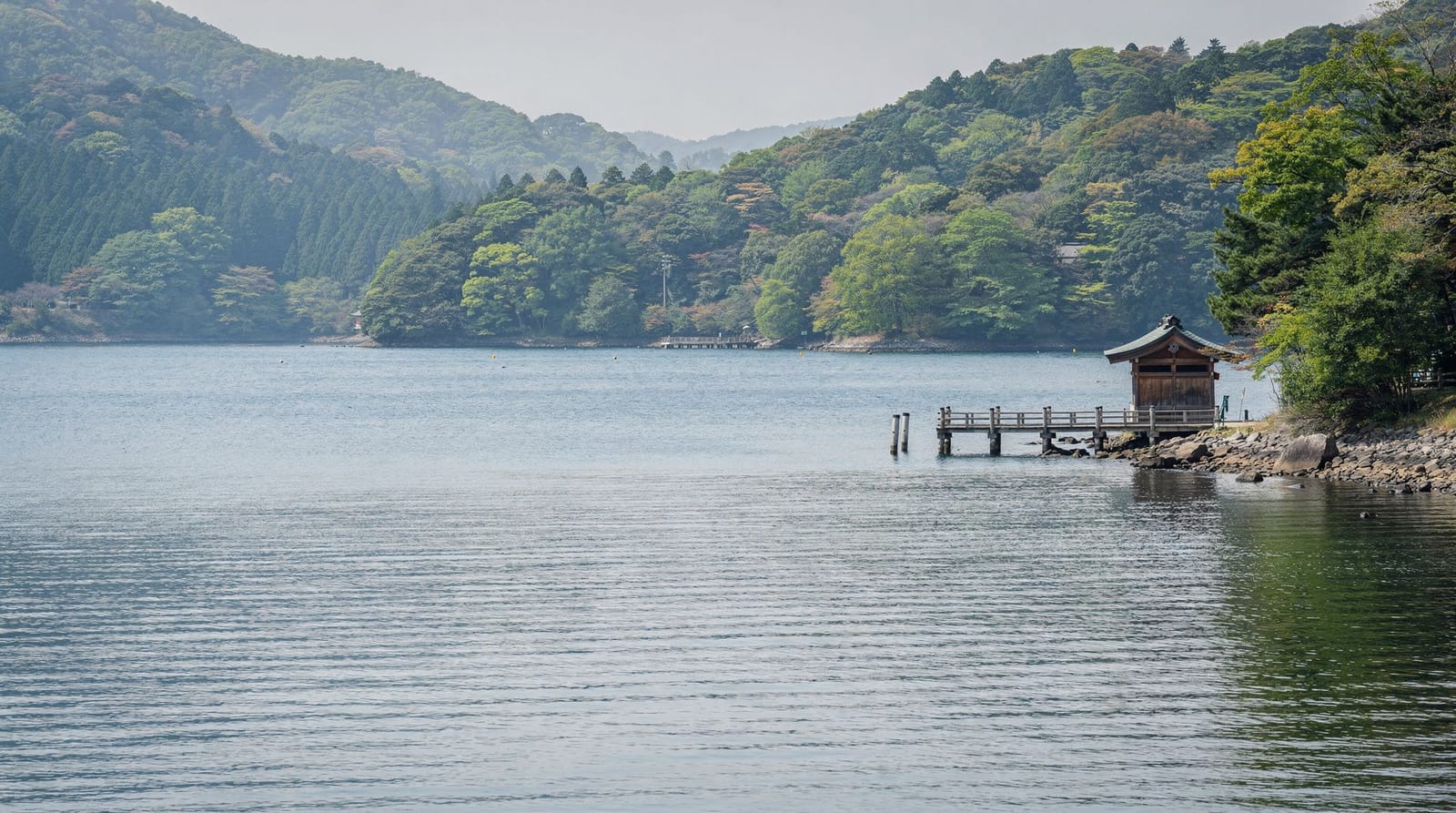
The more common and honestly more enjoyable approach for most visitors: take a train to Otsu, the lakeside city on Lake Biwa’s southern shore (roughly 10-15 minutes from Kyoto Station by JR), and cycle from there along the lake’s flatter shoreline path. This section forms part of the longer Biwaichi route, a roughly 200km loop circling the entire lake that serious cyclists complete over 1-2 full days — not realistic as a Kyoto day trip, but a genuine and popular long-distance cycling circuit in its own right for anyone extending their trip specifically for it.
A shorter, half-day version — cycling a stretch of the western or southern shore path from Otsu and back — gives a real sense of the lake’s scale and scenery without the multi-day commitment, and rental shops in Otsu cater specifically to this shorter-distance visitor. See the Lake Biwa and Otsu destination guide for what else the area offers beyond cycling, including its own temples and lakeside dining.
Nara by bike: a genuine alternative to the standard bus day trip
Most visitors reach Nara, home of the famous deer park and Todai-ji’s Great Buddha, by train and then walk the park on foot. A less common but genuinely worthwhile alternative is a guided bike tour of Nara itself once you’ve arrived, covering more of the city’s ancient capital sites in less time than walking allows.
Nara bike tour in the ancient capital, UNESCO World HeritageThis isn’t a Kyoto-to-Nara cycling route (the distance and traffic conditions make that impractical for casual visitors) but rather a bike-based way to cover Nara’s own considerable UNESCO World Heritage site once you’ve arrived by train — worth considering as an alternative to the standard walking-only day trip covered in the Nara day trip guide.
Uji: a flatter, closer alternative to Lake Biwa
For a cycling day trip with less elevation commitment than the Lake Biwa mountain pass, Uji — famous as the historic heart of Japanese matcha production and home to Byodo-in temple, depicted on the ¥10 coin — is a genuinely good option. Reachable by train in roughly 20-30 minutes from Kyoto Station, Uji sits on mostly flat terrain along the Uji river, with tea fields and smaller temples spread across a walkable-to-cyclable radius that rewards a bike over a purely on-foot visit.
A rented bike from near Uji Station covers the tea-field areas and the riverside stretch considerably faster than walking, without the fitness demands of a mountain route. See the Uji matcha guide for the tea-culture side of the destination, which pairs naturally with a cycling day here.
Group cycling tours versus riding solo
Guided group cycling tours, whether within the city or on longer regional routes, move at the pace of the slowest rider and follow a fixed, pre-planned route — a genuine advantage for anyone unsure of navigation or wanting the social element of a shared ride, but a real constraint if your fitness or interests diverge meaningfully from the group’s.
Riding solo or with your own small group removes that constraint entirely: stop where you want, skip a stretch that doesn’t interest you, turn back early on the Lake Biwa route if fatigue sets in without needing to justify it to a group. The tradeoff is that solo riders lose the route knowledge and safety-in-numbers a guided tour provides, particularly relevant on longer, less touristed stretches like the mountain pass toward Lake Biwa, where cycling alone on an unfamiliar road with real elevation change carries more risk than the same ride with an experienced guide.
Repairs, breakdowns and basic bike maintenance on longer rides
Longer regional rides carry more real risk of a mechanical issue simply due to distance and time on the bike. Most rental shops equip city and e-bikes with basic reliability in mind, but a flat tire or chain issue 20km from Kyoto on the Lake Biwa route is a meaningfully bigger inconvenience than the same issue on the Kamo River path.
Confirming the rental shop’s breakdown policy — whether they offer roadside support, a swap at a partner location, or simply expect you to walk the bike to the nearest train station — is worth doing before setting out on any route extending beyond the city center. Carrying a basic repair kit isn’t standard practice for casual renters and generally isn’t necessary given this support network, but knowing the plan in advance removes real uncertainty if something does go wrong mid-route.
Renting versus guided: the same tradeoff as in-city
As with cycling within Kyoto itself, the choice between renting independently and joining a guided tour comes down to planning time and route confidence. Self-guided rentals (roughly ¥1,000-4,000 per day depending on standard or electric) give full control over pace and distance, which matters more on longer regional routes like Lake Biwa, where turning back early is a real and reasonable option if fatigue sets in. Guided tours (¥6,000-12,000+ for a few hours, more for full-day regional rides) remove the route-planning burden and typically include better bikes, particularly e-bikes, than a basic city rental shop offers.
What to bring for longer regional rides
Beyond the basics covered in the Kyoto bike tours guide — sturdy shoes, water, a light rain layer — longer regional rides toward Lake Biwa or a full Nara circuit benefit from a proper daypack rather than just a bike basket, sun protection given the more exposed lakeside and countryside stretches compared to shaded city streets, and a charged phone with an offline map downloaded in advance, since signal can be inconsistent in some of the more rural stretches between Kyoto and Lake Biwa.
Seasonal considerations
Spring and autumn are the most comfortable seasons for longer regional rides, with mild temperatures suited to multi-hour cycling. Summer (June-August) heat and humidity make the Lake Biwa mountain pass route considerably more demanding, and an early start or e-bike is a genuine comfort upgrade rather than a luxury in these months. Winter (December-February) is cold but manageable for shorter city and Kamo River path rides; longer regional routes are less commonly attempted this time of year given shorter daylight hours.
Combining cycling with public transit for longer regional trips
A practical pattern worth knowing for anyone planning a Lake Biwa or Uji cycling day without full confidence in a long solo ride: several JR and private rail lines in the Kyoto region allow bicycles on board if bagged (a rule generally applying to standard folding or disassembled bikes rather than full-size rental bikes, so check this specifically with your rental shop).
More commonly and simply, the train-then-rent approach — taking a train to Otsu or Uji and renting a bike locally rather than transporting one from Kyoto — avoids the bagging requirement entirely and is the approach most visitors use in practice. This combination of transit for distance and cycling for local exploration is generally the most time-efficient way to cover a Kyoto-region day trip that includes cycling as one component rather than the entire day’s activity.
Cost comparison: cycling versus other transport for regional day trips
A cycling-based day to Otsu or Uji costs roughly the same as visiting either destination by train alone, plus the day’s bike rental (¥1,000-4,000) — the marginal cost of adding cycling to an already-planned day trip is modest. Compared to a guided cycling tour covering the same ground (¥6,000-12,000 or more for a regional excursion), self-guided cycling after a simple train ride is meaningfully cheaper, though it trades away route guidance and the safety margin of a knowledgeable leader on less-familiar roads. For budget-conscious travelers confident in independent navigation, self-guided regional cycling is one of the better value activities available in the wider Kyoto area relative to its cost.
A note on carrying gear for a full day out
Longer regional rides toward Lake Biwa or Uji often turn into a full day away from your hotel, which means carrying more than a typical short city ride requires — a change of layers as temperatures shift between morning and afternoon, sufficient water for stretches without convenient stores, and any photography gear you want for the lakeside or tea-field scenery.
A properly fitted backpack, rather than relying on a rental bike’s basket alone, makes a meaningful difference in comfort over several hours of riding, particularly on any route involving real distance or elevation change. Packing light but complete for the specific day’s route, rather than assuming you can improvise en route, is worth the extra planning time given how much less commercial infrastructure exists once you’re outside central Kyoto’s tourist core.
Frequently asked questions about cycling in Kyoto
What’s the difference between this guide and the Kyoto bike tours guide?
The Kyoto bike tours guide focuses on guided, tour-format rides within the city and Arashiyama, aimed mainly at visitors wanting a curated few hours. This guide covers cycling more broadly as an activity, including self-guided routes, longer rides extending beyond the city toward Lake Biwa, and the practical logistics of building your own route rather than joining a fixed tour.
Is Biwaichi (cycling around Lake Biwa) realistic for a Kyoto-based traveler?
The full Biwaichi loop is roughly 200km around the entire lake and typically takes committed cyclists 1-2 full days — not realistic as a day trip from Kyoto. A partial section, cycling a stretch of the lake’s western or southern shore path from Otsu, is realistic in a half-day or day trip and gives a genuine sense of the route without the multi-day commitment.
Do I need an e-bike for the Kyoto-to-Lake Biwa route?
It depends on your route. Training to Otsu and cycling the flat lakeside path doesn’t require an e-bike. Cycling the mountain pass directly from central Kyoto to Lake Biwa involves real, sustained elevation gain, and an e-bike makes that route considerably more manageable for riders without strong hill-climbing fitness or experience.
What is the Philosopher’s Path and can it be cycled?
The Philosopher’s Path is a roughly 2km canal-side walking path connecting Ginkaku-ji to Nanzen-ji through Kyoto’s eastern hills, lined with cherry trees. It’s technically walkable rather than a dedicated cycling route, and some sections are narrow with pedestrian traffic, so several guided e-bike tours treat it as one stop among several rather than a route to ride end to end at speed.
How fit do I need to be for cycling around Kyoto?
Central Kyoto and the Kamo River path require minimal fitness — flat, well-paved, and suitable for casual riders of most ages. Routes toward the eastern hills (Ginkaku-ji, the Philosopher’s Path area) involve gentle but sustained climbs where an e-bike helps. Routes toward Lake Biwa over the mountain pass require genuine cycling fitness unless using an e-bike or starting the ride from Otsu rather than central Kyoto.
Are there guided cycling day trips outside Kyoto city?
Yes, though the catalog is smaller than for in-city bike tours — most operators focus on Kyoto and Arashiyama itself, with day trips further out (to Nara or Lake Biwa) more commonly offered as bike tours specific to those destinations rather than combined Kyoto-departure rides. Check the specific tour’s starting location before booking if you want to begin directly in Kyoto rather than transferring first.
Can beginners handle the Lake Biwa shoreline ride from Otsu?
Yes — the shoreline path itself is flat and well-suited to casual riders once you’re in Otsu, since the demanding part of a Kyoto-to-Lake Biwa route is specifically the mountain pass, which the train-then-cycle approach avoids entirely. A half-day out-and-back along the shore from Otsu is a reasonable outing for riders of most fitness levels.
Bike rental logistics: what to check before you sign
Kyoto’s rental shops range from simple hourly city-bike counters near major stations to dedicated e-bike outfitters catering to longer regional rides.
Before renting, confirm three things that vary meaningfully between shops: whether the deposit is cash or card-only (some smaller shops are cash-only), whether a helmet is included (not universal, though increasingly standard as Japan’s helmet-recommendation rules have tightened in recent years), and the shop’s return-time policy, since a same-location return by a fixed evening hour is standard but a few shops allow drop-off at a second location for a fee — genuinely useful if you’re finishing a route like the Uji or Arashiyama ride somewhere other than where you started. See the Kyoto bike tours guide for shop-specific recommendations within the city itself.
Insurance and liability basics for rental cyclists
Most Kyoto rental shops include basic third-party liability coverage in the rental price, covering damage or injury caused to others, though the specifics — coverage limits, whether it extends to regional rides outside the city, and what counts as excluded reckless use — vary by shop and are worth a quick question before signing rather than assuming full coverage by default.
Personal injury coverage for the rider themselves is less consistently included, so travelers already carrying comprehensive travel insurance should confirm whether cycling accidents specifically fall under their policy, since some travel insurance plans exclude “adventure activities” in ways that could technically include a mountain-pass ride toward Lake Biwa even though city cycling is genuinely low-risk. For casual city and Kamo River path riding, this is a minor formality; for the longer regional routes covered in this guide, it’s worth the two extra minutes to confirm before setting out.
Frequently asked questions about Cycling in Kyoto and beyond — routes to Arashiyama and Lake Biwa
What's the difference between this guide and the Kyoto bike tours guide?
Is Biwaichi (cycling around Lake Biwa) realistic for a Kyoto-based traveler?
Do I need an e-bike for the Kyoto-to-Lake Biwa route?
What is the Philosopher's Path and can it be cycled?
How fit do I need to be for cycling around Kyoto?
Are there guided cycling day trips outside Kyoto city?
Top experiences
Bookable activities with verified prices and instant confirmation on GetYourGuide.