Kyoto with kids — a 3-day family itinerary
Kyoto: Family Friendly Personalized Tour
Kyoto works well with kids if you plan for shorter days
Kyoto is not a theme-park destination, but it has enough hands-on, physical, and genuinely kid-interesting sights — a real steam locomotive turntable, free-roaming monkeys with a mountain view, hundreds of tame deer that bow for crackers — to make a three-day family trip work well, as long as you plan around nap times, shorter walking stretches, and fewer sights per day than an adult-paced itinerary would fit.
The main adjustment from a standard Kyoto itinerary is pacing: this plan schedules 2-3 stops per day instead of 4-5, builds in a rest block after lunch, and picks the shortened, lower-effort version of anything that has one (a partial Fushimi Inari hike rather than the full mountain, for instance). Every hotel or vacation rental choice should prioritize proximity to Kyoto Station or downtown Kyoto over anything else — long taxi or train transfers with tired kids erode goodwill fast, and staying central keeps every day’s travel time under 30 minutes each way.
Strollers work on most routes here, though Fushimi Inari and parts of Arashiyama involve some uneven ground; a carrier is a reasonable backup for children under about 3. Public restrooms and vending machines are reliably available at every stop on this itinerary, which matters more with kids than it might otherwise.
| Where | Downtown Kyoto (day 1), Arashiyama (day 2), Nara day trip (day 3) |
| Cost | Around ¥18,000–28,000 ($120–187)/day for two adults + two kids |
| Time needed | 3 days, 2-3 stops per day with rest blocks |
| Getting there | Base near Kyoto Station or downtown Kyoto; JR trains, buses, trams |
| Best time | Any season; day one’s indoor museum is the best rainy-day fallback |
Day-by-day at a glance
| Day | Stops | Pace | Kid highlight |
|---|---|---|---|
| 1 | Railway Museum, Nishiki Market | Indoor-heavy, low walking | Steam locomotive rides |
| 2 | Monkey Park, bamboo grove, short Fushimi Inari | Outdoor, one steep climb | Hand-feeding macaques |
| 3 | Nara deer park, Todai-ji, kimono rental | Day trip, mostly flat | Deer that bow for crackers |
Day 1 — Trains, market snacks, and downtown Kyoto
09:30 — Kyoto Railway Museum (¥1,200 adults / ¥500 kids, $8 / $3.30)
Start at the Kyoto Railway Museum, a 15-minute walk or short tram ride from Kyoto Station. The museum houses more than 50 real locomotives, including a working steam engine that runs short rides on-site (small extra fee, ¥300, weather dependent), a train simulator kids can operate, and a viewing deck overlooking the JR tracks where actual Shinkansen bullet trains pass at regular intervals — a genuine highlight for many children regardless of how they feel about the rest of the museum. Allow 2-2.5 hours; the museum is large and mostly indoors, useful on a hot or rainy day.
Kyoto Railway Museum admission tickets12:15 — Lunch near Kyoto Station
The Kyoto Station building itself has a food court on the lower level (Kyoto Ramen Koji, ¥900-1,300 per bowl) with enough variety that picky eaters usually find something, and the noise level is high enough that kids being loud doesn’t stand out. Porta underground mall, connected to the station, has additional casual options including a few Western-style choices if needed.
14:00 — Rest block / hotel downtime
Build in a genuine 60-90 minute break after lunch — a nap for younger kids, downtime for older ones — rather than pushing straight into the afternoon. This is the single most useful pacing decision on a family Kyoto trip and the one adult itineraries skip.
16:00 — Nishiki Market
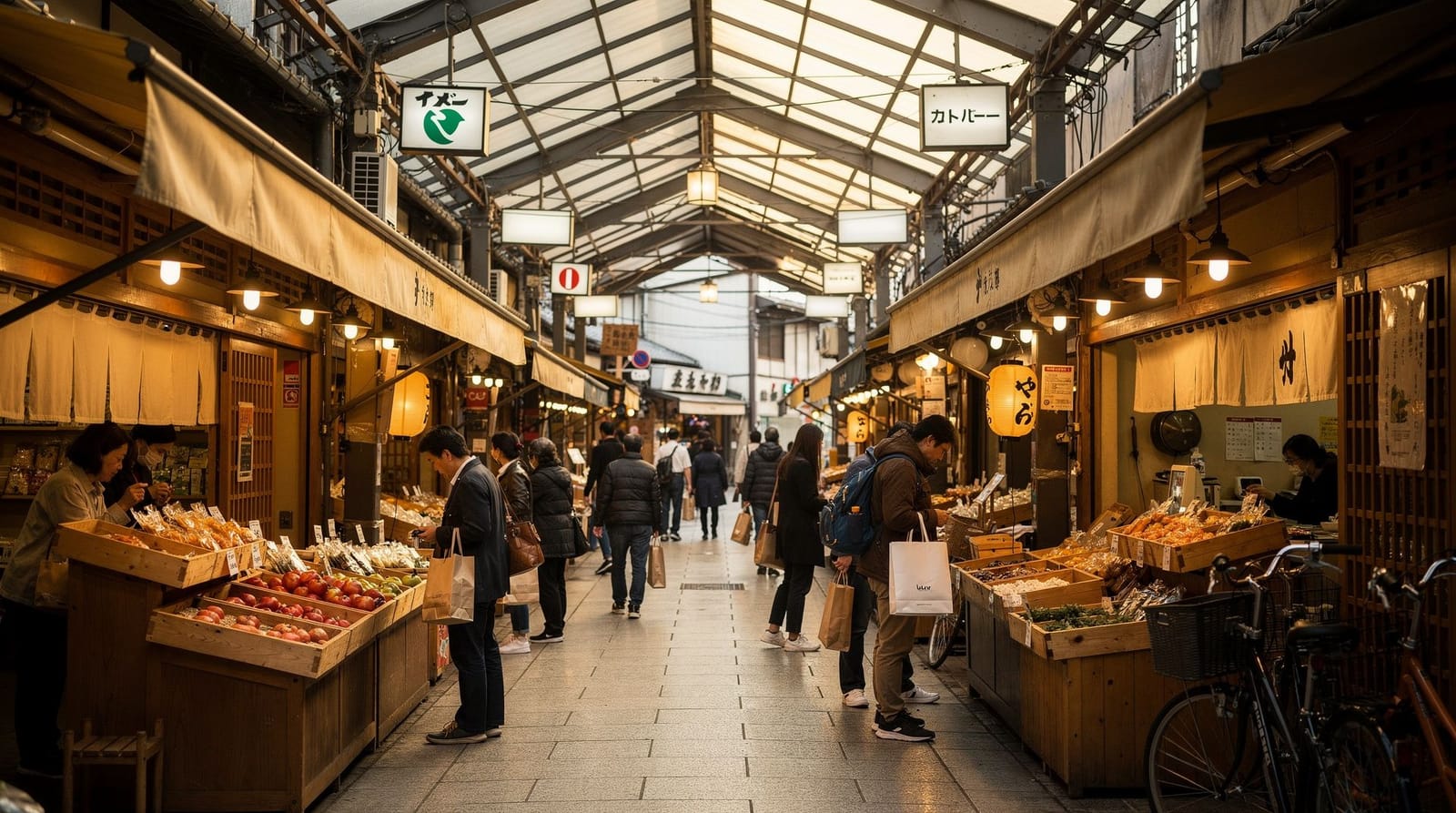
Nishiki Market, a five-block covered arcade often called “Kyoto’s kitchen,” is built for grazing rather than a sit-down meal — dozens of stalls sell small, kid-friendly bites: skewered mochi, tamagoyaki (sweet rolled omelet) on a stick, small takoyaki portions, and fruit skewers, most in the ¥200-500 range.
It’s an easy way to let kids try new foods in small, low-commitment portions rather than committing to a full meal they might not eat — the same grazing approach covered for adults in the best food tours in Kyoto guide works just as well with children in tow. The market can be crowded and narrow with a stroller during peak hours (11:00-14:00), so a later-afternoon visit, as scheduled here, is noticeably easier to navigate.
18:00 — Dinner downtown
Kaiten-zushi (conveyor-belt sushi) restaurants near the Nishiki/Shijo area — Musashi Sushi and several chain locations nearby — are reliably fast, visually engaging for kids (watching plates go by), and let each family member pick exactly what they want without a shared-plate negotiation. Expect ¥150-500 per plate.
Day 2 — Arashiyama: monkeys, bamboo, and a shortened Fushimi Inari
09:00 — Arashiyama Monkey Park Iwatayama (¥550 adults / ¥250 kids, $3.70 / $1.70)
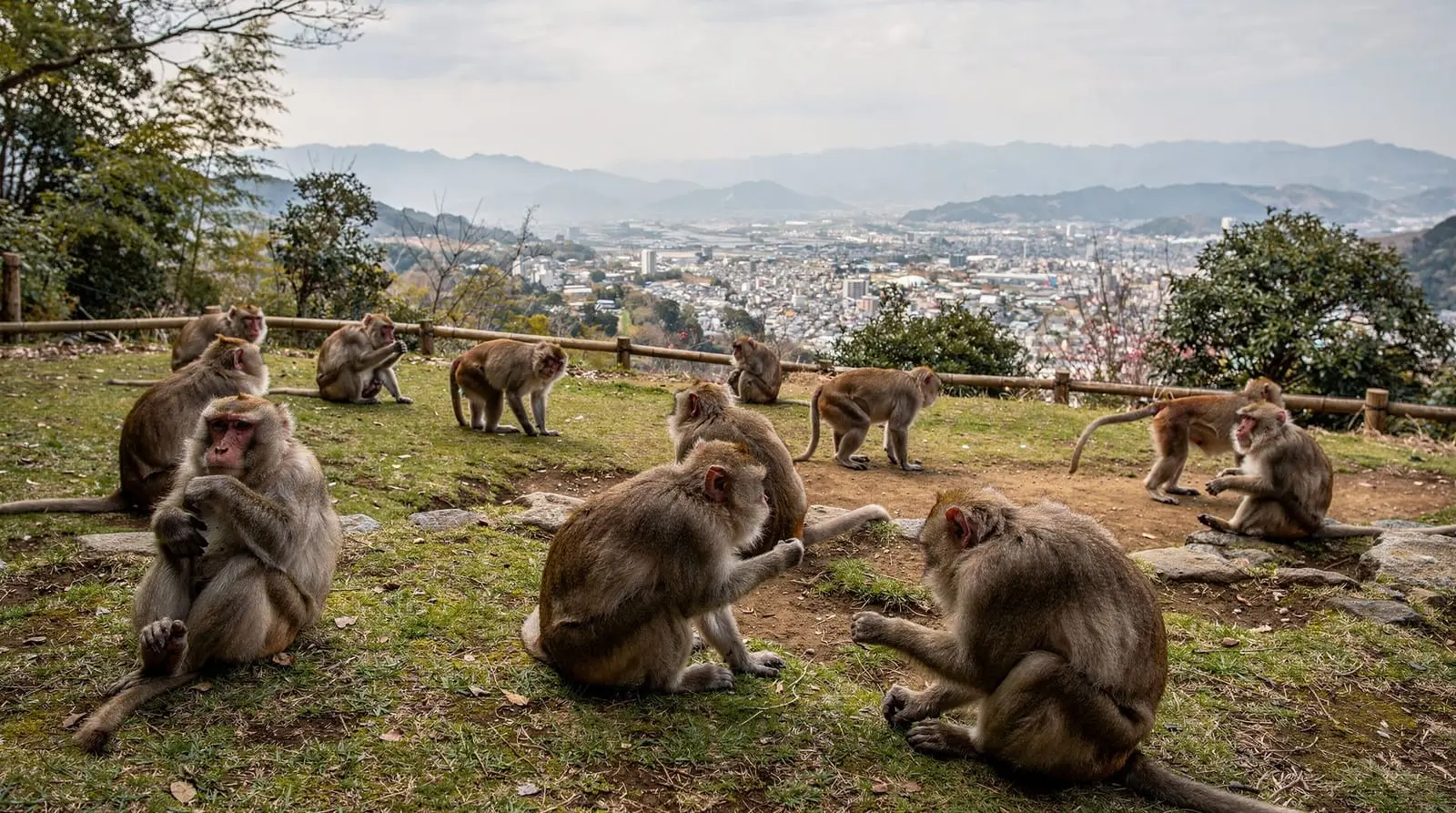
Take the JR Sagano Line or Randen tram to Arashiyama (about 20-25 minutes from central Kyoto) and start at the Monkey Park before it gets busy. The climb up to the park is about 20 minutes on a somewhat steep dirt path — manageable for most kids but worth pacing slowly, and not practical with a stroller (carriers or simply carrying younger children works better). At the top, roughly 120 Japanese macaques roam freely around a viewing area with a panoramic view over Kyoto; a small feeding hut lets you buy fruit and nuts (¥100) to hand-feed monkeys through wire mesh — direct contact outside the hut is not allowed and staff enforce this for safety. Allow 90 minutes total including the climb.
the Arashiyama bamboo grove and monkey mountain walking tour11:00 — Arashiyama Bamboo Grove (free)
The bamboo grove is a five-minute walk from the monkey park entrance — a flat, paved path through towering bamboo stalks that takes 15-20 minutes at an easy pace. It’s genuinely striking for kids in a different way than a temple is: tall, dense, and slightly otherworldly, with no admission fee or time pressure.
12:00 — Lunch in Arashiyama
Arashiyama Yoshimura (soba noodles, riverside seating, ¥1,200-1,800) and several casual noodle and rice-bowl shops along the main Arashiyama street offer quick, kid-manageable meals. For something more novelty-driven, a handful of matcha soft-serve and dango (sweet rice dumpling) stalls along the same street work well as a post-lunch treat.
13:30 — Rest block
As with day one, a break of 60-90 minutes back at the hotel (a 20-25 minute train ride from Arashiyama) resets energy before the afternoon. If a full return trip isn’t practical, a quiet riverside bench near the Togetsukyo Bridge works as a lower-key alternative.
15:30 — Fushimi Inari — the short version, to Yotsutsuji only
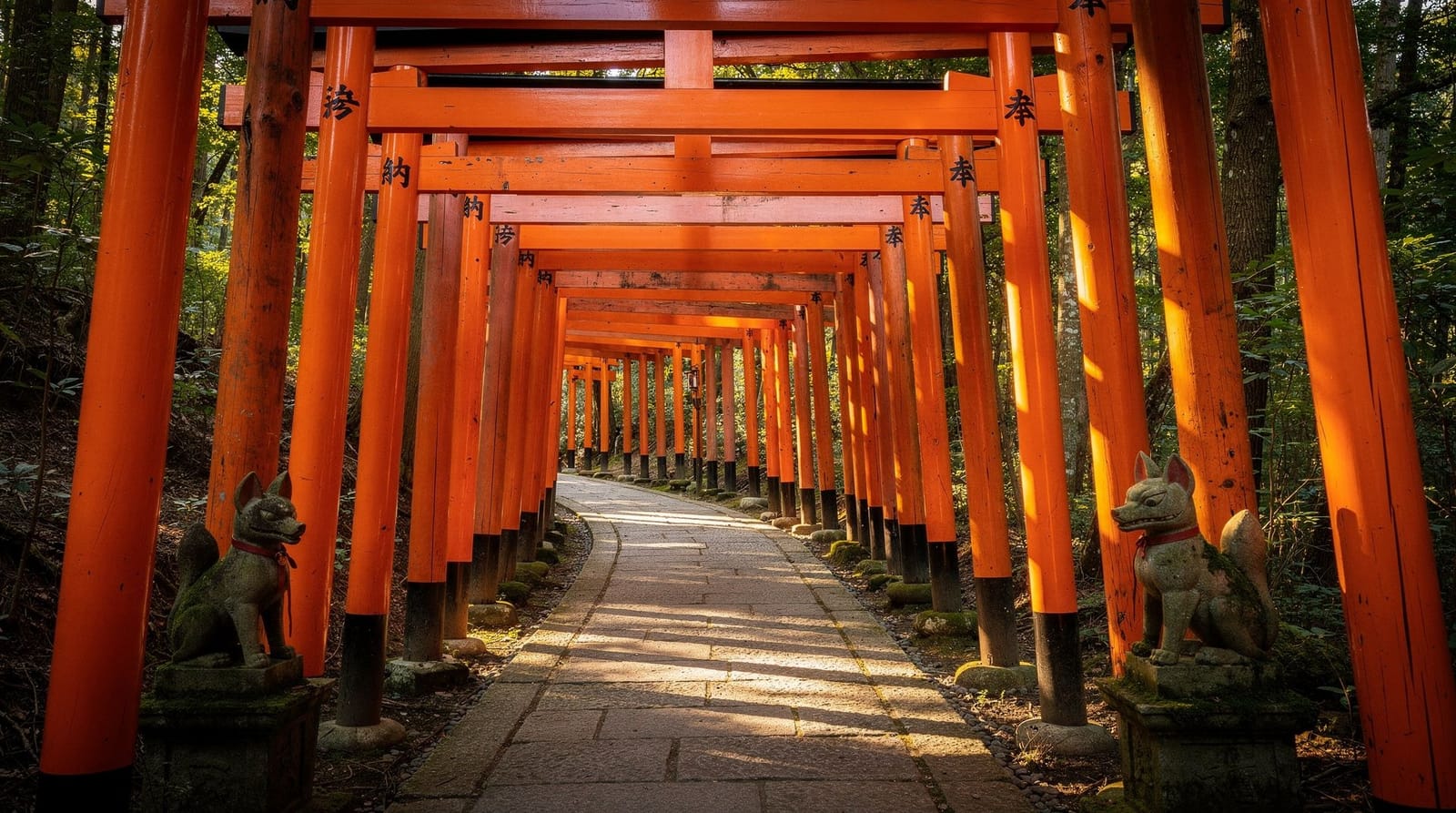
Rather than attempting Fushimi Inari’s full 2-3 hour, 4km round trip to the summit, this itinerary stops at Yotsutsuji, an intersection roughly a third of the way up with a genuine view over southern Kyoto — 45-60 minutes round trip from the base, entirely through the famous dense torii-gate tunnel (Senbon Torii), which is also the section kids find most visually striking. From Arashiyama, reach Fushimi Inari via a JR transfer at Kyoto Station (about 35-40 minutes total). The shrine is free and open 24 hours, with no ticket line to wait in — a real advantage on a day with tired kids, since there’s no fixed schedule pressure.
17:00 — Dinner near Fushimi or back downtown
Casual options near Inari Station, in the Fushimi district, or back near your accommodation all work; this is a good day to keep dinner simple and close rather than adding another cross-town trip.
Day 3 — Nara day trip: deer, kimono, and gentle pacing
09:00 — Travel to Nara (JR Nara Line rapid, ~45 min, ¥720 / $4.80)
Nara makes an easy family day trip from Kyoto — direct train, no transfers, and a park built almost entirely around a single, reliably kid-pleasing activity: feeding the deer. From Nara Station, the deer park entrance is a 5-10 minute walk.
09:45 — Nara Park deer feeding (free entry, shika senbei ¥200 / $1.30 per pack)
Over 1,000 sika deer roam freely through Nara Park, many trained to bow their heads for crackers (shika senbei), sold at small stands throughout the park. This is genuinely free-range and unsupervised, which means real physical contact with animals — a strong draw for most kids, but worth a quick briefing beforehand: deer can nip at clothing, bags, or hands that are holding crackers too long, particularly around the stands themselves where deer congregate most densely. Feeding away from the crowded stand areas, where deer are calmer, tends to go more smoothly with younger children.
a private family bike tour of Nara Park with lunch11:00 — Todai-ji’s Great Buddha Hall (¥600 adults / ¥300 kids)
A 10-minute walk from the main deer areas, Todai-ji houses a 15-meter bronze Buddha statue inside the world’s largest wooden building — a genuinely impressive scale for kids to register in person. One pillar inside has a hole cut through its base said to be the same size as the Buddha’s nostril; local tradition holds that a child who can squeeze through it will gain enlightenment (or, at minimum, a fun photo and a game most kids on this itinerary enjoy). Allow 45-60 minutes.
12:30 — Lunch near Nara Park
Restaurants around the Sanjo-dori shopping street, a short walk from the park, offer standard casual Japanese options (udon, rice bowls, ¥900-1,400) at reasonable, non-inflated prices. Some cafes near the park entrance specifically cater to families with deer-themed menu items, which can be a fun, low-stakes lunch stop.
14:00 — Kimono rental for kids (¥3,000-6,000 per child, $20-40)
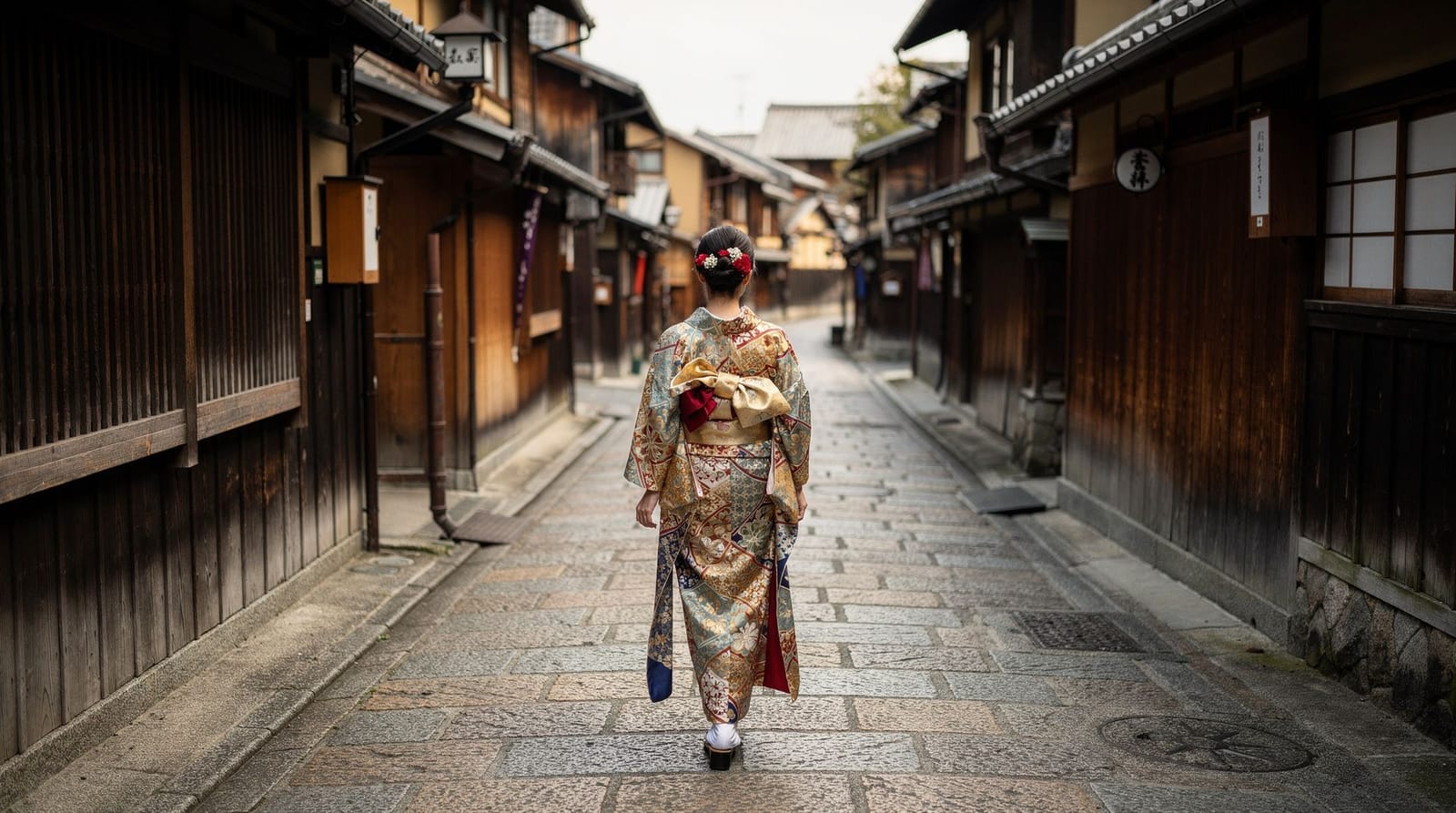
Several rental shops near Nara Park and back in Kyoto’s Higashiyama and Gion districts offer kid-sized kimono and yukata rentals, typically including simple hair accessories, for a shorter rental window (2-4 hours) than adult packages — a practical difference, since full-day rental in a kimono is genuinely tiring for most young children. Booking ahead is worth it in peak seasons (spring, autumn) but usually not necessary the rest of the year.
a kid and family kimono experience in Gion16:00 — Return to Kyoto
The JR Nara Line rapid service back to Kyoto Station runs the same 45-minute route; aim to be on a train before 17:00 to avoid the tail end of the evening commuter rush, which gets standing-room-only from around 17:30.
Practical notes for a family trip
Pacing: this itinerary intentionally caps each day at 2-3 main stops with a built-in rest block, roughly two-thirds the density of an adult-paced Kyoto itinerary. Resist the temptation to add a fourth stop even if energy seems good mid-morning — the afternoon crash with tired kids is more disruptive than the sight you’d gain by skipping the break.
Avoiding long walks: Fushimi Inari’s shortened Yotsutsuji version, the flat bamboo grove path, and Nara Park’s mostly level ground were chosen specifically to avoid the steep, extended walking sections common elsewhere in Kyoto (the full Fushimi Inari summit hike, the Kiyomizu-dera hillside approach). If a child struggles with the Arashiyama monkey park’s uphill path, it’s the one genuinely steep segment on this itinerary and can be skipped in favor of just the bamboo grove.
Kid-friendly restaurants: kaiten-zushi (conveyor belt sushi), ramen and udon shops, and department store food courts (depachika) are consistently the easiest options with kids — visual, fast, and forgiving of small portions or picky eating. Formal kaiseki dining is best saved for a date night with a babysitting service rather than attempted with young children.
Budget: expect ¥3,500-6,000 ($23-40) per day per child in admission and activity costs across these three days, plus ¥2,000-3,500 ($13-23) per day per child in food. Adults roughly double the admission figure and food is typically shared or similar in cost.
Extending or adjusting: for a shorter family trip, days one and two combine reasonably well into a single denser day if needed, dropping either the Railway Museum or the Nishiki Market visit. For a longer stay, the Kyoto-Osaka 3-day itinerary adds Osaka’s aquarium and a different city pace, also generally kid-friendly, or the Kyoto-Nara 2-day itinerary gives Nara’s deer park more room to breathe.
See the kimono rental guide for more on sizing and booking for children specifically, the Kyoto travel budget guide for a full daily cost breakdown, and the Kyoto etiquette guide for temple and shrine behavior worth teaching kids before you go.
Rainy day and rest-day alternatives
Japan’s rainy season (early June to mid-July) and occasional summer typhoons can force a schedule swap, and having a backup plan ready reduces stress more than any packing list. An indoor ninja class and samurai museum experience in central Kyoto works well as a full substitute for an outdoor day — kids get a hands-on activity regardless of weather, and it slots into either the day-one or day-two block without disrupting the rest of the itinerary.
a kid-friendly ninja class and samurai museum experienceDepartment store basements (depachika) near Kyoto Station and downtown are another reliable rainy-day fallback — covered, air-conditioned, and full of small food samples kids enjoy grazing on, similar in spirit to Nishiki Market but entirely indoors. If day two’s outdoor stretch gets rained out specifically, swap it for day one’s Railway Museum and push Arashiyama to a clearer day later in the trip; the museum’s large indoor halls handle a full rainy morning comfortably.
Managing meltdowns and energy dips
Even with the built-in rest blocks, a genuinely tired or overstimulated child is a realistic possibility on any of the three days. Vending machines and convenience stores (konbini) are within a few minutes’ walk of nearly every stop on this itinerary, and a cold drink or a small snack often resets a flagging kid faster than pushing through to the next sight.
If a meltdown happens at a temple or shrine, step outside the main grounds rather than trying to manage it inside — Japanese temple etiquette expects quiet, and stepping out avoids the awkwardness for everyone. Building slack into the schedule (this itinerary already runs at roughly two-thirds adult pace) means skipping one stop entirely, such as the optional Umeda-style extras or a second temple, rarely derails the day.
Food safety and allergies with young kids
Japan’s food labeling can be a real barrier for allergy-aware families, since ingredient lists are usually Japanese-only and cross-contamination disclosure is inconsistent at small stalls. Department store food halls and chain restaurants near Kyoto Station tend to have clearer, sometimes English, allergen information than small market stalls, which is worth factoring into day one’s Nishiki Market visit if allergies are a concern.
Carrying a translated allergy card (readily available as a printable template online) and steering toward familiar dishes like plain rice, grilled fish, or udon at the restaurants named in this itinerary reduces the guesswork. The best food tours in Kyoto guide has more detail on navigating Kyoto’s food scene with dietary restrictions.
Frequently asked questions about visiting Kyoto with kids
What age is Kyoto realistically manageable for?
Most of this itinerary works from around age 4-5 upward, once children can comfortably walk 20-30 minutes at a stretch and sit through a 45-minute train or museum visit. Toddlers and infants are workable with a carrier and flexible expectations, but the Fushimi Inari and monkey park segments both involve some uneven or sloped ground that’s easier with an older, steadier walker.
Is Fushimi Inari’s full hike too much for kids?
The full round trip to the summit (roughly 4km, 2-3 hours, stone steps throughout) is a genuine hike and generally too long for younger children on a multi-stop day. The shortened version to Yotsutsuji (45-60 minutes round trip) covers the most photogenic torii-gate tunnel and is realistic for most kids from about age 5 up.
Are the monkeys at Arashiyama Monkey Park safe for kids to be near?
Yes, with the park’s rules followed — direct hand-feeding only happens inside the designated feeding hut through wire mesh, and staff actively discourage physical contact with monkeys outside that context. The macaques are wild and free-roaming rather than tame pets, so supervising kids and not letting them chase or corner an animal matters throughout the visit.
Do the Nara deer bite?
Some do nip at hands, clothing, or bags, particularly around the cracker-selling stands where deer congregate and compete for food. It’s rarely serious — more a startled nip than an aggressive bite — but briefing kids beforehand (don’t tease with food, don’t hold a cracker too long, hand it over promptly or drop it) reduces the chance of an unpleasant surprise.
Is a stroller practical for this itinerary?
Partially. Kyoto Station, Nishiki Market (outside peak hours), the bamboo grove, and most of Nara Park are stroller-manageable. The Arashiyama monkey park climb and Fushimi Inari’s stone steps are not stroller-friendly at all — plan to carry younger children or use a lightweight carrier for those two segments specifically.
What if it rains during the trip?
Day one (Railway Museum, Nishiki Market’s covered arcade) is the most rain-resistant day on this itinerary. If rain falls on day two or three, the bamboo grove and Fushimi Inari’s lower sections have some tree cover but no real shelter, and Nara Park has minimal covered areas — a rain day is a reasonable trigger to swap in an indoor alternative like an aquarium or museum and push the outdoor day to later in the trip if your schedule allows.
How much does a family of four spend per day on this itinerary?
Roughly ¥18,000-28,000 ($120-187) per day for two adults and two children, covering admission, food, and local transport, excluding accommodation. The kimono rental day (day three) runs higher due to the rental cost; days without a rental component are typically at the lower end of that range.
Are there quieter alternatives if my child has sensory sensitivities?
Nishiki Market and the Fushimi Inari base area can both get loud and crowded at peak times — visiting Nishiki later in the afternoon (as scheduled here) and doing Fushimi Inari’s shortened version rather than lingering at the base reduces exposure to the densest crowds. The bamboo grove and Nara Park’s quieter sections, away from the main deer-feeding stands, are generally the calmest stops on this itinerary.
What’s a good backup plan if it rains on the Arashiyama or Nara day?
Swap the outdoor day for day one’s Railway Museum, which is almost entirely indoors and can absorb a full rainy day without losing much. A ninja class and samurai museum experience is another indoor option that works as a like-for-like substitute for an outdoor activity block on short notice.
Are there allergy-friendly food options for kids on this itinerary?
Department store food halls and chain restaurants near Kyoto Station and Nara Park tend to have clearer allergen labeling than small market stalls, and dishes like plain rice, grilled fish, or udon are relatively safe defaults. Carrying a translated allergy card is worth doing in advance, since small stalls in Nishiki Market rarely have English ingredient information.
Top experiences
Bookable activities with verified prices and instant confirmation on GetYourGuide.