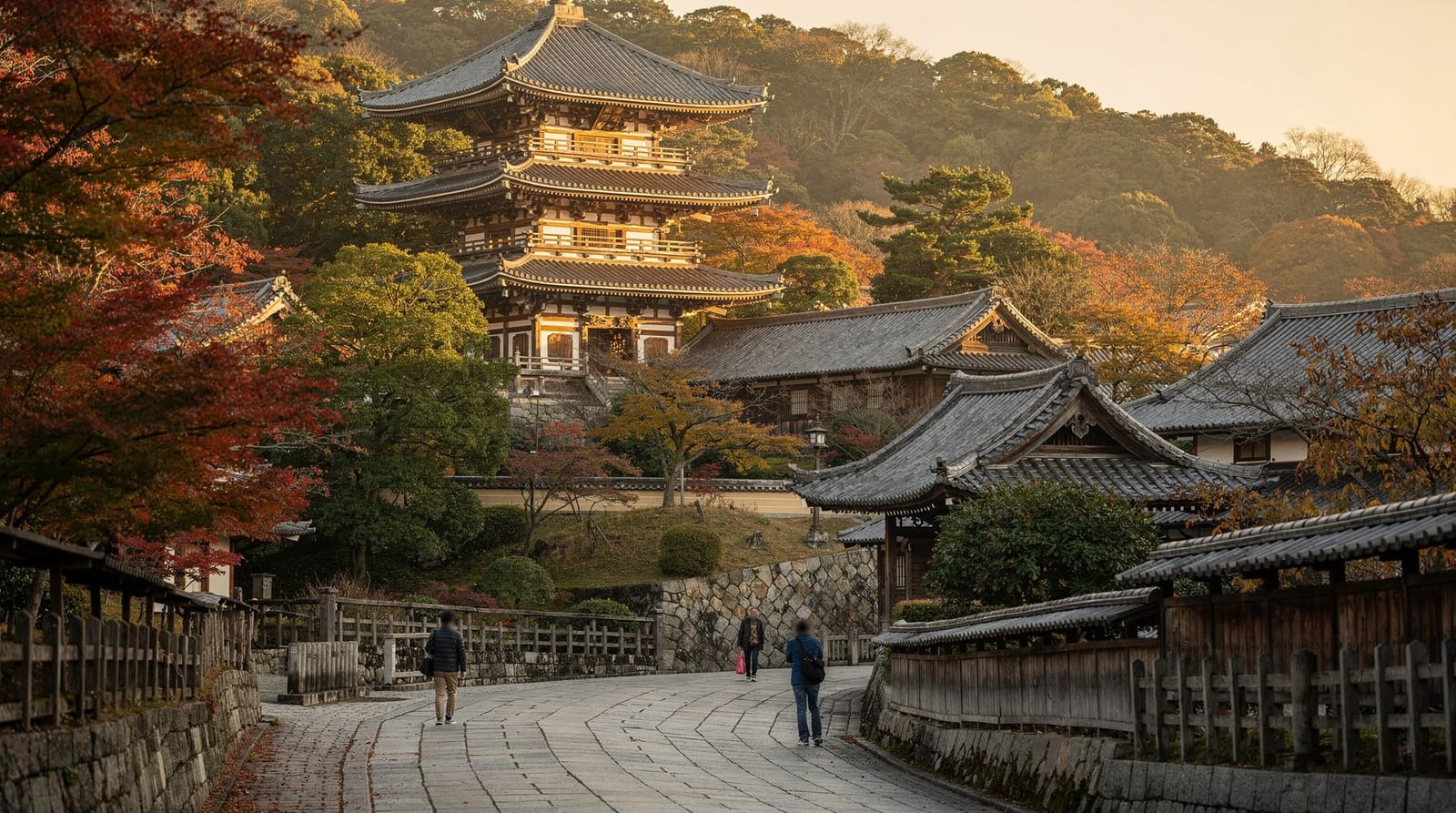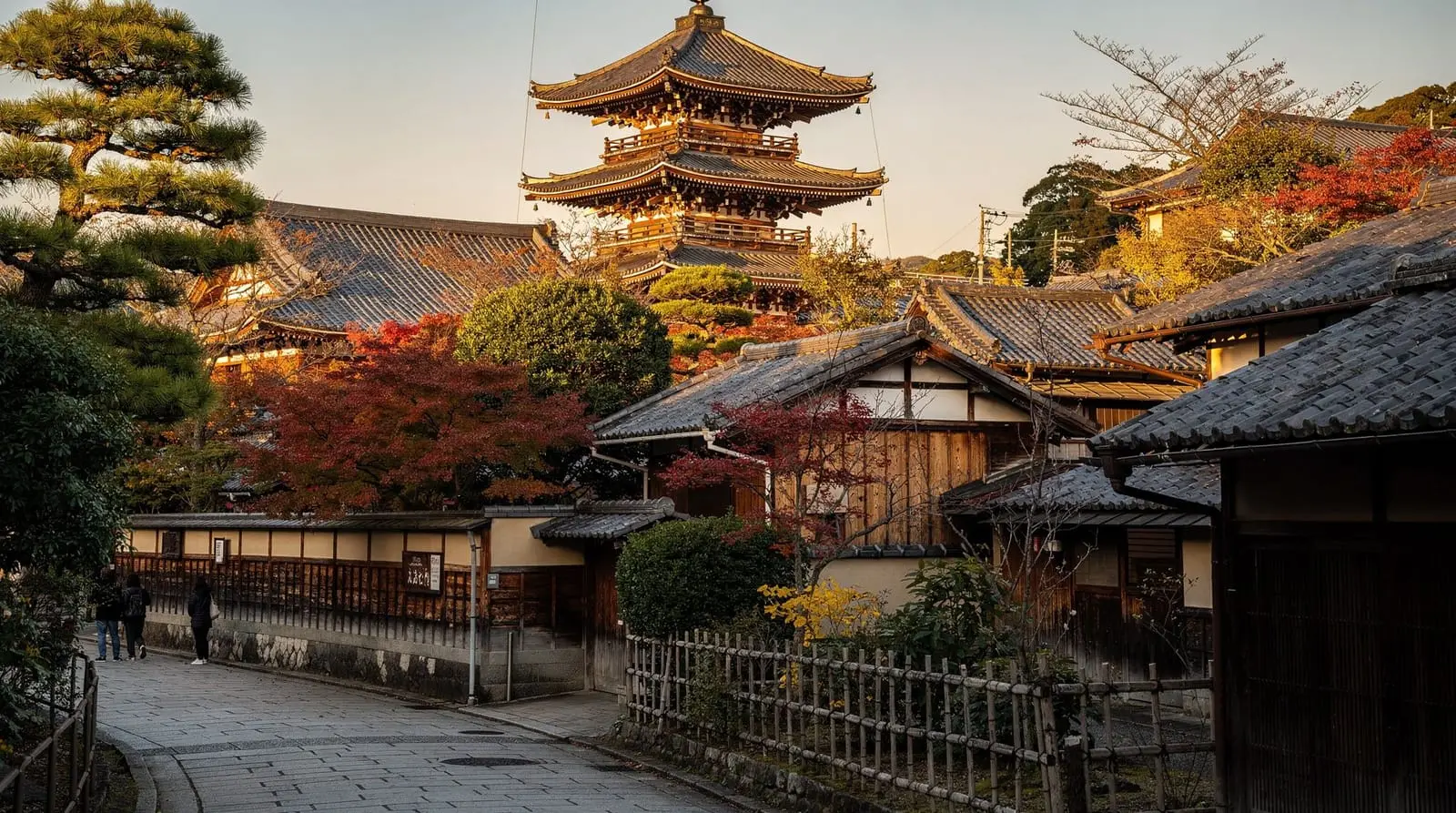
First-timer mistakes in Kyoto — and how to actually avoid them
Most Kyoto trip mistakes aren’t about missing some secret local knowledge — they’re about a small number of predictable planning errors that repeat across nearly every first-time visitor’s trip. This list covers the ones that come up most consistently, along with what actually fixes each one.
| Biggest mistake | Cramming 4+ districts into one day |
| Fix | 2–3 districts per day, 3–4 days minimum |
| Shoes | Slip-on, socks packed even in summer |
| Cash to carry | Around ¥10,000–20,000 (US$65–135) |
| Book ahead | Kaiseki, kimono rental in peak season, Saiho-ji |
Mistake 1: trying to see too much in too little time
Kyoto’s headline sights are spread across a genuinely large area — Arashiyama in the west, Fushimi Inari in the south, Kinkaku-ji in the north, Higashiyama in the east — and the city’s narrow streets, frequent bus congestion, and walking-heavy temple visits mean transit time between districts adds up faster than a map’s straight-line distances suggest. A common first-timer plan tries to cram Fushimi Inari, Kinkaku-ji, Arashiyama, and Gion into a single day, and ends up rushing through all four rather than genuinely experiencing any of them.
The fix is blunter than most guides admit: pick two, at most three, districts per day, and accept that a first Kyoto trip realistically needs three to four full days to cover the major sights at a reasonable pace, not the one or two days some itineraries suggest is sufficient. Our how many days in Kyoto guide walks through the trade-offs by trip length, and the ready-made 4-day Kyoto itinerary is built around exactly this two-to-three-districts-a-day pacing.
Mistake 2: wearing the wrong shoes
Kyoto involves an enormous amount of walking on uneven stone paths (Sannenzaka and Ninenzaka in Higashiyama, the Fushimi Inari mountain trail, gravel temple grounds) combined with frequent shoe removal at temple interiors with tatami or wooden floors. Visitors who show up in shoes with complicated laces or straps end up fumbling at every temple entrance while a queue forms behind them, and visitors in unsupportive sandals often regret it by the second or third day of walking 15,000+ steps.
Slip-on shoes that are easy to remove and put back on, with socks packed even in summer (bare feet on tatami is considered less polite than socked feet), solve both problems at once and are worth the minor style compromise.
Mistake 3: not getting an IC card immediately
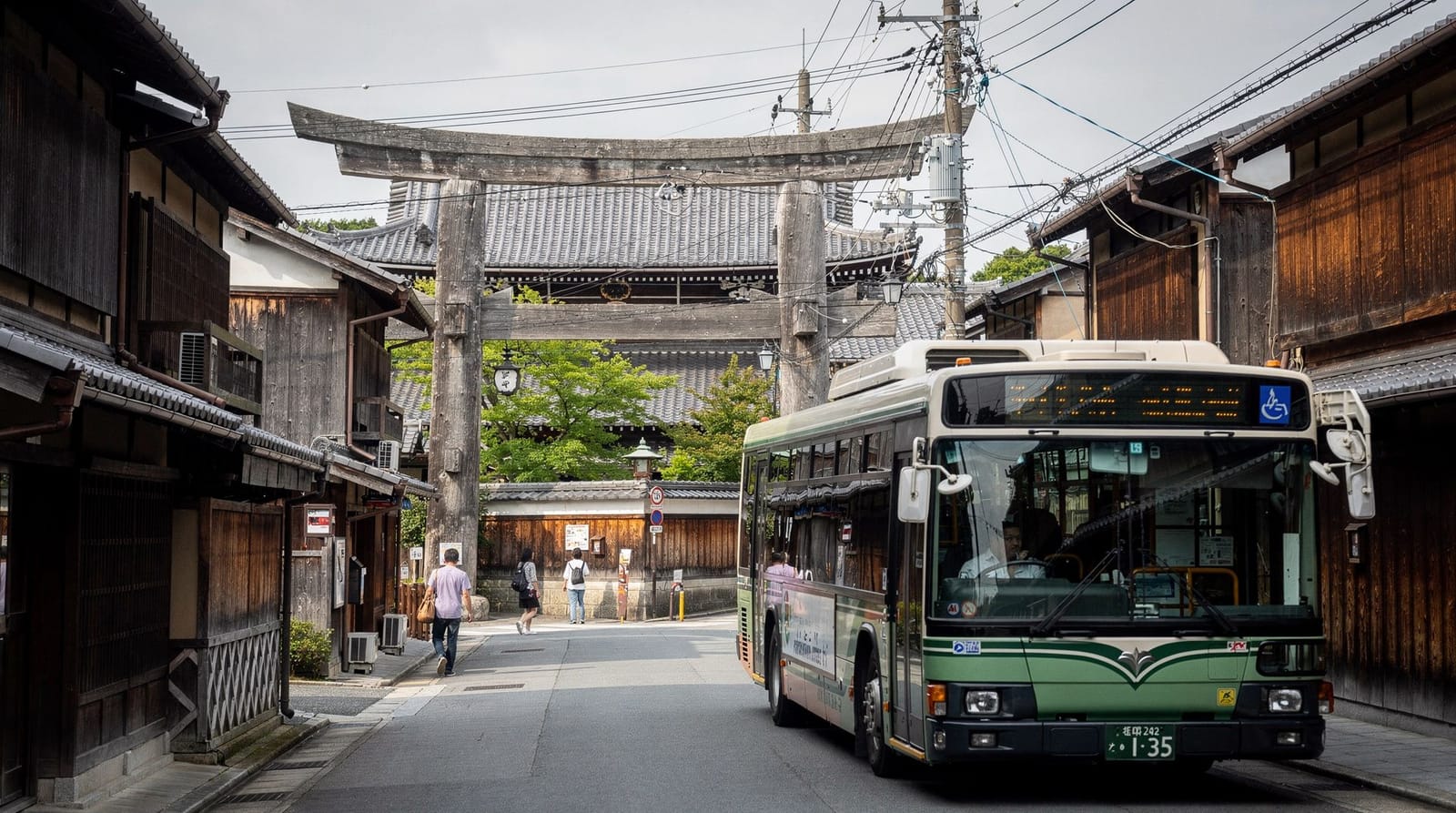
Kyoto’s bus and train network runs on IC cards (ICOCA is the local one, though Suica and Pasmo from Tokyo work identically) that tap on and off without needing exact change or paper tickets for every ride. Visitors who skip this and pay cash on buses lose real time every single boarding fumbling for coins, and miss out on the fare-capping and transfer convenience the card provides. ICOCA cards are available from ticket machines at Kyoto Station and most major stations, with a small refundable deposit, and should be one of the first things sorted on arrival, ideally at the airport before even reaching the city.
Kyoto hop-on hop-off sightseeing bus ticket — a useful alternative for visitors who’d rather not manage individual bus fares at allMistake 4: visiting Fushimi Inari or the Arashiyama bamboo grove mid-morning
Both of these sights follow the same predictable pattern: close to empty before 8am, filling steadily from around 8:30-9:30am, and packed by late morning through the afternoon. A huge share of first-time visitors, following a “reasonable” itinerary that has breakfast then a 10am start, arrive at exactly the worst possible time and come away with crowded, disappointing photos and a rushed feeling neither sight deserves.
Reordering the day so the most crowd-sensitive sight comes first, before breakfast if necessary, is a bigger single improvement to a Kyoto itinerary than almost any other change. Our dedicated guide on avoiding crowds at Fushimi Inari breaks down the hour-by-hour pattern in more detail, and the broader avoiding crowds in Kyoto guide applies the same logic across the rest of the city’s major sights.
Mistake 5: assuming all of Kyoto’s food is fine dining
Kyoto’s reputation for refined kaiseki cuisine and multi-course tasting menus leads some visitors to either overspend on formal dining every meal, or conversely to assume good food requires an expensive reservation and skip genuinely excellent, casual options. In reality, some of the best food in the city is at Nishiki Market’s food stalls, neighborhood ramen and udon shops, and standing sushi counters, often ¥1,000-2,000 (US$6.70-13) per person — a fraction of a kaiseki dinner’s typical ¥8,000-25,000 (US$53-170) range.
Budgeting one or two special dinners for the trip, rather than every meal, leaves room to actually enjoy the everyday food culture that most Kyoto residents eat day to day. The full Kyoto food guide has a broader breakdown of where to eat at every price point across the trip.
Mistake 6: not booking popular experiences far enough ahead
Several of Kyoto’s most in-demand experiences — certain kaiseki restaurants, particular kimono rental shops during cherry blossom or autumn foliage season, and Saiho-ji’s moss temple, which requires advance written or online application — sell out or require booking weeks ahead, not days. First-timers who assume everything in Kyoto can be arranged spontaneously on arrival are sometimes disappointed to find their preferred restaurant or experience fully booked once they land, particularly during peak spring and autumn weeks.
Kimono rental experience with hairstyling — a popular add-on worth booking ahead during peak seasonsMistake 7: not budgeting real time for Fushimi Inari’s mountain trail
A related but distinct mistake: visitors who do arrive early at Fushimi Inari often still only walk the crowded lower tunnel and turn back, unaware that the genuinely quiet, forested mountain trail beyond Yotsutsuji (about 30-40 minutes’ walk) delivers a completely different, far less crowded experience. Budgeting at least 60-90 minutes rather than a quick 20-minute in-and-out photo stop gets considerably more out of the shrine.
Mistake 8: treating Gion as a photo backdrop rather than a working neighborhood
Gion is a genuine, actively used geisha district, not a themed attraction, and treating it purely as a photo opportunity — chasing geisha and maiko for candid shots, blocking narrow lanes for a better angle — has become enough of a problem that the local council has banned photography entirely on several backstreets, with posted fines for violations. Visitors who want a genuine cultural encounter with geisha culture are better served by a structured show, dinner, or guided walking tour that includes an actual consensual meeting, rather than trying to catch working professionals on their way to appointments.
Gion history and geisha culture walking tour — a guided way to understand the district properly rather than treating it as a photo backdropMistake 9: skipping day trips because “there’s already so much in Kyoto”
Nara’s deer park and Todai-ji, Uji’s tea houses, and Arashiyama’s own quieter hills are all within a short train ride of central Kyoto, yet some first-time visitors, overwhelmed by the volume of sights within the city itself, never venture beyond central Kyoto at all. Building at least one half or full day trip into a four-or-more-day itinerary genuinely broadens the experience without requiring much extra logistics, since most of these destinations are 20-45 minutes away by direct train — see the best day trips from Kyoto guide for the full range of options.
Nara half-day tour covering the deer park and four key sights — an easy way to fit a day trip into a busy itineraryMistake 10: not carrying cash
Kyoto has become considerably more card-friendly in recent years, but a meaningful share of small restaurants, temple admission counters, and traditional shops — particularly outside the most touristed strips — still operate cash-only or cash-preferred. Visitors relying entirely on cards can find themselves unable to pay at exactly the kind of small, authentic restaurant or shop most worth visiting. Carrying a reasonable amount of cash (¥10,000-20,000, or roughly US$65-135, replenished from 7-Eleven ATMs, which reliably accept foreign cards even when other ATMs don’t) avoids this friction entirely.
Mistake 11: booking a hotel far from a train line to save money
Kyoto accommodation prices vary meaningfully by proximity to transit, and it’s tempting to book a noticeably cheaper hotel slightly outside the central area to save money. The trade-off is real, though: a hotel a 15-20 minute walk or bus ride from the nearest train station adds that time to both ends of every single day’s sightseeing, which compounds into hours of lost time across a multi-day trip. Staying within easy walking distance of Kyoto Station, or of a JR or subway line, is usually worth a modest price premium given how much time it saves across the length of a trip.
Mistake 12: underestimating how early some temples open and close
Several of Kyoto’s most popular temples keep hours that surprise first-time visitors used to a more standard 9-to-5 sightseeing schedule. Kiyomizu-dera opens as early as 6am, well before most visitors are even awake, which is a genuine opportunity rather than an inconvenience. On the other end, many temple grounds — including some major ones — stop accepting entry 30 minutes or more before their officially posted closing time, catching out visitors who arrive expecting to slip in right before close. Checking specific opening and last-entry times for each planned stop, rather than assuming a uniform schedule across the city, avoids a wasted trip to a closed gate.
Mistake 13: not accounting for how physically demanding the city is
Kyoto’s sightseeing is genuinely more physically demanding than many first-time visitors expect going in — stone stairs at Fushimi Inari and Kiyomizu-dera, uneven paths in Arashiyama’s hills, and simply the cumulative distance of walking between sights across a full day, often totaling well over 15,000-20,000 steps. Visitors who don’t train or prepare for this level of walking, or who don’t build in rest stops and slower-paced afternoons, sometimes find the physical toll undercuts their enjoyment by the second or third day. Planning at least one lower-intensity day or half-day into a longer trip — a museum visit, a leisurely market browse, a seated tea ceremony — genuinely helps sustain energy for the rest of the itinerary.
Mistake 14: not checking which train pass actually pays off
Kyoto is small enough that many first-time visitors assume a multi-day rail pass automatically saves money, then either buy one that barely gets used or skip one that would have paid for itself several times over on a day-trip-heavy itinerary. The math depends entirely on the plan: a JR Pass rarely makes sense for a Kyoto-only trip, but a Kansai area pass or the Kansai thru pass can be worthwhile if Osaka, Nara, and Kobe are all on the itinerary. Working this out before arrival, rather than buying whatever pass a travel forum mentioned most often, avoids paying for coverage you don’t need.
Mistake 15: underestimating how different Kyoto in spring or autumn actually feels
Visitors who’ve read that spring and autumn are “the best time to visit” sometimes arrive expecting a slightly busier version of an otherwise normal trip, rather than the substantially different reality of peak cherry blossom or autumn foliage season: fully booked restaurants, sold-out kimono rentals, and queues at every headline temple that simply don’t exist the rest of the year. It isn’t a reason to avoid those seasons — the scenery is genuinely worth it — but it does mean booking further ahead and building in more buffer time than a same trip in June or November would need. The Kyoto weather month by month guide sets realistic expectations for whichever season you’re landing in.
The pattern underneath all of these
Nearly every mistake on this list traces back to the same root cause: treating Kyoto like a checklist to move through quickly rather than a city that rewards a slower, better-timed pace. The fixes are mostly about subtraction — fewer districts per day, fewer meals at expensive restaurants, less rushing through Fushimi Inari’s entrance tunnel — rather than finding some additional secret tip. A first Kyoto trip that does less, better-timed, tends to come away far more satisfied than one that tries to do everything. If you want the condensed version of a well-paced first trip, our Kyoto for first-timers guide pulls all of this together into a single planning framework.
Frequently asked questions about Kyoto
How many days do I really need for a first trip to Kyoto? Three to four full days covers the major sights at a reasonable, non-rushed pace, including one half or full day trip to Nara or Uji. Two days is workable but means picking two or three priority districts rather than trying to see everything; see the how many days in Kyoto guide for a breakdown by trip length.
What’s the single biggest first-timer mistake in Kyoto? Overpacking the itinerary — trying to fit Fushimi Inari, Kinkaku-ji, Arashiyama and Gion into one day. It leads to rushing through all four rather than genuinely experiencing any of them, and it’s the root cause behind several of the other common mistakes on this list, from crowd timing to physical fatigue.