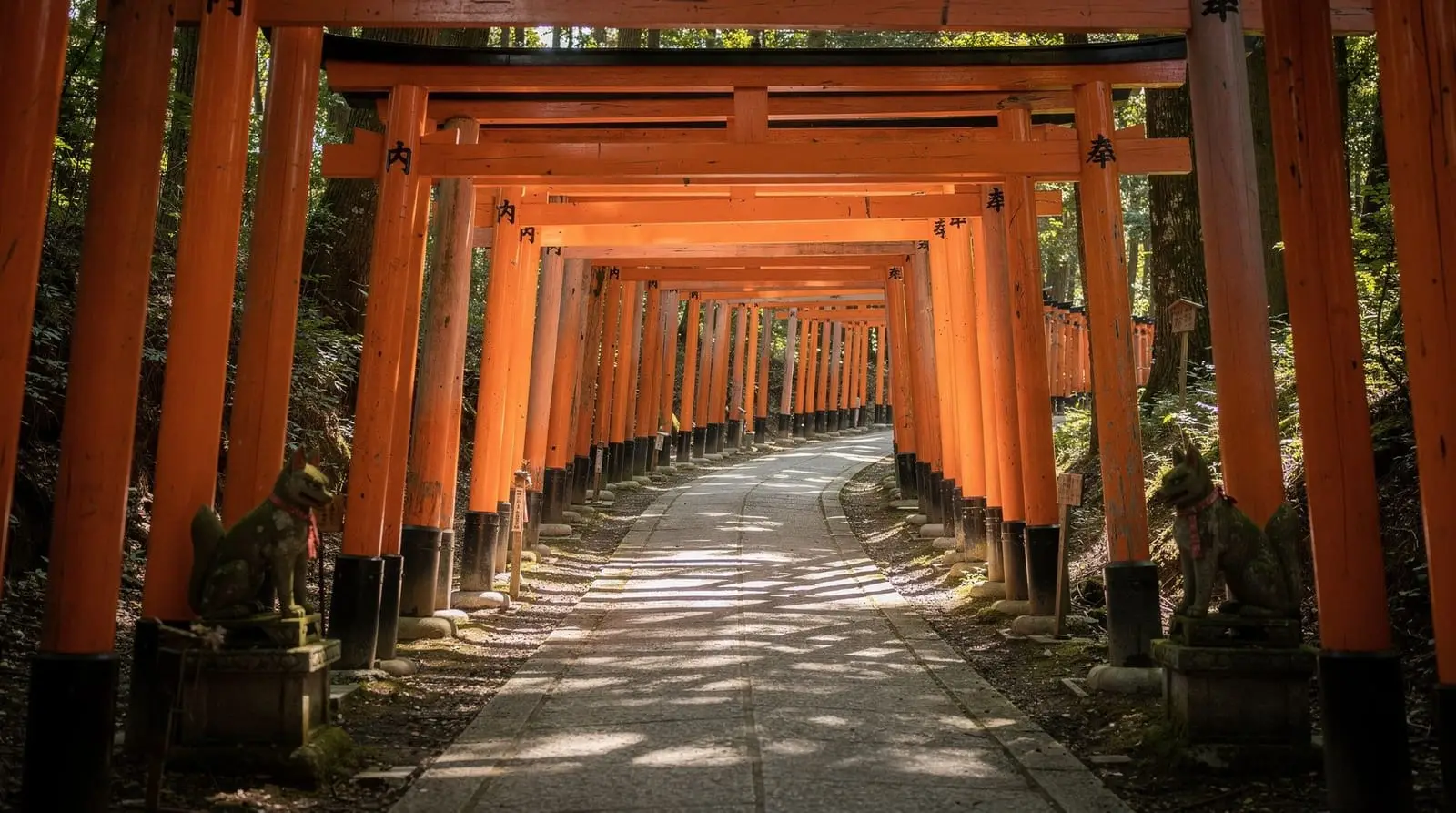
How to avoid crowds at Fushimi Inari — timing and quiet sections that work
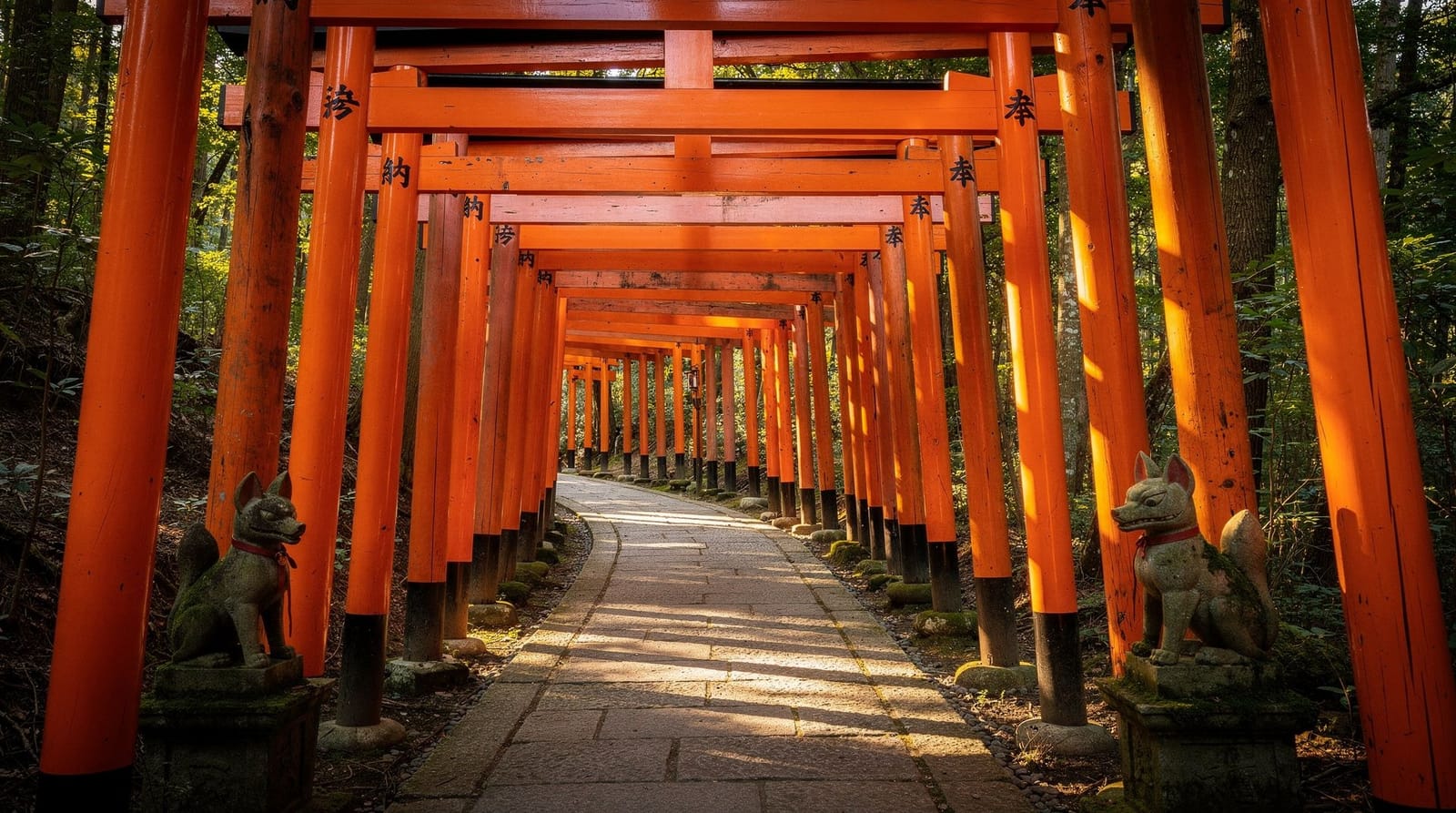
Fushimi Inari Taisha is Kyoto’s single most photographed sight and, on any normal afternoon, its most crowded one — the entrance tunnel of vermillion torii gates that appears in nearly every Kyoto photo essay is also the bottleneck point for what can be several thousand daily visitors funneling through a path barely wide enough for two people to pass comfortably. None of that is a reason to skip it. It’s a reason to be specific about when and how to visit, which is what this piece covers.
| Best arrival time | Before 8am, or after 8-9pm |
| Cost | Free, open 24 hours |
| Getting there | JR Inari Station, 5 min direct from Kyoto Station |
| Quiet zone | Past Yotsutsuji, 30-40 min uphill walk |
| Worst time | New Year’s (hatsumode), mid-morning to afternoon |
Why Fushimi Inari crowds harder than almost anywhere else in Kyoto
Three things combine to make Fushimi Inari’s crowding worse than a typical Kyoto temple. First, it’s free and open 24 hours, so there’s no ticketed entry to naturally cap visitor flow the way paid temples do. Second, it sits directly beside its own JR train station (Inari, two stops from Kyoto Station on the Nara Line), making it one of the easiest major sights in the city to reach, which means it appears on nearly every itinerary regardless of interest level. Third, the most photogenic section — the dense, tightly packed Senbon Torii (“thousand torii gates”) near the base — is also the shortest and narrowest, so even a moderate crowd creates a visible bottleneck exactly where everyone wants to stop and take a photo.
The single most effective fix: arrive before 8am
Fushimi Inari’s crowd pattern is remarkably predictable across the day. Before 7:30-8am, the entrance tunnel and lower torii sections are close to empty, with only a handful of other early visitors and the occasional jogger. From roughly 8:30-9:30am onward, tour groups and day-trippers start arriving in volume, and by mid-morning the Senbon Torii tunnel is a steady, shuffling line rather than an open path. That density holds through the afternoon and into early evening before thinning again after sunset.
Early-morning Fushimi Inari shrine tour, structured specifically around the pre-crowd windowSince there’s no admission fee and the shrine never closes, the only real cost of an early visit is losing part of a morning’s sleep — a straightforwardly good trade against what’s gained. A 7am arrival, timed to catch the first JR Nara Line trains of the morning from Kyoto Station, is genuinely achievable for most visitors and delivers close to the empty-tunnel photos seen in professional photography of the shrine. Our full Fushimi Inari guide covers the shrine’s history and layout in more depth if this is your only visit, and the broader avoiding crowds in Kyoto guide applies the same early-timing logic to the rest of the city’s headline sights.
The mountain trail is the real crowd-avoidance secret
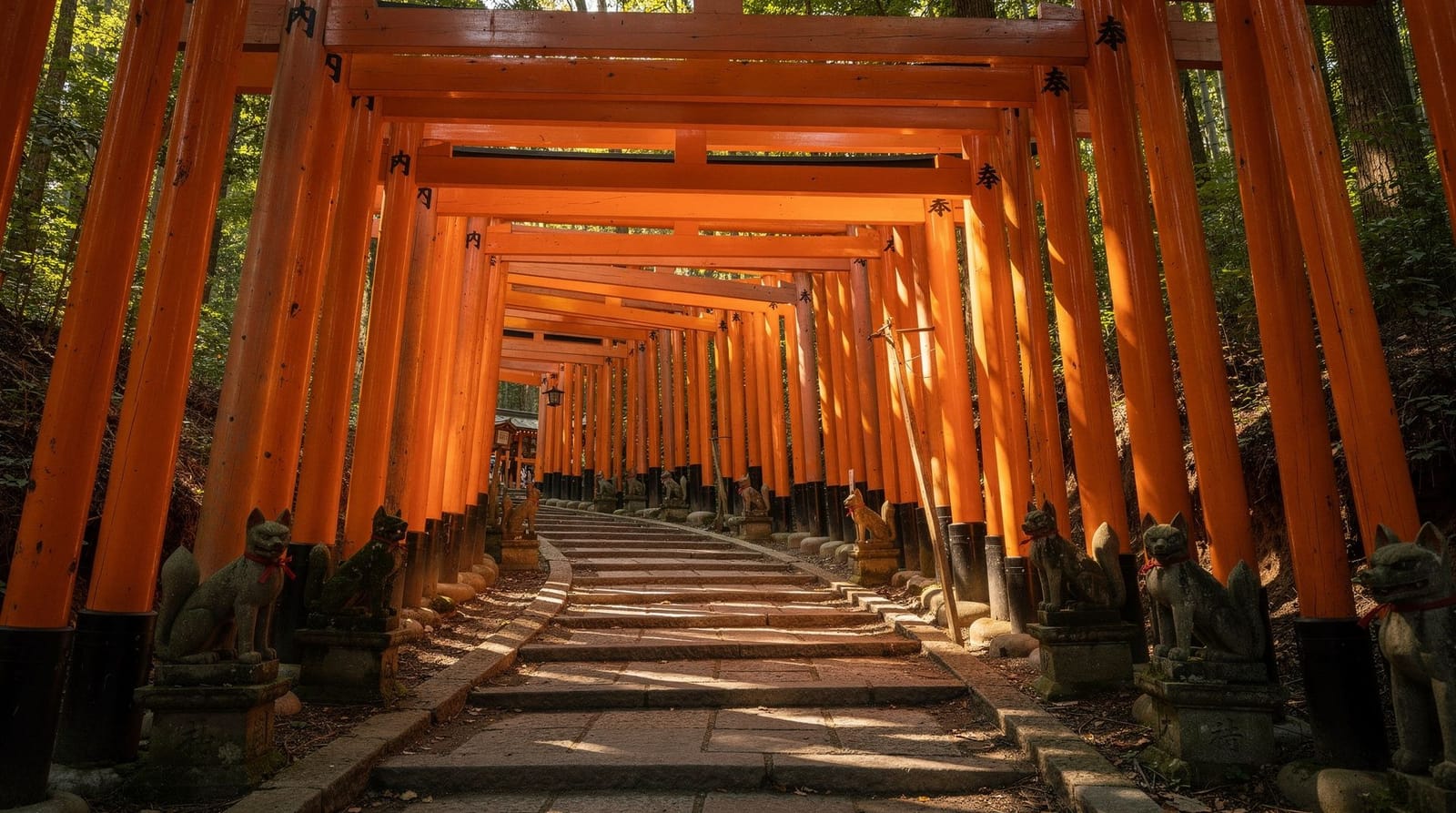
The most underused tactic at Fushimi Inari isn’t about timing at all — it’s about distance. The vast majority of visitors, even on a busy day, never go past Yotsutsuji intersection, roughly 30-45 minutes’ walk up the mountain and about a third of the way to the summit. Beyond that point, crowd density drops sharply and continues dropping the further up the mountain trail you go, since the round trip to the summit takes two to three hours and most day-trippers on tight schedules simply don’t have that time.
This means a visitor with even moderate time and reasonably comfortable shoes can walk directly through the crowded lower tunnel — accepting some congestion there — and be rewarded with a genuinely quiet, forested mountain shrine trail within 30-40 minutes, passing dozens of smaller sub-shrines, fox statues, and torii-lined switchbacks that see a fraction of the entrance area’s foot traffic. Yotsutsuji itself, at the halfway point, has an open viewpoint over southern Kyoto and is a reasonable turnaround for visitors without time for the full summit hike, while still delivering meaningfully more solitude than the base.
Night visits: the other genuinely quiet option
Because Fushimi Inari never closes and has minimal lighting beyond scattered stone lanterns along the main path, a nighttime visit is a legitimate and increasingly popular alternative to an early-morning one. After roughly 8-9pm, crowd density drops well below even the early-morning window, and the torii gates take on a noticeably different, more atmospheric character under lantern light rather than daylight.
Fushimi Inari night hike — a guided evening walk through the shrine’s quieter, lantern-lit hoursThe trade-off is real, though: the mountain trail beyond the lower tunnel is genuinely dark in sections with only intermittent lighting, uneven stone steps, and no staff presence, so a solo night visit up the full mountain isn’t something to do casually without a headlamp and reasonable caution, particularly beyond Yotsutsuji. A guided night tour or a visit that stays within the well-lit lower sections is the more sensible version of this strategy for most visitors.
What to actually skip if time is limited
If a visit has to be short — under an hour — the honest recommendation is to accept that the entrance tunnel will be at least moderately busy regardless of timing, unless it’s genuinely before 8am, and to prioritize walking as far as Yotsutsuji rather than lingering for photos in the crowded lower section. The view and open sub-shrines at Yotsutsuji deliver a meaningfully different, calmer experience than the tunnel photos everyone already has in their camera roll from other visitors’ trip reports, and reaching it takes less time than most visitors assume.
For visitors specifically prioritizing photography, a guided tour timed around dusk or dawn — outside standard tour-group hours — tends to outperform an independent visit at a “convenient” mid-morning time, simply because it front-loads the correct timing rather than leaving it to chance.
Guided walking tour of Fushimi Inari Taisha, covering the shrine’s history and layout along the main torii pathCombining Fushimi Inari with the rest of a Kyoto day
Because the shrine crowds up so predictably after mid-morning, it works well as the literal first stop of a Kyoto day rather than a mid-afternoon addition slotted between other sights. Fushimi Inari also sits at the southern end of the JR Nara Line, making it a natural first or last stop on a day that also includes Kyoto Station, Tofuku-ji (one stop north), or a further trip to Nara.
Visitors staying near Kyoto Station specifically have the easiest access of anyone in the city, with the shrine reachable in under 15 minutes by train, which makes an early start there even more practical than it might seem. If you’re a first-timer building out a broader day around this, our Kyoto for first-timers itinerary slots Fushimi Inari in as the opening stop for exactly this reason.
Seasonal crowd patterns worth knowing about
Beyond the daily rhythm, Fushimi Inari’s crowd levels shift meaningfully by season. New Year’s is genuinely the shrine’s single busiest period of the entire year by a wide margin — Fushimi Inari is one of the most popular hatsumode (first shrine visit of the year) destinations in the Kansai region, drawing crowds in the hundreds of thousands across the first few days of January, on a scale that dwarfs even a busy spring or autumn weekend. Visitors planning a New Year’s trip to Kyoto should expect the shrine, and the roads and trains leading to it, to be exceptionally congested regardless of time of day during that specific window.
Cherry blossom season and autumn foliage season also add a meaningful crowd bump on top of the shrine’s normal baseline, since Fushimi Inari sits on nearly every visitor’s itinerary regardless of season, and spring and autumn are simply when overall visitor volume to Kyoto peaks citywide. Midsummer (July-August), by contrast, sees a genuine dip in crowd density during the hottest parts of the day, since the shadeless lower torii sections become uncomfortably hot by late morning — a legitimate secondary crowd-avoidance angle for visitors traveling in summer, alongside the standard early-morning timing.
Crowd levels by time and season, at a glance
| Window | Crowd level | Notes |
|---|---|---|
| Before 7:30-8am, any season | Very low | The single most reliable quiet window |
| 8:30am-early afternoon | High to very high | Tour groups and day-trippers arrive in volume |
| After 8-9pm | Low | Atmospheric, but sections are genuinely dark |
| Cherry blossom / autumn foliage | High baseline | Adds to normal crowding, not a special case |
| New Year’s (first days of January) | Extreme | Hundreds of thousands for hatsumode |
| Midsummer midday (Jul-Aug) | Moderate dip | Heat thins the shadeless lower sections |
What the walk actually involves, so you can budget time properly
For visitors deciding how far up the mountain to go, it helps to know the actual layout. From the main entrance, the dense Senbon Torii tunnel section takes 10-15 minutes to walk through at a normal pace, though considerably longer with photo stops or crowds. From there to Yotsutsuji, the halfway viewpoint, is another 30-40 minutes of steadily inclining stone steps and torii-lined paths, gaining real elevation along the way — comfortable shoes matter here more than the entrance section might suggest.
Beyond Yotsutsuji, the trail loops around the mountain summit and back down, a further 60-90 minutes for the full loop, passing numerous smaller sub-shrines, tea houses, and quieter fox-statue clusters that see only a fraction of the lower section’s foot traffic.
Visitors without time or inclination for the full summit loop can turn back at Yotsutsuji and retrace their steps, having still covered the genuinely rewarding middle section of the mountain while skipping the steepest, most physically demanding upper stretch.
Getting there without adding to the congestion
Inari Station, on the JR Nara Line, sits directly across the street from the shrine’s main entrance, making the train the simplest and most reliable access option — considerably more predictable than a taxi or bus during the shrine’s busiest hours, when nearby roads can back up with tour buses and drop-off traffic. From Kyoto Station, it’s a direct, five-minute ride with no transfer, which is part of why an early start is so achievable for visitors staying anywhere near the station.
The Keihan Fushimi-Inari Station, on a different rail line a short walk from the shrine’s entrance, offers a useful alternative route for visitors coming from other parts of the city without connecting through Kyoto Station first. The broader Fushimi district guide covers the sake breweries and canal-side neighborhood a short walk south of the shrine, worth knowing about if an early finish at the shrine leaves time before the rest of the day starts.
The bottom line on crowds at Fushimi Inari
Two changes account for almost all of the achievable improvement: arrive before 8am if visiting during the day, and walk further than most other visitors do, past Yotsutsuji if time allows. Neither requires paying for anything, though a guided early-morning or night tour is a reasonable option for visitors who’d rather have the timing and route handled for them. What doesn’t meaningfully help is trying to guess a “secret” quiet day of the week — Fushimi Inari’s crowd pattern is driven far more by time of day than by which day it happens to be, weekday or weekend included.
Frequently asked questions about Kyoto
What time should I arrive at Fushimi Inari to avoid crowds? Before 7:30-8am is the most reliable window, when the entrance tunnel and lower torii sections are close to empty. After roughly 8-9pm is the other genuinely quiet option, though sections of the mountain trail are dark and better suited to the well-lit lower path or a guided night tour.
Is it worth walking all the way to the top of Fushimi Inari to avoid crowds? You don’t need the full summit — Yotsutsuji, about 30-40 minutes up and roughly a third of the way to the top, is where crowd density drops sharply, since most day-trippers never go further. It’s a reasonable turnaround point if you don’t have two to three hours for the full loop.