The best zen gardens in Kyoto — and how to actually read them
Kyoto: Ryōan-ji, Greatest Zen Garden Guided Tour in 80 Min.
Duration: 80 minutes
What's the best zen (dry) garden in Kyoto and how do you “read” one?
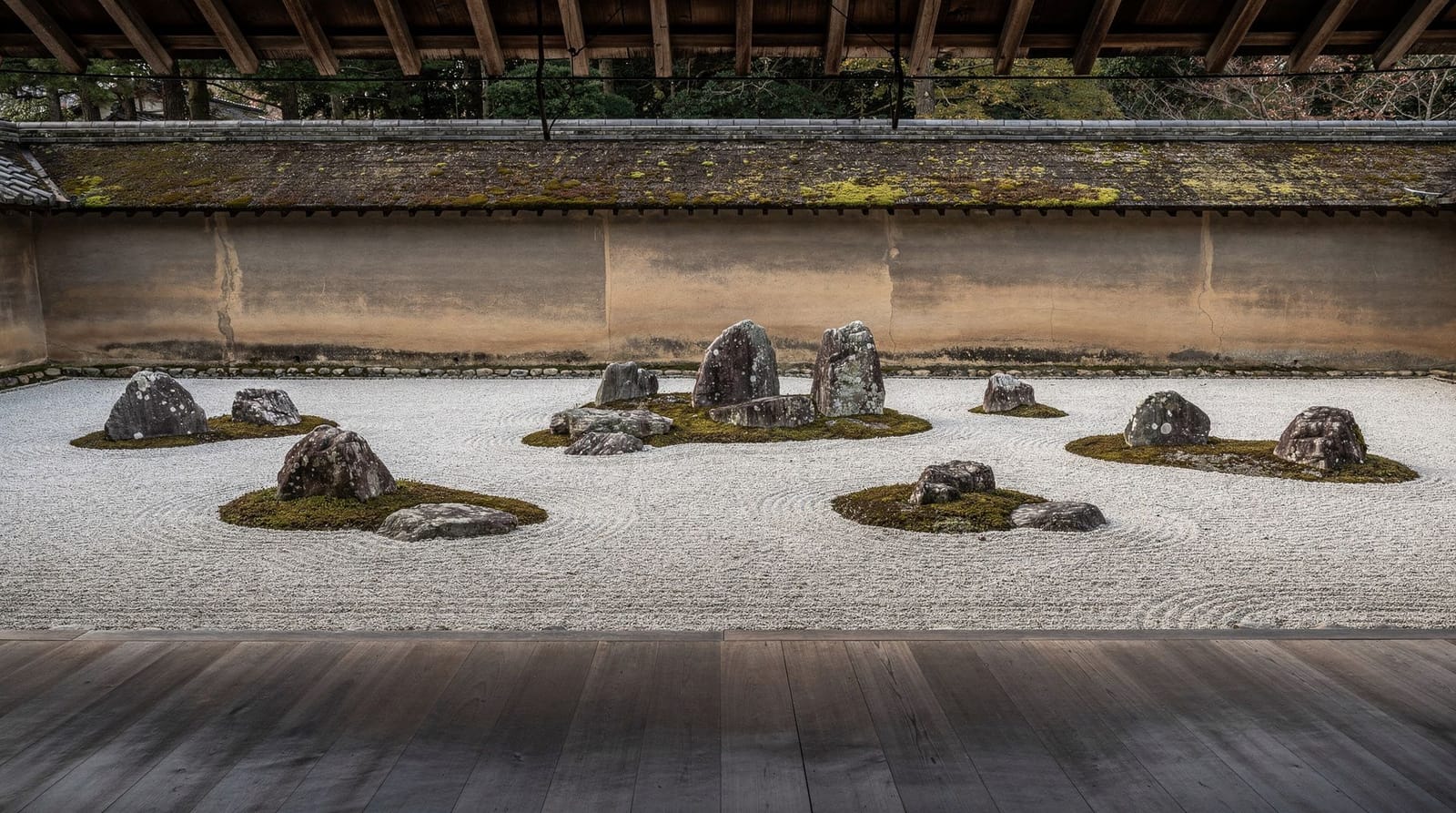
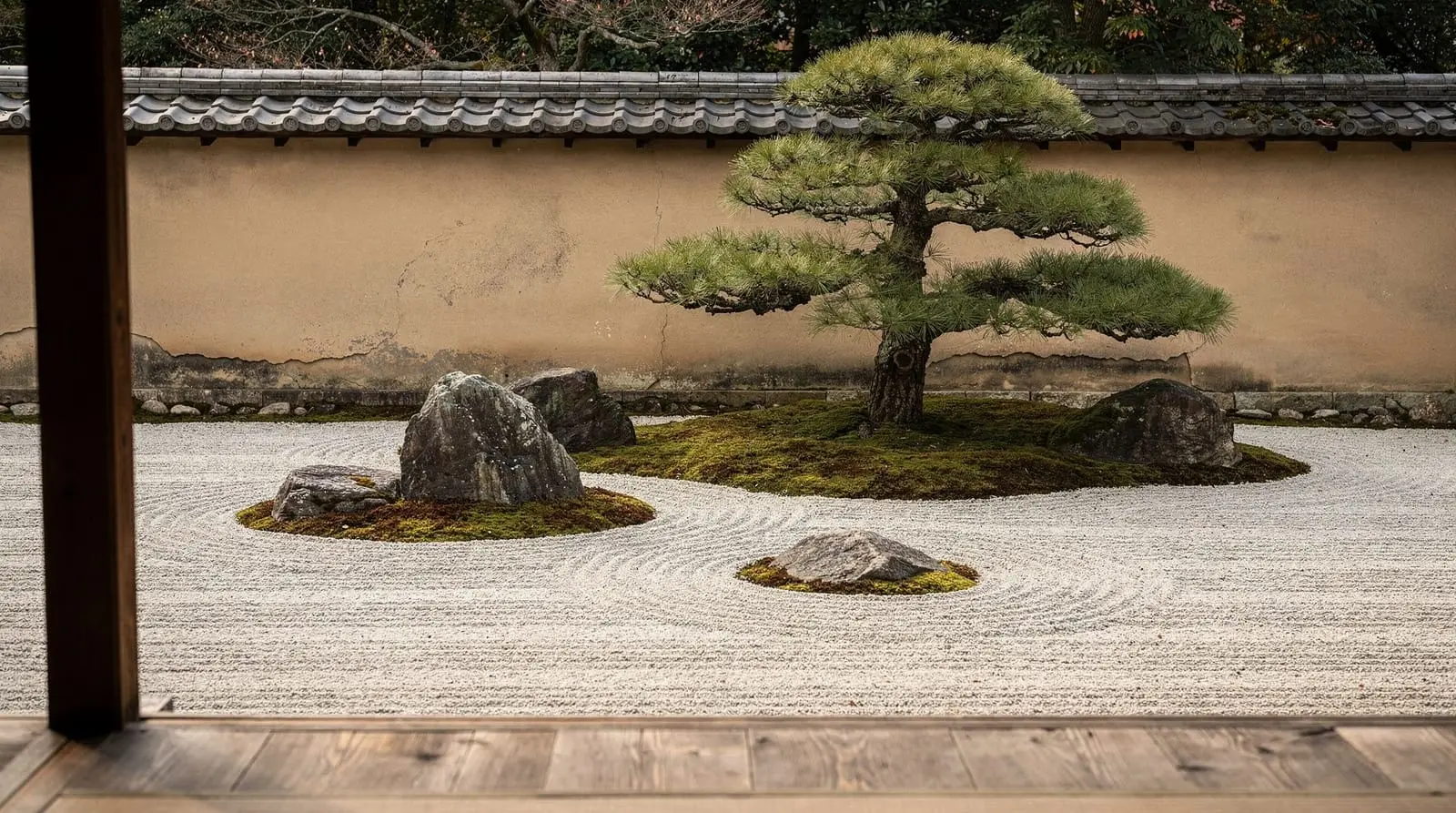
Ryoan-ji's 15-stone garden is the most famous and the best starting point at ¥600 admission. Reading a karesansui doesn't mean decoding a fixed message — raked gravel typically stands in for water, upright stones for mountains or islands, and the arrangement is meant to be sat with rather than solved. Most garden historians actively warn against over-literal interpretation; the ambiguity is intentional.
| Ryoan-ji | ¥600, 8am-5pm, 15-20min to sit with |
| Daitoku-ji subtemples | ¥500-600 each, ~9am-4:30/5pm |
| Tofuku-ji Hojo garden | ¥500 (¥1,000 w/ valley in autumn) |
| Kennin-ji | ~¥600, 10am-5pm |
| Booking | None needed — all walk-in |
Four gardens, one vocabulary, genuinely different results
A karesansui, or dry landscape garden, uses raked gravel and arranged stone instead of water and plants to suggest a landscape — but “dry garden” as a category covers a wider range than the famous Ryoan-ji photo suggests. Kyoto’s best examples span a 700-year design tradition, from Zen temples built around abstract stone compositions to a 1939 modernist reinterpretation using clipped hedges in a checkerboard grid. This guide covers the four most worthwhile: Ryoan-ji, Daitoku-ji’s subtemples, Tofuku-ji, and Kennin-ji — what makes each different, real prices, and a straightforward explanation of how to look at a dry garden without needing an art history degree.
For pond-and-strolling gardens — a different tradition entirely — see the companion best gardens in Kyoto guide, which covers Saiho-ji, Tenryu-ji, Ginkaku-ji, and Katsura Imperial Villa.
How to actually “read” a dry garden
The honest answer is that most karesansui gardens don’t have a single documented meaning, and treating them like a puzzle to solve usually leads to disappointment. What’s useful instead is the vocabulary: raked gravel in parallel or wave-like lines conventionally suggests water, whether a still pond or moving current; upright or grouped stones suggest mountains, islands, or in some compositions a boat crossing open water; moss, where present, softens the transition between stone and gravel.
Ryoan-ji’s 15 stones don’t map to any agreed narrative — theories range from a tiger carrying cubs across a river to a purely abstract composition about incomplete perception, and no contemporary document settles the question. The gardens reward slow, unhurried looking more than active decoding; sit rather than search for an answer.
Ryoan-ji greatest zen garden guided tourRyoan-ji: the reference point
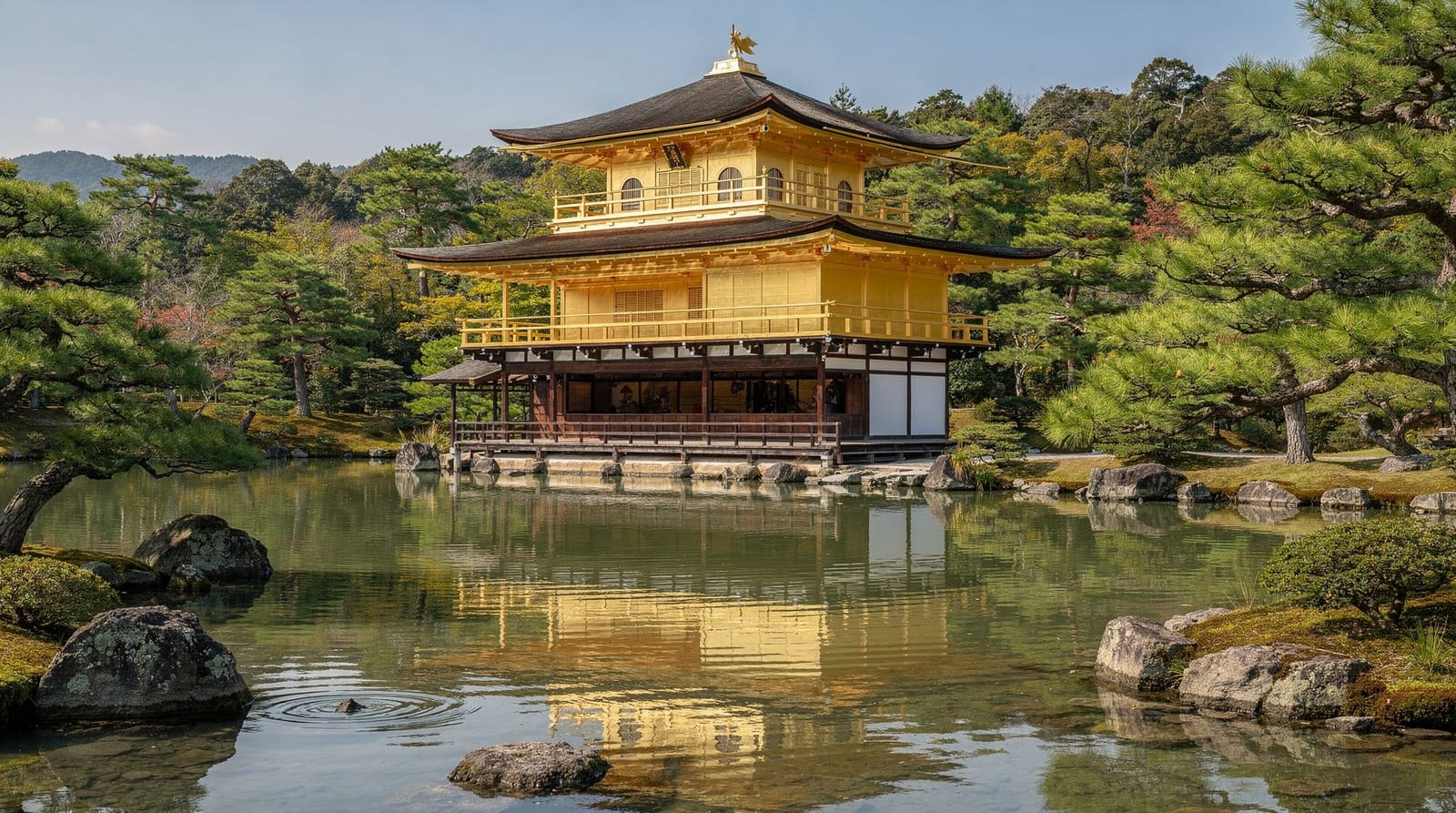
Ryoan-ji’s rectangle of raked white gravel, containing 15 stones arranged so at least one is always hidden from any single seat along the veranda, is the garden most books and courses use to introduce the karesansui tradition — which has made it Kyoto’s most name-recognized dry garden, for better or worse. Admission is ¥600, hours run 8am-5pm (shorter in winter), and the garden itself takes only 15-20 minutes to sit with, though many visitors stay considerably longer. The full breakdown — the tsukubai water basin’s hidden inscription, the quieter Kyoyochi pond most visitors skip, and how the temple connects to nearby Kinkaku-ji — is in the dedicated Ryoan-ji guide.
Kinkaku-ji and Ryoan-ji walking tourDaitoku-ji: one temple complex, three distinct gardens worth separating
Daitoku-ji is less a single temple than a walled complex of over twenty subtemples, most of them closed to the public, but three open ones offer genuinely different garden experiences worth telling apart rather than treating as interchangeable. Daisen-in’s small courtyard garden depicts a symbolic river journey — water source in the mountains, rapids, a boat, and finally an open sea represented by raked gravel — entirely through stone and gravel arrangement, with no plants at all.
Zuiho-in’s garden, redesigned in the 20th century by Shigemori Mirei (the same designer behind Tofuku-ji’s modern garden), includes a cross-shaped stone arrangement in a rear section referencing the temple’s founding patron, a 16th-century daimyo baptized as a Christian — a detail most visitors walk past without noticing unless they know to look. Koto-in trades dramatic symbolism for atmosphere: a moss-and-stone approach path lined with maples, considered one of the most photogenic entries to any Kyoto subtemple, especially in autumn. Each charges separate admission, generally ¥500-600, and each takes 20-30 minutes to see properly.
Tofuku-ji: a 1939 modernist reinterpretation inside a medieval monastery
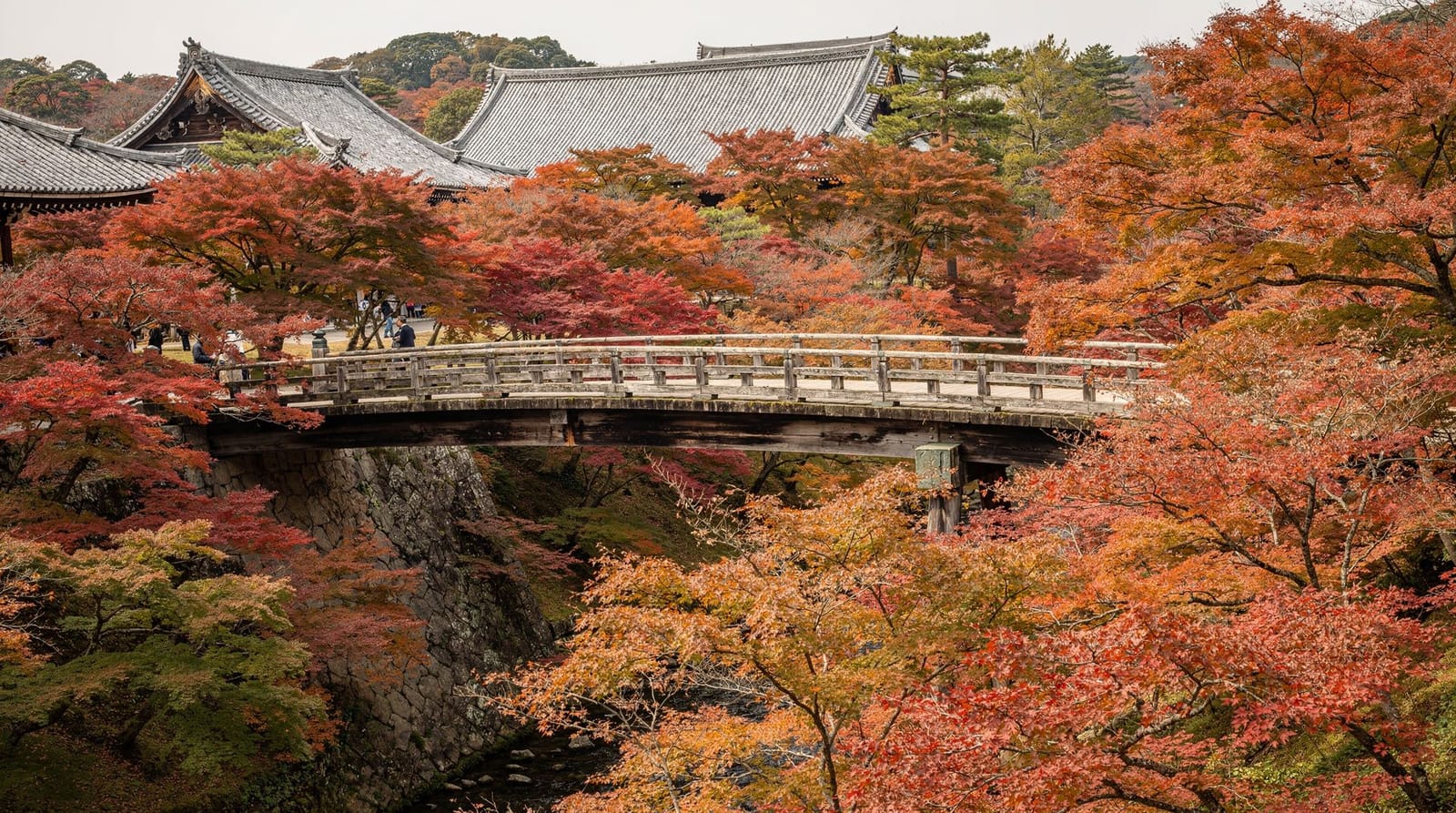
Tofuku-ji’s Hojo garden, redesigned in 1939 by Shigemori Mirei, uses a geometric checkerboard grid of clipped azalea and moss — a design abstract and grid-based enough that first-time visitors sometimes assume it’s contemporary rather than nearly a century old. It’s paired at the same site with the temple’s famous Tsutenkyo bridge and valley of roughly 2,000 maples, which draws Kyoto’s densest autumn foliage crowds for about three weeks each November. Outside that window, the garden itself is rarely busy. Full pricing, autumn timing, and how the two halves of the site (garden versus valley) are ticketed separately is covered in the Tofuku-ji guide.
Tofuku-ji and Komyo-in guided walking tourKennin-ji: Kyoto’s oldest Zen temple, in the middle of Gion
Kennin-ji, founded in 1202 by the monk Eisai — credited with formally introducing Rinzai Zen Buddhism to Japan and popularizing tea drinking alongside it — is Kyoto’s oldest Zen temple, tucked into a quiet corner of the Gion district just a short walk from the crowds on Hanamikoji-dori.
Its grounds include the Chotei-kyo dry garden near the main hall and a separate moss-and-stone composition, both considerably less visited than the temple’s main draw: a large ceiling painting of twin dragons in the Dharma Hall, added in 2002 to mark the temple’s 800th anniversary. Most visitors come for the dragons and leave without pausing at the gardens — worth correcting if you’re already in Gion for the geisha district and want a genuinely quiet stop nearby.
Zen moments Kyoto temple reflections tourPrices and hours at a glance
Ryoan-ji: ¥600, 8am-5pm (winter hours shorter). Daitoku-ji subtemples: ¥500-600 each, roughly 9am-4:30/5pm depending on the subtemple, with hours varying by season. Tofuku-ji: ¥500 for the Hojo garden outside autumn peak, ¥1,000 for the valley/Tsutenkyo bridge during the November foliage season. Kennin-ji: around ¥600, including access to both the dragon ceiling and the gardens, typically 10am-5pm with earlier last entry.
Crowds and timing
None of these four gardens require reservations, which means crowd levels depend entirely on time of day and season rather than a capped booking system. Ryoan-ji and Kennin-ji see the steadiest tour traffic given their fame; Daitoku-ji’s individual subtemples and Tofuku-ji’s Hojo garden outside autumn are markedly quieter, since they draw visitors specifically interested in garden design rather than every general Kyoto itinerary. Arriving within the first hour of opening is the single most reliable strategy across all four — see the crowd-avoidance guide for exact timing windows citywide.
Combining zen gardens into a half-day or full day
Ryoan-ji and Daitoku-ji sit close enough in northern Kyoto’s Kitayama district to combine with Kinkaku-ji into a single half-day, though Daitoku-ji’s scattered subtemples require more walking between gates than a single-site visit. Tofuku-ji, near Fushimi, pairs naturally with a Fushimi Inari visit earlier or later the same day. Kennin-ji, inside Gion, fits easily alongside a geisha-district walk without adding meaningful transit time. Treating all four as one single day is possible but rushed — two zen gardens properly seen, rather than four rushed through, usually makes for a more satisfying day.
What actually differs between a “good” and “mediocre” karesansui
With so many Kyoto temples featuring some version of a raked-gravel garden, it’s worth being able to distinguish a genuinely significant design from a decorative afterthought, since not every dry garden in the city carries the same weight. The strongest examples — Ryoan-ji, Daisen-in, Tofuku-ji’s Hojo garden — share a few traits: a clear, considered relationship between individual stone groupings rather than scattered placement, a composition that changes meaningfully depending on where you sit or stand rather than looking identical from every angle, and boundaries (walls, hedges, or borrowed scenery) that are as deliberately designed as the stones and gravel themselves.
A smaller, more decorative dry garden — and Kyoto has many attached to guesthouses, restaurants, and minor temple halls — often uses the same raked-gravel vocabulary without that underlying compositional rigor, which is fine as atmosphere but isn’t the same category of achievement as the four gardens covered in this guide. Knowing the difference helps calibrate expectations at smaller temples along the way, rather than assuming every raked-gravel courtyard in Kyoto carries equal significance.
Zen meditation as a way to engage more deeply
Several temples in this category, along with others around the city, offer short guided zazen (seated meditation) sessions, sometimes paired with a garden viewing, for visitors who want more than a walk-through. These sessions typically run 30-45 minutes, conducted in a temple hall rather than in front of the garden itself, and are a genuinely different way to engage with the same contemplative tradition these gardens were designed to support. See the zen meditation guide for which temples offer English-language sessions and what to expect.
What to wear and accessibility
Interior hall visits at all four sites require shoes off, so easily removable footwear matters more here than at outdoor-only gardens. Paths are typically gravel, stone, or wood veranda, with few ramps or accommodations for wheelchairs — Ryoan-ji’s main veranda viewing area is among the more accessible, since it requires no walking beyond the entrance hall itself, while Daitoku-ji’s scattered subtemple layout involves the most walking between gates.
Where karesansui came from, and why it spread
Dry landscape gardening has roots in Chinese landscape painting and garden traditions, imported into Japan alongside Zen Buddhism from the 13th century onward, but it developed a distinctly Japanese character as it took hold in Kyoto’s Zen monasteries.
Early Zen temples used stone and gravel partly out of practical necessity — monastery courtyards were often small, shaded, and poorly suited to the water features and full-scale plantings a strolling pond garden required — and partly because the discipline of arranging inanimate stone and raked gravel to suggest a landscape fit naturally with Zen practices of restraint and abstraction. What began as a workaround for cramped monastery courtyards became, by the Muromachi period (1336-1573), a fully developed art form in its own right, with gardens like Ryoan-ji’s representing the tradition at its most refined and abstract.
The influence didn’t stop at Japan’s borders or at the medieval period: 20th-century modernist landscape architects, both in Japan and internationally, drew directly on karesansui principles — asymmetry, abstraction, framing a limited palette of materials — and Shigemori Mirei’s 1939 Tofuku-ji garden is itself an example of the tradition being consciously reinterpreted through a modernist lens rather than simply repeated. Corporate courtyards, contemplation gardens, and even some public plazas outside Japan borrow karesansui vocabulary today, usually without visitors realizing the design language traces back to gardens like the four covered in this guide.
A brief note on originality versus interpretation
None of these four gardens come with a fully documented, contemporary explanation of their designer’s exact intent — even Ryoan-ji’s creation date and designer remain genuinely uncertain, a gap that’s unusual for a site this significant. That absence of a fixed answer is, for many visitors, part of the appeal rather than a flaw: these are spaces built for contemplation, not for delivering a single correct interpretation, and the gap between the garden’s ambiguity and centuries of scholarly attempts to resolve it is itself part of what makes the tradition worth spending an unhurried hour with.
Pairing a zen garden visit with the rest of Kyoto’s temples
None of these four gardens need a full day on their own, which makes them easy to fold into a wider temple itinerary rather than treating “zen garden day” as a separate trip. Ryoan-ji and Daitoku-ji sit close enough to Kinkaku-ji in northern Kyoto to combine into one half-day without much backtracking. Tofuku-ji pairs naturally with a Fushimi Inari morning, since both sit in the city’s southeast.
Kennin-ji, inside Gion, slots easily into an afternoon that also includes a Hanamikoji walk or a stop at the Gion district’s quieter Shirakawa canal. For travelers building a longer temple-focused trip, the Kyoto UNESCO sites guide covers how these gardens fit into the city’s wider list of protected historic monuments, several of which — Ryoan-ji and Tofuku-ji among them — carry that designation specifically for their garden design.
Seasonal character: how these gardens change without flowers
Unlike Kyoto’s pond-and-strolling gardens, these four dry gardens don’t rely on flowering plants for their visual identity, which makes them worth visiting in any season rather than timing a trip around bloom or foliage — but they do still shift character with the seasons in subtler ways. Fresh snow, when it happens, transforms Ryoan-ji’s raked gravel into a genuinely rare, striking composition, since white-on-white removes the usual visual contrast between stone and sand.
Moss at Koto-in and around Daitoku-ji’s approach paths deepens in color during the early-summer rainy season, the same window that makes Ginkaku-ji’s hillside garden vivid, described in the Ginkaku-ji guide. Autumn adds color at the edges of these gardens even where the central composition itself is unchanged — Daisen-in’s borrowed maple canopy and Koto-in’s maple-lined approach both benefit from November’s foliage without the extreme crowding that hits Tofuku-ji’s valley specifically. Summer’s harsh midday light is arguably these gardens’ least flattering season for photography, though early-morning visits sidestep that regardless of month.
Frequently asked questions about The best zen gardens in Kyoto — and how to actually read them
What does the raked gravel in a zen garden actually represent?
Why is Ryoan-ji's garden considered the most important dry garden in Kyoto?
What's the difference between Daitoku-ji's subtemple gardens?
Is Tofuku-ji's garden actually a traditional zen garden?
What makes Kennin-ji's garden worth visiting alongside its famous dragon ceiling?
Do you need to book Kyoto's zen gardens in advance?
Which Kyoto zen garden is best for a first-time visitor with limited time?
Are these gardens crowded, and when's the quietest time to visit?
Top experiences
Bookable activities with verified prices and instant confirmation on GetYourGuide.