Kinkaku-ji guide — the Golden Pavilion, mirror pond & Ryoan-ji pairing
Kyoto: Kinkaku-ji Guided Tour with Entry Ticket
How much does it cost to visit Kinkaku-ji and can you go inside?
Admission is ¥500, and it's view-only — there is no interior access to the Golden Pavilion itself. You walk a fixed path around the mirror pond (Kyoko-chi) for the classic photo angle, then continue through the surrounding garden. Open 9am-5pm daily, with no evening or illumination hours.
A view-only pavilion, and the one photo everyone takes
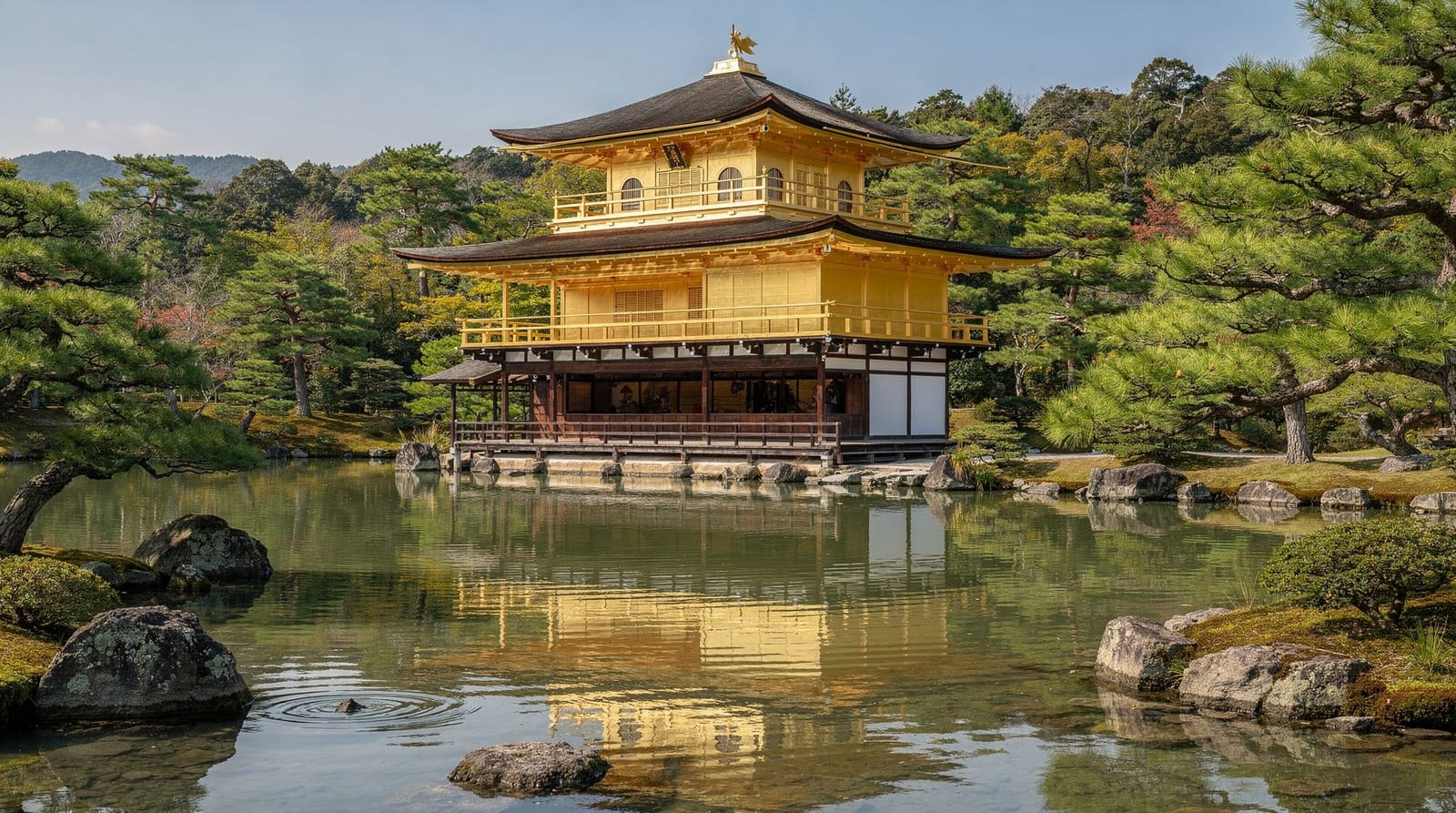
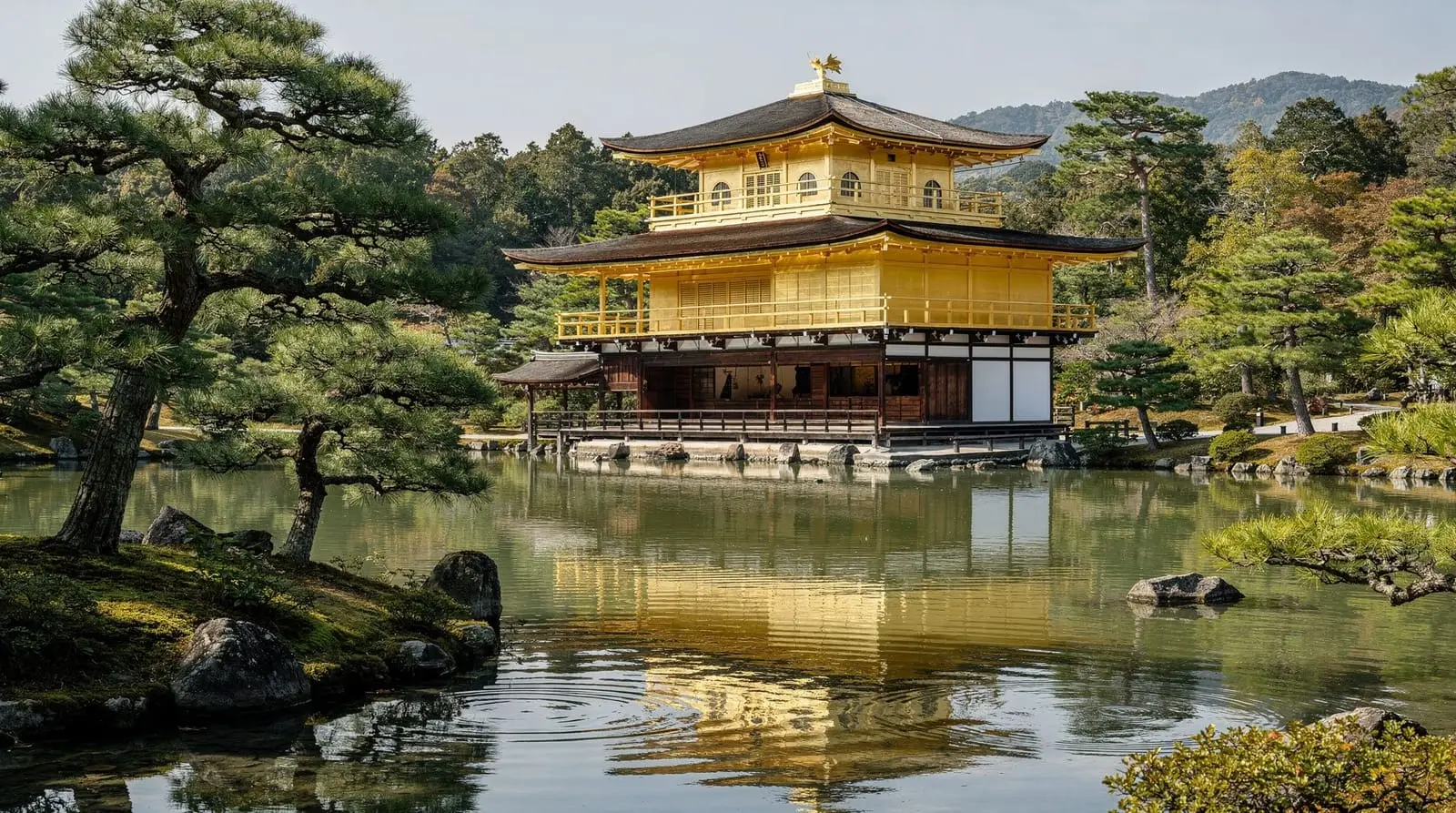
Kinkaku-ji — literally “Golden Pavilion” — is the single most recognizable building in Kyoto, and one of the most photographed in Japan: a three-story structure with its top two floors covered in genuine gold leaf, standing over a still pond that mirrors the whole building on calm days. It’s also, worth stating plainly, a view-only site. There’s no interior tour, no walking through the pavilion’s rooms — the entire visit is a fixed loop path around the pond and garden, taking 30-45 minutes unhurried.
The current building dates only to 1955. The 14th-century original, built as part of a retirement villa for shogun Ashikaga Yoshimitsu and later converted to a Zen temple, was burned down in 1950 by a novice monk — an event that became the basis for Yukio Mishima’s 1956 novel The Temple of the Golden Pavilion. The gold leaf on today’s reconstruction was substantially thickened during a 1987 restoration, which is why the building reads as especially vivid gold in modern photographs compared to older images of the site.
| Admission | ¥500 |
| Hours | 9am-5pm daily, last entry around 4:30pm |
| Time needed | 30-45 minutes, view-only |
| Getting there | Bus 101/102/205 from Kyoto Station, around 40 min |
| Best time | Right at 9am opening |
Admission, hours, and what the ticket actually is
Admission is ¥500, paid at the gate. Rather than a standard paper stub, the ticket is printed as a small talisman — a Buddhist good-luck charm meant to be kept, not a receipt to be discarded, which is a detail worth knowing before you toss it.
Hours run 9am to 5pm every day of the year, with last entry around 4:30pm. Kinkaku-ji does not offer evening illumination hours the way Kiyomizu-dera does during cherry blossom and autumn foliage season — the gate closes at 5pm regardless of the calendar.
Kinkaku-ji guided tour with entry ticketThe mirror pond and the fixed viewing path
The garden surrounding Kinkaku-ji was designed around Kyoko-chi, the “mirror pond,” specifically to reflect the pavilion — a deliberate piece of landscape design rather than a coincidence of geography. Ten small islands and rocks are placed across the pond, each said to represent a specific location from Buddhist cosmology or classical literature.
Visitors follow a single one-way path that starts at the classic photo point across the pond, continues past the pavilion’s side, climbs briefly through a hillside garden with a small teahouse (Sekkatei), and exits near a shop selling matcha and temple charms. There’s no option to loop back or linger at a second angle once the path moves you forward — plan your photos at the main viewpoint before continuing.
Crowds: no quiet window, only “least bad”
Unlike sights with a genuine early-morning or late-afternoon lull, Kinkaku-ji doesn’t have a reliable quiet stretch. It’s a fixed stop on nearly every Kyoto bus tour itinerary, and the crowd builds from opening and stays heavy through the afternoon, right up until the 5pm close. Right at 9am opening is the closest thing to a quiet window — even a 20-30 minute head start on the day’s tour buses makes a visible difference at the main viewpoint.
Kinkakuji, Golden Pavilion, private 90-minute tourWinter, particularly a snowy morning, is the one condition that changes the experience meaningfully rather than just the crowd size — gold against snow and dark water is a genuinely different image, and a number of long-time visitors and photographers rate it as the best version of the site. It can’t be planned around with any certainty, but it’s worth checking the forecast if you’re in Kyoto during winter.
Getting there: bus or taxi, not train
Kinkaku-ji sits in the Kitayama district in northern Kyoto, with no train station nearby. From Kyoto Station, city buses 101, 102, and 205 run to the Kinkaku-ji-michi stop, a journey of roughly 40 minutes depending on traffic — this is a longer bus ride than most other major sights in the city, so budget accordingly. A taxi covers the same distance in about 20-25 minutes.
Kinkaku-ji and Ryoan-ji, despite both being labeled “northern Kyoto” sights, are not within comfortable walking distance of each other. Plan on a bus (roughly 15-20 minutes between the two) or a taxi rather than assuming you can walk the district temple-to-temple the way you can in Higashiyama.
Combining Kinkaku-ji with Ryoan-ji and Ninna-ji
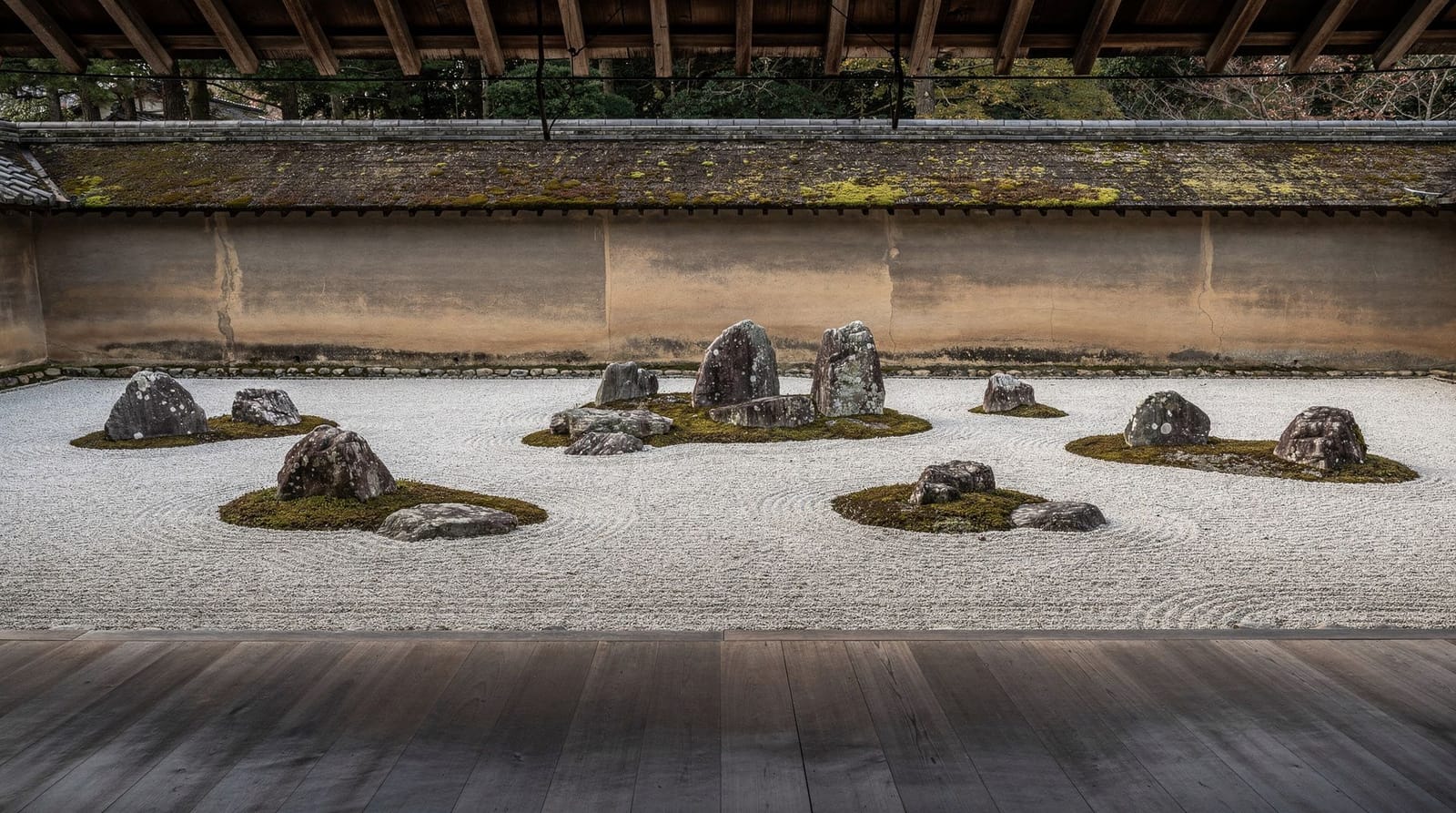
Because this district has no other major draw beyond its temples, almost every visitor to Kinkaku-ji also visits at least Ryoan-ji, home to Japan’s most famous dry rock garden, a short bus ride away. See the Ryoan-ji guide for the fifteen-stone garden and its layout.
Kinkaku-ji and Ryoan-ji walking tourNinna-ji, known for its later-blooming Omuro cherry trees (typically two to three weeks after the rest of the city’s peak bloom), is a reasonable third stop for anyone with a full day rather than a half day set aside for this district. For an overview of the whole northern Kyoto area including Daitoku-ji’s quieter Zen sub-temples, see the Kinkaku-ji and Kitayama destination guide.
Planning the rest of the day
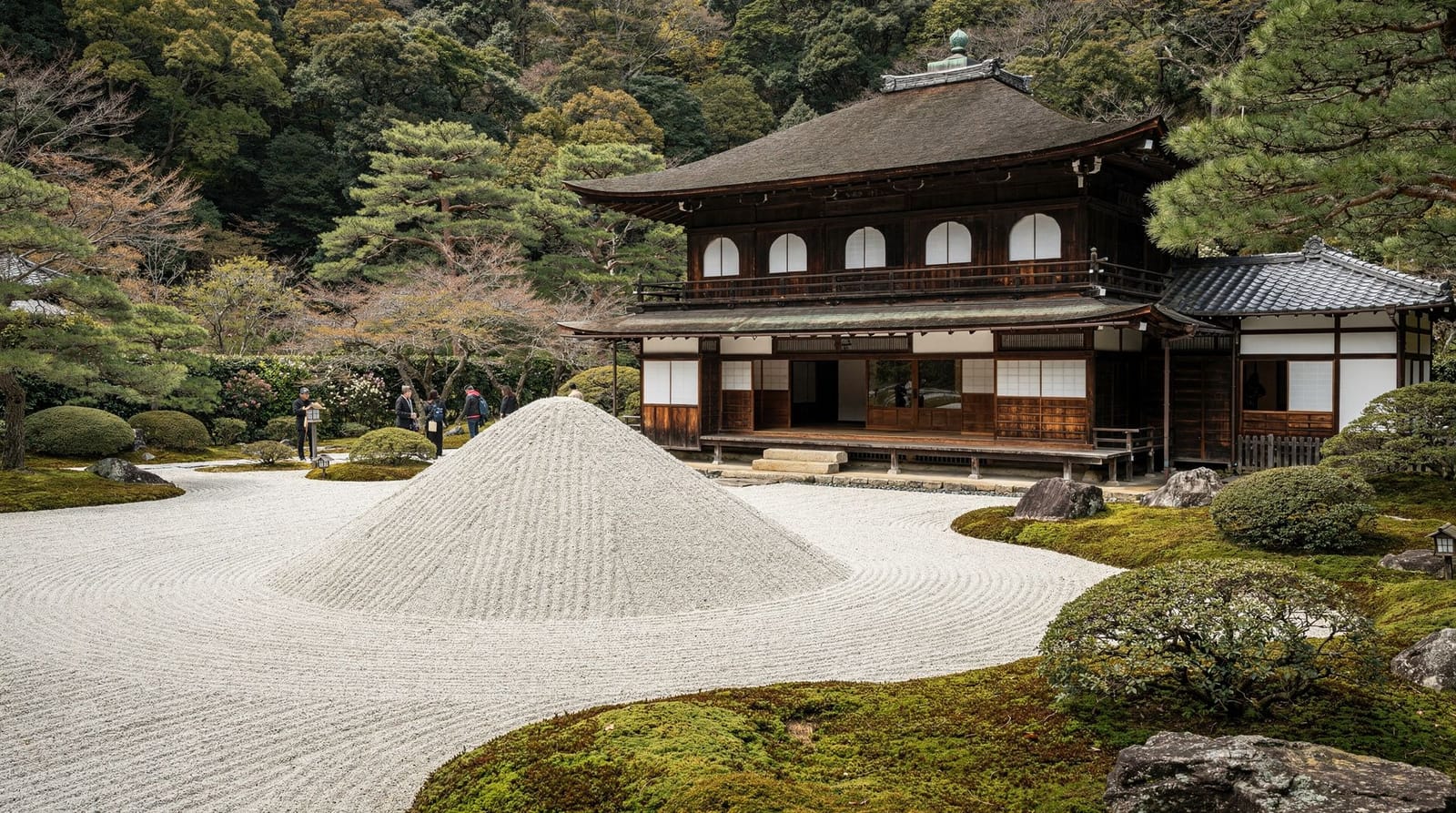
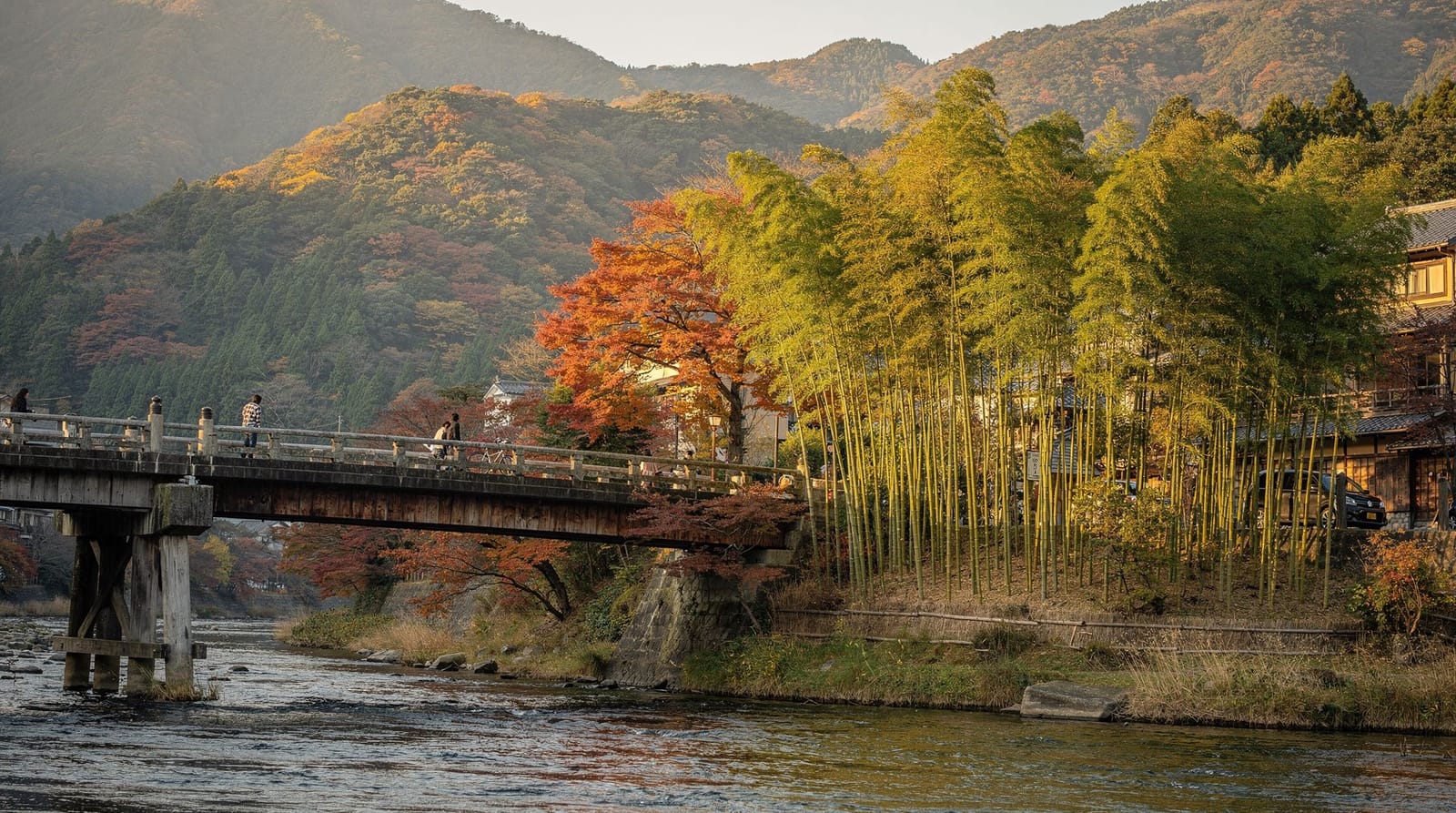
Because Kitayama sits apart from Kyoto’s other major clusters, most people treat it as a self-contained half-day trip rather than folding it into a Higashiyama or Gion walk. If you’re building a fuller itinerary, the Arashiyama destination guide covers the bamboo grove and Tenryu-ji, reachable by bus or train from this district in around 20-30 minutes, and makes a natural second stop for the afternoon. For the sand garden and Philosopher’s Path alternative on the opposite side of the city, see the Ginkaku-ji guide.
A brief history: retirement villa to Zen temple
Kinkaku-ji began not as a temple but as a retirement villa built for shogun Ashikaga Yoshimitsu in 1397, one of the most powerful figures of the Muromachi period, who used the estate to host dignitaries and cultural gatherings that helped define what later became known as Kitayama culture — an aesthetic movement blending aristocratic and Zen Buddhist influences. After Yoshimitsu’s death, per his will, the villa was converted into a Zen temple, following the same pattern later repeated at Ginkaku-ji by his grandson.
The pavilion’s three floors each represent a different architectural style: the ground floor uses Shinden-zukuri, an aristocratic residential style; the second floor uses Bukke-zukuri, associated with the warrior class; and the top floor uses a Chinese Zen temple style, with gold leaf applied only to the top two floors. This layered mixing of styles within a single building is part of what made the design historically significant beyond its later fame as a photogenic gold structure.
The 1950 fire and what “original” actually means
It’s worth being direct about a detail some visitors don’t realize until they’re standing in front of the building: the Kinkaku-ji seen today is not the original structure. In 1950, a 22-year-old novice monk at the temple set fire to the pavilion, destroying it completely — an act later understood to stem from mental illness, and one that became the basis for Yukio Mishima’s 1956 novel The Temple of the Golden Pavilion, itself based partly on court testimony from the monk’s trial.
The current building, an exact reconstruction completed in 1955, is now itself seven decades old, with a significant re-gilding in 1987 that used substantially more gold leaf than the postwar reconstruction had originally applied, giving the modern building its especially vivid appearance.
What to wear and practical tips
Kinkaku-ji’s path is flat and fully paved for its entire loop, making it one of the more accessible major temple sights in Kyoto compared to hillside sites like Kiyomizu-dera. Comfortable walking shoes are still sensible, but there’s no steep climbing involved. The path can get slippery in wet weather near the pond’s edge, where crowding sometimes pushes visitors toward the water’s low retaining wall.
There are no restrooms inside the garden loop itself — facilities are located near the entrance and exit, so plan accordingly before starting the walk. A small shop near the exit sells matcha, temple charms, and Kinkaku-ji-branded souvenirs; prices are in line with other major temple gift shops in the city, not notably higher or lower.
How Kinkaku-ji compares to Kyoto’s other major temples
Kinkaku-ji’s visit is short and singular — one viewpoint, one photograph, done in under an hour — which makes it fundamentally different from a sight like Kiyomizu-dera, where the surrounding lanes and secondary halls add real time and content. If you’re planning a day with several stops, Kinkaku-ji fits easily as a 45-minute anchor rather than requiring a half day on its own.
Compared to its sister site Ginkaku-ji, Kinkaku-ji draws considerably larger crowds and bigger tour groups, reflecting its status as the more universally recognized of the two “pavilion” temples — worth knowing if you’re deciding which to prioritize on a schedule that can’t fit both.
Common mistakes first-time visitors make
The most frequent mistake is arriving expecting an extended visit and being surprised by how short the fixed loop path actually is — many first-time visitors budget an hour or more, only to find themselves at the exit shop in 30 minutes. Plan the rest of your Kitayama day around this shorter-than-expected visit rather than assuming Kinkaku-ji alone will fill a morning.
A second mistake is not realizing there’s no interior access before arriving — some visitors expect to walk inside the pavilion the way they might at a Western palace or museum, and are disappointed to find the entire visit is exterior viewing only. Setting that expectation beforehand makes the visit land better; the site is designed as a single perfect view rather than an interior tour, and it delivers well on that narrower promise.
A third mistake is skipping the upper garden section past the pond in a rush to leave after the main photo. The hillside path with Sekkatei teahouse offers a different, elevated perspective and a quieter stretch of the visit, and it takes only an extra 10 minutes beyond the main viewpoint — worth the short detour before exiting.
The Sekkatei teahouse and the upper garden
Past the main pond viewpoint, the path climbs briefly through a hillside section of the garden to Sekkatei, a small teahouse structure dating from the Edo period, added to the grounds after the pavilion’s founding era. It’s not open for tea service to the general public, but the structure itself and the surrounding elevated garden offer a quieter, greener contrast to the crowded pond-side viewpoint most visitors experience. From certain points on this upper path, a partial view back down toward the pavilion roof is visible through the trees — a different angle from the standard postcard shot.
Photography tips
The single best-known photo angle — the pavilion reflected in Kyoko-chi with the hillside behind it — is available from a fixed viewing area early in the loop path, and it’s also the most crowded single point in the entire visit. Arriving at opening minimizes the number of people you’ll need to work around in that spot. Because the path is one-way, there’s no option to return to this viewpoint later in the visit if the light or crowd conditions improve, so it’s worth taking your time here rather than assuming you can come back.
Midday sun creates strong reflections on the pond that can work well or poorly depending on the specific weather — an overcast sky often produces a calmer, more even reflection than direct sun, which can create glare on the water’s surface.
Seasonal notes
Cherry blossom season (typically late March to early April) adds pink blossoms around the pond’s edge without extending hours or changing the admission structure, and it’s one of the most crowded windows of the year alongside autumn foliage. Autumn foliage, generally peaking in mid-to-late November, frames the gold pavilion against red and orange maples for a genuinely different color palette than the summer green backdrop. Winter, and particularly a rare snowy morning, is considered by many repeat visitors and photographers the single most striking season to see the site, since snow against gold is a combination unavailable any other time of year — though it can’t be reliably planned around given Kyoto’s inconsistent winter snowfall.
Nearby food and where to eat before or after
Unlike Higashiyama or Arashiyama, the immediate area around Kinkaku-ji has limited dining options directly adjacent to the temple — a handful of soba and udon shops sit along the main road near the bus stop, generally priced for the tourist volume passing through rather than local rates. For a wider range of options at more typical prices, the Kitaoji area a short bus ride away, or downtown Kyoto reachable in 20-30 minutes, offer considerably more choice.
A few matcha and dessert cafes near the temple’s parking area cater specifically to visitors leaving the site, with soft-serve and matcha parfaits in the ¥600-900 range — a reasonable stop if you’re not planning a full meal nearby, but not a destination worth a special trip on their own merits.
Budgeting your visit within a Kitayama day
If Kinkaku-ji is the first stop of a Kitayama half-day, arriving right at 9am opening and moving through the roughly 30-45 minute loop leaves comfortable time to reach Ryoan-ji by mid-morning, before its own crowds build significantly. A typical half-day pairing looks like: Kinkaku-ji at 9am, bus to Ryoan-ji by 10-10:30am, an hour there including the rock garden and a walk around Kyoyochi pond, then either Ninna-ji or lunch before continuing elsewhere in the city for the afternoon. Trying to add a third or fourth temple to the same morning generally means rushing at least one of them, given the bus transfers required between sights in this scattered district.
Accessibility
Kinkaku-ji’s main loop path is flat, paved gravel and gently sloped, making it one of the more manageable major temple sights in Kyoto for visitors with limited mobility — a meaningful contrast to hillside sites like Kiyomizu-dera. The short climb to Sekkatei’s upper garden does involve some incline and steps, and can reasonably be skipped without missing the site’s central attraction. Restrooms near the entrance and exit are standard modern facilities, and the site does not require removing shoes at any point since the entire visit stays outdoors.
Wheelchair users should be able to complete the main loop without significant difficulty, though the gravel surface can be firmer going than smooth pavement in a few short stretches. Staff at the entrance can point out the most manageable route if you have specific concerns before starting the walk.
Frequently asked questions about Kinkaku-ji guide — the Golden Pavilion, mirror pond & Ryoan-ji pairing
Is the Golden Pavilion actually covered in real gold?
Can you go inside Kinkaku-ji?
How much does Kinkaku-ji admission cost?
What are Kinkaku-ji's opening hours?
When is Kinkaku-ji least crowded?
Is snow or a specific season the best time to see Kinkaku-ji?
How do you get to Kinkaku-ji and can you walk there from Ryoan-ji?
Should Kinkaku-ji be combined with Ryoan-ji and Ninna-ji?
Top experiences
Bookable activities with verified prices and instant confirmation on GetYourGuide.