Gion district guide — Hanamikoji, Shirakawa, and how to walk it right
Kyoto: The Geisha Districts of Kyoto Walking Tour
What's the best way to spend a few hours in Gion?
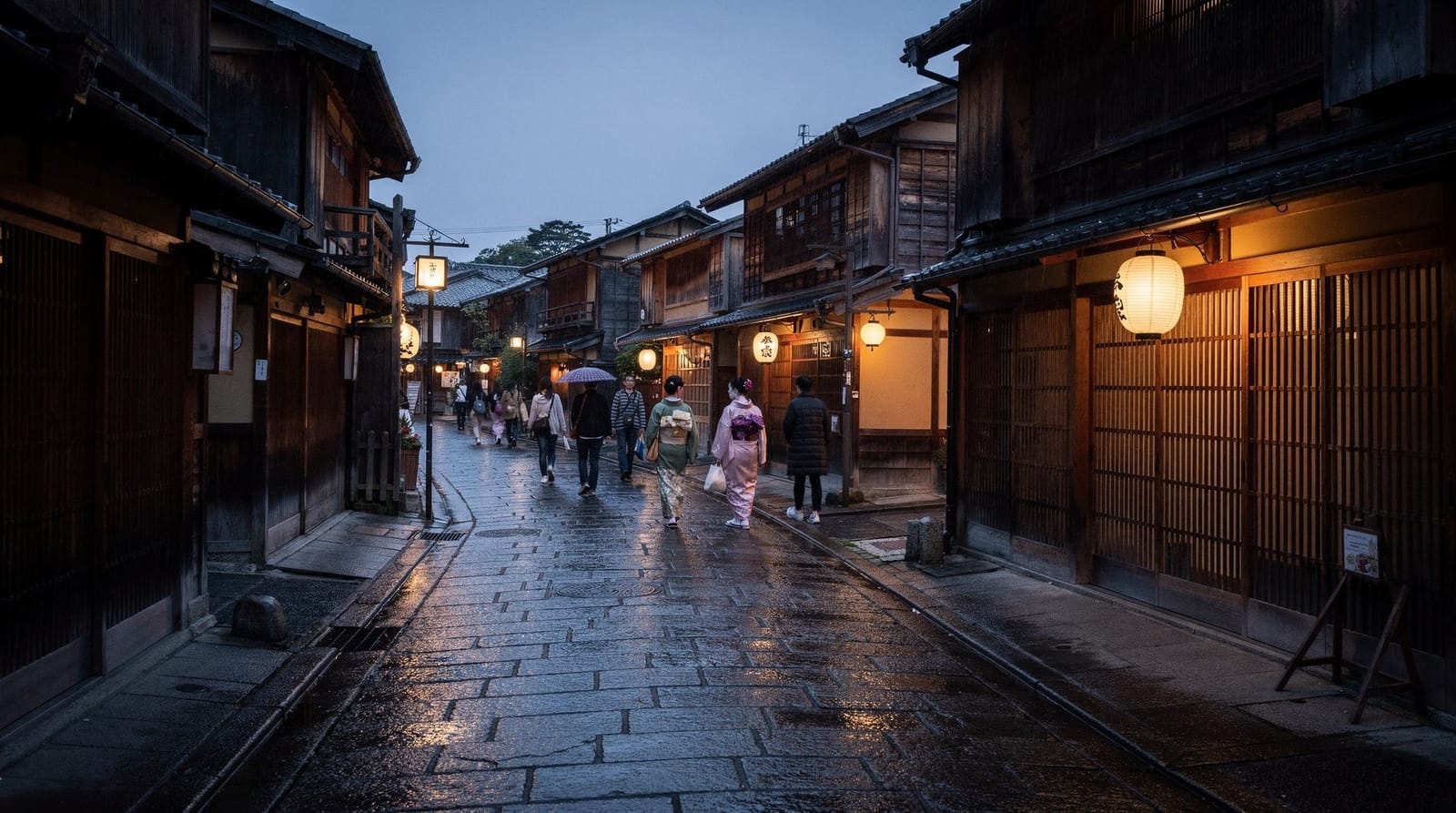
Walk Hanamikoji-dori from Shijo-dori south toward Kenninji-dori, detour onto Shirakawa canal's cherry-lined lane, and treat any maiko or geiko sighting as a bonus rather than the goal. Late afternoon into early evening (roughly 4-6:30pm) shows the district at its most atmospheric, with wooden machiya facades lit and restaurants opening for the evening, without the daytime tour-group density of Hanamikoji's busiest hours.
| Core streets | Hanamikoji-dori, Shirakawa canal |
| Time needed | 20-30min walkable end to end; 2-3hrs unhurried |
| Best window | 4-7pm for atmosphere; before 9am for quiet |
| Maiko sightings | Possible ~5:30-6:30pm, never guaranteed |
| Getting there | Gion-Shijo Station (Keihan) |
A working neighborhood built around two streets
Gion gets described in most travel writing as “Kyoto’s geisha district,” which is accurate but incomplete — it undersells the fact that Gion is a functioning neighborhood of restaurants, shops, and residences, organized around two very different streets that most visitors walk without quite realizing they’re seeing two distinct characters of the same district. Hanamikoji-dori is the wide, formal spine; Shirakawa is the narrow, quiet canal-side lane a few minutes’ walk away. Understanding both, plus the machiya architecture that ties the whole district together, gets you a genuinely richer visit than treating Gion as a single photo-op street to walk through once.
Hanamikoji-dori: the spine of the district
Hanamikoji-dori runs roughly north-south for about a kilometer, stone-paved and lined with wooden machiya facades, many now operating as restaurants, teahouses, and small shops.
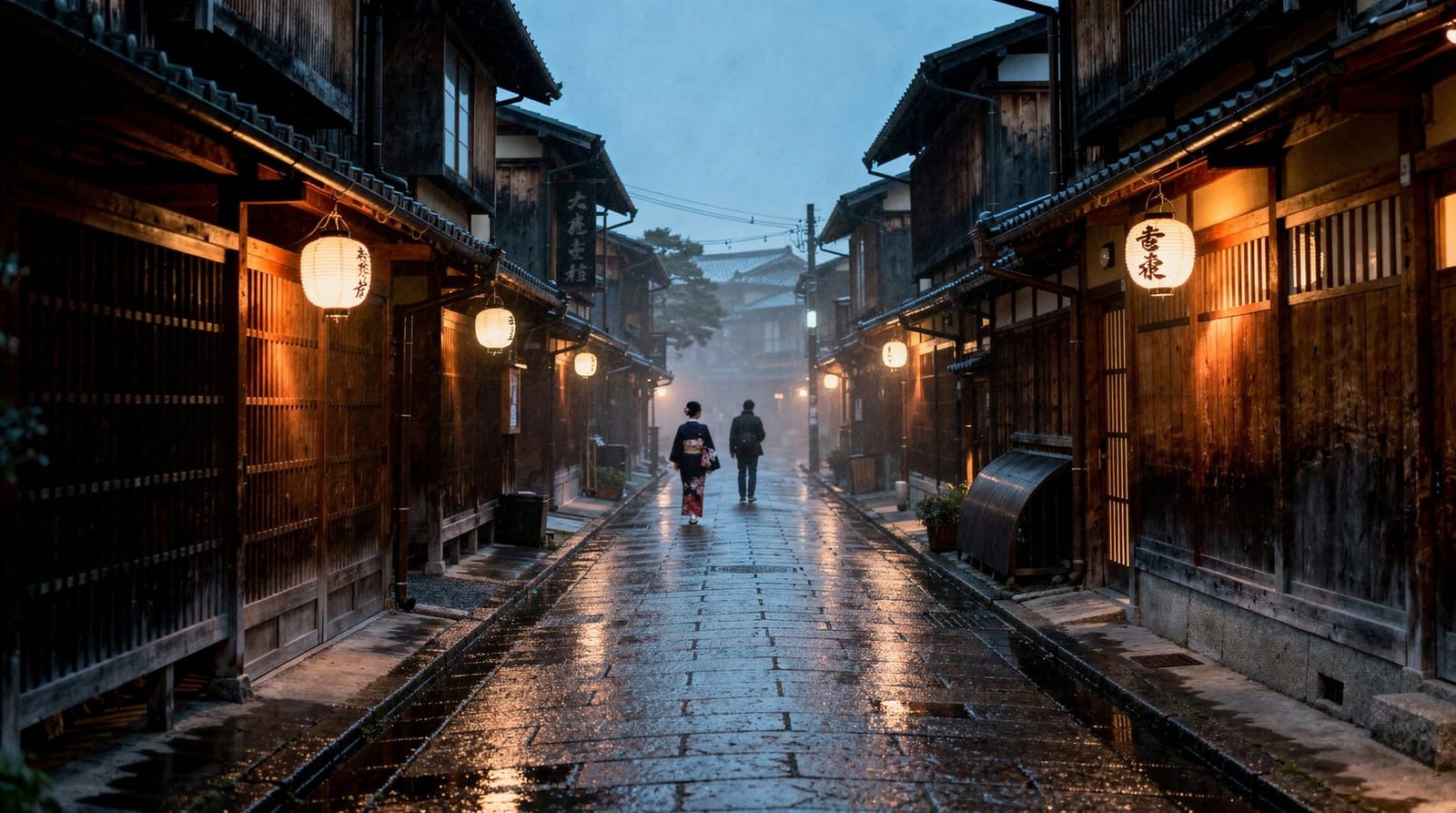
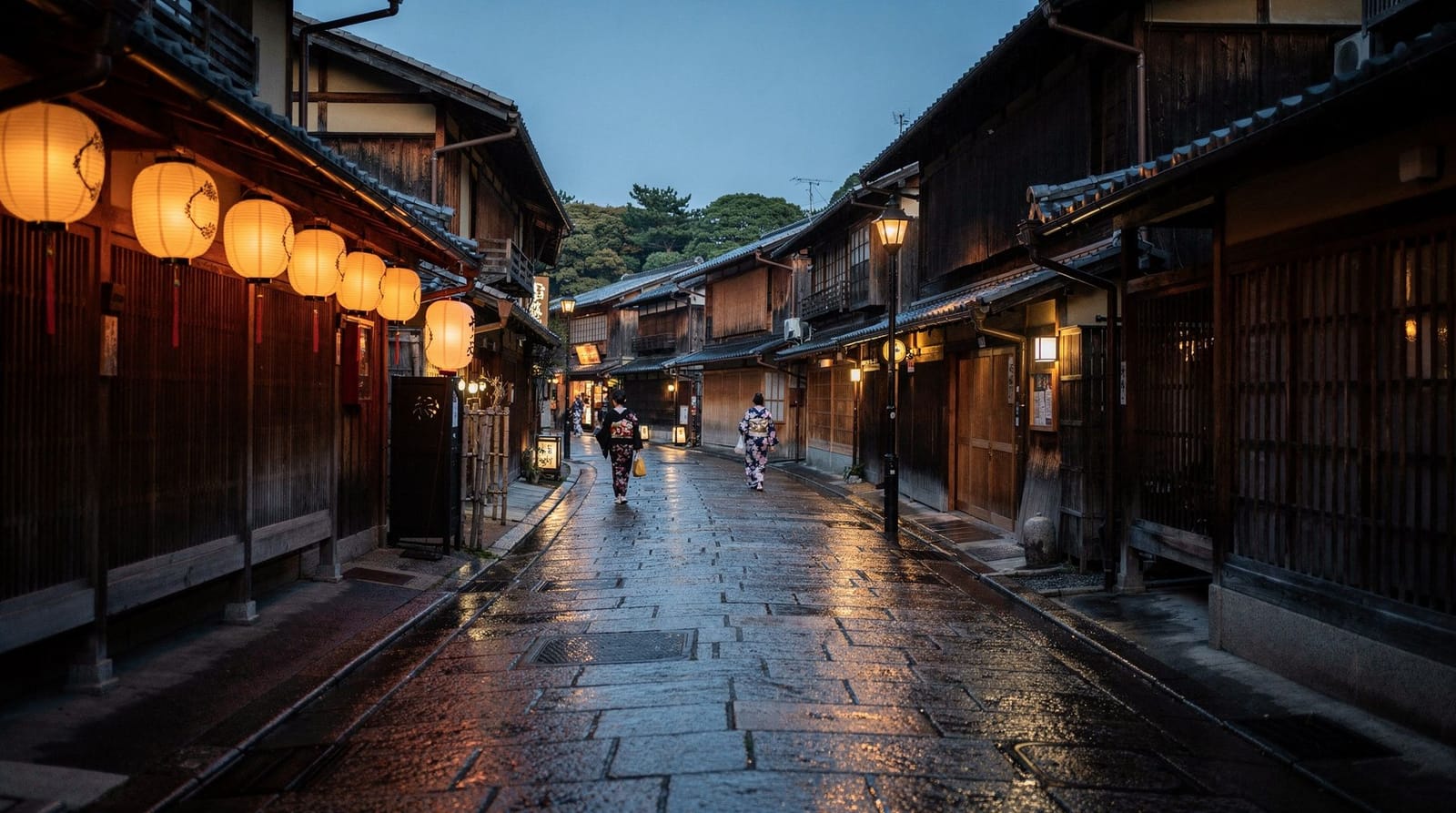
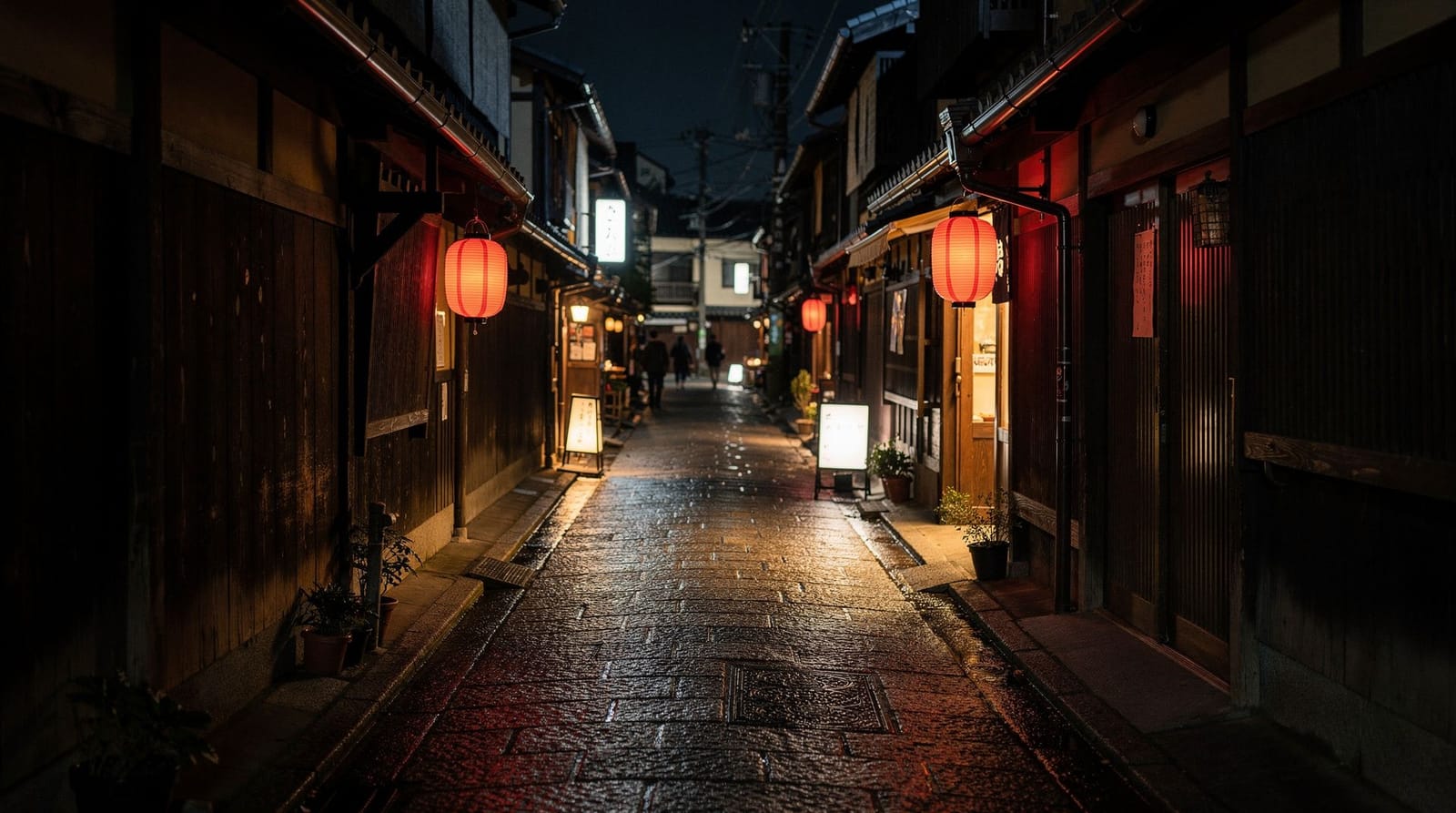
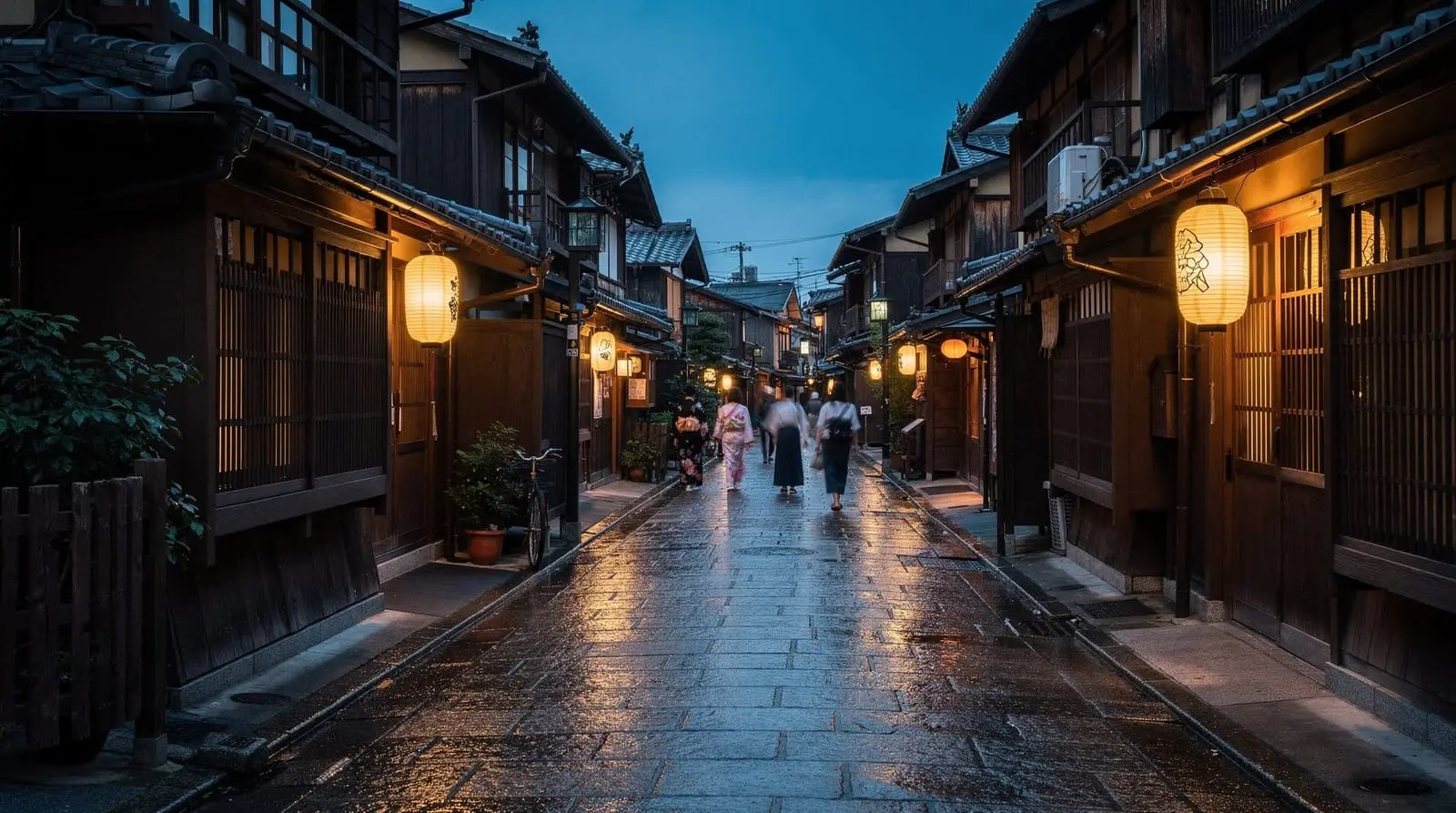
The street’s character shifts noticeably along its length: the northern stretch near Shijo-dori carries heavier general foot traffic and more shopfronts aimed at casual visitors, while the southern half, closer to Kenninji-dori and Kennin-ji temple, is quieter, more architecturally intact, and the section most associated with Gion’s classic postcard image — dark wood latticework, stone paving, and paper lanterns outside restaurant entrances. This southern stretch is also where several marked private streets branch off, some carrying photography restrictions that visitors should take seriously (more on this below).
Geisha districts of Kyoto walking tourShirakawa: the quieter, water-lined alternative
A short walk north and east of Hanamikoji’s midpoint, the Shirakawa canal runs through Gion’s edge, lined with willow trees, stone bridges, and a row of restaurants with small wooden decks overhanging the water. It’s consistently described by repeat visitors as more photogenic than Hanamikoji itself, thanks to the combination of water, greenery, and traditional architecture in a single frame, and it draws a noticeably smaller crowd than the main street, particularly earlier in the day. Cherry blossoms along the canal in late March/early April are a specific, well-known draw, though the lane is worth a walk in any season for its comparative calm.
Machiya: the architecture underneath everything
The wooden townhouses lining both Hanamikoji and Shirakawa are machiya, Kyoto’s traditional urban building type, historically combining a shopfront or workspace at street level with living quarters set behind and above, built narrow and deep — a layout that traces back to an old tax system assessing properties by street frontage width rather than total floor area, incentivizing narrow facades and long, deep lots.
Gion has one of the city’s highest concentrations of preserved machiya, largely because so many buildings functioned as ochaya (teahouses) or okiya (geiko residences), which kept them in continuous, protected use rather than subject to the redevelopment pressure that reshaped much of central Kyoto through the 20th century. Many machiya today operate as restaurants or cafes open to the public, offering a way to experience the interior layout — narrow entry hall, interior courtyard garden, tatami rooms — without needing an ochaya introduction.
Ochaya versus the cafes you can actually walk into
It’s worth being precise about a common point of confusion: an ochaya is a traditional teahouse where geiko and maiko entertain guests with food, conversation, music, and performance, and these venues are overwhelmingly reservation-only, often requiring an introduction from an existing regular customer — not something a walk-in visitor can access directly.
What is open to the public are the many cafes and tea shops throughout Gion, several inside converted machiya with tatami seating and courtyard views, serving matcha, wagashi sweets, and light meals with no connection to the ochaya system at all. Treating a nicely appointed machiya cafe as equivalent to booking an ochaya is a mistake worth avoiding — they’re genuinely different experiences, and only one requires the kind of introduction most tourists won’t have.
Geisha dinner and Gion cultural walkWhere and when maiko sightings actually happen
Gion’s geiko and maiko live and work largely out of public view, but a brief public window exists around dusk — roughly 5:30-6:30pm — when they move on foot between their okiya and evening appointments at ochaya or restaurants, most often along Hanamikoji-dori and around the Shinbashi area a few streets north. It’s a real but unpredictable window, not a scheduled event, and shouldn’t be the sole reason for a Gion visit.
The Gion geisha guide covers this in full detail, including the difference between geiko and maiko, why most “geisha” photographed at midday near Kiyomizu-dera are actually tourists in rented kimono, and the specific etiquette around photography that’s become a real point of friction in recent years.
Etiquette: the short version
Gion is a residential and working neighborhood, not a theme park, and the district’s relationship with tourism has been strained enough in recent years that specific rules now carry real fines. Photography is banned outright on some marked private streets south of Hanamikoji (fines up to ¥10,000, about $65, for violations), chasing or blocking geiko and maiko for photos is both rude and, in some cases, actionable, and general courtesy — no touching kimono or hair ornaments, no flash in anyone’s face, keeping voices down on residential lanes — applies throughout the district even where no specific rule is posted. See the Kyoto etiquette guide for citywide norms beyond Gion specifically.
Dining in Gion: from casual to genuinely formal
Gion’s restaurant scene spans a wide range, from casual noodle shops and cafes accessible to any walk-in visitor to high-end kaiseki restaurants and ochaya-adjacent dining that typically requires reservations, sometimes made well in advance. The kaiseki dining guide covers what a multi-course traditional meal actually involves and realistic price expectations; for a lower-commitment way to sample the district’s food without a formal sit-down reservation, several evening food tours walk a curated route through Gion’s restaurants and street-level spots.
Kyoto evening Gion food tourShopping: beyond souvenir shops
Interspersed with restaurants and teahouses, Gion’s machiya storefronts include a genuine concentration of traditional craft shops — fans, incense, textiles, and lacquerware among them — alongside more generic souvenir stores aimed squarely at tour groups. The southern stretch of Hanamikoji and the streets immediately around it tend to have the higher concentration of specialist, longer-established shops, while the busier northern end near Shijo-dori leans more toward mass-market souvenirs. Taking the time to walk a full block past the first few storefronts before buying anything tends to turn up better, more specific options than the first shop you pass.
Kimono rental: doing it, and doing it appropriately
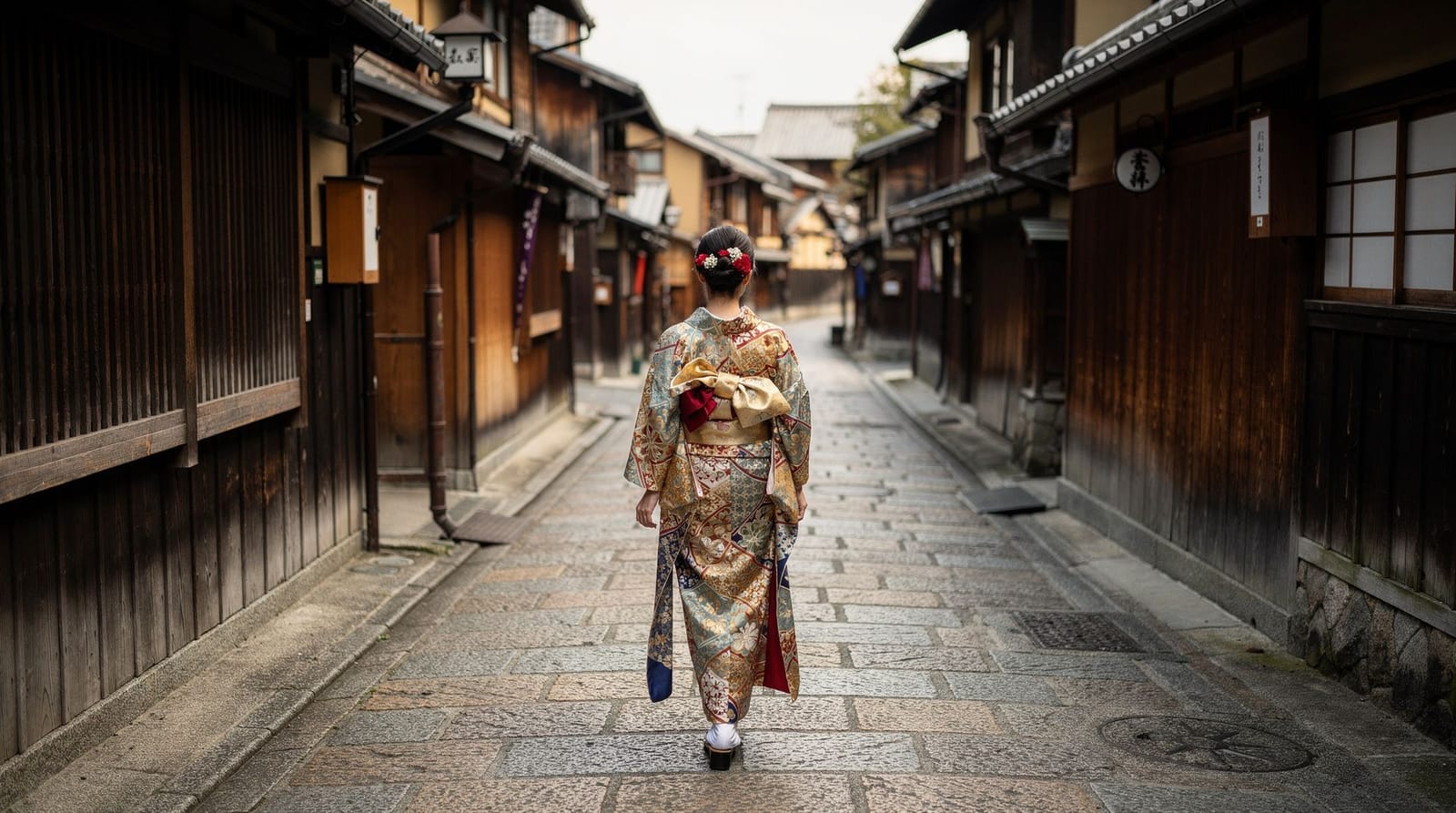
Renting a kimono for a Gion walk is a popular and genuinely enjoyable activity, with numerous rental shops throughout the district offering everything from basic packages to full hair and accessory styling. It’s worth being clear-eyed about what this is and isn’t: renting a kimono for photos is a legitimate tourist activity in its own right, but it is not the same as being, or impersonating, a geiko or maiko, and rental shops generally style customers distinctly enough that confusion is minimal. See the kimono rental guide for shop recommendations, pricing, and what’s actually included in a typical package.
Getting to Gion and moving around once there
Gion-Shijo Station on the Keihan line sits at the district’s northern edge, putting Hanamikoji-dori within a couple of minutes’ walk of the station exit. Kyoto Station connects via bus (roughly 15-20 minutes) or a Keihan/JR combination involving one transfer. Once in the district, everything worth seeing — Hanamikoji, Shirakawa, and the approach to Yasaka Shrine — is walkable within 20-30 minutes end to end, making Gion one of the more compact major districts in the city to explore on foot without needing internal transport.
Combining Gion with Higashiyama
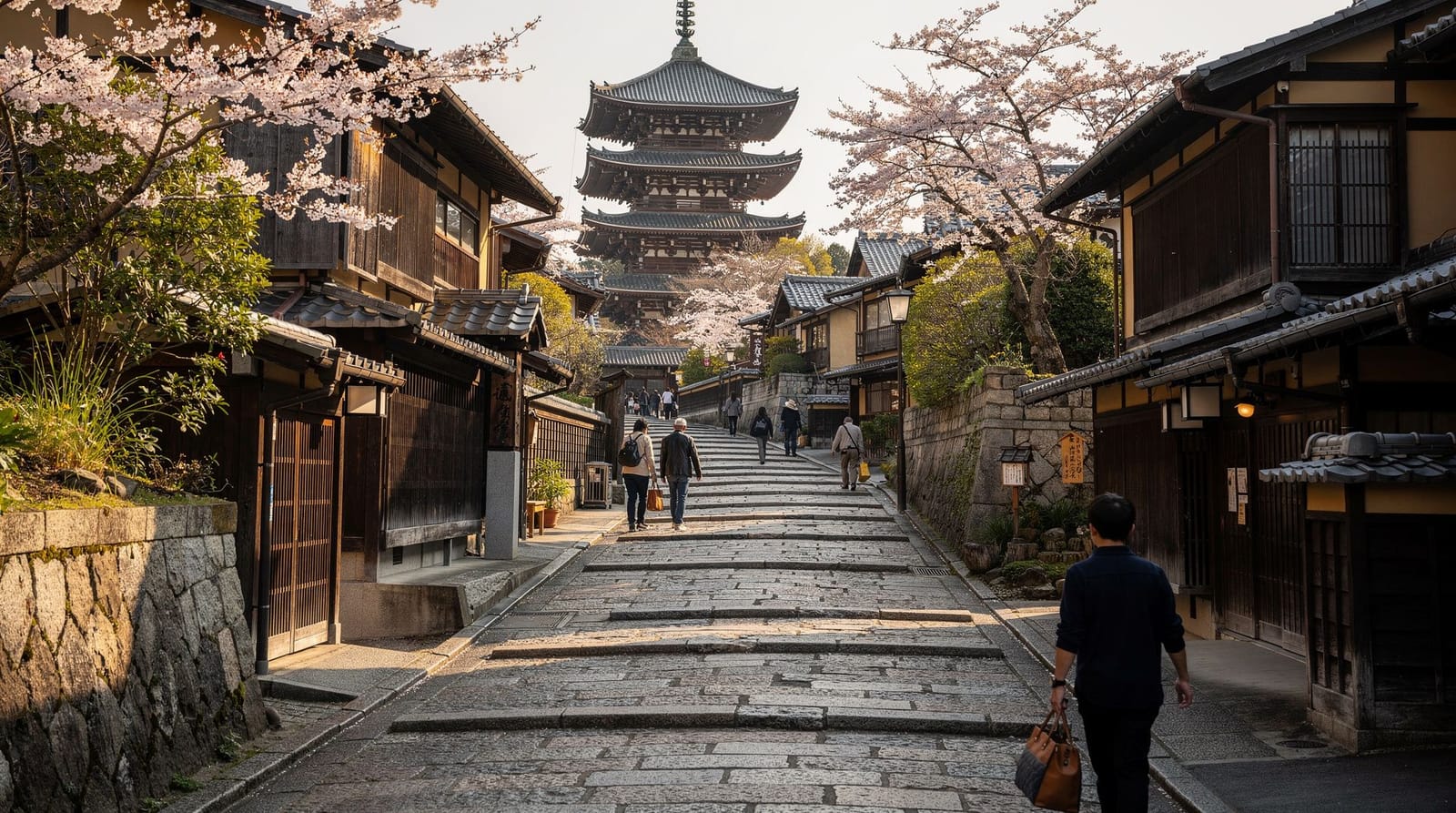
Gion sits immediately adjacent to the Higashiyama district, connected via Yasaka Shrine’s grounds, making a combined half-day covering both districts one of the most efficient itineraries in Kyoto. The Higashiyama district guide covers the Sannenzaka and Ninenzaka lanes and Kiyomizu-dera specifically, which pair naturally with a Gion walk either before or after, depending on which direction of the day you’d rather spend on temple steps versus flat street-level wandering.
Night walk in Gion, Kyoto’s geisha districtBest time of day and season to visit
Early morning (before 9am) shows Hanamikoji and Shirakawa at their quietest, ideal for architecture photography without crowds or the risk of blocking foot traffic on narrow lanes. Late afternoon into early evening (4-7pm) is the district’s most atmospheric window, combining manageable crowds with restaurants opening for the evening and the small chance of a maiko or geiko sighting around dusk. Cherry blossom season along Shirakawa (late March-early April) and any weekend during peak travel months bring Gion’s heaviest crowds, worth factoring into timing expectations regardless of which specific streets you’re prioritizing.
A brief history: from riverside teahouses to a protected district
Gion developed from the 17th century onward as a district of teahouses serving travelers and pilgrims heading to Yasaka Shrine, gradually formalizing into one of Kyoto’s licensed hanamachi (flower towns) — districts where geiko and maiko trained and worked — alongside Pontocho and several smaller districts elsewhere in the city. Much of the wooden machiya architecture visible today along Hanamikoji and Shirakawa dates to rebuilding after fires and the district’s peak development in the late 19th and early 20th centuries, rather than to Gion’s earliest years.
In recent decades, sections of Gion have been formally designated as a preservation district under Kyoto city ordinances, restricting demolition and requiring new construction to match traditional building styles — a direct response to redevelopment pressure that reshaped large parts of central Kyoto during the postwar period but was deliberately held back here. That legal protection is a significant reason Gion’s streetscape today looks as intact as it does compared to many other historic pockets of the city, and it underpins the more recent, separate set of rules — the private-street photography bans among them — introduced specifically to manage tourism pressure on a district whose physical fabric had already been protected for decades.
A neighborhood, not a backdrop
The single idea worth carrying through a Gion visit is that this is a place people live and work, not a set built for visitors — the machiya are homes and businesses, the ochaya operate on a genuine, functioning reservation economy, and the geiko and maiko walking to appointments at dusk are commuting to work, not performing for cameras. Visiting with that understanding, rather than treating the district purely as a photo opportunity, is both the more respectful approach and, by most accounts from repeat visitors, the one that actually produces a better, calmer experience of one of Kyoto’s most distinctive neighborhoods.
Building Gion into a fuller Kyoto day
Gion works well as either the centerpiece of an evening or one stop within a longer day. Travelers combining it with temple sightseeing typically pair it with a Higashiyama morning or afternoon, as covered above, but it also sits within easy reach of Fushimi Inari via the Keihan line, making a Fushimi-then-Gion day a realistic full-day plan without backtracking through central Kyoto.
For travelers wanting a structured introduction to the district’s traditional arts rather than just a self-guided walk, the Gion Corner guide covers a condensed evening show a short walk from Hanamikoji, and the tea ceremony guide covers dedicated bookings inside the district itself.
A simple walking order if you only have ninety minutes
For visitors without time to wander freely, a straightforward route covers both signature streets efficiently: start at Gion-Shijo Station and walk south down Hanamikoji-dori toward Kenninji-dori, taking in the shift from the busier northern shopfronts to the quieter, more architecturally intact southern stretch.
From near the southern end, cut back north toward Shirakawa canal for the willow-lined, water-side stretch, then finish at Yasaka Shrine, which connects directly into Higashiyama if there’s time to continue. This route avoids backtracking, covers both of Gion’s distinct characters rather than just Hanamikoji, and takes roughly 45-60 minutes at an unhurried pace without stopping, or closer to 90 minutes with a tea or shopping stop worked in.
Frequently asked questions about Gion district guide — Hanamikoji, Shirakawa, and how to walk it right
What is Hanamikoji-dori and why is it Gion's main street?
What's the Shirakawa canal and is it different from Hanamikoji?
Can you actually see geiko or maiko walking around Gion?
What is a machiya and why does Gion have so many?
What's the difference between an ochaya and a regular teahouse or cafe in Gion?
Is Gion worth visiting during the day, or only in the evening?
What should you avoid doing in Gion?
How does Gion compare to Pontocho for an evening walk?
Top experiences
Bookable activities with verified prices and instant confirmation on GetYourGuide.