The best temples in Kyoto — how to actually prioritize
Kyoto: Crowd-Free Tour of Kiyomizu & Ginkaku-ji Temples
What are the must-see temples in Kyoto if I only have one day?
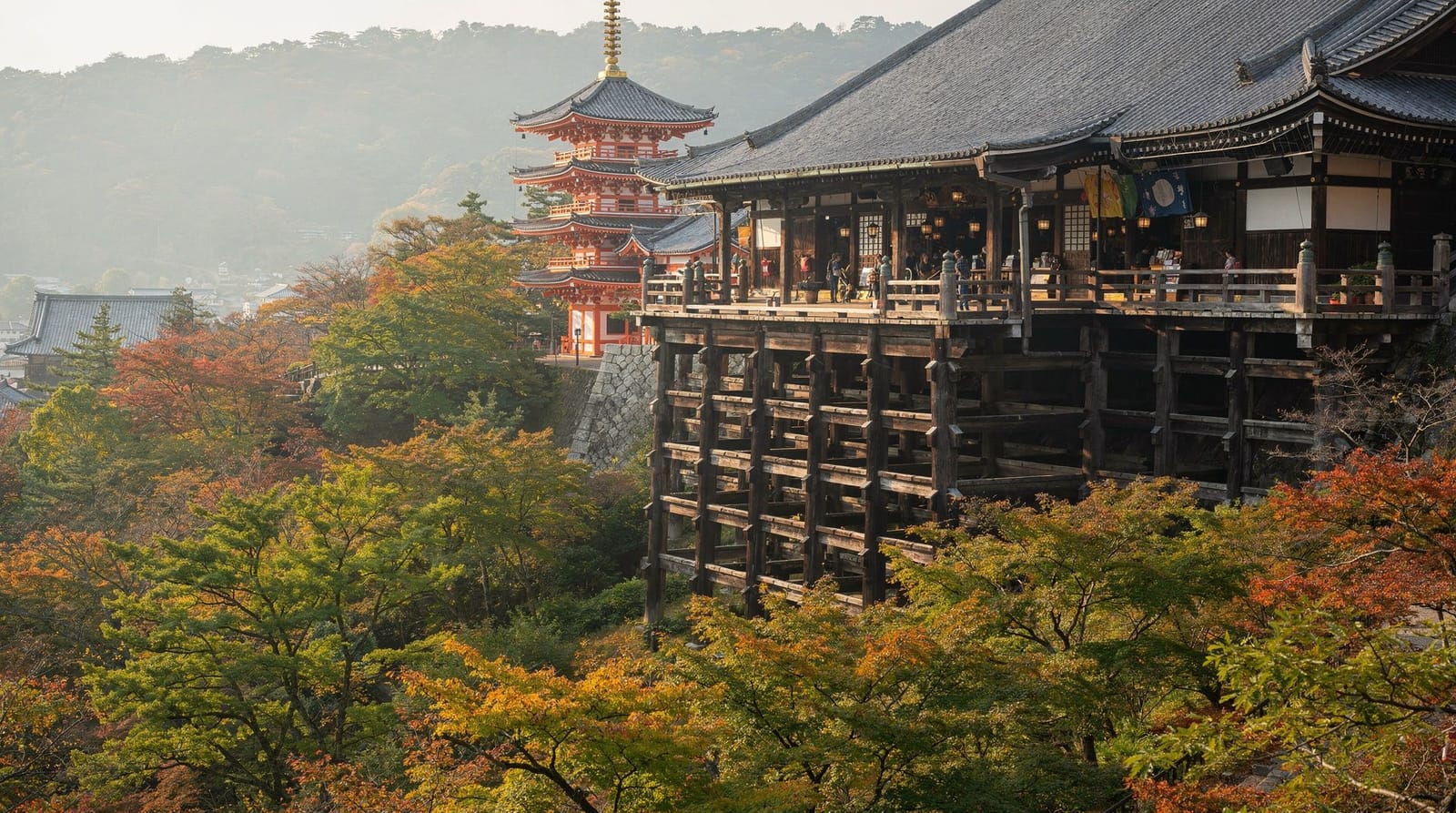
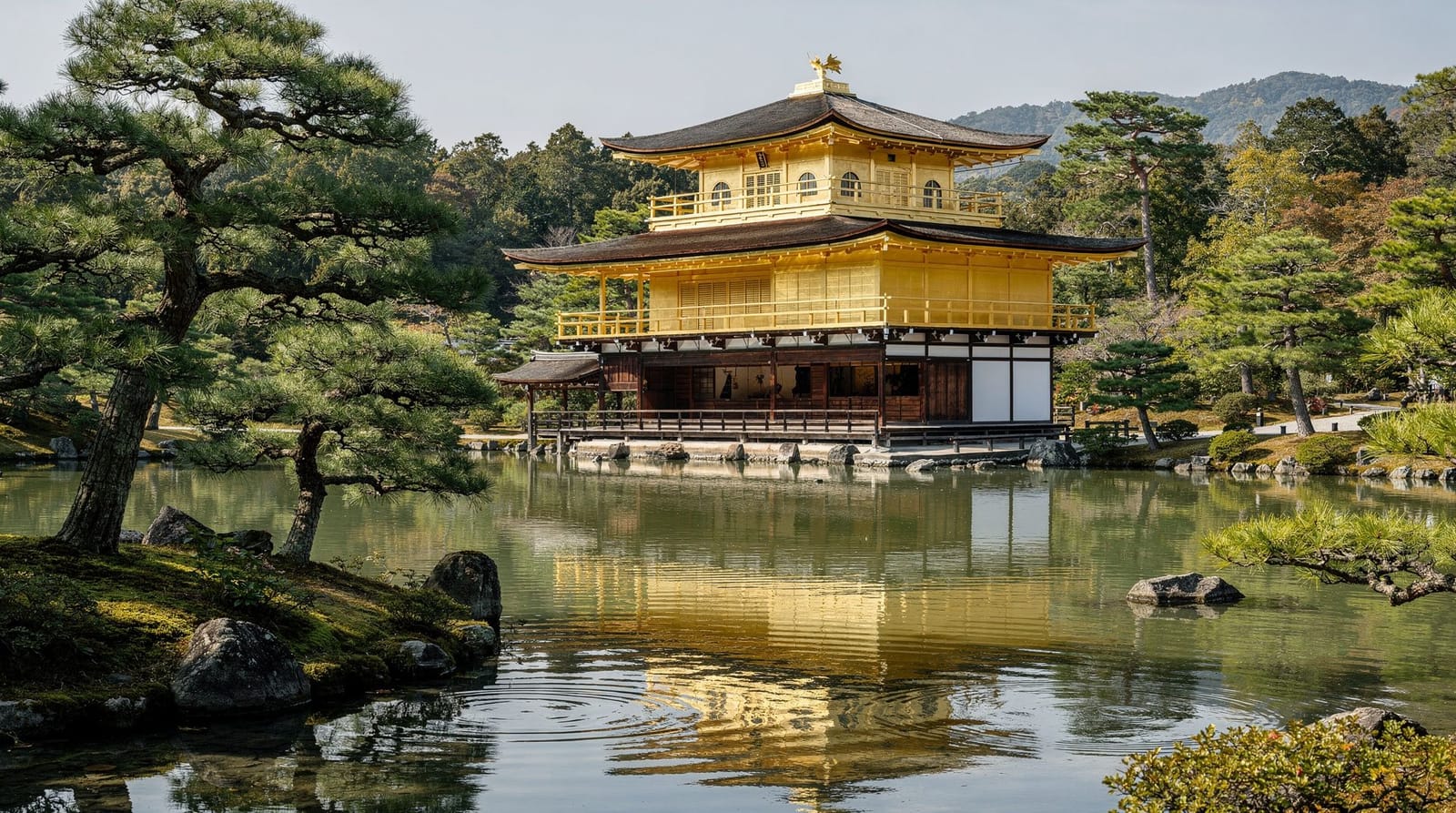
Kiyomizu-dera and Kinkaku-ji cover Kyoto's two most recognizable temple images and sit on opposite sides of the city, so a one-day visit realistically means choosing one, not both, unless the day is planned tightly around transport. If forced to pick one, Kiyomizu-dera edges out Kinkaku-ji for most first-time visitors because the surrounding Higashiyama lanes add a full district's worth of sightseeing around the temple itself.
Kyoto has roughly 1,600 Buddhist temples, and no visitor is seeing more than a handful of them properly. The problem isn’t finding temples worth visiting — it’s that nearly every “top 10” list ends up recommending the same eight or nine famous names without addressing the actual planning question: given limited time, which of these are genuinely different from each other, and which are close enough in experience that visiting both is redundant. This guide sorts Kyoto’s major temples by what they actually offer, not by fame alone, and gives a straightforward answer for 1-day, 2-day and 3-day visits.
| 1 day | Pick one cluster — Higashiyama is the top pick |
| Cost | ¥400-600 per temple, no city-wide pass |
| Best time | Opening (8-9am); peak crowds 11am-2pm |
| 2 days | Add the northern cluster or Arashiyama |
| 3+ days | Tofuku-ji, Sanjusangendo, or a day-trip temple (Nara/Uji) |
Kyoto’s four temple clusters, compared
| Cluster | Key temples | Best for |
|---|---|---|
| Higashiyama | Kiyomizu-dera, Sanjusangendo | First-timers, walkable half-day |
| Northern Kyoto | Kinkaku-ji, Ryoan-ji, Ninna-ji | The gold pavilion + a rock garden |
| Arashiyama | Tenryu-ji | Pairs with the bamboo grove |
| Southeast (day 3+) | Tofuku-ji | Autumn foliage, fewer crowds |
The four “types” of Kyoto temple experience
Most of Kyoto’s famous temples fall into one of four categories, and the mistake many itineraries make is stacking multiple temples of the same type, which produces diminishing returns fast.
Architecture and setting. Kiyomizu-dera (wooden stage on a hillside, no nails) and Kinkaku-ji (gold-leaf pavilion reflected in a pond) are the two headline examples — both are primarily about a single striking building in a specific setting, and both photograph as well as they look in person. See our Kiyomizu-dera guide and Kinkaku-ji guide for details on each.
Rock and moss gardens (karesansui). Ryoan-ji’s rock garden — 15 stones arranged so that at least one is always hidden from view no matter where you stand — is the most famous example of this genre and the one most visitors have seen a photo of without knowing the name. Nanzen-ji’s Hojo garden and Tofuku-ji’s Shigemori-designed compositions belong in the same category; visiting more than two of these back to back tends to blur together for anyone without a specific interest in garden design.
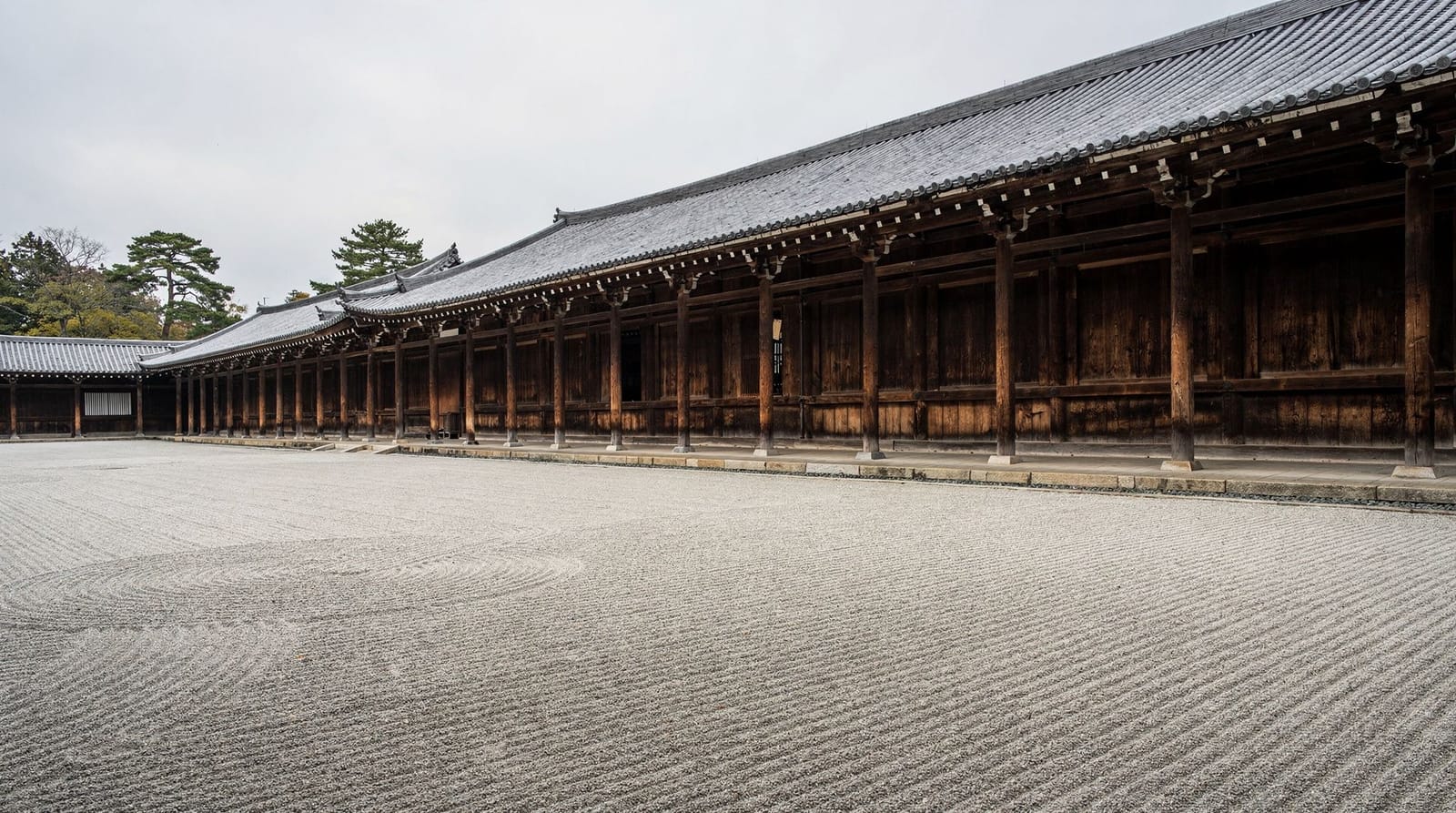
Scale and sculpture. Sanjusangendo is the standout here — a 120-metre hall holding 1,001 carved Kannon statues — and it’s a genuinely different kind of experience from anything on this list: indoors, sculptural, and unphotographable (no cameras allowed), which is precisely why it’s underrated relative to its actual significance. Read the full Sanjusangendo guide.
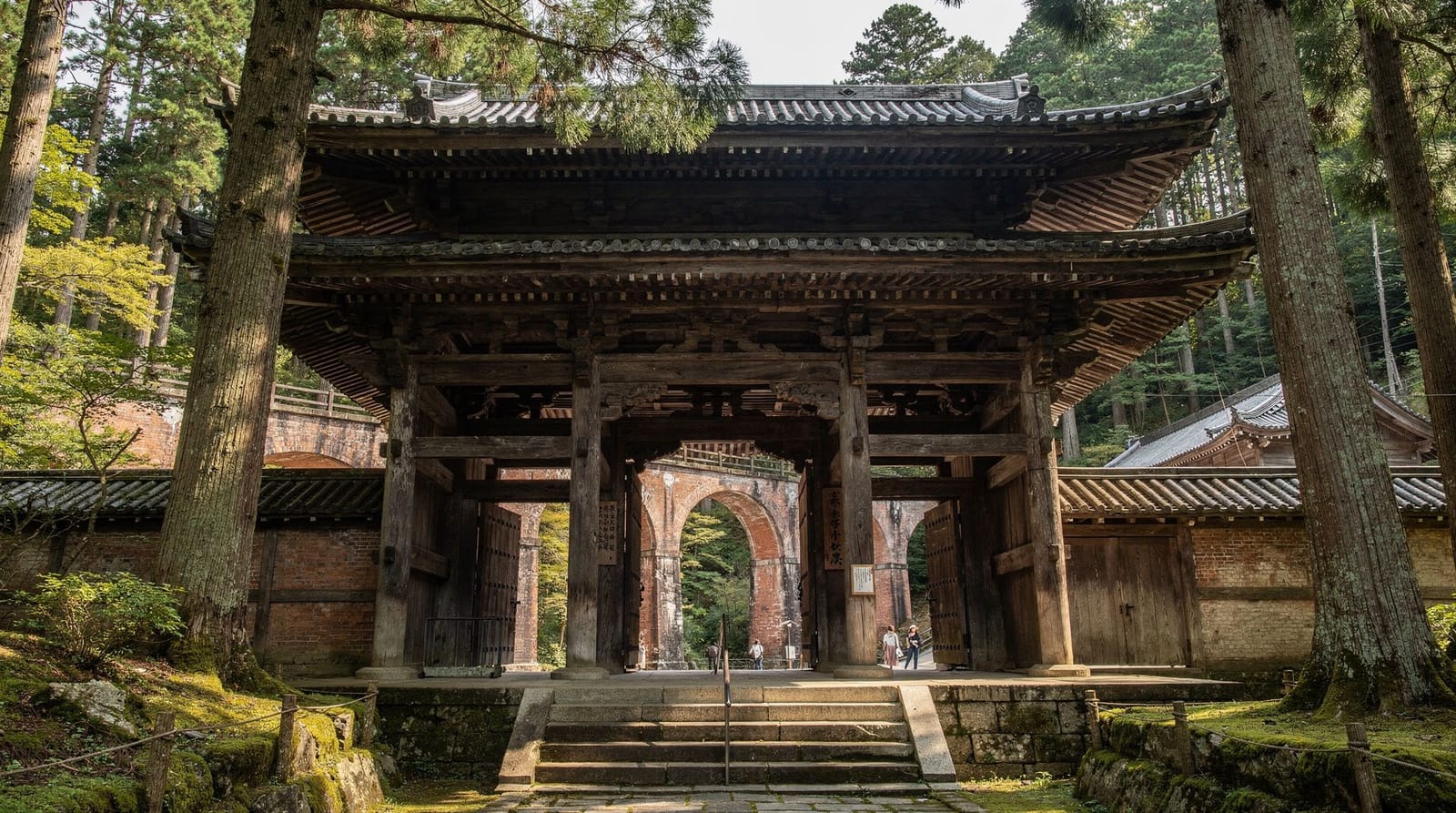
Zen complex and grounds. Nanzen-ji and Tenryu-ji both function less as a single building to see and more as a walkable complex — multiple sub-temples, gardens, gates, and in Nanzen-ji’s case an incongruous 19th-century brick aqueduct running straight through the grounds. These reward an hour or more of unhurried walking rather than a fast photo stop. Our Nanzen-ji guide covers the Sanmon gate, Suirokaku aqueduct and sub-temple gardens in detail.
Crowd-free tour of Kiyomizu-dera and Ginkaku-jiOne day: pick a side of the city, not a list of names
Kyoto’s major temples are spread across four geographically distinct clusters, and the single biggest planning mistake on a one-day visit is trying to cover more than one cluster. Higashiyama (eastern Kyoto: Kiyomizu-dera, Sanjusangendo, and the Sannenzaka/Ninenzaka lanes between them) is walkable as a single half-day loop.
Northern Kyoto (Kinkaku-ji, Ryoan-ji, Ninna-ji) is a separate cluster roughly 30–40 minutes by bus from Higashiyama, and doing both in one day means at least 90 minutes lost to transit alone. Arashiyama (Tenryu-ji, the bamboo grove) sits further west still. Pick one cluster and do it properly rather than racing between all three — a rushed Kinkaku-ji visit squeezed into 20 minutes between two other stops undersells a site people fly across the world to see.
For most first-time visitors with exactly one day, the recommendation is: Higashiyama in the morning (Kiyomizu-dera, then Sanjusangendo or the Sannenzaka lanes, depending on interest), then either Fushimi Inari in the afternoon (a 15-minute train ride south) if shrines interest you more than a second temple cluster, or Nanzen-ji and the southern end of the Philosopher’s Path if you want a second, quieter Zen experience without crossing the city.
Two days: add the northern cluster or Arashiyama
With a second day, add Kinkaku-ji, Ryoan-ji and Ninna-ji as a single northern-Kyoto morning (they’re a short bus ride apart from each other), then use the afternoon for Nanzen-ji and the Philosopher’s Path walking north to Ginkaku-ji — this pairs a “big gold building” morning with a quieter garden-and-walking afternoon, which tends to work better than two mornings that both center on famous single buildings. Alternatively, swap in Arashiyama for the afternoon: Tenryu-ji plus the bamboo grove is a comparable half-day, though it’s a genuinely different neighborhood on the western edge of the city and adds transit time.
Three days: Tofuku-ji, Sanjusangendo and the quieter options
A third day is where Tofuku-ji (exceptional in autumn, still worth it for the Shigemori garden year-round) and Sanjusangendo earn their place — both are less crowded than the temples above precisely because they’re less famous, and both are genuinely distinct experiences rather than a repeat of what you’ve already seen. This is also the point at which a day trip to Uji for Byodo-in, or to Nara for Todai-ji, becomes worth considering instead of a fourth Kyoto temple — see our day trip guides for that comparison.
Sanjusangendo’s 1,001 Kannon statues, guided visitTemples for specific interests
Not every visitor is optimizing for “the most famous temples.” A few groupings help match temples to specific interests rather than defaulting to a generic top-ten list.
Rainy-day and indoor-heavy visits. Kyoto’s weather, especially during the June rainy season (tsuyu) and typhoon-adjacent stretches of early autumn, can make garden-focused temples less rewarding. Sanjusangendo, entirely indoors along a covered corridor, and Nijo Castle’s Ninomaru Palace, a mostly-roofed walk through painted rooms, hold up far better in bad weather than Ryoan-ji or Tenryu-ji, where the appeal is largely about sitting outdoors and looking at a garden in good light.
Families with young children. Kinkaku-ji and Nijo Castle both have relatively short, flat, stroller-manageable routes and a clear, singular “wow” moment that works even for visitors with limited patience for architectural nuance. Nanzen-ji’s Sanmon climb and the steep Sannenzaka/Ninenzaka lanes near Kiyomizu-dera are harder going with a stroller or very young children.
Photography-focused visitors. Nanzen-ji’s Suirokaku aqueduct, Fushimi Inari’s torii tunnels (technically a shrine, not a temple, but usually grouped with temple itineraries), and Tofuku-ji’s Tsutenkyo bridge in autumn are the three most consistently rewarding spots for a strong single image, though all three are correspondingly the hardest to shoot without other visitors in frame unless you arrive at opening.
Visitors with a specific interest in Zen practice. A small number of temples, including some sub-temples at Kenkyu-ji and other Rinzai complexes, offer paid zazen (seated meditation) sessions open to visitors, sometimes with English instruction. These aren’t sightseeing stops in the conventional sense and require checking current-year availability and reservation requirements directly, but they’re worth knowing about for anyone wanting more than a walk-through visit.
Combined tickets and passes: mostly don’t exist
Unlike some cities, Kyoto doesn’t offer a single combined ticket covering its major temples — each charges separate admission, typically ¥400–600 for the main hall or garden, occasionally more for sub-temples (Nanzen-ji, for instance, charges separately for its Sanmon gate, Hojo garden and each sub-temple you enter). A handful of related-temple combination tickets exist locally (for example, some Arashiyama temples offer a discount if visited together), but there’s no city-wide temple pass equivalent to a museum card. Budget roughly ¥500–600 per temple and plan admission costs into the day rather than expecting a bundled rate.
Crowds: the pattern is consistent across almost every temple
With rare exceptions (Sanjusangendo, Tofuku-ji outside autumn, most sub-temples), Kyoto’s famous temples follow the same crowd curve: quiet at opening (usually 8–9am), building through mid-morning, peaking roughly 11am–2pm, and thinning again after 4pm. Kinkaku-ji and Kiyomizu-dera are the two most consistently crowded regardless of time of day during high season (late March–early May, October–November), but even these are noticeably calmer in the first 30–45 minutes after opening. If a temple only appears on your itinerary once, that slot is worth protecting for opening time rather than whatever else is scheduled first. See avoiding crowds in Kyoto for a fuller seasonal breakdown.
Day-trip temples worth weighing against a fourth Kyoto day
If a Kyoto stay runs four days or longer, it’s worth explicitly weighing a fourth temple-focused day in the city against a day trip to a temple elsewhere in the region — the two most common candidates are Todai-ji in Nara, home to Japan’s largest bronze Buddha statue and one of the largest wooden buildings on Earth, and Byodo-in in Uji, whose Phoenix Hall (depicted on the ¥10 coin) is arguably as significant architecturally as anything within Kyoto itself.
Both are under an hour from Kyoto Station by train, and both offer something genuinely different from what’s covered above — Todai-ji’s Great Buddha Hall is on a scale nothing in Kyoto matches, and Byodo-in’s Heian-period Pure Land garden design predates most of what survives inside the city. For a visitor with three solid Kyoto temple days already planned, either makes a stronger fourth day than a second visit to a similar site within the city.
Etiquette basics that apply across almost every temple
A handful of etiquette points recur at nearly every site on this list and are worth internalizing once rather than relearning at each stop. Remove shoes wherever tatami flooring is present (a shoe rack or plastic bag is usually provided) but keep them on in stone-floored corridors like Sanjusangendo’s. Photography inside main halls is frequently restricted or banned outright — assume no photography indoors unless a sign explicitly permits it, rather than the reverse.
Speak quietly inside halls with active worship areas, and avoid sitting directly on temple furniture or garden walls not designated as public seating. None of this is rigidly enforced against foreign visitors making an honest mistake, but knowing the pattern in advance avoids the small, avoidable friction of being corrected by staff mid-visit.
What’s overrated (or at least over-scheduled)
Not every famous name earns its spot on every itinerary. Nijo Castle, while historically significant (its “nightingale floors” were designed to squeak as a security measure against intruders) and a genuine UNESCO World Heritage Site, is a fortress-palace rather than a temple, and visitors expecting a temple-style visit sometimes find the interior — mostly empty painted rooms viewed from a walkway, no furniture, photography restricted inside — less immediately rewarding than the exterior grounds suggest.
It’s worth including for the history, not for a repeat of the “beautiful single building” experience Kinkaku-ji already delivers. Similarly, cramming both Ryoan-ji and Tofuku-ji into the same day because “they’re both famous gardens” tends to produce diminishing returns — one karesansui garden per day is usually enough unless the interest is specifically comparative.
Building an itinerary around temple opening hours
Most Kyoto temples open around 8:30–9am and close between 4:30pm and 5pm, with last entry typically 30 minutes before closing — narrower windows than many visitors expect coming from cities where major sites stay open into the evening. A small number extend hours seasonally: Kiyomizu-dera, Kodai-ji and several other sites hold special evening illuminations during peak cherry blossom (early April) and autumn foliage (mid-November) weeks, with extended admission until around 9–9:30pm, offering an entirely different, lantern-lit atmosphere worth planning a specific evening around if visiting during either season.
Outside those windows, treat 4pm as a practical cutoff for starting a new temple visit, since arriving with only 15–20 minutes before closing rarely allows enough time to see a site properly, particularly ones with a garden meant to be sat with rather than walked through quickly.
Booking guided tours versus visiting independently
Every temple on this list can be visited entirely independently — none require a guide, and admission is straightforward walk-up ticketing at each site. A guided tour adds value in specific, limited ways: historical and doctrinal context that’s easy to miss from posted signage (particularly at sites like Nanzen-ji or Tofuku-ji where the significance of a specific garden design isn’t obvious without explanation), logistics handled for visitors uncomfortable navigating bus routes between temples, and in some cases skip-the-line arrangements at the more congested sites during peak season.
The tradeoff is pace and flexibility — a guided group moves on a schedule, while independent visitors can linger at whichever temple interests them most and skip the rest. For a first Kyoto trip focused on the headline sites (Kiyomizu-dera, Kinkaku-ji), independent visits with a good guidebook or this site’s guides are entirely sufficient; a guided tour earns its cost more clearly for the less-signed, higher-context sites like Nanzen-ji’s sub-temples or Tofuku-ji’s Shigemori gardens.
Nanzen-ji Zen walk: gardens and Sanmon gateWhat a realistic budget looks like across a temple-focused trip
For a three-day, temple-focused Kyoto stay covering roughly seven to eight sites across the clusters above, admission alone runs approximately ¥3,500-5,000 (US$23-33) per person, before factoring in any sub-temple add-ons at complexes like Nanzen-ji that charge separately for each garden or gate. Add transit between clusters (bus or subway day passes run ¥700-1,100 per day) and the total temple-specific budget for a three-day stretch lands around ¥6,000-8,000 (US$40-53) per person, a modest share of most Kyoto trip budgets once accommodation and food are factored in. See the Kyoto travel budget guide for how this fits into overall daily spending.
Combining temples with nearby food and rest stops
Several of Kyoto’s temple clusters sit near genuinely good food options worth building into a temple day rather than treating sightseeing and eating as separate errands. The Higashiyama lanes between Kiyomizu-dera and Yasaka Shrine are dense with small tea houses and shops selling yatsuhashi (a local cinnamon-and-red-bean sweet) and matcha soft-serve, making a natural mid-walk break. Arashiyama’s stretch near Tenryu-ji has a similar density of tofu restaurants and cafes. Northern Kyoto, by contrast, is more residential and has fewer casual food options directly at Kinkaku-ji or Ryoan-ji, so it’s worth planning a lunch stop before heading north rather than assuming options will appear along the way.
Temples worth revisiting on a repeat trip
Visitors returning to Kyoto after a first trip that covered the headline names often ask what’s worth a second look versus what to leave for someone else’s first visit. Ryoan-ji and Tofuku-ji reward a second visit more than Kinkaku-ji or Kiyomizu-dera do, since their appeal is contemplative rather than a single “wow” moment already captured the first time around — a quiet weekday morning at Ryoan-ji’s rock garden, sat with rather than photographed and left, is a genuinely different experience from a first, crowd-driven pass through.
Seasonal timing also matters more on a repeat trip: a temple seen once in summer looks meaningfully different under spring blossoms or autumn maples, which is reason enough to revisit Tofuku-ji or Tenryu-ji specifically during a different season than the first visit.
Frequently asked questions about visiting Kyoto’s temples
How many temples should I visit in Kyoto in one day?
Two to three, within a single geographic cluster (Higashiyama, northern Kyoto, or Arashiyama). Trying to cover temples across multiple clusters in one day loses significant time to transit and tends to produce a rushed, unsatisfying visit at each stop.
Is Kinkaku-ji or Kiyomizu-dera better for a first-time visitor?
Both are genuinely worth seeing, but if choosing only one, Kiyomizu-dera has an edge for most visitors because the surrounding Higashiyama district (Sannenzaka, Ninenzaka, Yasaka Shrine) extends the visit into a full half-day of sightseeing, where Kinkaku-ji is more self-contained.
Do Kyoto’s temples offer a combined admission ticket?
No city-wide temple pass exists. Each temple charges separate admission (typically ¥400–600), and some, like Nanzen-ji, charge separately for individual sub-temples and gardens within the same complex.
What’s the least crowded major temple in Kyoto?
Sanjusangendo and Tofuku-ji (outside its late-November foliage peak) are consistently the least crowded of the well-known temples, largely because they’re less recognizable from a single iconic photo than Kinkaku-ji or Kiyomizu-dera.
Should I visit temples in the morning or afternoon?
Morning, ideally at or near opening time (8–9am). Crowds build steadily from mid-morning and peak around 11am–2pm at Kyoto’s most famous sites; the difference between an 8:30am and an 11:30am visit to Kinkaku-ji is substantial.
Are Kyoto’s temples free to enter?
No, with the exception of some outer grounds (Nanzen-ji’s main precinct and the Suirokaku aqueduct, for example, are free, while its Sanmon gate and gardens are ticketed). Most main halls and gardens charge ¥400–600 admission.
How do I choose between a rock garden temple like Ryoan-ji and a sculpture-focused site like Sanjusangendo?
They’re different enough experiences that visiting one of each is more rewarding than two of the same type. Ryoan-ji suits visitors interested in minimalist design and contemplation; Sanjusangendo suits anyone drawn to large-scale religious sculpture and craftsmanship.
Can I visit Kyoto’s temples in the rain?
Yes, though a rainy day is a reasonable time to prioritize temples with covered viewing areas or indoor halls — Sanjusangendo’s covered corridor and Nijo Castle’s largely roofed palace walkway hold up well, while garden-centric sites like Ryoan-ji are still viewable from covered verandas but lose some of their appeal in poor light and heavy rain.
Is it worth hiring a guide for Kyoto’s temples?
For first-time visitors, a guided walk covering two or three temples in one cluster (for example Kiyomizu-dera and the Higashiyama lanes, or Nanzen-ji’s gardens and Sanmon gate) adds historical context that’s easy to miss reading signage alone, and can help navigate the admission and etiquette details temple by temple.
Top experiences
Bookable activities with verified prices and instant confirmation on GetYourGuide.