Hidden temples of Kyoto — real quiet alternatives to the headline sights
Kyoto has somewhere around 1,600 Buddhist temples and 400 Shinto shrines, and the tourist itinerary that circulates online covers, at most, a dozen of them. That leaves an enormous amount of genuinely worthwhile, architecturally and historically significant temple space seeing a fraction of the visitors at Kinkaku-ji or Fushimi Inari. This list sticks to places that are actually easy to reach and open to the public — not obscure sites requiring special permission — while still delivering real crowd relief.
| Easiest add-on | Jojakko-ji or Gio-ji, both near the bamboo grove |
| Most exclusive | Saiho-ji — advance booking required |
| Cost range | Around ¥300–700, Saiho-ji around ¥4,000 |
| Best paired with | Arashiyama hills or the Philosopher’s Path |
| Avoid rushing | 2–3 hidden temples per half-day, not five in an afternoon |
Otagi Nenbutsu-ji — 1,200 stone statues above the bamboo grove
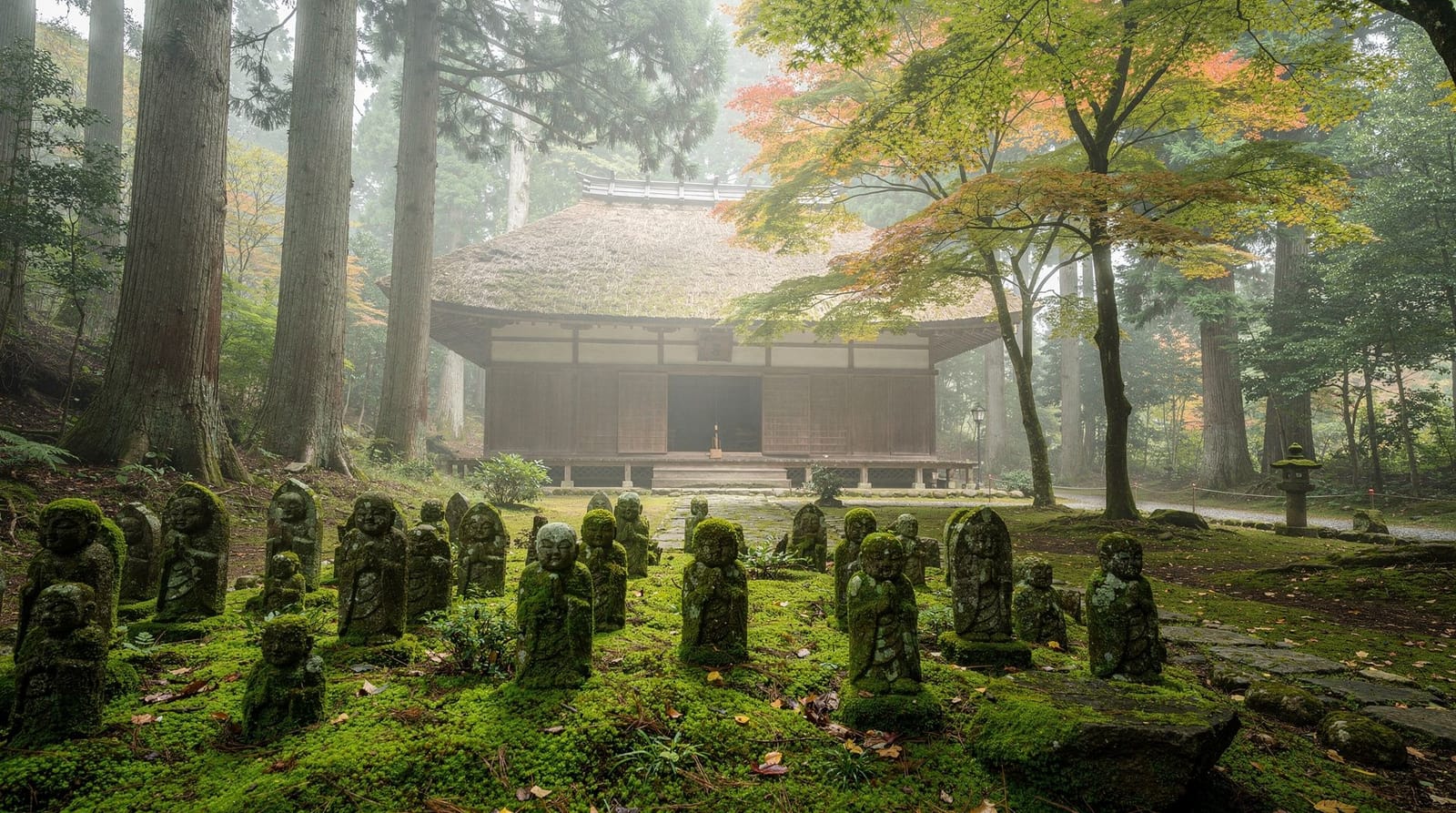
Tucked in the hills above Arashiyama, a 15-20 minute uphill walk past the more famous bamboo grove and Tenryu-ji temple, Otagi Nenbutsu-ji is easy to miss entirely if you don’t know to look for it, and that’s exactly why it stays quiet even during Arashiyama’s busiest hours. The temple’s defining feature is roughly 1,200 individually carved stone rakan statues, each one different — some serious, many whimsical, carved by amateur volunteers over a multi-decade restoration project starting in the 1980s after the temple fell into disrepair.
Admission runs about ¥300 (US$2), and the walk up, past smaller shrines and quieter residential lanes, is itself a pleasant contrast to Arashiyama’s main tourist strip. The main Arashiyama bamboo grove guide covers how to time the walk in from the more famous grove before continuing up here.
Guided Arashiyama hidden temples and bamboo grove tour — built around the quieter routes past the main crowdsJojakko-ji — Arashiyama’s quiet hillside temple
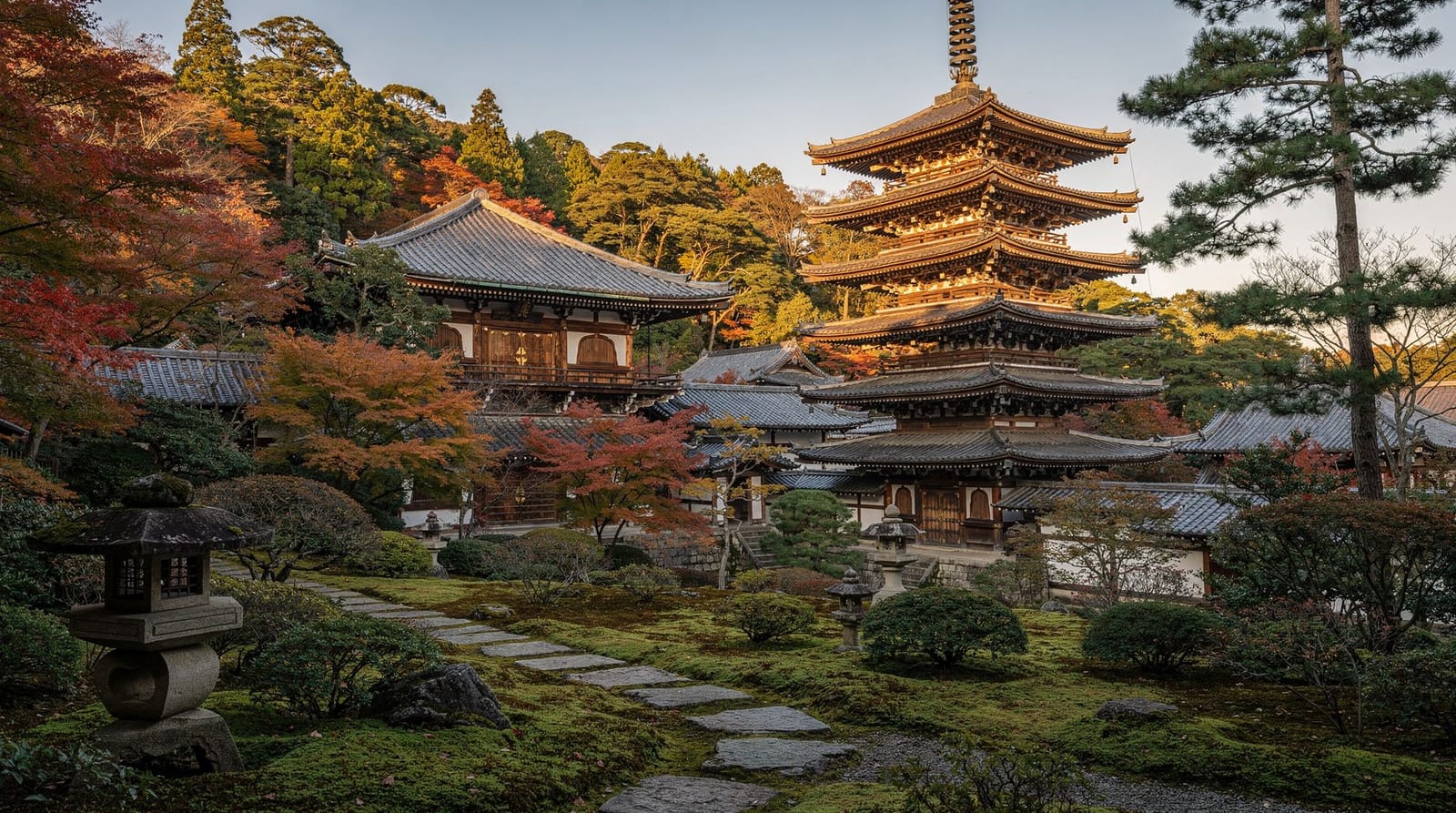
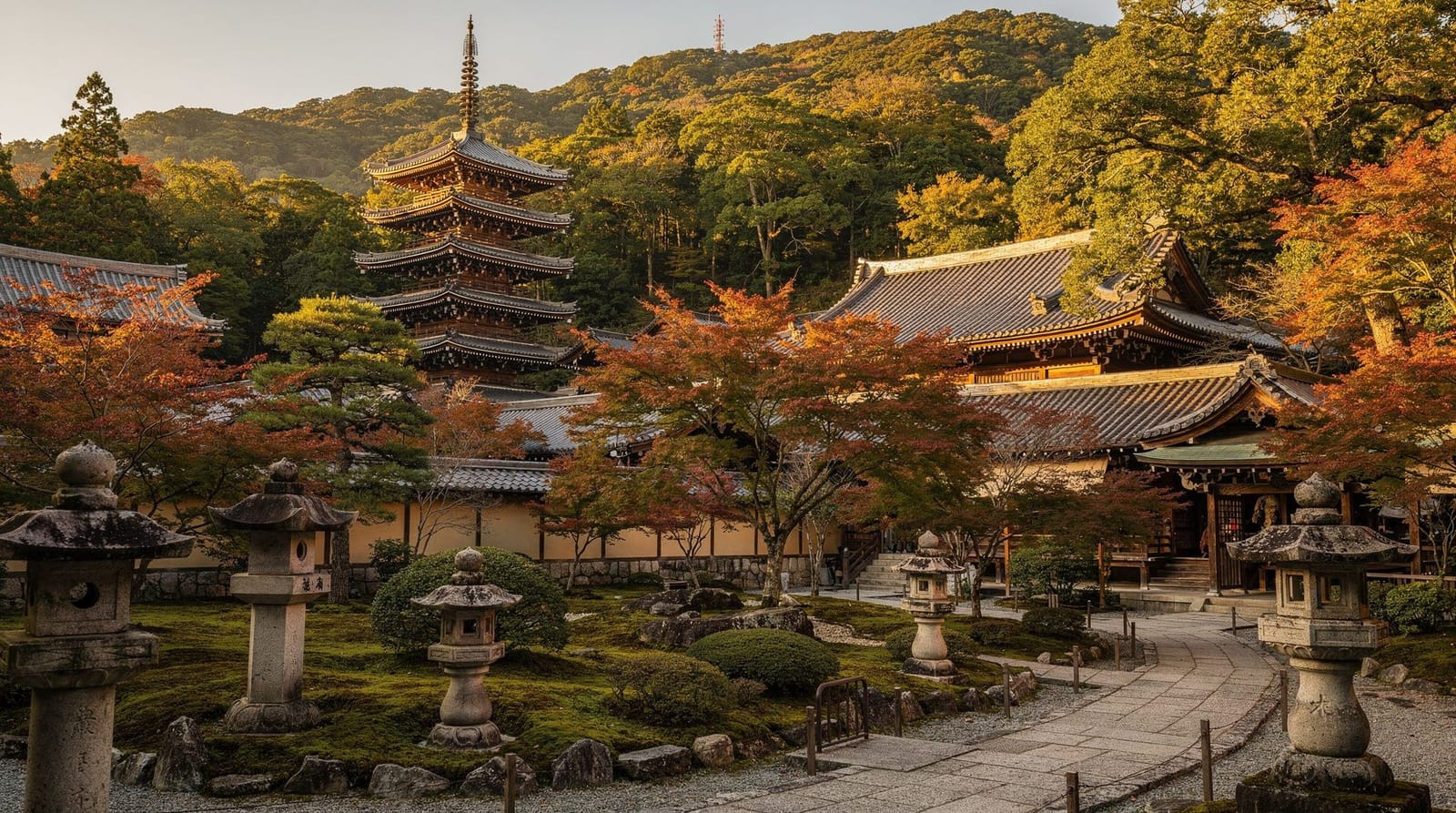
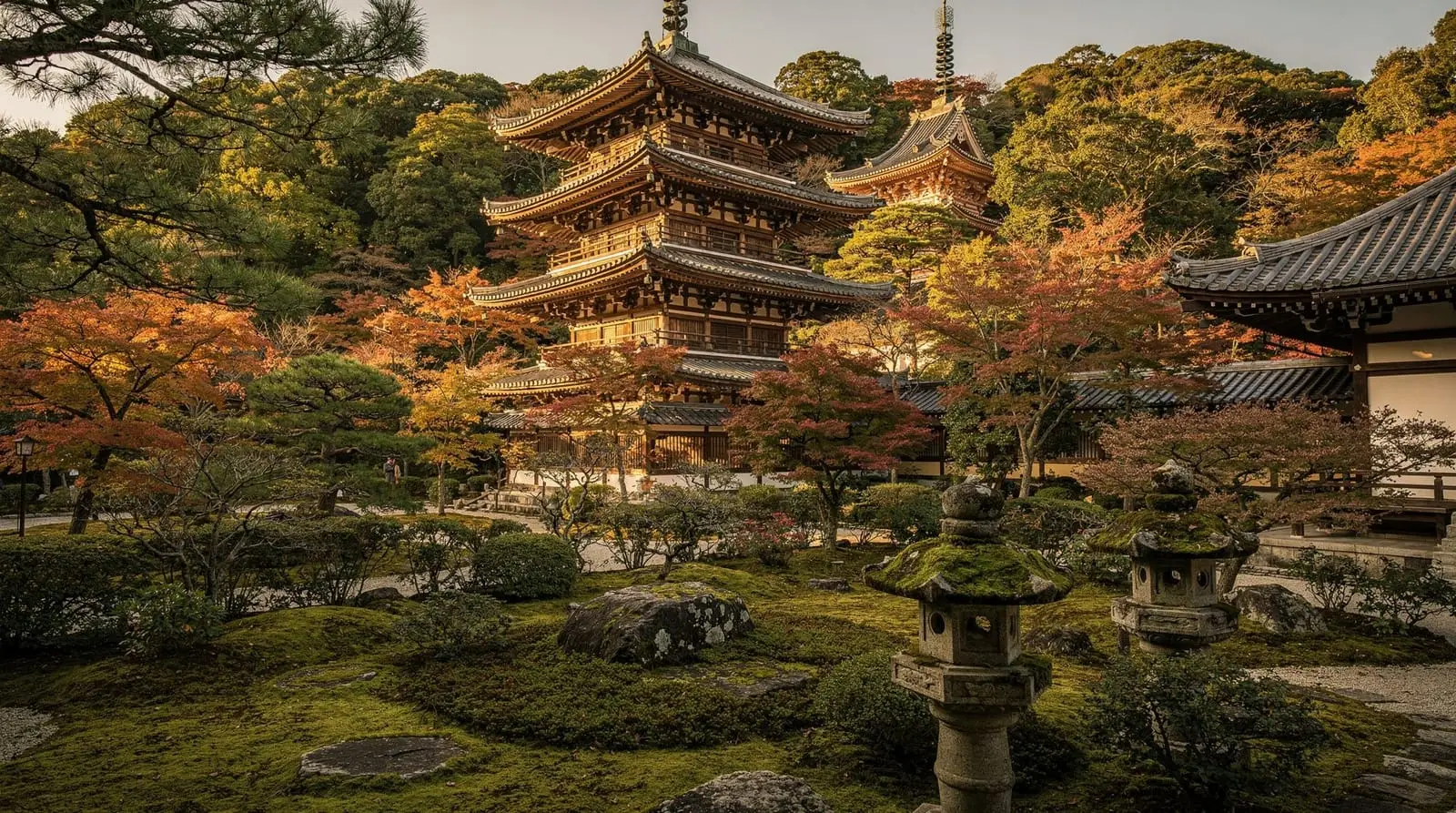
Also in the Arashiyama hills, close to the bamboo grove but rarely visited by the crowds streaming through it, Jojakko-ji sits on a wooded slope reached by a stone staircase, with a thatched-roof gate and a small pagoda visible through the trees. It’s especially known among photographers for autumn foliage scattered across its moss gardens, but it’s worth visiting in any season for the quiet climb alone, a genuinely different pace than the packed paths five minutes away. Admission is roughly ¥500 (US$3.30).
Gio-ji — a moss garden with almost nobody in it
A short walk further into the Sagano hills from Jojakko-ji, Gio-ji is a small, thatched-roof temple built around a dense, vivid moss garden and connected to a 12th-century legend about a scorned court dancer, Giō, who retreated there as a nun. It’s genuinely tiny — a full visit takes 20-30 minutes — but the moss garden is one of the most striking small-scale spots in Kyoto’s western hills, and it’s rare to encounter more than a handful of other visitors even at midday. Admission is about ¥300 (US$2).
Sanzen-in — Ohara’s mossy paradise garden, far from the center
Ohara, a rural valley roughly an hour by bus from central Kyoto, sees a small fraction of the city’s usual visitor volume simply because of the extra travel time, which makes Sanzen-in a genuinely worthwhile detour for anyone with a flexible day.
The temple’s Yusei-en garden, a moss-carpeted landscape dotted with stone Jizo statues (some deliberately placed to peek out from the moss with an almost playful expression), is one of Kyoto’s most photographed gardens among people who actually make the trip out, despite being unfamiliar to most first-time visitors. Admission is around ¥700 (US$4.70), and Ohara’s surrounding countryside, dotted with small farms and other minor temples, rewards a slower half-day pace rather than a rushed stop.
Shisen-do — a scholar’s retreat with a deer-scarer soundtrack
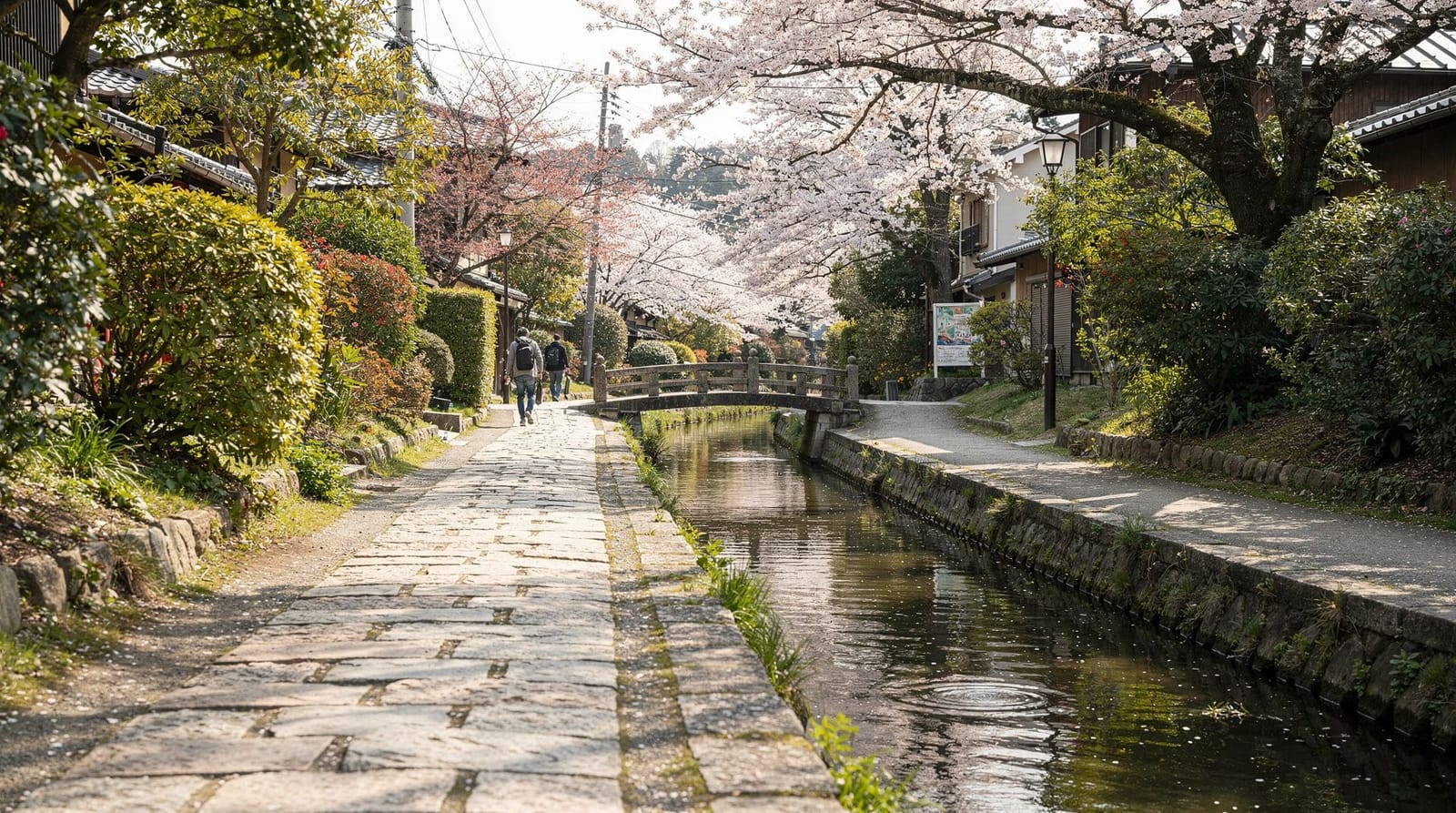
In the northeastern hills near the start of the Philosopher’s Path, Shisen-do was built in 1641 as the retirement villa of a former samurai-turned-scholar, Ishikawa Jozan, and retains a genuinely residential, contemplative feel rather than a grand temple complex. Its garden includes a shishi-odoshi, a bamboo deer-scarer that periodically strikes a stone with a distinctive, echoing clack — a small but memorable detail that most visitors to Kyoto’s bigger gardens never encounter. Admission is roughly ¥500 (US$3.30), and it pairs naturally with a Philosopher’s Path walk that continues south toward Ginkaku-ji.
Philosopher’s Path and hidden temple walking tour — routes past several lesser-visited temples along the canalKomyo-in — Tofuku-ji’s quiet neighbor
Tofuku-ji itself is one of Kyoto’s most crowded autumn foliage spots, but its small sub-temple Komyo-in, a short walk from the main complex, is a rock garden (Hashintei, designed in 1939 by influential landscape architect Shigemori Mirei) that most Tofuku-ji visitors never bother finding, despite being open the same hours and requiring only a modest additional donation, typically around ¥500 (US$3.30, cash donation box rather than a fixed ticket). Its star-shaped stone arrangement is a genuinely striking piece of 20th-century garden design, distinct in style from Tofuku-ji’s older, more traditional grounds.
Saiho-ji (Koke-dera) — the moss temple that requires planning ahead
Saiho-ji, commonly called Koke-dera or “moss temple,” is Kyoto’s most famous moss garden and arguably its most deliberately exclusive experience: visits require advance written or online application, a fixed visit time, and participation in a short sutra-copying session before entering the garden, with admission around ¥4,000 (US$27) — considerably more than a typical temple.
That barrier to entry is exactly why it stays uncrowded even though it’s genuinely one of Kyoto’s most extraordinary gardens, over 120 varieties of moss forming a dense green carpet beneath maple trees. It’s not a spontaneous stop — book weeks ahead if it’s a priority — but for visitors willing to plan around it, the calm, unhurried garden experience is unlike anything on a typical Kyoto itinerary.
Honen-in — a thatched gate along the Philosopher’s Path itself
Most visitors walking the Philosopher’s Path go straight from Ginkaku-ji to Nanzen-ji without detouring to Honen-in, a small temple set just off the main canal path behind a distinctive thatched gate and a pair of raked sand mounds (byakusadan) that are re-carved with seasonal patterns throughout the year. The temple’s grounds are free to enter and open daily, though the main hall itself opens to the public only during a handful of designated days each spring and autumn — worth checking specific dates ahead if seeing the interior matters, though the grounds and gate alone are a worthwhile five-minute detour from the main path regardless.
Kurama-dera — a mountain temple reached by cable car
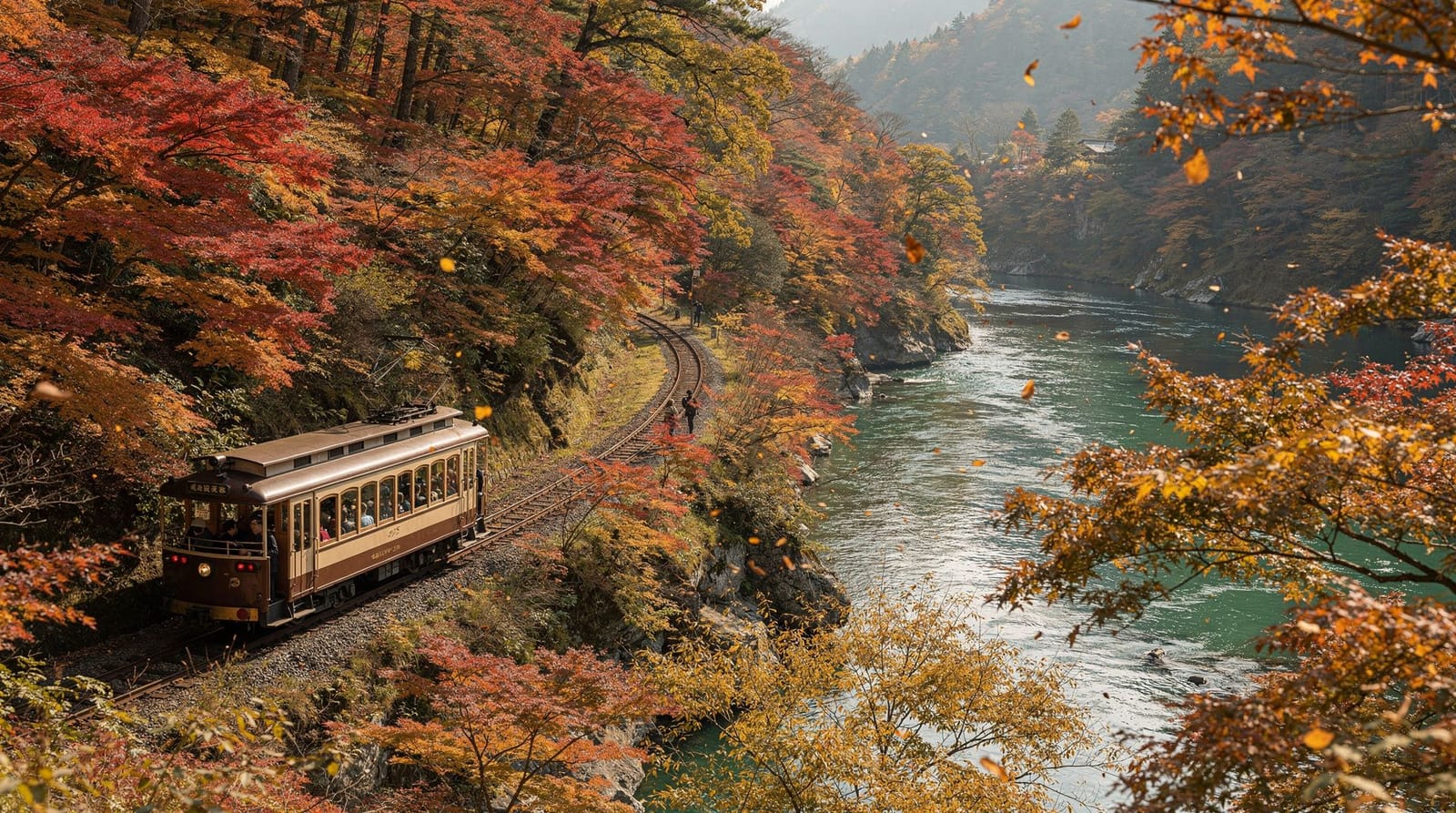
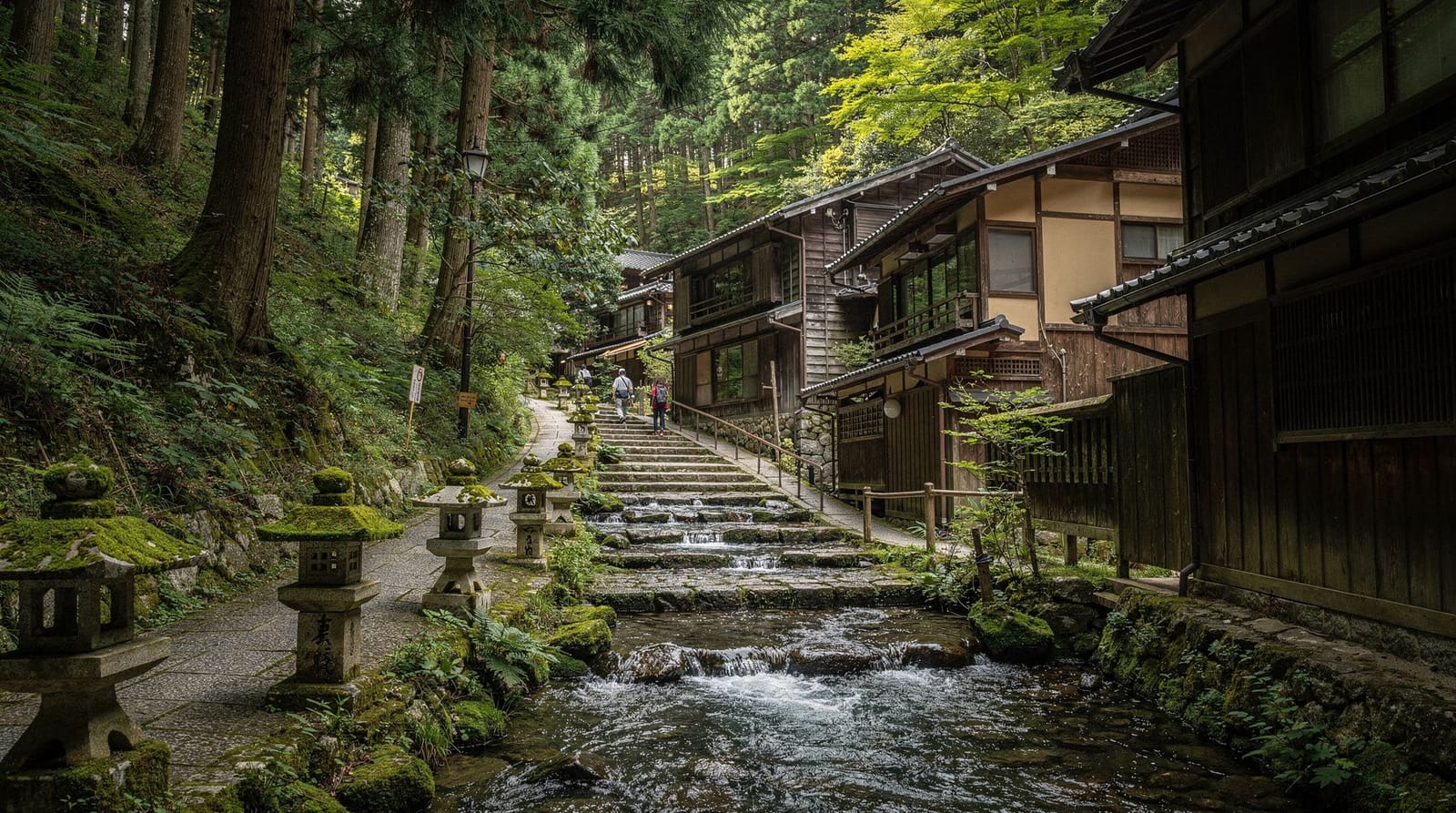
North of central Kyoto, in the mountain village of Kurama, Kurama-dera sits partway up a forested mountainside reached either by a steep uphill walk through cedar forest or a short cable car (Japan’s shortest, in fact) that covers part of the ascent. The temple has a genuinely different character from anything in central Kyoto — mountain air, cedar forest, and a legendary association with tengu (mythical mountain goblins) and the young warrior Minamoto no Yoshitsune, who is said to have trained here.
It’s a roughly 30-minute train ride from central Kyoto on the Eizan Railway, making it a legitimate half-day trip rather than a quick add-on, and it pairs naturally with nearby Kibune, a small riverside village known in summer for kawadoko, dining platforms built directly over the cool river. The Kurama-Kibune area guide has more detail on combining the two, including seasonal notes on when the river dining platforms operate.
How hidden temples compare to Kyoto’s headline sights
| Temple | Crowd level | Cost | Standout feature |
|---|---|---|---|
| Otagi Nenbutsu-ji | Very low | ~¥300 | 1,200 individually carved stone statues |
| Jojakko-ji | Very low | ~¥500 | Quiet hillside climb, autumn moss |
| Gio-ji | Very low | ~¥300 | Dense moss garden, 12th-century legend |
| Sanzen-in (Ohara) | Low | ~¥700 | Moss garden with peeking Jizo statues |
| Shisen-do | Low | ~¥500 | Scholar’s retreat, bamboo deer-scarer |
| Komyo-in | Low | ~¥500 donation | 1939 star-shaped rock garden |
| Saiho-ji (Koke-dera) | Very low, by design | ~¥4,000 | 120+ moss varieties, advance booking required |
| Kinkaku-ji (for comparison) | Very high | ~¥500 | Gold-leaf pavilion, the headline sight |
How to actually find these without getting lost
None of the temples above are on the standard tourist maps handed out at hotels, and several — Gio-ji and Jojakko-ji especially — sit down narrow residential lanes without prominent signage. A dedicated offline map app with the temple names saved in advance, or a printed map from a tourist information center, is worth arranging before setting out, since mobile signal in the Sagano hills and parts of Ohara can be inconsistent. Locals in these areas are generally used to visitors asking for directions and are typically happy to point the way, even with a language barrier, given how consistently these temples receive foot traffic from people specifically looking for them.
Why these places stay quiet — and how long that will last
Most of these temples aren’t secret in any real sense; they’re published, mapped, and open to the public. What keeps them quiet is a combination of extra travel time (Ohara, the Sagano hills beyond the bamboo grove), a lack of a single iconic photo that circulates as widely as Fushimi Inari’s torii tunnel or Kinkaku-ji’s gold reflection, and in Saiho-ji’s case, a deliberate admission process. None of that guarantees they’ll stay this quiet indefinitely — travel media and social platforms have a track record of turning yesterday’s hidden gem into tomorrow’s queue — but as of now, all of the temples above deliver a meaningfully calmer experience than Kyoto’s headline sights, without requiring special access beyond what’s already described.
Building a hidden-temple day without over-scheduling
The temples above cluster naturally into two loose day plans: an Arashiyama-hills day (Otagi Nenbutsu-ji, Jojakko-ji, Gio-ji, ideally starting early before the main bamboo grove crowds arrive) and an eastern-hills day (Shisen-do and the Philosopher’s Path, with Komyo-in added if the day also includes Tofuku-ji). Ohara and Saiho-ji are better treated as standalone half-days given their travel time and, for Saiho-ji, its fixed appointment slot.
Trying to combine too many of these into a single rushed day defeats the purpose — the appeal here is the slower pace as much as the lower crowd count, and rushing between five quiet temples in an afternoon just recreates the same hurried feeling as the headline sights, with worse transit connections. Our broader best temples in Kyoto guide and Kyoto off the beaten path itinerary both slot naturally alongside this list if you want to build a full trip around lower-crowd sights, and the general avoiding crowds in Kyoto guide covers timing strategies for the headline temples you do still want to see.
Frequently asked questions about Kyoto
Which hidden Kyoto temple should I prioritize if I only have time for one? Gio-ji or Jojakko-ji, both in the Sagano hills a short walk beyond Arashiyama’s bamboo grove — they add only 20-30 minutes to a trip you’re likely already making, and both are consistently quiet even when the main grove is packed. If moss gardens specifically are the draw and you have more time, Sanzen-in in Ohara is the more dramatic version.
Do I need to book hidden temples in advance like the famous sights? No, with one exception: Saiho-ji (Koke-dera) requires advance written or online application weeks ahead. Every other temple on this list — Otagi Nenbutsu-ji, Jojakko-ji, Gio-ji, Sanzen-in, Shisen-do, Komyo-in, Honen-in, and Kurama-dera — is open to walk-in visitors during normal hours with no reservation needed.