Saiho-ji (Kokedera) — the moss temple you can't just walk into
Kyoto to Arashiyama Day Trip - Private & Personalized
How do you get into Saiho-ji, and how much does it cost?
You must reserve in advance — there's no walk-up entry. Booking is done through Saiho-ji's own online reservation system, opened roughly two to three months ahead of each date, with a limited number of visitor slots per day. Admission is ¥4,000 (about US$27), which includes a mandatory sutra-copying session before the garden itself opens. Skipping the reservation step means you will not get in, regardless of how far you've traveled.
Saiho-ji is the garden most Kyoto guidebooks describe in reverent terms and then, almost as an afterthought, mention you can’t actually walk into. That’s not an exaggeration or an old rule that’s quietly relaxed for tourists — Saiho-ji, universally known by its nickname Kokedera (“moss temple”), has required an advance reservation for every single visitor for decades, with no same-day ticket window at all. Understanding that upfront, and booking accordingly, is the entire difference between seeing one of Kyoto’s most distinctive gardens and standing outside a locked gate having wasted a morning.
| Where | Nishikyo Ward, south of Arashiyama’s main cluster |
| Cost | Around ¥4,000 per person, cash generally accepted |
| Time needed | Around 75-90 minutes (sutra copying + garden walk) |
| Getting there | Bus from Kyoto Station (around 50 min) or Randen line to Matsuo-Taisha + short bus/taxi |
| Booking | Mandatory in advance, opens roughly 2-3 months ahead |
What makes the moss at Saiho-ji different from anywhere else
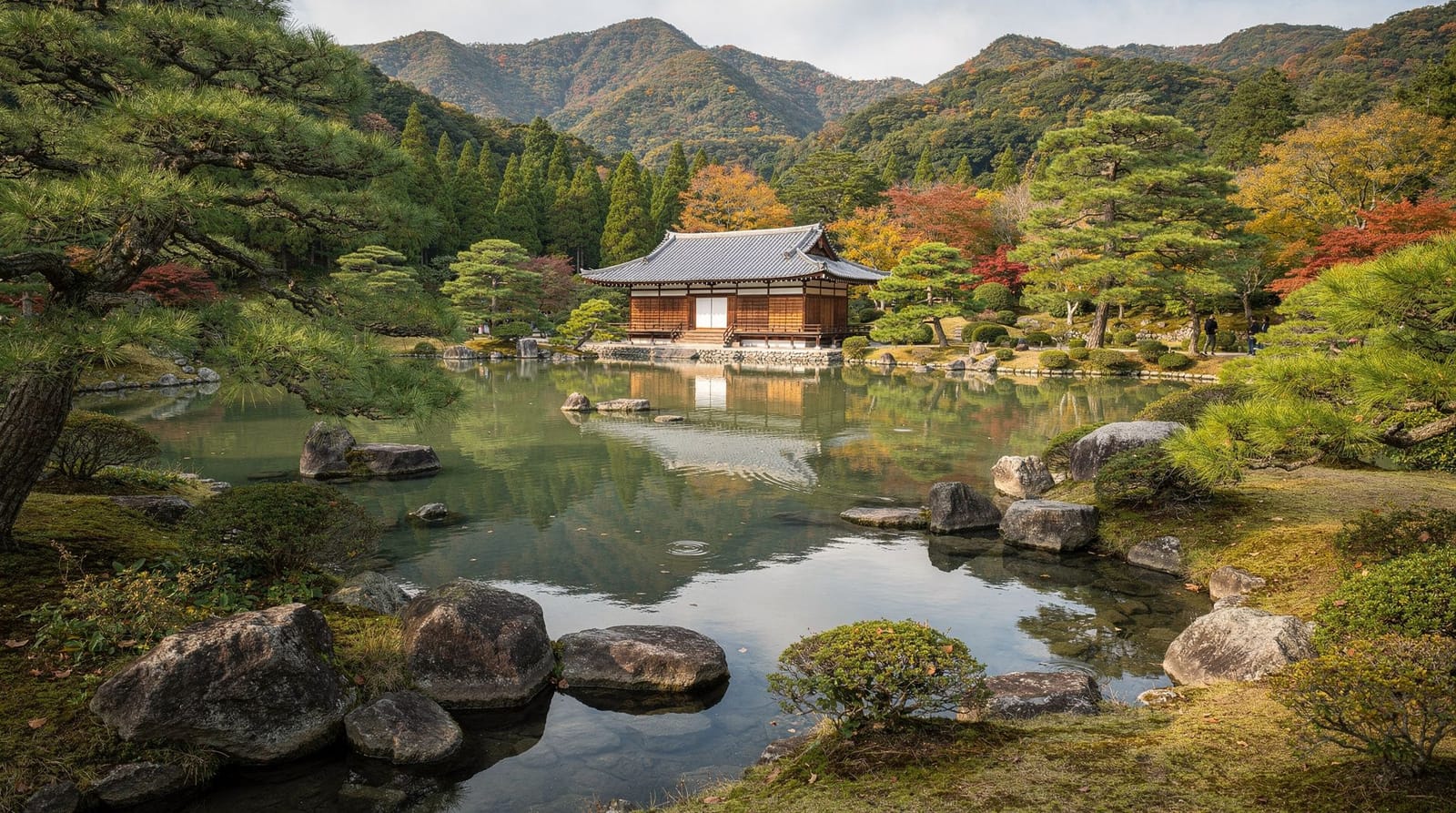
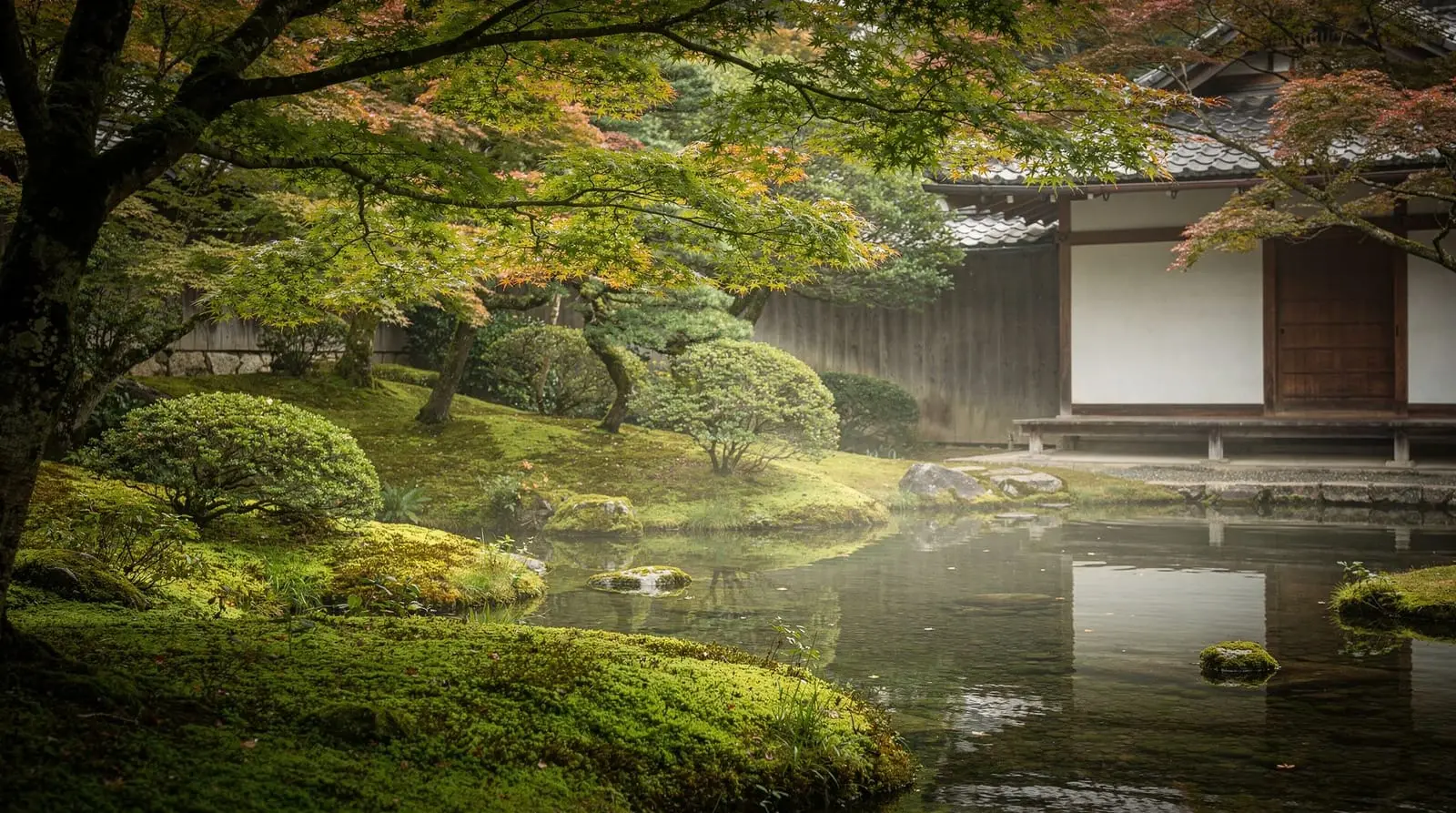
The temple’s grounds hold an estimated 120 species of moss, carpeting the ground beneath a canopy of maple and pine in shades that shift from bright green in early summer rain to duller tones in winter. This wasn’t the original 14th-century design intent — the garden, attributed to the monk and garden designer Muso Soseki (the same figure credited with Tenryu-ji’s Sogenchi garden across town), was conceived as a strolling pond garden in the classical style, without moss as its defining feature.
The moss developed gradually after flooding in the early 20th century altered the site’s drainage and shade conditions, an unplanned ecological shift that ended up producing the effect the garden is now famous for. It’s a rare case of a UNESCO-recognized landscape being defined by an accident of hydrology rather than its designer’s original intent.
The reservation is not optional, and it’s not new
Saiho-ji began requiring advance reservations in the 1970s after decades of open access led to overwhelming visitor numbers that were, by most accounts, damaging the moss itself through sheer foot traffic and compacted soil. The solution the temple settled on — mandatory booking plus a devotional prerequisite before entry — has remained in place with only procedural updates (moving from mail-only booking to an online system) ever since. There is no exception for visitors who didn’t know about the requirement, no on-site ticket counter for walk-ups, and no way to talk your way in at the gate. If you want to see Saiho-ji, the reservation has to happen before you land in Japan, not after.
How to actually book a visit
Saiho-ji’s own website runs the reservation system, opening booking windows roughly two to three months ahead of each visiting date. Popular dates — weekends generally, and especially any date during cherry blossom season (late March-early April) or autumn foliage weeks (mid-to-late November) — can fill within days of the booking window opening, so checking the system as early as your trip planning allows is worth doing rather than waiting until closer to departure.
The booking process requests your preferred date, a backup date if possible, and the number of visitors in your party; confirmation is typically issued once the request is processed. Because reservation systems and exact procedures can shift, checking Saiho-ji’s official site directly close to your trip for the current process is the safest approach — this guide describes the general system rather than a fixed, unchanging procedure.
What a visit actually involves, step by step
On arrival at your reserved time, visitors are seated at low writing desks inside a temple hall, given a brush, ink, and a sheet with pre-printed sutra characters to trace rather than compose from memory. This sutra-copying practice, called shakyo, is treated as a genuine devotional exercise rather than a formality — talking and photography are discouraged during the session itself, and the pace is unhurried. The session runs roughly 30-45 minutes before visitors are released into the moss garden to walk the grounds at their own pace. Completed sutra copies are typically left as an offering rather than taken home, though procedures can vary.
The garden itself: what you see after the writing session
Once through the sutra-copying hall, the moss garden unfolds as a strolling path around a central pond shaped, according to temple tradition, like the Japanese character for heart or mind (kokoro) — a detail easy to miss at ground level but part of the garden’s symbolic design. Moss covers nearly every surface not occupied by the pond, path, or maple and pine trunks, in a density and variety that’s genuinely distinct from the more selectively placed moss accents at gardens like Ginkaku-ji’s hillside path. A full walk of the grounds takes 30-45 minutes at an unhurried pace, though the garden’s capped visitor numbers mean there’s rarely pressure to move quickly.
Real cost: ¥4,000, and why it’s higher than everywhere else
Admission is ¥4,000 (roughly US$27 depending on the exchange rate), several times higher than the ¥500-600 typical of Kyoto’s walk-in temple gardens. The price reflects two things: the capped, low-volume visitor model the temple deliberately maintains, and the fact that admission functions as much as a rationing mechanism as a simple entrance fee. There’s no discounted or child ticket in most cases, and payment is generally handled on arrival rather than online at time of booking — check the confirmation details from your reservation for the specific process.
Is it worth ¥4,000 compared to Kyoto’s other gardens
This is a genuinely fair question, and the honest answer depends on what you’re optimizing for. If moss gardens specifically interest you, or you value a guaranteed-quiet, unhurried experience over efficiency, Saiho-ji delivers something no walk-in garden in Kyoto can match, precisely because the reservation system prevents overcrowding by design.
If you’re working through a tight first-time Kyoto itinerary already covering Kinkaku-ji, Fushimi Inari, and the Arashiyama bamboo grove, the combination of cost, advance planning required, and the sutra-copying time commitment makes Saiho-ji a reasonable one to skip in favor of walk-in sites like Tenryu-ji that deliver strong garden design without the logistics.
Sutra copying: what it means if you’re not Buddhist
Shakyo, the sutra-copying practice required before entering the garden, doesn’t require any particular religious belief or background to participate in — it’s presented to visitors as both a devotional practice and, functionally, a way of slowing down before entering a garden meant for contemplation. Non-Buddhist and non-religious visitors are welcome and commonly make up a large share of attendees; the expectation is respectful, quiet participation rather than religious commitment. Character sheets are pre-printed for tracing, so no calligraphy skill or knowledge of Japanese is required to complete the exercise.
Getting to Saiho-ji
Saiho-ji sits in Kyoto’s Nishikyo Ward, south of the main Arashiyama tourist core, and is most commonly reached by bus from Kyoto Station (roughly 50 minutes) or by combining a train to Matsuo-Taisha Station on the Randen (Keifuku) line with a short bus or taxi connection. It’s close enough to Arashiyama to combine into a single day, though it sits outside Arashiyama’s main walkable cluster of sights, so factor in a separate short journey rather than assuming it’s an easy add-on walk from the bamboo grove.
Combining Saiho-ji with the rest of Arashiyama
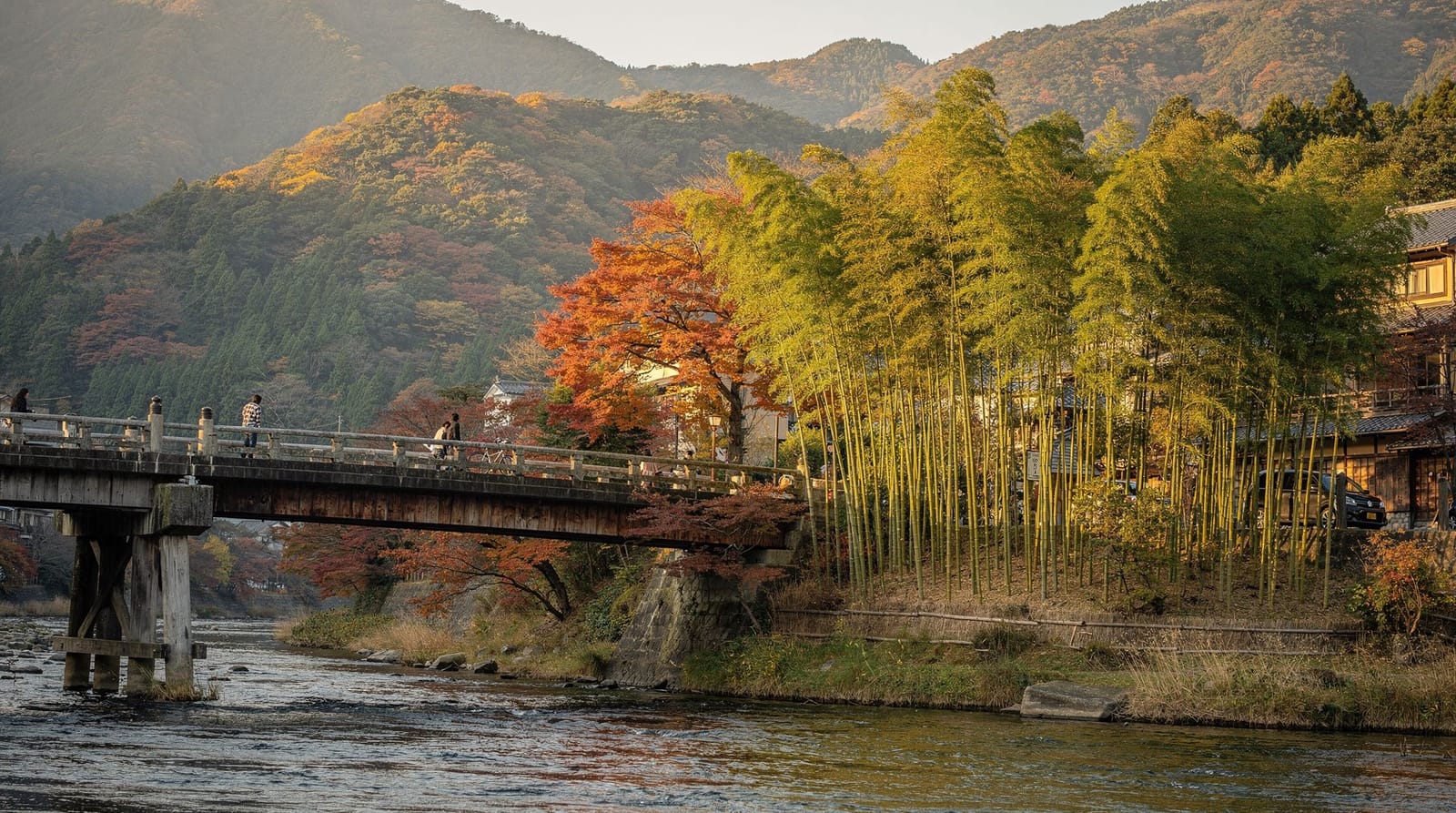
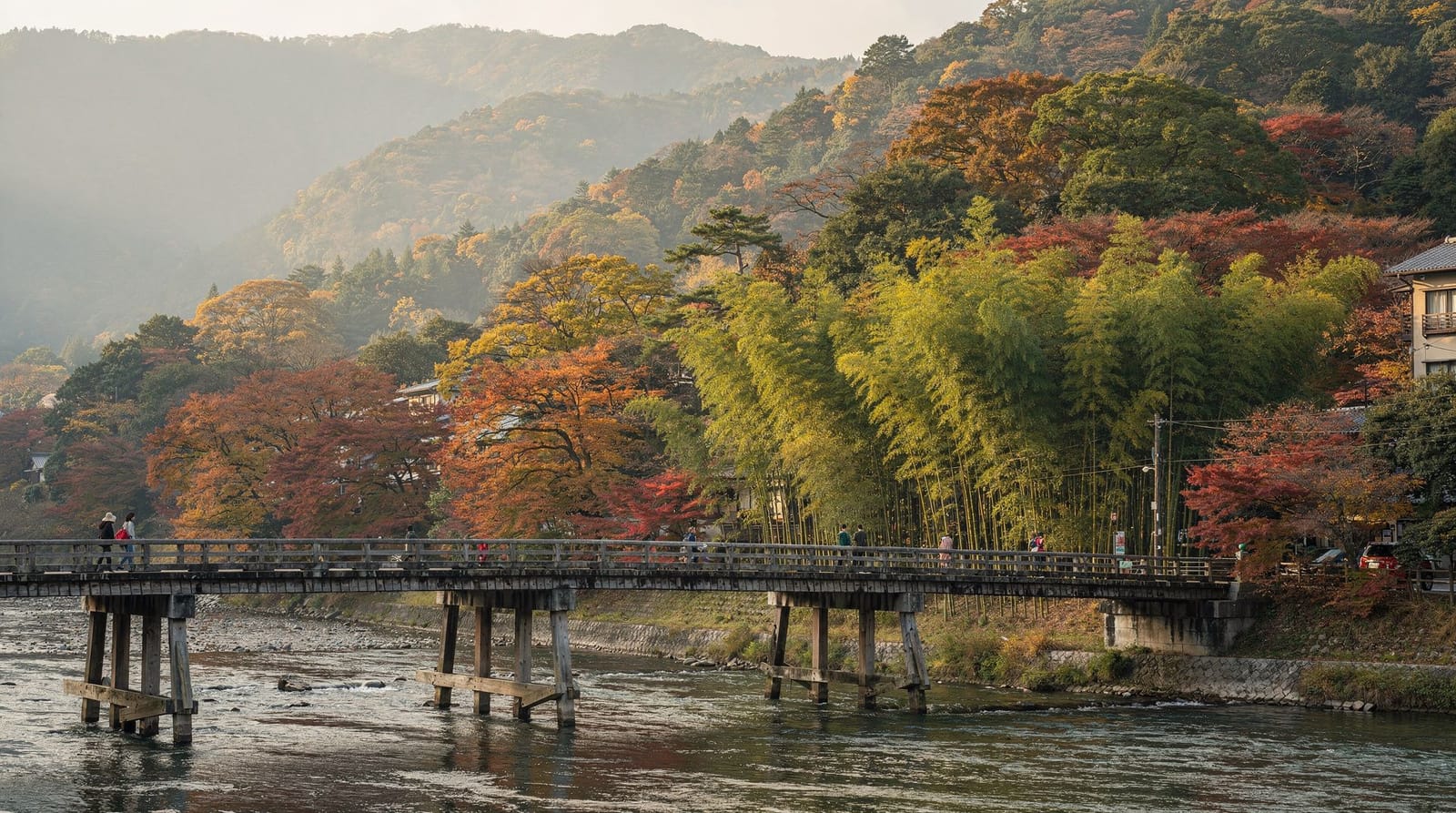
Because Saiho-ji requires a fixed reservation time, the practical approach is to build the day around that booking rather than trying to fit it flexibly alongside other sightseeing. A common pattern: Saiho-ji’s reserved morning or early-afternoon slot first, followed by the short trip north into central Arashiyama for the bamboo grove, Tenryu-ji, and the Togetsukyo Bridge in the afternoon once the fixed-time obligation is out of the way. Attempting the reverse — flexible sightseeing first, Saiho-ji squeezed in after — risks running late for a reservation that won’t be held if you miss your slot.
Photography and etiquette inside the garden
Rules around photography inside the moss garden have shifted over the years as the temple has balanced visitor experience against the ecological fragility of a moss carpet that can be damaged by trampling alone, let alone visitors stepping off the path for a better angle. Current signage on arrival is the reliable source for what’s permitted in any given section — treat any posted restriction as non-negotiable given how easily moss is damaged by foot traffic, and stay on marked paths throughout the grounds regardless of what’s technically allowed elsewhere.
Best time of year to visit
Saiho-ji’s capped reservation system means crowding isn’t really a seasonal concern the way it is at walk-in gardens — you’ll have a comparably calm experience whenever you can get a booking. That said, early summer (June), during Japan’s rainy season, is when the moss reaches its most saturated, vivid green, making it arguably the single best month to see the garden at its visual peak, even though it’s not the season most visitors instinctively plan a Japan trip around. Autumn (November) adds maple color against the moss, and is the hardest season to book given competing demand from foliage-season travelers citywide.
Common mistakes to avoid
The most common and costly mistake is assuming a reservation can be arranged after arriving in Kyoto, or treating Saiho-ji as a spontaneous add-on to an Arashiyama day — by the time most travelers realize the booking window has passed, it’s too late to fix within a single trip.
A second mistake is underestimating the sutra-copying session’s time commitment and scheduling something immediately after with no buffer; between the writing session and the garden walk, budget 75-90 minutes minimum from arrival to exit. A third is skipping the check of Saiho-ji’s official site close to departure for any procedural updates — reservation systems for high-demand, low-capacity sites like this one do change periodically, and confirming current details a few weeks before your trip avoids surprises.
Accessibility
The sutra-copying hall requires sitting at low desks, typically on cushions on tatami flooring, which may be difficult for visitors with limited mobility in knees or hips — inquire with the temple in advance if this is a concern, as seating arrangements can sometimes be adjusted. The garden path itself is mostly packed earth and stone, occasionally uneven, and not fully wheelchair accessible given the site’s traditional layout and the need to protect the moss itself from compacted, heavily trafficked routes.
How Saiho-ji’s moss is actually maintained
The roughly 120 species of moss carpeting Saiho-ji’s grounds require more active management than the word “moss garden” might suggest — moss is sensitive to foot traffic, soil compaction, shade levels, and moisture balance, and a garden this large and this densely covered needs continuous, careful maintenance rather than simply being left alone to grow. Temple grounds staff manage watering during dry spells, remove fallen leaves and debris that can smother patches of moss, and monitor path boundaries closely to prevent visitor traffic from compacting soil beyond the marked walkway.
This is part of why the capped, reservation-only visitor model matters beyond crowd comfort: it’s a direct ecological control, limiting the number of feet moving through the garden each day to a level the moss can sustainably tolerate. Visitors sometimes assume a “moss garden” simply happens on its own given enough shade and rain, but Saiho-ji’s version is closer to a continuously tended living collection than a passive landscape feature.
The bigger picture: why the reservation system exists at all
It’s worth stepping back from the logistics to note what makes Saiho-ji unusual among Kyoto’s major sights: it’s one of the only cases in the city where a temple deliberately chose to make itself harder to visit, specifically to preserve the thing that makes it worth visiting in the first place. Every other major Kyoto garden on a typical itinerary — Tenryu-ji, Ginkaku-ji, Ryoan-ji — accepts unlimited walk-in visitors and manages crowding, if at all, only through opening hours.
Saiho-ji’s model, inconvenient as the planning requirement is, is a large part of why the moss has survived in the condition it has. Booking ahead and following the sutra-copying process isn’t a hoop to jump through around the “real” garden visit — it’s the mechanism that keeps the garden worth visiting at all.
If you’d rather skip the reservation entirely
Not every visit needs to be built around Saiho-ji’s booking window. If your dates don’t line up with the reservation system, or the sutra-copying commitment doesn’t appeal, a guided Arashiyama day trip covering the bamboo grove and nearby walk-in gardens delivers a full, satisfying day without any advance planning beyond booking the tour itself. It also pairs naturally with the best gardens in Kyoto and best zen gardens guides if you’re deciding which reservation-free sites to prioritize instead, and with general Kyoto etiquette pointers that apply at any temple you visit.
Private, personalized Arashiyama day trip