Kyoto autumn leaves forecast 2026 — when momiji season actually peaks
Kyoto’s autumn foliage season, known as koyo, gets less advance hype than cherry blossom season but is arguably the more reliable of the two — the color change is driven by a longer, steadier cooling trend rather than a single sharp temperature threshold, which makes late-season forecasts noticeably more accurate. Still, “when do the leaves peak” is a genuinely different question in October than it is in mid-November, and this piece covers how the 2026 forecast will likely develop and how to plan around it.
| Typical peak | Late November (Nov 20 – Dec 1) |
| Earliest color | Kurama and Kibune, a week or more earlier |
| Latest color | Arashiyama, a few days to a week later |
| Book by | Autumn, same urgency as cherry blossom season |
| Cheaper alternative | First half of November or first week of December |
Kyoto’s autumn color runs later than most visitors expect
The single most common planning mistake with Kyoto’s autumn leaves is assuming they peak in early or mid-October, in line with foliage further north in Japan or in much of the US and Europe. In reality, Kyoto’s maple (momiji) color typically peaks between mid-November and the very start of December, one of the latest windows of any major city in Japan, a function of its inland basin location and comparatively mild autumn temperatures. Ginkgo trees, which turn a distinct solid yellow rather than maple’s red-orange gradient, tend to peak a week or two earlier than the maples, usually mid-to-late November.
Based on the historical range over the past decade, late November — roughly November 20 through December 1 — has been the single most reliable peak window for Kyoto’s most photographed maple groves. Years with a warm autumn have pushed peak color into early December; a genuinely cold, early autumn has occasionally pulled it forward into the second week of November, but this is the less common pattern.
How the forecast tightens as autumn progresses
Japanese weather services and several tourism sites begin publishing preliminary koyo forecasts in September, based on long-range temperature outlooks, but these carry wide error margins similar to early cherry blossom forecasts. The forecast becomes meaningfully more reliable from mid-October onward, once actual autumn cooling is underway and can be tracked directly. By early November, most forecasters can give a fairly confident window for peak color at Kyoto’s major spots, typically narrowing to within about a week.
For a 2026 trip booked well in advance, the safest planning anchor is the historical late-November window, with actual forecast tracking starting in October to fine-tune specific dates once flights and hotels are already locked in.
Not every temple in Kyoto peaks on the same day
One of the more useful things to understand about Kyoto’s koyo season is that peak color doesn’t happen citywide on a single date — it varies by several days to two weeks depending on a garden’s elevation, tree species mix, and microclimate, which is genuinely useful for building a multi-day itinerary around it.
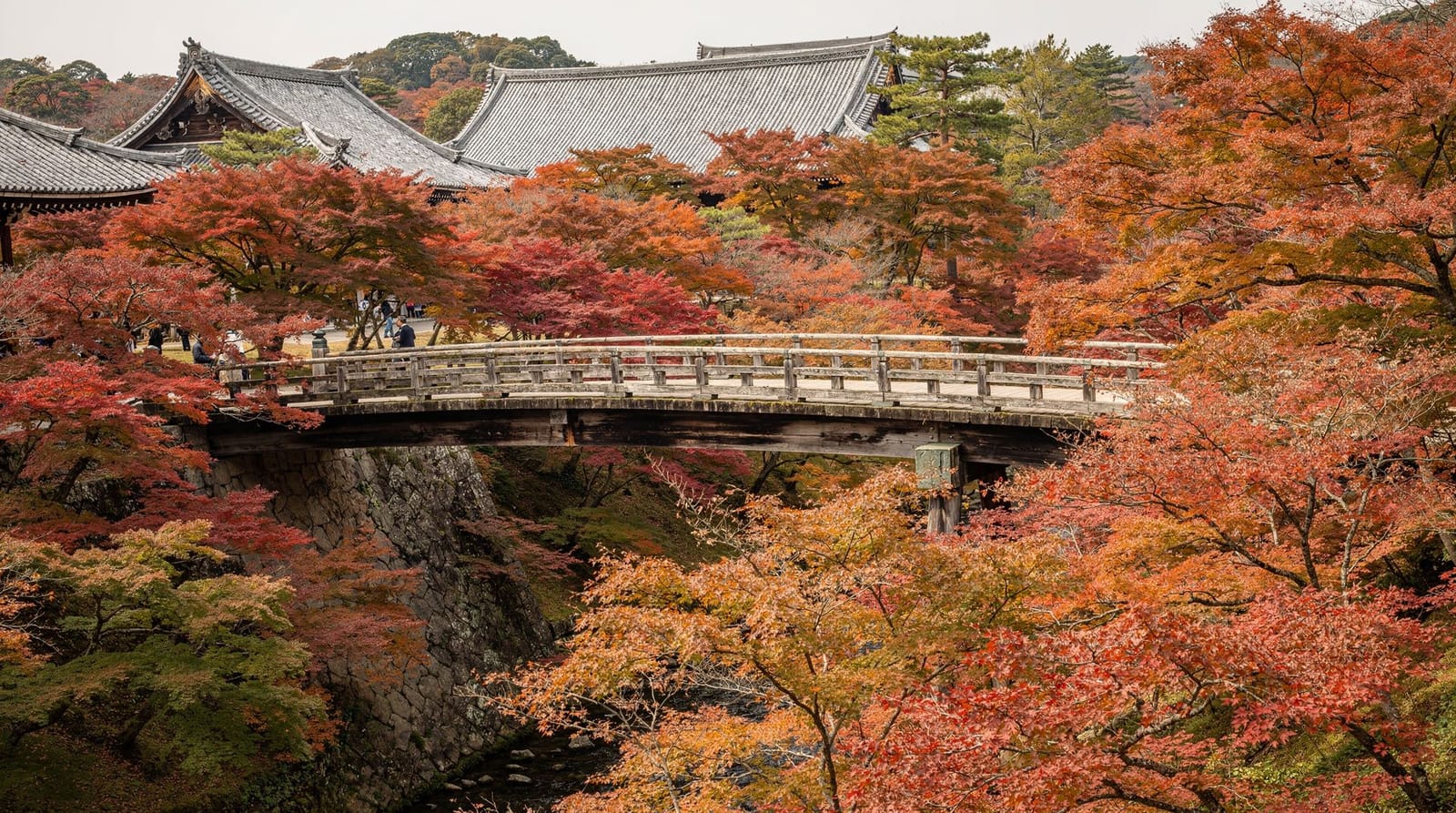
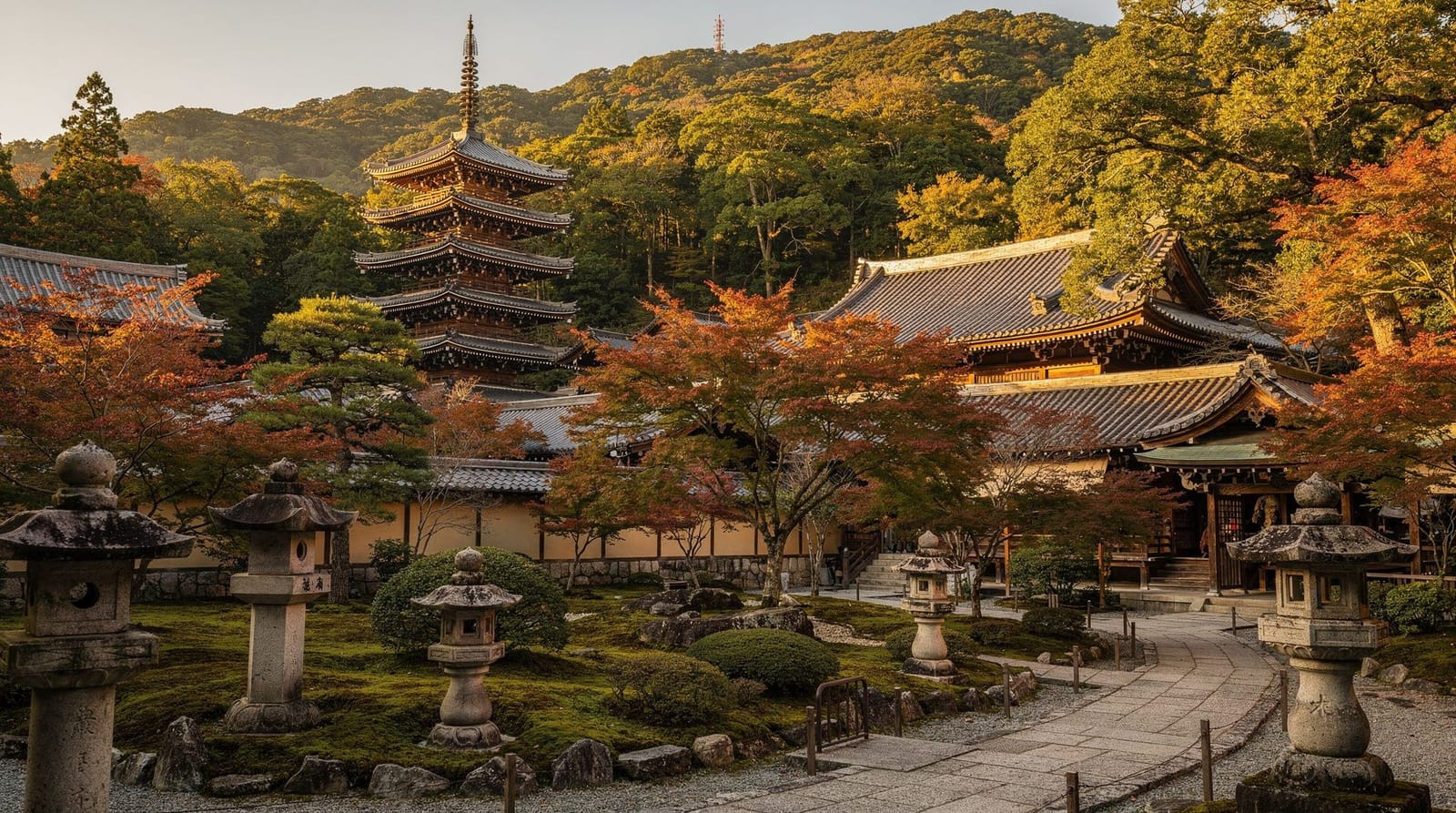
Tofuku-ji, widely considered Kyoto’s single best momiji spot thanks to the view from the Tsutenkyo bridge over a valley densely packed with maples, tends to peak in the classic mid-to-late November window and draws correspondingly enormous crowds during that stretch — arriving at opening (8:30am, extended to earlier hours during peak season) is close to essential.
Guided walking tour of Tofuku-ji and neighboring Komyo-in — timed around the temple’s peak momiji weeksNanzen-ji and its Zen sub-temples, along with the nearby Eikan-do (Zenrin-ji), a temple specifically famous for its illuminated night foliage viewing in autumn, run on a broadly similar schedule to Tofuku-ji. Arashiyama’s maple groves along the Katsura River, and the hillside above the bamboo grove, tend to hold color a few days to a week later than the eastern city temples, partly a function of the cooler river valley delaying the change and then extending it.
Kurama and Kibune, in the mountains north of the city, typically color earlier than central Kyoto by a week or more given their higher elevation, making that area a useful first stop for a trip that starts before the main city has turned. Our full autumn foliage in Kyoto guide maps out the complete spot-by-spot color calendar in more detail than this forecast piece covers.
Peak timing by area, at a glance
| Area | Typical peak | Notes |
|---|---|---|
| Kurama, Kibune (mountains) | Early-to-mid November | Higher elevation, colors first |
| Tofuku-ji, Nanzen-ji, Eikan-do | Mid-to-late November | Kyoto’s classic peak window |
| Arashiyama (river valley) | Late November into early December | A few days to a week behind the east side |
| Kamo River banks | Mid-to-late November | Free, unticketed, less crowded |
| Lake Biwa, Otsu | Mid-to-late November | Lakeside color, more space to spread out |
What “peak” versus “just starting” versus “past peak” actually looks like
As with cherry blossoms, chasing the literal peak date isn’t always the best strategy. In the week or two before peak, maples show a genuinely attractive mix of green, yellow, and red — sometimes called a rainbow effect — that many photographers actually prefer to the more uniform, deeper red of full peak. Crowds during this early-color window are noticeably lighter than on a peak weekend, since domestic Japanese travelers in particular tend to time trips tightly around the forecast peak.
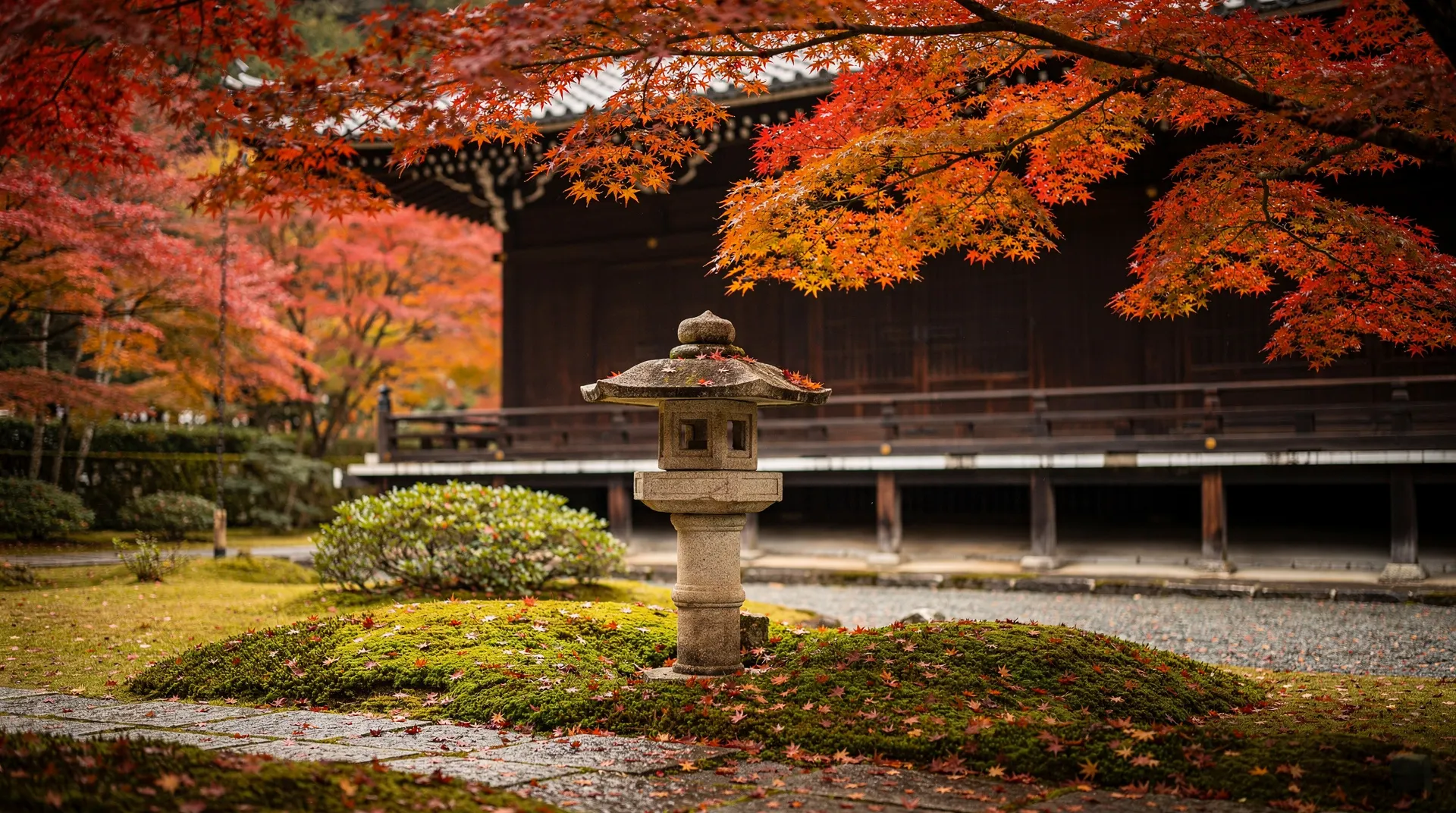
Past peak, leaves begin dropping, and while a bare tree isn’t the goal, several temples are specifically known for their fallen-leaf carpets on moss or stone paths — the fallen maple leaves scattered across the moss garden approach at temples like Jojakko-ji in Arashiyama are, for some visitors, a more memorable image than the trees themselves at full color.
Illuminated night viewing — a distinct autumn experience
Several temples run special evening illumination (light-up) events during peak koyo weeks, projecting light onto maple canopies and reflecting pools for a night viewing experience genuinely different from a daytime visit. Kodai-ji, Eikan-do, and Kiyomizu-dera have all run autumn light-up seasons in recent years, typically for a roughly three-to-four-week window centered on the citywide peak, with separate evening admission tickets and hours extending past normal closing. These events draw their own dedicated crowds and are worth checking specific dates for directly on the temple’s own announcements closer to the 2026 season, since exact illumination windows are usually confirmed only a month or two ahead.
What drives the color change, and why it’s more predictable than sakura
Cherry blossom timing depends heavily on a specific warming trigger in late winter and early spring, which makes it genuinely volatile year to year. Autumn foliage color change is driven by the opposite process — a gradual accumulation of cooler nights and shorter daylight hours through October and November that breaks down chlorophyll in the leaves, revealing the yellow and red pigments underneath.
Because this is a longer, more gradual seasonal process rather than a single sharp trigger, autumn forecasts, once October arrives, tend to be somewhat more reliable and less prone to sudden last-minute shifts than spring forecasts are, even if the absolute peak date still moves by a week or more between an unusually warm and an unusually cool year.
Booking a trip around the November peak
Because Kyoto’s peak color lands so much later than many visitors initially assume, one of the most common planning mistakes is booking an “autumn in Japan” trip for early-to-mid October, based on foliage patterns from colder-climate destinations, and arriving to find Kyoto’s maples still fully green. Flights and hotels for the genuine late-November peak window should be booked with the same urgency as a cherry blossom trip — this stretch is Kyoto’s second-most expensive and fully booked period of the year, behind only spring, and popular ryokan and hotels near Higashiyama or Arashiyama can sell out months ahead for the historically likely peak weekend.
For travelers with flexible dates, the shoulder periods just before or after the tightest peak weekend — the first half of November, or the first week of December — offer a genuine trade-off worth considering: slightly less saturated color at the very best-known spots, in exchange for noticeably lower hotel prices and thinner crowds at Tofuku-ji and Arashiyama specifically, which are consistently the two most congested foliage destinations in the city during the exact peak weekend.
Autumn foliage beyond the temple gardens
Kyoto’s koyo season isn’t limited to temple gardens — the city’s broader landscape turns with it. The Kamo River banks, lined with a mix of maple and other deciduous trees, offer a free, unticketed, and far less crowded way to see genuine autumn color on a casual walk or cycle, without needing to plan around any specific temple’s opening hours or admission fee. The mountains visible from many parts of the city, particularly Higashiyama’s wooded slopes seen from Kiyomizu-dera’s stage or Nanzen-ji’s grounds, add a broader, more atmospheric layer of color to the skyline through November that’s easy to miss when focused purely on individual named gardens.
Lake Biwa and the Otsu area, a short train ride from central Kyoto, offer another autumn option away from the city’s most crowded gardens, with lakeside foliage and considerably more space to spread out than any single temple garden allows.
Private 3-hour guided tour of Lake Biwa from Kyoto — a quieter autumn option away from the city’s most crowded gardensPractical packing for a November Kyoto trip
Late November in Kyoto is genuinely cold by midday standards for many visitors, especially compared to the mild image the city’s autumn photos suggest — daytime temperatures typically sit in the low-to-mid teens Celsius (roughly 55-60°F), dropping into single digits Celsius (high 30s to low 40s °F) after dark, with a real chance of the season’s first light frost by late November in some years. Layering, a proper jacket rather than just a light sweater, and comfortable closed shoes for the same stone paths and temple grounds that get slippery when wet are worth planning for specifically, since a trip focused on outdoor garden viewing means spending real time standing around in the cold rather than moving briskly between indoor stops.
Planning a trip around a moving peak window
Given the spread between Kurama’s early color and Arashiyama’s later color, a multi-day Kyoto autumn trip has a real practical advantage over a single-day visit: it can be sequenced to follow the color as it moves through the city, starting in the mountains or higher-elevation spots early in the trip and finishing in the river valleys and western districts toward the end, rather than hoping every location happens to peak on the same visit day.
For trips locked to fixed dates that can’t move with the forecast, the safest single bet is the last ten days of November — narrow enough to catch most years’ peak somewhere in the city, even if not every individual garden is at its absolute best on the same day. Building in at least one flexible, unplanned day gives room to redirect toward whichever neighborhood the forecast says is peaking once actual conditions are known, rather than following a fixed schedule set months earlier.
As with cherry blossom season, it’s worth weighing the trade-off honestly: the exact peak weekend brings Kyoto’s autumn crowds to their most intense levels of the year at spots like Tofuku-ji and Arashiyama, on top of already elevated hotel prices. A trip timed for the express edges of the season — early or late within that broader November-to-early-December window — trades a small amount of color intensity for a meaningfully calmer visit and lower costs.
Our Kyoto in autumn guide covers the season more broadly beyond just foliage timing, and the general avoiding crowds in Kyoto guide has arrival-time strategies that apply directly to Tofuku-ji and Arashiyama during peak koyo weeks.
Frequently asked questions about Kyoto
When exactly do Kyoto’s autumn leaves peak in 2026? Based on the historical pattern, late November — roughly November 20 through December 1 — is the most reliable peak window for Kyoto’s best-known maple groves. A warm autumn can push it into early December; a cold, early autumn can pull it forward into the second week of November, though this is less common.
Which Kyoto spot has the best autumn foliage? Tofuku-ji is widely considered the single best momiji spot, thanks to the view from the Tsutenkyo bridge over a valley densely packed with maples, though it also draws the largest crowds during peak weeks. Arashiyama and Nanzen-ji are close seconds with a similarly strong reputation.