One day in Kyoto — what not to miss
A single day in Kyoto is genuinely not enough to see the city properly — worth saying plainly before anything else, since Kyoto rewards a slower pace across three or four days far better than a day trip ever will. But a one-day visit, whether it’s a stopover from Osaka, a day trip from a Tokyo-based trip, or simply all the time available, can still deliver a real, satisfying taste of the city if the plan is realistic about what fits.
| Core plan | Fushimi Inari (morning) + Higashiyama (midday) |
| Start time | By 8am at Fushimi Inari |
| Districts | Pick 2, at most — not 4 |
| Transit | IC card sorted before the day starts |
| Skip | Nara, Uji, or more than one extra district |
Why a one-day visit is still worth doing properly
Some travel advice suggests skipping Kyoto entirely rather than doing it in a single rushed day, on the theory that a poor first impression is worse than none at all. That’s overly cautious — a well-planned single day, focused tightly on two districts rather than spread thin across four, delivers a genuinely satisfying, representative sample of the city, not a diluted or misleading one. The key is discipline in the planning stage: resisting the urge to add “just one more stop” once the day’s core plan is set, since that single addition is usually what turns a well-paced day into a rushed one.
The honest math of a one-day Kyoto visit
Kyoto’s major districts — Fushimi Inari in the south, Higashiyama in the east, Arashiyama in the west, Kinkaku-ji in the north — are spread far enough apart that visiting all four properly in one day means spending more time in transit than actually at any of them. The realistic approach for a single day is picking two districts, at most, and accepting that everything else waits for a return trip. For anyone with more than a single day, the how many days in Kyoto guide breaks down what an extra day or two actually buys you, and the ready-made 1-day itinerary offers a structured version of the plan below.
Start at Fushimi Inari, first thing, before anything else
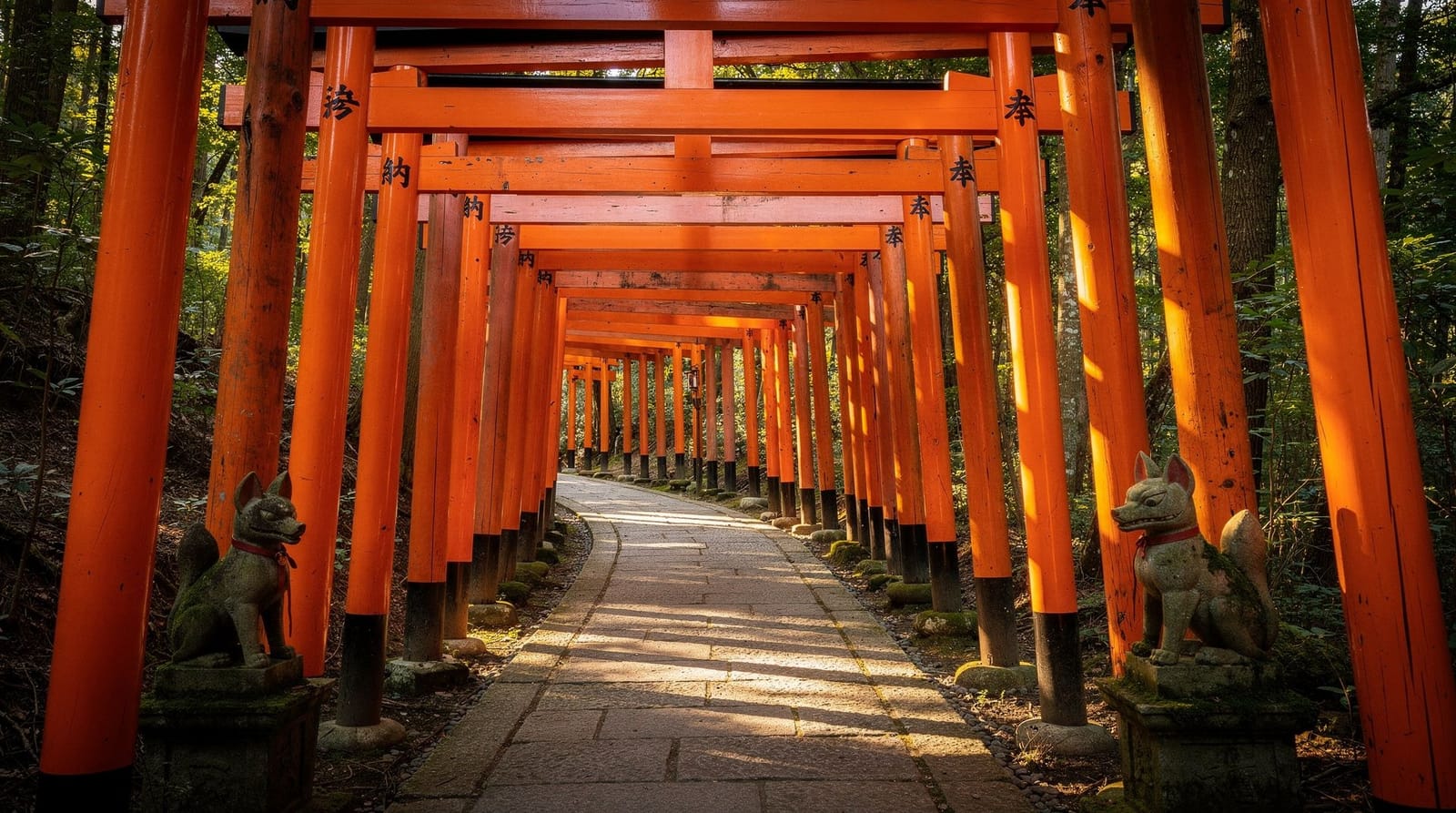
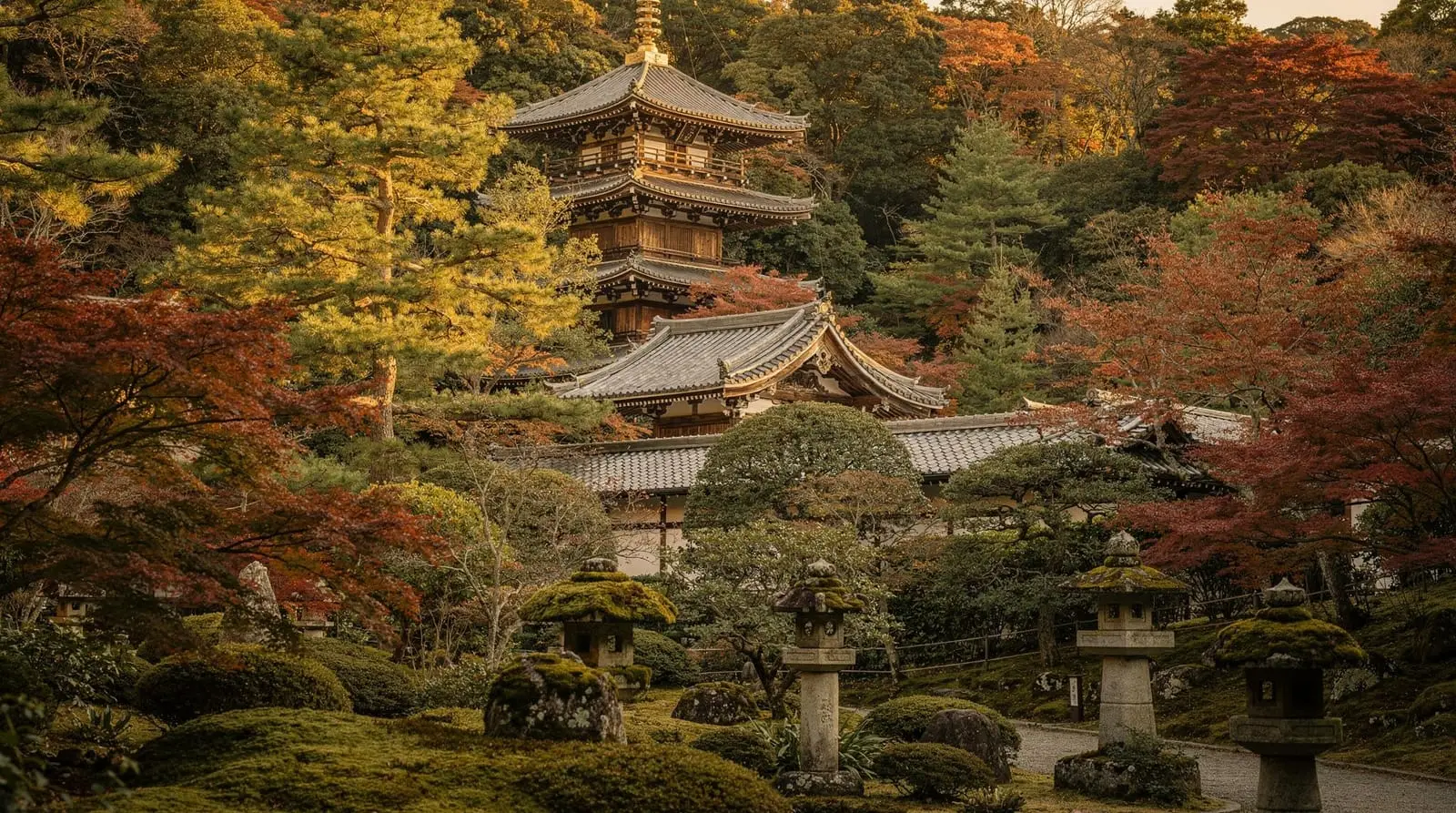
If a one-day visit includes only one “must-see” sight, it should be Fushimi Inari Taisha, and it should be the very first stop, ideally by 8am. The shrine’s famous torii tunnel goes from close to empty at dawn to genuinely crowded within about two hours, and since it’s free with no fixed opening hours, an early start costs nothing but sleep. Kyoto Station is two train stops away on the JR Nara Line, roughly five minutes, making this an easy first stop for anyone staying near the station.
Early-morning Fushimi Inari shrine tour — the single highest-value stop for a one-day Kyoto visitBudget 60-90 minutes here — enough to walk well past the crowded lower tunnel to the quieter Yotsutsuji viewpoint roughly a third of the way up the mountain, without committing to the full two-to-three-hour round trip to the summit, which a one-day itinerary genuinely doesn’t have room for. The full Fushimi Inari guide has more on the shrine’s layout, and our piece on avoiding crowds at Fushimi Inari covers the timing logic in more depth.
Move to Higashiyama for the second half of the morning
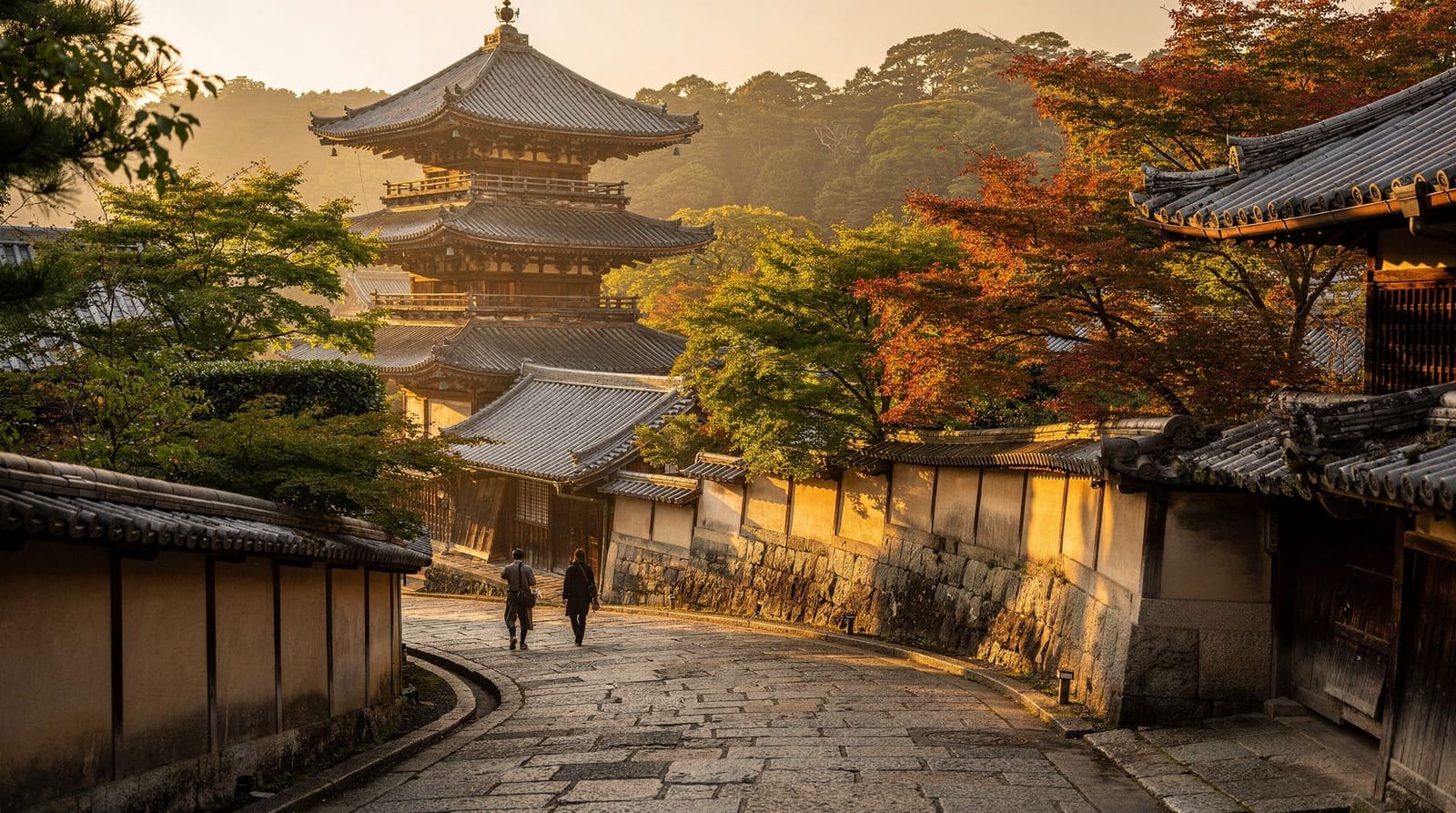
From Fushimi Inari, Higashiyama — the historic eastern hills district including Kiyomizu-dera, the Sannenzaka and Ninenzaka lanes, and Yasaka Shrine — is a reasonable next stop, roughly 15-20 minutes by taxi or bus. Kiyomizu-dera opens at 6am, unusually early for a major temple, which rewards arriving before the late-morning tour groups. The wooden stage overlooking the valley below is Kiyomizu-dera’s signature view, and the walk down through Sannenzaka and Ninenzaka’s preserved lanes toward Yasaka Shrine and Gion covers a genuinely dense stretch of historic Kyoto in a comparatively short walk.
Kiyomizu-dera, Fushimi Inari and Gion half-day tour — a structured way to cover this exact combination with a guideGetting the transit right without wasting time
The single biggest time-waster in a rushed one-day itinerary is inefficient transit between stops, and a little planning here pays off more than almost anything else on this list. An IC card (ICOCA locally, though Suica and Pasmo work identically), tapped directly on and off buses, subways, and trains without needing exact change or paper tickets, should be sorted before the day even starts, ideally at the airport or Kyoto Station on arrival. Between Fushimi Inari and Higashiyama specifically, a taxi is often worth the modest extra cost over a bus on a tightly timed one-day itinerary, since it removes any uncertainty around bus schedules or standing-room crowding that can eat into an already tight day.
Lunch in or near Gion
Gion, immediately adjacent to the bottom of the Higashiyama walk, is a natural lunch stop — genuinely worth eating in this area rather than rushing to a different neighborhood, since it saves transit time and Gion has a solid range of casual and mid-range restaurant options along and just off the main Hanamikoji street. This is also the point in the day to remember that Gion is a working geisha district, not a photo backdrop — enjoy the historic streets and architecture, but don’t chase or photograph geisha or maiko without consent, particularly on the several backstreets where photography is now formally banned.
The afternoon: one more district, chosen deliberately
With Fushimi Inari and Higashiyama covering the morning and lunch, the afternoon has room for one more area, and the honest choice depends on priorities. Arashiyama, in the west, offers the bamboo grove and Tenryu-ji temple but requires 30-40 minutes of transit from Gion, cutting meaningfully into the time actually spent there. Kinkaku-ji, the Golden Pavilion, is a similarly worthwhile but comparably distant option in the north.
Nishiki Market, by contrast, sits centrally between downtown and Gion and requires far less transit time, making it a lower-effort, high-payoff choice for an afternoon that’s already spent a lot of the day in transit — a covered, walkable food street with roughly 130 stalls, genuinely satisfying as an unhurried browse-and-graze stop to close out a busy day.
Comparing the two afternoon options
| Nishiki Market | Arashiyama or Kinkaku-ji | |
|---|---|---|
| Transit from Gion | Minimal, central location | 20-40 minutes |
| Effort | Low | Moderate to high |
| Best for | A day already heavy on transit | Visitors prioritizing postcard sights |
| Time needed | 1-2 hours | 2-3 hours including transit |
For visitors specifically prioritizing the postcard sights over efficiency, Arashiyama is worth the extra transit time, but it should be the day’s only remaining stop once chosen, rather than squeezed in alongside something else.
Alternative: a single guided full-day tour
For visitors who’d rather not plan the logistics of connecting these stops independently, a guided full-day tour covering Kyoto’s core sights handles the sequencing and transit directly, generally hitting a similar combination of Fushimi Inari, a major temple, and one or two additional stops within a single organized day.
Kyoto Golden Triangle tour — a guided full-day option covering the city’s core highlights without independent transit planningAn alternative plan: Arashiyama and central Kyoto instead
For visitors whose priorities lean more toward the bamboo grove and the golden pavilion than toward Fushimi Inari and Higashiyama, a genuinely different but equally valid one-day plan pairs Arashiyama in the morning (arriving by 8am for the bamboo grove and Tenryu-ji temple, before the tour bus crowds build) with Kinkaku-ji in the early afternoon, roughly 20-25 minutes away by bus or taxi. This version trades Fushimi Inari’s torii tunnel for the Golden Pavilion’s reflection and a fuller Arashiyama experience including the monkey park or a river-adjacent lunch, and it’s a reasonable choice for a repeat visitor who covered the Fushimi Inari and Higashiyama combination on a previous trip.
Whichever version is chosen, the underlying principle stays the same: two well-executed districts beat three or four rushed ones, and the single most crowd-sensitive stop of the day should always come first, before mid-morning crowds build.
Where to base yourself for a one-day visit
For visitors arriving specifically for a single day — a stopover between other destinations, or a day trip from Osaka — staying near Kyoto Station the night before, if an overnight is involved at all, minimizes the morning’s transit time to Fushimi Inari and keeps a bag storage option close by for a same-day arrival and departure. Kyoto Station’s coin lockers and dedicated luggage storage services are extensive and reliable, making a genuine day trip (arrive by early morning train, depart by evening train) a realistic plan without needing an overnight stay in the city at all.
Realistic timing for a day-tripper from Osaka or elsewhere
For visitors based in Osaka rather than Kyoto itself, the trip between the two cities takes roughly 15-30 minutes depending on the specific train line and station pair, making a genuine full-day visit from Osaka entirely workable. The Kyoto versus Osaka guide is worth a look if you’re still deciding which city to base yourself in for a broader Kansai trip.
Leaving Osaka by 7am gets a visitor to Fushimi Inari for its ideal early window, with a full day still ahead before a reasonable return in the evening. The same Fushimi Inari-then-Higashiyama plan outlined above works identically whether the day starts and ends in Kyoto or in Osaka, with only the very first and very last legs of the day differing.
What to skip on a one-day visit, and why that’s fine
A single day genuinely doesn’t have room for Nara’s deer park (a separate half-day trip on its own), Uji’s tea houses, or more than a brief taste of any single neighborhood. That’s a fine trade, not a failure — a one-day visit that does Fushimi Inari and Higashiyama properly, without rushing, delivers a considerably better experience than one that tries to add Arashiyama, Kinkaku-ji, and Nara into the same day and ends up rushing through all of them.
If the one-day visit leaves you wanting to come back for everything you didn’t see, that’s arguably the correct outcome — Kyoto genuinely rewards a longer return trip, and a well-paced single day is a better advertisement for that than an exhausting attempt to see everything at once. Our broader avoiding crowds in Kyoto guide applies the same early-start, pick-fewer-districts logic to longer trips too, if this taste of Kyoto convinces you to come back for more.
Frequently asked questions about Kyoto
Is one day really enough to see Kyoto? Not to see the whole city properly, but it’s enough for a genuinely satisfying, focused visit if you pick two districts rather than trying to cover four. Fushimi Inari plus Higashiyama, done without rushing, is a considerably better day than a scattered attempt at everything.
Should I do Fushimi Inari or Arashiyama if I only have one day? Fushimi Inari is the stronger single choice for most first-time visitors — it’s free, right by Kyoto Station, and delivers the single most iconic Kyoto image. Arashiyama is a reasonable alternative if the bamboo grove and Kinkaku-ji’s Golden Pavilion matter more to you, or if you’ve already seen Fushimi Inari on a previous trip.