Kyoto in 5 days — the complete plan plus the mountains
Kyoto: Arashiyama Bamboo Forest Morning Tour by Bike
What a fifth day should actually be for
By day five, the obvious sights are done.
| Where | Days 1-4 Kyoto + Nara; Day 5 Arashiyama return + Ohara or Kurama-Kibune |
| Cost | Around ¥36,000-45,000 ($245-310) per person for all 5 days |
| Time needed | 5 full days; Day 5 starts 06:45, ends with a late dinner |
| Getting there | JR/Kintetsu/Eizan lines, city buses; no car needed |
| Best time | Ohara peaks June rain and November foliage; avoid Kurama-Kibune’s trail in heavy rain |
This plan offers two mountain options for the second half of Day 5 — Ohara, a rural valley with Sanzen-in Temple and almost no tourist infrastructure, or Kurama-Kibune, a pair of villages connected by a forest hiking trail with an open-air onsen at one end. Both are roughly an hour from central Kyoto and both see a small fraction of the visitors that Arashiyama or Higashiyama do, which after four days of crowd-timing and early starts is often exactly the relief a trip needs. Pick Ohara for temples and quiet gardens, Kurama-Kibune for a short hike and a hot spring.
Days 1-4 follow the identical structure laid out in the 4-day Kyoto itinerary: Day 1 east Kyoto (Fushimi Inari, Higashiyama, Gion), Day 2 west Kyoto (Arashiyama, Kinkaku-ji), Day 3 downtown (Nijo-jo, Nishiki Market, Philosopher’s Path), Day 4 Nara (deer park, Todai-ji, Kasuga Taisha). Full hour-by-hour timing for those four days is in the linked itinerary; what follows here covers the new fifth day.
Days 1-4 — the complete first-time route
Day 1: Fushimi Inari before 8am (JR Nara Line, ~5 min, ¥150), Kiyomizu-dera and Higashiyama’s Sannen-zaka/Ninen-zaka lanes by mid-morning, Gion in early evening. Day 2: Arashiyama bamboo grove and Tenryu-ji before 9am (JR Sagano Line, ~15-20 min, ¥240), Kinkaku-ji by bus in the afternoon. Day 3: Nijo-jo Castle in the morning, Nishiki Market at midday, Philosopher’s Path in the afternoon. Day 4: a full day in Nara — the deer park, Todai-ji’s Great Buddha, and Kasuga Taisha, via Kintetsu Nara Line express (~35 min, ¥760/$5.25). See the 4-day itinerary for full timed detail, prices, and etiquette notes.
Fushimi sake brewery tour, 18 tastingsIf Day 1 or Day 4 leaves extra time, this is also a natural point to add Fushimi’s sake-brewing district along the Horikawa canal, a short walk or one train stop from Inari Station and generally overlooked by visitors who leave the shrine straight after the hike.
Day 5 — Arashiyama at dawn, then Ohara or Kurama-Kibune
06:45 — Arashiyama bamboo grove, before the first tour buses
JR Sagano Line from Kyoto Station to Saga-Arashiyama, ~15-20 minutes, ¥240 ($1.65). Visited already on Day 2, the bamboo grove is worth a genuine return at this hour specifically — before 7:30am, it’s common to walk the entire grove path without another visitor in frame, a completely different experience from the mid-morning crowds most first-time visitors see. Pair it with a slower walk through the surrounding Sagano district’s smaller, less-visited temples rather than repeating Day 2’s Tenryu-ji stop.
Arashiyama bamboo grove and Monkey Mountain walking tour08:30 — Optional: Hozugawa River boat or Sagano scenic train
For a genuinely different view of the same valley, the Hozugawa River boat ride runs roughly 2 hours through the gorge below Arashiyama (¥6,000/$41 per person, departs a short bus ride upstream from Kameoka), or the Sagano Romantic Train covers a shorter, faster scenic loop along the same river (~25 minutes, ¥880/$6). Either is optional and adds 2-3 hours to the morning — skip both if the mountain afternoon matters more than a second Arashiyama activity.
Hozugawa River boat and Sagano Romantic Train tour10:00 — Return toward central Kyoto, choose your mountain
Head back to Kyoto Station or Demachiyanagi Station depending on which afternoon route you’re taking. Ohara departs from Kyoto Station; Kurama-Kibune departs from Demachiyanagi, reachable via the Karasuma subway line and a transfer, roughly 20-25 minutes from Kyoto Station.
Option A — Ohara (bus, ~1 hour)
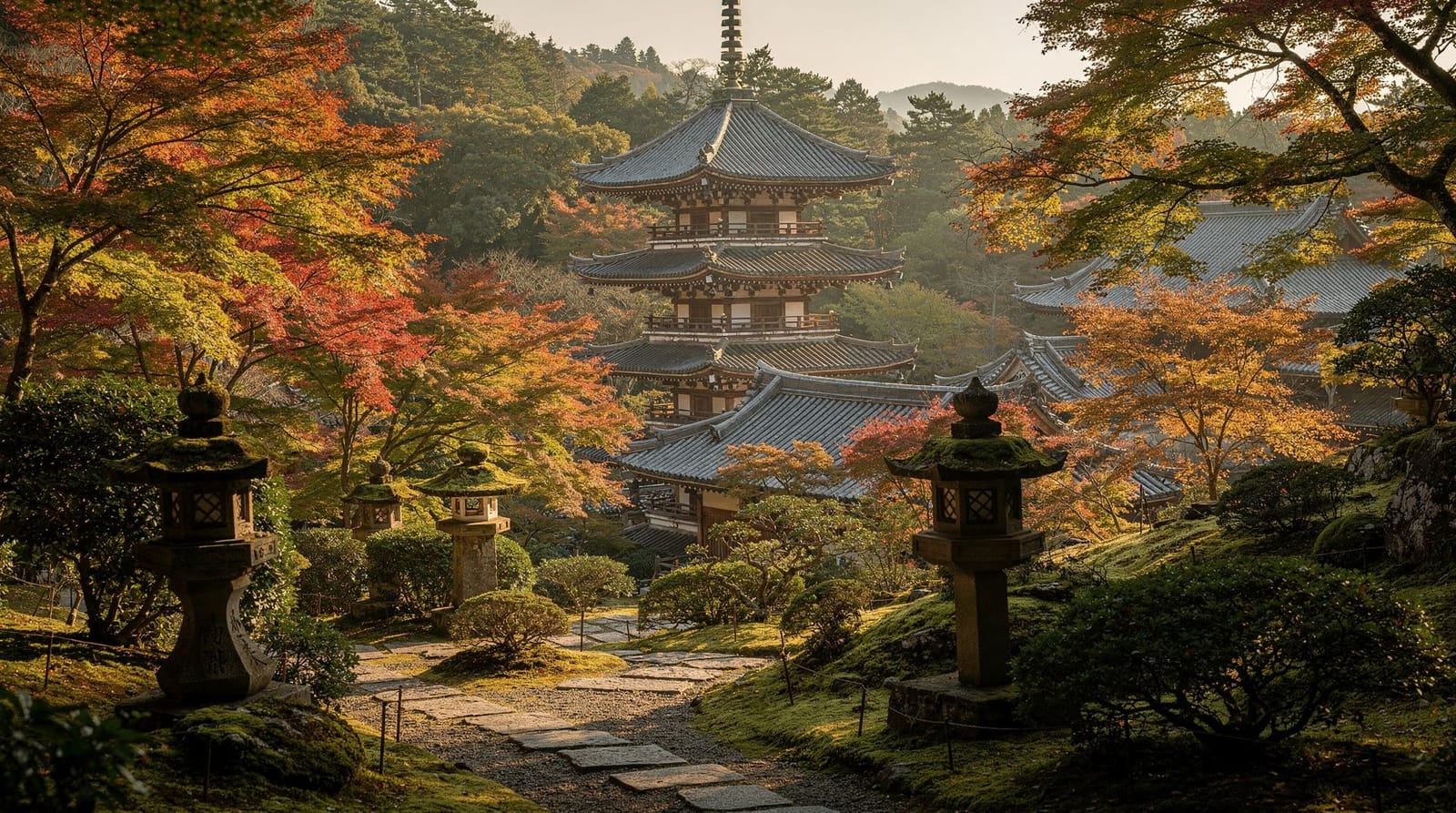
Bus 17 or 19 from Kyoto Station or Kokusaikaikan Station to Ohara, roughly 1 hour, ¥560-680 ($4-4.50). Ohara is a rural farming valley ringed by mountains, built around Sanzen-in Temple, whose moss gardens — genuinely some of the most photographed moss in Kyoto among the small number of visitors who make it out here — are at their best in early summer rain or autumn color. Entrance ¥700 ($5). The valley has almost none of the tour infrastructure of central Kyoto: a handful of small restaurants, a few farm stands selling pickled vegetables, and long stretches with no other visitors in sight. Budget 2.5-3 hours including the temple and a walk through the surrounding rice fields.
Option B — Kurama-Kibune (Eizan Railway, ~30 min)
Eizan Railway from Demachiyanagi to Kurama, about 30 minutes, ¥470 ($3.25). Kurama village sits at one end of a roughly 1-hour forest hiking trail over Mount Kurama, connecting to Kibune village at the other end — a genuine, moderately steep hike through cedar forest past Kurama-dera temple (¥300/$2 entry partway up), not a paved path. At the Kurama end, Kurama Onsen offers an open-air bath with forest views (¥2,500-3,000/$17-21 including a locker and towel), a reasonable way to end the hike if timed for the afternoon. Kibune, at the other end, has a cluster of restaurants built on platforms directly over the river, some running kawadoko terrace dining in summer.
15:30 — Return to Kyoto
From either Ohara (bus, ~1 hour) or Kibune/Kurama (Eizan Railway via Demachiyanagi, ~30-40 minutes total), plan to be back in central Kyoto by mid-to-late afternoon, leaving the evening free.
18:00 — A final, unhurried dinner
With five days of early starts behind you, this is a reasonable night to book somewhere that requires a reservation — a kaiseki restaurant in Gion or Pontocho, or an izakaya recommended by your accommodation rather than one chosen on the walk past. See the kaiseki in Kyoto guide and the Kyoto food guide for options across price ranges.
Practical notes for 5 days in Kyoto
Transport cost: Days 1-4 run roughly ¥3,500-4,000 ($24-27) total. Day 5 adds ¥800-1,400 ($5.50-9.50) depending on whether you choose Ohara or Kurama-Kibune, plus the optional Hozugawa boat (¥6,000/$41) if included.
JR Pass: not worth it across all 5 days either — total JR-specific usage stays under ¥2,000 ($14) even with the Nara day trip included, since most of this route runs on private railways (Keihan, Kintetsu, Eizan) and city buses rather than JR lines. The Kansai Wide Area Pass is more relevant if Osaka or Himeji are added to the trip, but not for a Kyoto-and-Nara-only 5 days. See the Kyoto travel budget guide.
Season: Ohara’s moss gardens peak in the June rainy season and November foliage; Kurama-Kibune’s hike is best avoided in heavy rain, since the forest trail becomes slick without the paved surfaces of central Kyoto’s sights. Both are considerably quieter than Kyoto’s core year-round, but early autumn and early summer are their strongest individual seasons.
Budget: with mid-range meals across all five days, entrance fees, transport, and the optional mountain-day extras, a realistic total is ¥36,000-45,000 ($245-310) per person, excluding accommodation.
If five days still isn’t enough: the week-long Kyoto itinerary extends this same structure with additional day trips and slower coverage of neighborhoods only touched briefly here.
Ohara vs. Kurama-Kibune
| Ohara | Kurama-Kibune | |
|---|---|---|
| Pace | Mostly flat walking | Real forest hike, ~1 hour |
| Highlight | Sanzen-in’s moss gardens | Forest trail + open-air onsen |
| Getting there | Bus, ~1 hour | Eizan Railway, ~30 min |
| Cost | ¥560-680 transport + ¥700 entry | ¥470 transport + ¥300 temple + ¥2,500-3,000 onsen |
| Best for | Quiet gardens, less physical effort | Hikers wanting a genuine trail and a soak |
Fitting Fushimi’s sake district into a lighter moment
If Day 1 or Day 4 leaves a spare hour, Fushimi’s sake-brewing district along the Horikawa canal is worth folding in rather than saving for a dedicated trip — it’s a short walk or one train stop from Inari Station, so it costs almost nothing in extra transit on a day you’re already passing through. Streets of Edo-period brewery buildings, several offering tastings, sit almost entirely overlooked by visitors who leave Fushimi Inari straight after the hike, which by day five of a Kyoto trip is exactly the kind of quiet detour that’s easy to miss without deliberately building it in. See the Fushimi sake district guide for which breweries offer walk-up tastings versus requiring a reservation.
Making the most of a slower fifth day
Five days in is also a reasonable point to loosen the schedule generally, not just on Day 5. If jet lag, weather, or simple fatigue has been eating into earlier days, this is the day to let go of a fixed itinerary altogether — pick whichever mountain option appeals, skip the optional Hozugawa boat or Sagano train without guilt, and treat the 18:00 dinner reservation as the only fixed point in the day. Repeat visitors and slower travelers, the audience this plan is really built for, often get more out of Day 5’s built-in flexibility than out of any single stop on it.
Frequently asked questions about 5 days in Kyoto
Should I choose Ohara or Kurama-Kibune for Day 5?
Choose Ohara for a quieter, temple-and-garden-focused half-day with less physical effort — it’s mostly flat walking around Sanzen-in and the surrounding valley. Choose Kurama-Kibune if a genuine forest hike and an open-air onsen appeal more than another temple visit; it requires a reasonable fitness level for the roughly 1-hour trail over Mount Kurama.
Is returning to Arashiyama on Day 5 really worth it after already visiting on Day 2?
For most visitors, yes, specifically because of the time difference — a 6:45am arrival on Day 5 is meaningfully earlier than the already-early 7:30am start built into Day 2, and the gap between a grove with a handful of visitors and one that’s genuinely empty is larger than it sounds. Skip this return if Day 2’s visit already felt sufficiently quiet, and use the morning for the Hozugawa boat or extra sleep instead.
Are Ohara and Kurama-Kibune accessible without a car?
Yes — both are reachable entirely by public transport (bus for Ohara, Eizan Railway for Kurama-Kibune), which is how this itinerary routes them. Neither requires a rental car or taxi.
What’s the biggest difference between these two mountain villages and central Kyoto?
Visitor volume, almost entirely. Both Ohara and Kurama-Kibune see a small fraction of Kyoto’s central tourist traffic, which changes the character of the visit — fewer queues, more direct interactions with shop and restaurant owners, and long stretches of trail or valley with no other visitors in sight, something essentially unavailable at Fushimi Inari or Arashiyama by mid-morning.
Can I do both Ohara and Kurama-Kibune in one day?
Not practically — they’re in different directions from central Kyoto and each deserves 3-4 hours to be worthwhile rather than rushed. Choose one for Day 5; if a second mountain day genuinely matters, it belongs on a sixth day or a future return trip.
Is the Kurama-to-Kibune hike difficult?
It’s a real, moderately steep forest trail with stone steps and dirt sections, not a paved walkway — manageable for most reasonably fit adults in about an hour, but not stroller-friendly and not ideal in wet or icy conditions given the lack of railings on some sections.
Do I need to book Kurama Onsen in advance?
No advance booking is required for the general open-air bath; it operates on a walk-up basis with posted hours, though it can occasionally reach capacity on weekends during peak foliage season.
What should I do with a fifth day if neither mountain option appeals?
The best day trips from Kyoto guide covers alternatives including Uji (matcha and Byodo-in Temple), Himeji Castle, and Lake Biwa, any of which can substitute for Day 5’s afternoon if Ohara or Kurama-Kibune don’t fit your interests.
Top experiences
Bookable activities with verified prices and instant confirmation on GetYourGuide.