Kyoto travel etiquette — dos and don'ts in one place
Kyoto etiquette questions come up constantly for visitors, mostly because the city packs an unusual density of active religious sites, traditional inns, and one of Japan’s last surviving geisha districts into a single normal day’s sightseeing. This is a fast, condensed reference — the specific dos and don’ts, without the longer explanations, for anyone who wants the checklist rather than the full essay.
| Golden rule | Quiet, careful, and watch what locals around you do |
| Photography | Never photograph geisha/maiko without consent |
| Tipping | Never — Japan has no tipping culture |
| Shoes | Slip-on, socks packed even in summer |
| Trash | Carry a small bag — public bins are rare |
Why etiquette matters more in Kyoto than in most Japanese cities
Kyoto holds the highest concentration of active religious sites and living traditional culture anywhere in Japan — working temples and shrines, a functioning geisha district, and traditional inns and tea houses that are part of daily commercial life, not museum exhibits. That density means etiquette questions come up far more often here in a single day’s itinerary than in a typical modern city visit, which is exactly why a condensed reference like this one is worth having on hand rather than trying to absorb an entire cultural primer before arrival.
None of the guidance below requires prior study — it’s meant to be skimmed once and referred back to as specific situations come up. The longer-form Kyoto etiquette guide covers the same ground with fuller explanations if you want more context behind any specific point here.
Temples and shrines
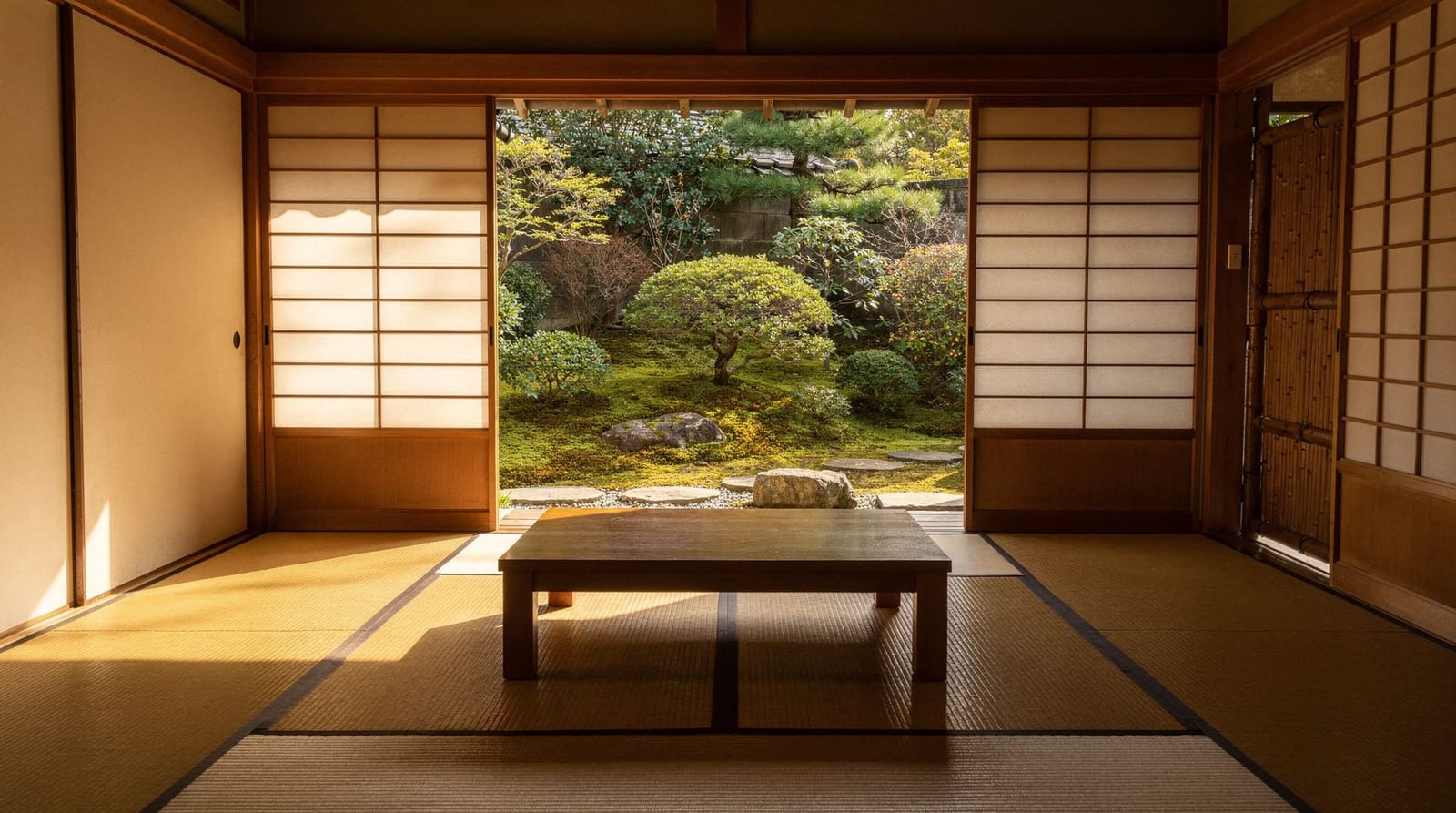
Do remove your shoes at any temple interior with a raised tatami or wooden floor — a shoe rack or shelf at the entrance signals this clearly. Don’t assume the same applies to outdoor grounds and gardens, which you walk in normal shoes.
Do keep your voice down inside temple halls and near active prayer areas. Don’t treat a quiet hall like an outdoor courtyard for loud conversation or phone calls.
Do follow the Shinto prayer sequence at a shrine’s main hall if you want to participate: toss a coin, bow twice, clap twice, make a silent wish, bow once more. Don’t worry about getting it slightly wrong — a sincere effort is what’s noticed, not textbook precision.
Do use the purification fountain (temizuya) correctly if you use it at all: rinse your left hand, then your right, then rinse your mouth by pouring water into your cupped hand. Don’t drink directly from the ladle, and don’t skip rinsing the ladle handle before returning it.
Don’t touch statues, offerings, or ritual objects unless a sign or staff member explicitly invites it.
Onsen and public baths
Do wash and rinse thoroughly at the shower stations before entering the shared bath water. Don’t bring soap, shampoo, or your small modesty towel into the bath itself.
Do tie up long hair so it doesn’t touch the water. Don’t assume all onsen welcome tattoos — most traditional venues still restrict visible tattoos, though policies vary genuinely venue to venue, and private bath rentals sidestep the question entirely if it’s a concern.
Arashiyama day tour with train, boat, and onsen — a structured way to experience onsen bathing with the logistics handledGeisha and Gion
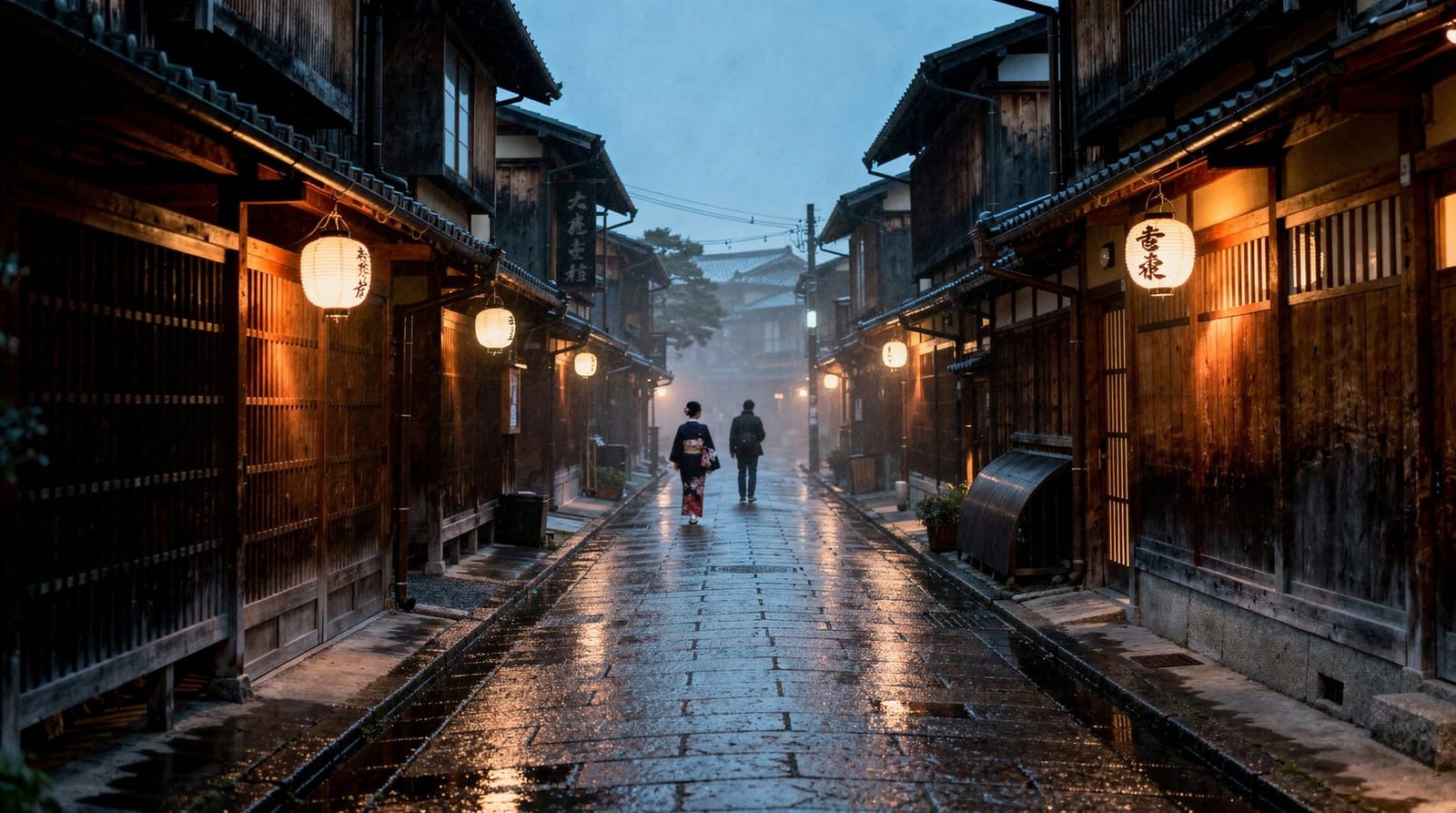
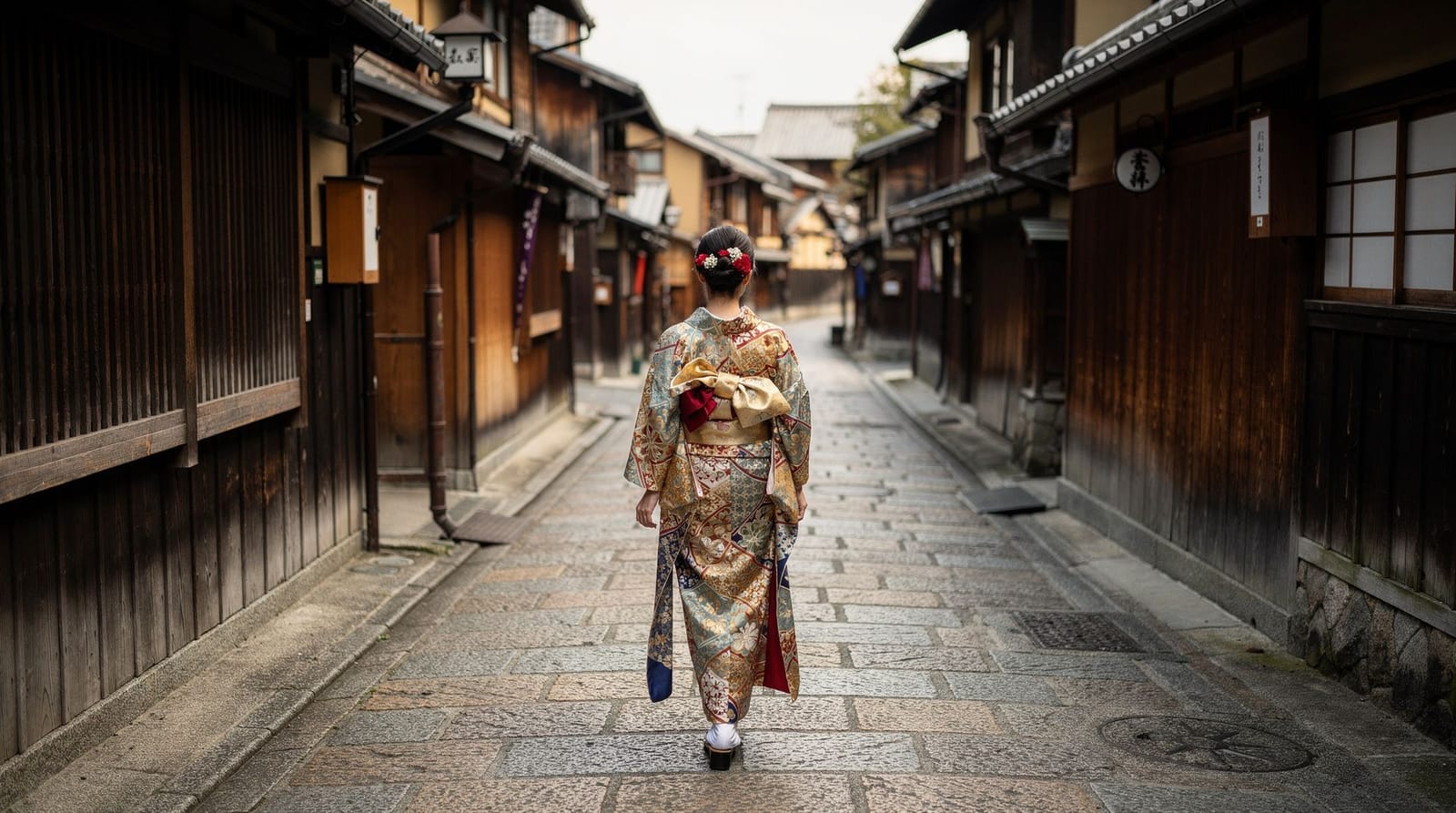
Do treat Gion as a working neighborhood, not a themed attraction — geisha and maiko encountered on the street are commuting to appointments, not posing for photos. Don’t photograph them without clearly given consent, and never on the several Gion backstreets now formally off-limits to photography, with posted fines up to ¥10,000.
Don’t block a geisha or maiko’s path for a better angle, and don’t touch their kimono, hair ornaments, or makeup.
Do book a structured show, dinner, or guided walking tour if you want a genuine geisha encounter — several include an actual consensual meeting in a controlled setting. Our full Gion geisha guide has more on the district’s etiquette specifically, including how to spot the difference between a working geisha and a tourist in a rented costume.
Gion history and geisha culture walking tour — a respectful, guided way to understand the districtEating and drinking in public
Don’t eat while walking through narrow historic lanes like Sannenzaka, Ninenzaka, or parts of Gion — both local custom and, increasingly, posted signage discourage it. Do step aside near the stall where you bought food, or find a bench, and finish there.
Don’t expect to find many public trash cans — Kyoto has notably few. Carrying a small bag for your own trash until you find a convenience store or return to your accommodation is standard practice, not an inconvenience unique to visitors.
Money and tipping
Don’t tip in restaurants, taxis, or for tour guides — Japan has no tipping culture, and attempting to tip is more likely to cause confusion than gratitude, with staff sometimes chasing you down to return the money.
Do use the small tray provided at many shop and restaurant counters for handing over cash or a card, rather than putting money directly into a staff member’s hand.
Photography
Do check for no-photography signage before photographing any temple interior or specific treasured object — grounds and gardens are usually fine, but interiors and certain items often aren’t.
Don’t use a tripod or professional-scale camera setup at busy sights without checking whether it’s permitted — some temples and gardens restrict tripods specifically to keep narrow paths moving during busy hours.
Kimono rental and dressing up
Do treat a rented kimono with the same care and modest movement a real kimono demands — the narrow-stepped walk and careful sitting posture are part of how the garment actually works, not just stylistic choices. Don’t wear a rented kimono to a formal restaurant or a religious ceremony without checking that it’s appropriate for the setting; most rental shops can advise on where it fits well and where it might feel out of place. The kimono rental in Kyoto guide covers shop options and pricing if you haven’t booked yet.
Kimono rental with a Gion and Kiyomizu-dera photoshoot — includes fitting and styling so the etiquette basics are handled for youDo return rental kimono by the agreed time — most shops rent by the day and rely on turnaround for the next customer.
Shoes, socks, and general dress
Do pack slip-on shoes if possible — Kyoto’s temple-heavy itineraries mean removing and replacing shoes multiple times a day, and complicated laces slow everyone down, including the line forming behind you.
Do carry a spare pair of socks, particularly in sandal weather — bare feet on tatami is considered less polite than socked feet.
Transit etiquette
Do queue in the marked lines on train and bus platforms, and let passengers exit before boarding. Don’t hold the doors or push through a crowded car — Japanese commuter etiquette expects an orderly, patient flow even at busy stations.
Do keep phone calls off buses and trains, or step to a vestibule area if a call is unavoidable. Don’t play videos or music without headphones — silent or near-silent train cars are the norm, not the exception, even on routes full of tourists.
Do offer priority seats to elderly passengers, pregnant women, or anyone with a visible need, even if you’re only riding a short distance.
Onsen towns and hot spring bathing
Do wash and rinse thoroughly at the shower stations before entering any shared bath. Don’t bring your small modesty towel into the bath water itself — set it aside or rest it on your head instead.
Do check a specific onsen’s tattoo policy directly if you have visible tattoos, since it varies venue to venue rather than following one citywide rule. Don’t assume either that all onsen ban tattoos or that none do — a private bath rental is the reliable fallback if a shared bath’s policy is unclear or restrictive.
Ryokan and traditional accommodation
Do change into the provided yukata robe for moving around a ryokan’s common areas, including to and from the bath — it’s the expected, normal attire, not a costume. Don’t wear outdoor shoes on tatami flooring; slippers are typically provided for hallways, removed again before stepping onto tatami itself.
Do respect a ryokan’s fixed dinner seating time if a kaiseki meal is included — arriving late can mean missing courses prepared to a schedule for the whole kitchen. Don’t expect the same flexible, come-and-go schedule of a Western hotel; the ryokan experience is built around its own rhythm. Our ryokan versus hotel in Kyoto comparison covers whether the etiquette and structure of a ryokan stay is the right fit for your trip in the first place.
Visiting private homes, workshops, and small shops
Do remove your shoes if invited into any private home or a small shop with a raised entryway — the shoe-removal custom extends well beyond temples into daily Japanese life. Don’t touch merchandise in small, traditional shops (crafts, ceramics, textiles) without asking first, particularly at family-run stores where handmade items may be fragile or one of a kind.
Do greet shop staff with a simple “konnichiwa” on entering — it’s a small courtesy that’s genuinely noticed and appreciated, even without further Japanese language ability.
Language and communication
Do learn a handful of basic phrases — arigatou gozaimasu (thank you), sumimasen (excuse me/sorry), and konnichiwa (hello) cover a surprising amount of ground and are consistently well received. Don’t assume English will be widely spoken outside major hotels and tourist-facing businesses — many smaller restaurants and shops, particularly outside the most touristed streets, operate with little to no English.
Do use a translation app for anything beyond basic phrases rather than speaking loudly and slowly in English, which doesn’t actually improve comprehension and can come across as impatient.
Etiquette mistakes that overlap with planning mistakes
A handful of etiquette slip-ups are really planning problems in disguise — rushing through a temple loudly because the schedule is too tight, or fumbling with complicated shoes at an entrance because the wrong footwear was packed. Our first-timer mistakes in Kyoto piece and the broader Kyoto for first-timers guide both cover the planning side of this, which fixes several etiquette friction points before they happen rather than after.
A general rule that covers everything else
Most Kyoto etiquette isn’t a rulebook to memorize before arrival — it’s a small number of consistent principles (quiet respect in sacred spaces, care around people’s work and privacy, cleanliness before shared facilities) applied to slightly different situations across a trip. Watching what local visitors around you are doing, and defaulting to quieter and more careful rather than louder and more casual, covers the vast majority of situations this checklist doesn’t explicitly mention.
Frequently asked questions about Kyoto
What’s the single most important etiquette rule for a first Kyoto trip? Keep it quiet and watch what’s around you — most temple, transit, and public-space etiquette in Kyoto comes down to being unobtrusive. If you had to prioritize one specific rule, it’s never photographing geisha or maiko without clear consent, since several Gion streets carry real posted fines for this.
Is it rude to tip in Kyoto restaurants or for tour guides? It’s not exactly rude, but it doesn’t work the way it does elsewhere — Japan has no tipping culture, and staff will often chase you down to return money left as a tip. Skip it entirely; good service is already reflected in the price.